

Are LED Lights Better Than Halogen for Under Cabinets?
Table of Contents
- Introduction
- Short Answer
- LED Overview
- Halogen Overview
- LED vs Halogen: Head-to-Head
- Quick Decision Guide
- Cost & Energy Calculation
- Installation Tips & Red Flags
- User Voices
- Authoritative Resources
- FAQs
- Conclusion
Introduction
Yes, LED lights are better than halogen lights for under cabinet lighting.
This conclusion is supported by professional studies and data comparing energy efficiency, lifespan, heat emission, and cost-effectiveness. The following sections will delve into the specifics of these comparisons, supported by authoritative sources.
Short Answer
Choose LED for cool operation, high efficiency, long life, and flexible color options. Consider halogen only if you prioritize near-perfect color rendition and classic warmth, and can manage heat and higher energy costs.
Table: LED vs. Halogen Lights Comparison
| Criteria | LED Lights | Halogen Lights |
|---|---|---|
| Energy Consumption | Uses at least 75% less energy | Uses 20-30% less energy than incandescent bulbs |
| Lifespan | Up to 25,000 hours (approx. 22 years) | 2,000 to 4,000 hours |
| Heat Emission | Very low heat emission | High heat emission |
| Initial Cost | Higher upfront cost | Lower upfront cost |
| Operational Cost | Lower due to energy savings and longevity | Higher due to frequent replacements and energy use |
LED Overview
- Efficiency: Uses at least 75% less energy than incandescent, far less than halogen
- Lifespan: Commonly 25,000+ hours; minimal maintenance
- Heat: Runs cool; safer for cabinets, food items, and finish materials
- Color: Available from warm (2700K) to neutral (3000–3500K) to cool (4000–5000K)
- CRI: Typically 80–95; premium LEDs now reach 95+ for color-critical tasks
- Dimming: Widely supported; verify driver and dimmer compatibility
Halogen Overview
- Color: Near-perfect CRI (~100); warm, continuous spectrum
- Brightness: High output but low efficacy (lumens per watt)
- Heat: Runs hot; can warm cabinet undersides and affect perishables
- Longevity: 2,000–4,000 hours; frequent bulb changes
- Energy: Significantly higher operating cost vs LED
- Dimming: Excellent dimming performance with standard dimmers
LED vs Halogen: Head-to-Head
Energy Efficiency
LED Lights
LED lights use significantly less energy than halogen bulbs. According to the U.S. Department of Energy, LEDs use at least 75% less energy compared to incandescent bulbs.
Halogen Lights
Halogen lights, while more efficient than traditional incandescent bulbs, are far less efficient than LEDs. Halogens use approximately 20–30% less energy than incandescent bulbs but still generate much more heat.
Table: Energy Consumption Comparison
| Light Type | Energy Consumption |
|---|---|
| LED Lights | 75% less than incandescent bulbs |
| Halogen Lights | 20-30% less than incandescent bulbs |
Result: LED delivers major energy savings with minimal heat output, ideal for tight under-cabinet spaces.
Lifespan and Durability
LED Lights
LEDs often exceed 25,000 hours, equating to many years of typical home use.
Halogen Lights
Halogen bulbs typically last 2,000–4,000 hours, leading to more frequent replacements.
Table: Lifespan Comparison
| Light Type | Lifespan |
|---|
| LED Lights | Up to 25,000 hours (approx. 22 years) |
| Halogen Lights | 2,000 to 4,000 hours |
Heat Emission
LED Lights
LEDs emit very little heat, making them safer and more suitable for under cabinet installations where heat could damage surfaces or create discomfort.
Halogen Lights
Halogen bulbs operate at higher temperatures, posing a burn risk and potentially warming cabinet surfaces.
Cost Effectiveness
Initial and Operational Cost
Although LEDs have a higher initial cost, their energy efficiency and longevity result in significant long-term savings.
| Aspect | LED Lights | Halogen Lights |
|---|---|---|
| Initial Cost | Higher | Lower |
| Operational Cost Over Time | Lower (due to energy savings and longevity) | Higher (due to frequent replacements and higher energy use) |
Detailed Insight:
Quick Decision Guide
Choose LED if you:
- Want cool operation with minimal risk to cabinet finishes or food items
- Value energy savings and lower lifetime cost
- Prefer adjustable color temperature and broad dimming options
- Need long service life with minimal maintenance
Consider Halogen if you:
- Prioritize near-perfect color rendering (CRI ~100)
- Prefer the classic warm look and smooth dimming
- Can manage heat and accept higher energy bills
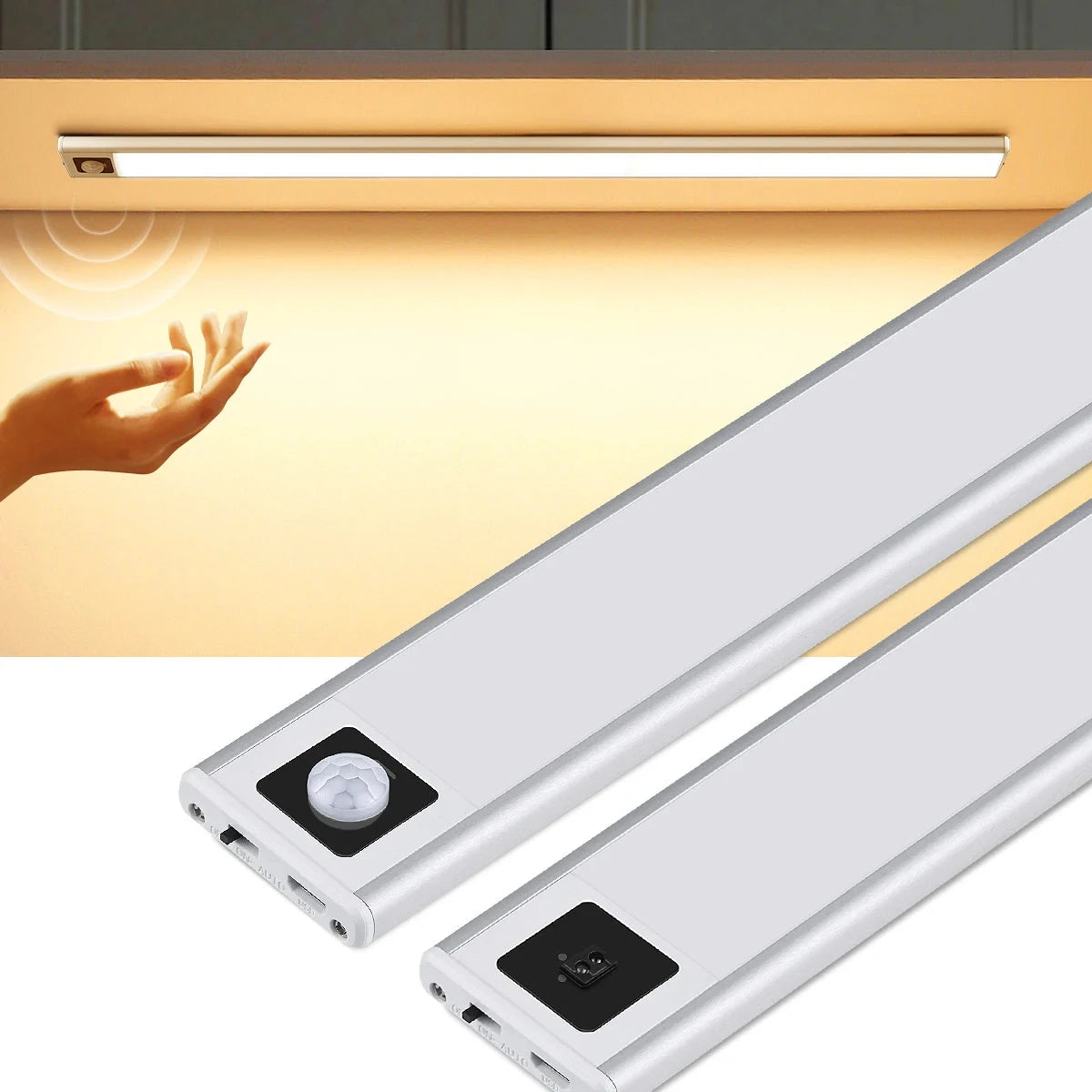
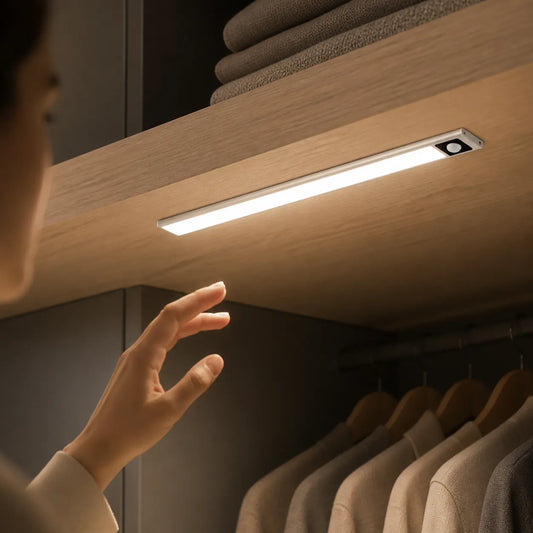
For a sleek, energy-efficient lighting solution with easy installation and minimal maintenance, consider the Ultra-Thin Under Cabinet LED Light Bar - USB Rechargeable, Smart Sensor, ideal for modern kitchens and spaces that prioritize both style and functionality.
Cost & Energy Calculation
Example: Four fixtures, 3 hours/day, electricity $0.15/kWh
- LED: 10W × 4 = 40W → 0.12 kWh/day → 43.8 kWh/year ≈ $6.57/year
- Halogen: 35W × 4 = 140W → 0.42 kWh/day → 153.3 kWh/year ≈ $23.00/year
- Annual savings ≈ $16.4 with LED (plus fewer replacements)
Detailed Insight:
Installation Tips & Red Flags
- Verify dimmer compatibility (LED driver + dimmer rating)
- Use UL/ETL listed fixtures and power supplies
- For halogen, ensure ventilation and distance from heat-sensitive materials
- Avoid exposed conductors; route cords neatly with channels
- Match color temperature to task needs: 2700–3000K for warm ambience, 3000–4000K for tasks
User Voices
🗣️ “LED bars kept my countertop cool and bright—no more warm cabinet undersides compared to halogens.”
🍳 “Halogen looked beautiful on food and stone, but the heat and bulb changes pushed me to LED.”
Authoritative Resources
Real-World Applications
Residential Kitchen Example
A homeowner replaced 10 halogen under cabinet lights (20 watts each) with equivalent LED lights (4 watts each). This change resulted in an 80% reduction in energy consumption and a significant decrease in heat emitted under the cabinets. The homeowner also appreciated the adjustable color temperatures offered by the LEDs.
Commercial Workspace Example
In a small office kitchen area, switching from halogen to LED under cabinet lighting reduced energy bills and maintenance needs, as the LEDs did not require replacement for over five years. Employees reported better light quality for tasks and a more comfortable environment due to reduced heat.
FAQs
Can LEDs match halogen’s color quality?
Many modern LEDs reach CRI 90–95+, delivering excellent color accuracy for kitchen tasks and displays.
Do LEDs flicker or buzz when dimmed?
Use dimmable LED drivers and compatible dimmers; quality components minimize flicker and noise.
What color temperature is best for countertops?
Warm 2700–3000K for ambience; 3000–3500K neutral for tasks; 4000K+ for crisp, cooler light.
Can I replace halogen pucks with LED?
Yes. Choose LED pucks or bars with similar form factor and ensure proper power supply and dimmer compatibility.
Conclusion
LED lights are undoubtedly better than halogen lights for under cabinet lighting. They offer superior energy efficiency, longer lifespan, reduced heat emission, and greater cost-effectiveness. These advantages make LEDs the preferred choice for both residential and commercial applications.
Further Reading
Explore the full guide for this topic: How to Choose Under Cabinet Lighting: A Complete Decision Guide














 />
/>
 />
/>
 />
/>
 />
/>
 />
/>