

How Big Should Under Cabinet Lights Be?
Table of Contents
- Introduction
- Recommended Sizes Table
- Key Factors That Determine Size
- Length vs. Profile (Width/Thickness)
- Light Distribution and Coverage
- Real-World Examples
- Practical Sizing Tips
- Common Sizing Mistakes
- FAQs
- Conclusion
Introduction
The ideal size for under cabinet lights typically ranges from 8 to 30 inches, depending on cabinet length, fixture type, and how much of the work surface you want evenly lit. In practice, “size” usually means fixture length (coverage), plus the physical profile (width and thickness) that must fit under the cabinet without causing glare.
Table: Ideal Sizes for Under Cabinet Lights
| Cabinet Length | Recommended Light Size |
|---|---|
| Less than 12 inches | 8-10 inches |
| 12-18 inches | 12-16 inches |
| 18-24 inches | 16-20 inches |
| More than 24 inches | 24-30 inches |
Key Factors That Determine Size
Factors Influencing the Size of Under Cabinet Lights
-
Cabinet Size
The size of your cabinets is the primary factor in determining the size of under cabinet lights. Smaller cabinets require smaller lights to ensure even illumination without over-lighting the space.
-
Lighting Coverage
Proper lighting coverage is essential for functionality and aesthetics. According to the Illuminating Engineering Society (IES), optimal under cabinet lighting should cover the entire counter space without creating dark spots or overly bright areas.
-
Purpose and Task Lighting
The purpose of the lighting also plays a critical role. For task-oriented areas, such as food preparation zones, brighter and more focused lighting is necessary. In contrast, ambient lighting for mood enhancement can be achieved with less intense and smaller fixtures.
Length vs. Profile (Width/Thickness)
Fixture length determines how much of the countertop (or desk/shelf surface) gets even light. Fixture profile (width and thickness) determines whether the light can be mounted cleanly under the cabinet and whether it creates glare. A slim profile helps hide the fixture behind the cabinet face frame and keeps the light source out of direct view.
If your cabinet has a front lip or face frame, placing the fixture slightly back from the front edge typically reduces glare while still washing the work surface.
Light Distribution and Coverage
Professional Theories and Data
Lighting Coverage Theory
According to the IES, the distance between the light source and the work surface affects the distribution of light. For under cabinet lighting, the light should be positioned to minimize shadows and provide uniform illumination.
Table: Light Distribution Based on Fixture Size
| Light Size | Coverage Area |
|---|---|
| 8-10 inches | 1-2 feet |
| 12-16 inches | 2-3 feet |
| 16-20 inches | 3-4 feet |
| 24-30 inches | 4-5 feet |
This table illustrates how different light sizes impact the coverage area, ensuring that each section of the countertop is well-lit.
Real-World Examples
Case Studies and Real-World Applications
Residential Kitchen Example
In a typical residential kitchen, under cabinet lighting was installed using the recommended sizes from the table above. Cabinets measuring 15 inches in length were equipped with 12-inch lights, providing even illumination across the countertop and enhancing the kitchen's functionality.
Commercial Workspace Example
A commercial kitchen used larger cabinets, each measuring 30 inches in length. Installing 24-inch under cabinet lights ensured comprehensive coverage, significantly improving visibility and safety for food preparation tasks.
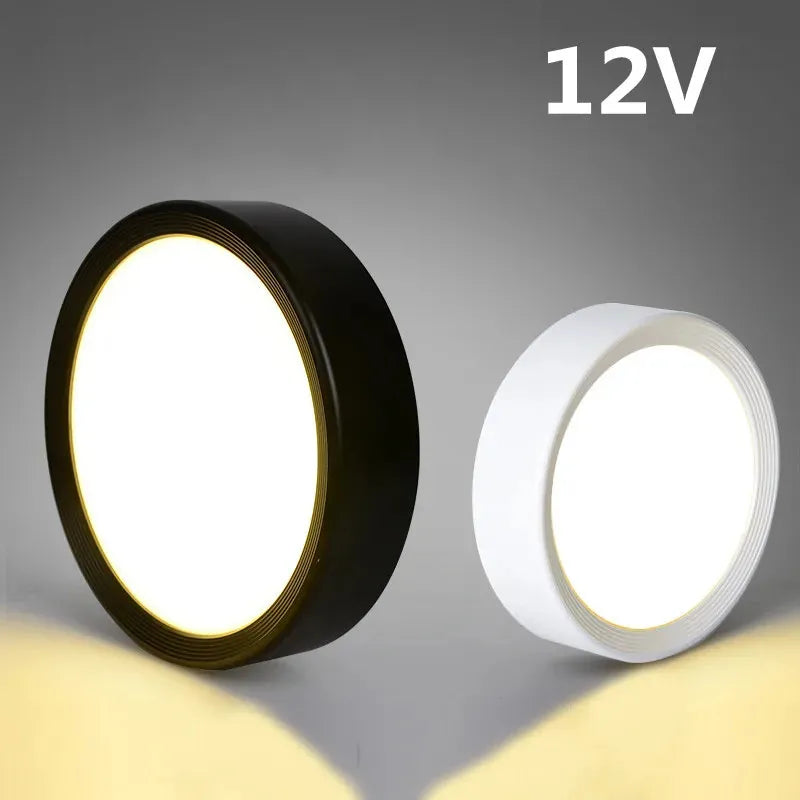
In both home kitchens and commercial workspaces, matching fixture size and output to the cabinet depth and task area helps avoid dark spots or excessive glare. 12V surface-mount under-cabinet LED puck lights, available in multiple diameters and wattage options, make it easier to scale light coverage from compact residential counters to larger commercial prep zones while keeping a consistent look across the space.
Practical Sizing Tips
Practical Tips for Choosing Under Cabinet Light Size
-
Measure Your Cabinets
Always measure the length of your cabinets before purchasing lights. This ensures you choose the correct size that fits well and provides adequate lighting.
-
Consider Multiple Fixtures
For longer cabinets, consider using multiple smaller fixtures instead of a single large one. This can help distribute light more evenly and prevent shadows.
-
Consult Professional Guidelines
Refer to guidelines from professional organizations like the IES to understand the best practices for under cabinet lighting.
Common Sizing Mistakes
- Choosing one long fixture when the cabinet layout has dividers, sinks, or gaps that interrupt coverage.
- Ignoring voltage drop on longer low-voltage runs, leading to dimmer light at the far end.
- Mounting too close to the front edge and seeing harsh glare from the LEDs while standing at the counter.
- Picking a fixture profile that is too thick to sit flat under the cabinet, causing uneven mounting.
FAQs
Should the light be the same length as the cabinet?
Not necessarily. Many installations leave a small gap at each end to avoid shadows from side panels and to make wiring and connectors easier. If a single fixture cannot cover the length cleanly, two shorter fixtures often produce more even light.
Is 12V or 24V better for longer runs?
For the same wattage, 24V systems draw less current than 12V systems, which typically reduces voltage drop over longer runs. The best choice depends on your driver and fixture system, but 24V is often easier to size for longer distances.
What matters more: length or lumens?
You need both. Length affects uniformity across the surface, while lumens determine brightness. A shorter, higher-output light can create hotspots, while a longer, lower-output light can feel too dim. Balancing coverage and output typically creates the most comfortable result.
Conclusion
The size of under cabinet lights plays a crucial role in ensuring proper illumination and functionality. By following professional guidelines and considering the specific needs of your space, you can select the ideal light size that enhances both the aesthetics and practicality of your kitchen.
Further Reading
Explore the full guide for this topic: Light Quality for Under Cabinet Lighting: Color, Brightness & Comfort














 />
/>
 />
/>
 />
/>
 />
/>
 />
/>