

New 2025 Energy Standards, Rebates, and Smart Lighting Incentives Affecting Holiday Lighting
Table of Contents
- Overview: What changed in 2025 energy standards for lighting?
- How the 2025 standards specifically affect holiday lighting products
- 2025 rebates, tax credits, and utility incentives that apply to holiday lighting
- Smart lighting incentives and how they apply to holiday decorations
- Practical compliance and installation checklist for holiday lighting
- Cost-benefit comparison: incandescent, LED, and smart LED holiday lighting
- How to claim rebates, document installations, and avoid common pitfalls
- Limitations, enforcement, and what to watch for next
- Frequently Asked Questions (FAQs)
Overview: What changed in 2025 energy standards for lighting?
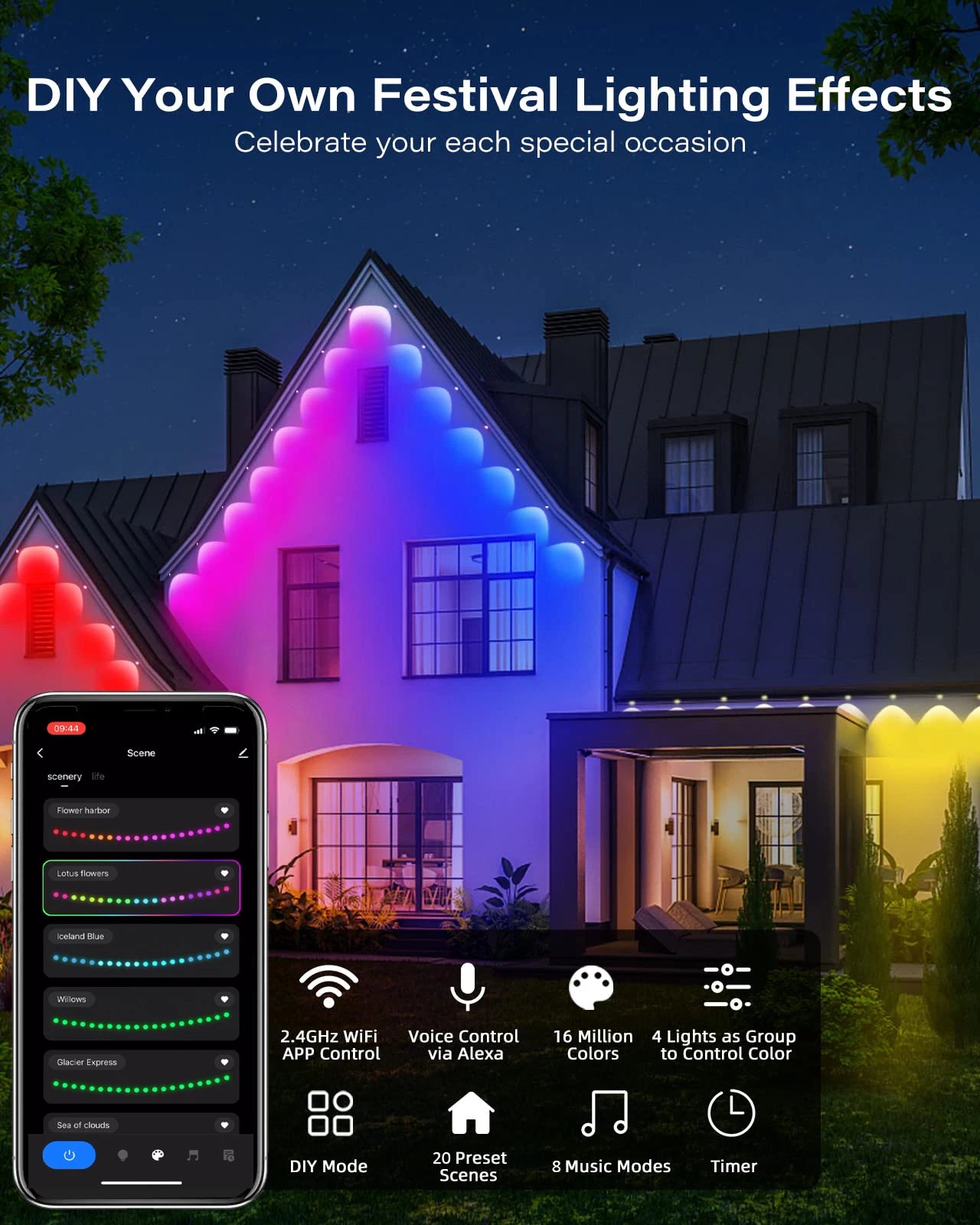
Federal and state-level efficiency rules tightened in 2025, accelerating the phase-out of low-efficiency decorative and general-service lamps and increasing minimum lumens-per-watt requirements for many bulbs.
In 2025 regulators continued implementing updated lighting efficiency rules that affect consumer holiday lighting choices. The Department of Energy (DOE) and several states have tightened efficacy (lumens-per-watt) and standby-power requirements for decorative and general service lamps, while energy labeling and smart-control compatibility are being emphasized. These changes prioritize LED and smart-enabled lighting as the baseline offering for retail mass-market holiday decor.
Key official resources: the U.S. Department of Energy’s lighting and energy-efficiency guidance and the state incentives database at DSIRE provide authoritative summaries and program links (see links below).
- DOE guidance on LED lighting and efficiency: energy.gov/energysaver/led-lighting
- State and utility incentive listings: DSIRE - Database of State Incentives for Renewables & Efficiency
How the 2025 standards specifically affect holiday lighting products
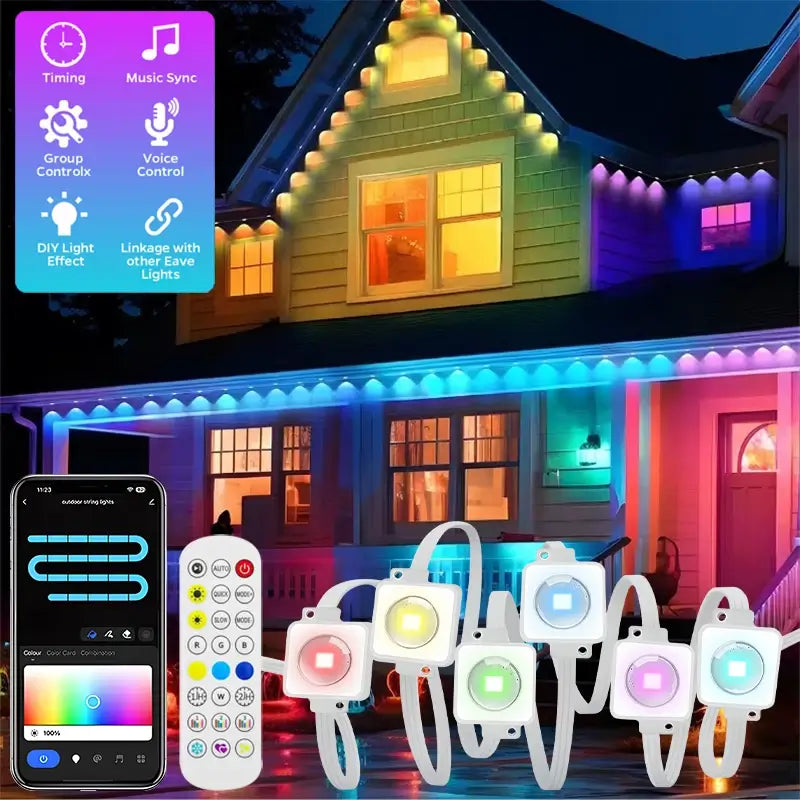
100FT 60 LED Permanent Outdoor Eaves LED Lights Waterproof RGB Christmas String Lights
New standards limit sale of inefficient decorative lamps and push manufacturers toward LED or smart LED holiday strings and accessories.
Manufacturers and retailers must comply with tighter minimum efficacy and, in some jurisdictions, reduced standby-power rules for plug-in decorative lighting. Practically, that means:
- Fewer incandescent and halogen holiday strings on store shelves.
- More LED strings marketed with lumen, wattage, and lifetime specs.
- Increasing availability of smart-ready strings that support dimming, scheduling, and low standby power usage.
For consumers, this reduces the risk of buying noncompliant products and makes LEDs the de facto standard for holiday displays. Retailers often mark products as “compliant with federal/state efficiency rules” or list ENERGY STAR® or manufacturer test data showing lumens-per-watt.
2025 rebates, tax credits, and utility incentives that apply to holiday lighting
Federal tax credits for major energy upgrades and broad utility/retailer rebates commonly cover LED bulbs, smart lighting controls, and related hardware—sometimes including holiday lighting products.
While major federal tax credits generally target larger home-efficiency upgrades, many local, state, and utility programs offer direct rebates that apply to lighting purchases and smart-control hardware. Examples of incentive types:
- Per-bulb or per-package rebates from utilities or retailers (often $1–$10/bulb or $5–$50 per string).
- Instant store discounts when traded in for efficient models (retailer promotions tied to utility incentives).
- Rebates for smart plugs, timers, or certified smart lighting hubs that reduce energy use across seasonal lighting.
How to find current offers:
- Search DSIRE for your state incentives and utility links: dsireusa.org.
- Check your utility’s residential rebate page—many publish seasonal promotions for holiday lighting.
- Look for ENERGY STAR promotions; ENERGY STAR lists qualified lighting and may be part of rebate eligibility: energystar.gov.
Smart lighting incentives and how they apply to holiday decorations
Incentives increasingly reward smart controls—scheduling, occupancy sensors, and remote dimming—because they cut standby and runtime energy tied to holiday displays.
Smart lighting qualifies for incentives for two reasons: it reduces unnecessary runtime through scheduling/automation and it enables aggregated demand response or grid services in some utility programs. Typical smart lighting incentives include:
- Rebates for smart plugs and Wi‑Fi/Zigbee controllers that switch strings on/off or dim them on a schedule.
- Incentives for smart hubs or certified controllers that meet low-standby and communications standards.
- Promotional bundle rebates when smart bulbs are bought in bulk for whole-home holiday setups.
Practical examples include using a smart plug to schedule exterior light strings to turn on only when needed, or grouping multiple indoor light strings under a single hub that qualifies for a larger rebate. Utilities focused on peak demand reductions may offer higher incentives if your smart devices support demand-response signals.
Practical compliance and installation checklist for holiday lighting (homeowners & installers)
Use this checklist to select compliant products, document purchases for rebates, and install safely—maximizing energy savings and incentive recovery.
Before buying or installing holiday lighting, follow these actionable steps:
- Verify product compliance: Look for lumen/watt specs, ENERGY STAR labels, or manufacturer compliance statements.
- Check incentives: Search your state utilities and DSIRE for rebates and read program rules for eligible SKUs.
- Choose smart controls: Prioritize timers, smart plugs, or controllers with low standby power and scheduling.
- Document purchases: Save receipts, model numbers, and product specification pages for rebate submissions.
- Follow electrical safety: Use outdoor-rated cords and GFCI outlets; don’t overload circuits when combining many strings.
- Program scenes and schedules: Set auto-off times and dimming to reduce runtime and demand charges if applicable.
Installer tip: When equipping multi-home displays or neighborhood holiday installations, collect owner permission for demand‑response participation and centralize device management to qualify for larger commercial/aggregated incentives.
Cost-benefit comparison: incandescent, LED, and smart LED holiday lighting
LEDs and smart LEDs cost more upfront but almost always pay back through lower energy use, longer life, and manufacturers’ warranties—plus added rebate value.
Below is an illustrative example comparing three common holiday lighting options. Assumptions: 50-bulb string, 150 hours seasonal use (5 hours/day × 30 days), electricity price $0.15/kWh. Values are example estimates—use actual product specs for precise calculations.
| Metric | Incandescent String (50 bulbs) | LED Non‑Smart String (50 bulbs) | LED Smart String (50 bulbs + controller) |
|---|---|---|---|
| Wattage per bulb | 5 W | 0.5 W | 0.5 W + 2 W controller |
| Total string wattage | 250 W | 25 W | 27 W |
| Seasonal energy (kWh) | 37.5 kWh | 3.75 kWh | 4.05 kWh |
| Seasonal energy cost (@$0.15/kWh) | $5.63 | $0.56 | $0.61 |
| Typical lifespan (hours) | 1,000 hrs | 25,000 hrs | 25,000 hrs |
| Approx. retail cost per string | $5–$15 | $10–$25 | $20–$60 |
| Potential rebate | Rare | Common ($2–$20) | Common/higher ($5–$50) |
Interpretation:
- Energy cost savings per season are small in absolute dollars for a single string, but scale quickly for larger displays or longer run times.
- LED lifetimes and lower replacement frequency give clear lifetime cost advantages.
- Smart LEDs enable schedule-driven savings and can unlock additional rebates or utility rewards.
💡 Smart LED holiday lights from Lumaz offer the best long-term value, blending energy savings with brilliant, customizable displays.
How to claim rebates, document installations, and avoid common pitfalls
Document product specs, follow rebate rules, and turn in clear receipts and photos—utilities reject claims missing model numbers, serials, or proof of disposal.
Steps to successfully claim incentives:
- Collect evidence at purchase: receipt, SKU, model number, and a snapshot of the product specification label (lumens, watts, ENERGY STAR mark).
- Confirm program eligibility before purchase: rebate programs often have eligible-model lists or require pre‑approval.
- Submit paperwork within program windows: many seasonal rebates have limited funding and fast deadlines.
- Keep proof of disposal if required: some trade-in programs require old incandescent bulbs to be recycled.
Common pitfalls:
- Buying products that look efficient but lack published lumens/watts—utilities often require explicit specs.
- Assuming online listings automatically qualify—confirm with the rebate administrator.
- Missing the rebate window—many programs operate on limited funds or seasonal deadlines.
😊 "We swapped our commercial display to smart LED strings and scheduled off-peak lighting—utility rebate covered half the hub cost, and our electric bill dropped noticeably." — Neighborhood display coordinator
Limitations, enforcement, and what to watch for next
Enforcement varies by state; manufacturers may take time to phase out old inventory—expect incremental rollout, retailer labeling updates, and expanded smart standards.
Important caveats and future signals:
- Enforcement approaches differ: some states strictly enforce sales bans on inefficient decorative lamps; others rely on manufacturer self-certification.
- Retailers may run down old inventory, so non-LED strings could still be available in early 2025—but they’ll become rarer.
- Watch for updates to ENERGY STAR and DOE smart lighting interoperability specifications, which could change rebate eligibility.
Recommended monitoring sources:
- DOE lighting pages and Federal Register notices for official standard changes: energy.gov.
- DSIRE for state/utility incentive changes: dsireusa.org.
Quick Tools and Metrics to Track Savings and Compliance
Use runtime logs, smart-app usage reports, and simple energy calculators to quantify savings and verify compliance with program thresholds.
- Smart-app logs: daily runtime and power draw for smart strings and plugs.
- Basic energy calculator: Watts × hours / 1000 = kWh (then × $/kWh).
- Payback metric: (Incremental cost − rebate) / annual energy savings.
Frequently Asked Questions (FAQs)
1. Are incandescent holiday lights illegal in 2025?
Not universally illegal, but many inefficient incandescent decorative lamps are being phased out under updated state and federal standards. Availability varies by retailer and state; if a specific incandescent product lacks the required efficacy specs it may be restricted from sale in certain jurisdictions.
2. Can I get a rebate for holiday string lights I already bought?
Some programs allow retroactive rebates if purchases fall within program dates and the product meets eligibility rules; many require proof of purchase and that the product model be on an approved list. Check your utility’s program terms and DSIRE for state details.
3. Do smart holiday lights use more energy because of the controller?
Smart controllers add a small standby draw (typically 1–3 watts), but the energy saved through scheduling, automatic shut-off, and dimming usually outweighs that small penalty—especially in multi-string displays.
4. How can small businesses or community groups qualify for larger incentives?
Aggregating purchases, applying for commercial or multi-family incentive programs, or partnering with local utilities for demand-response enrollment can unlock larger rebates. Contact your utility’s business or community programs for pre-approval and bulk-purchase rules.
5. What documentation do utilities usually require for a lighting rebate?
Typical documentation includes purchase receipts, product model numbers/SKUs, photos of product labels showing lumens/watts or ENERGY STAR certification, and a filled application form. Some programs require disposal proof for replaced incandescent bulbs.
If you’d like, I can create a printable checklist tailored to your state or local utility—tell me your zip code and whether the setup is residential, commercial, or community display.
Related Articles:
- The Complete Christmas Lights Buying Guide
- Which Christmas Lights Are Best?
- When Is the Best Time to Hang Christmas Lights?
- How to Choose and Use Christmas Light Clips?
- Fairy Lights: Guide to Creating Magical Spaces
- Solar String Lights: Everything You Need to Know
- How to Store Holiday Decorations Quickly and Efficiently














 />
/>
 />
/>
 />
/>
 />
/>
 />
/>