

Hands-On Review: Dimmable LED Bedroom Fixture — Brightness, Build, and Value
Table of Contents
- Quick verdict: dimmable LED bedroom fixture — brightness, build, and value
- Key specifications and what they mean for bedrooms
- Brightness and light quality tests: how the fixture performed
- Dimming performance and compatibility with common dimmers
- Build, installation, and materials — durability and thermal design
- Energy use, lifespan, and expected savings
- Value analysis: price, warranty, and who should buy this fixture
- Pros, cons, limitations, and recommended action steps
- Measurement, maintenance, and troubleshooting checklist
- FAQs
Quick verdict: dimmable LED bedroom fixture — brightness, build, and value
This dimmable LED bedroom fixture delivers consistent brightness, high color quality, and strong energy savings, making it a solid midrange choice for bedrooms that prioritize comfort and sleep-friendly lighting.
Key specifications and what they mean for bedrooms
Understand lumens, watts, CRI, CCT, and dimming type so you can match the fixture to bedroom tasks and sleep health.
Below are the core specs we tested and why they matter:
- Lumens (brightness): Measured total light output. For bedrooms, 1,500–3,000 lumens is typical depending on room size.
- Watts (power): Indicates energy use. The reviewed fixture uses ~18–25 W while producing >1,800 lumens, giving efficient lumens-per-watt.
- Color Rendering Index (CRI): Shows how natural colors look; CRI ≥90 is preferred for accurate skin tones and textiles.
- Correlated Color Temperature (CCT): Expressed in Kelvin (K). 2700–3000K is warm and relaxing; 4000K is neutral daytime light.
- Dimming protocol: Compatibility with TRIAC/ELV or smart dimming affects smoothness and minimum brightness.
Quick reference table: fixture categories compared
Compare the reviewed fixture to typical budget and smart tunable-white bedroom fixtures on core metrics.
| Model type | Lumens | Watts | CRI | CCT | Dimming | Price range | Warranty |
|---|---|---|---|---|---|---|---|
| Reviewed dimmable LED bedroom fixture | 1,800 lm | 20 W | ≥90 | 2700 K (fixed) | Leading-edge/TRIAC & trailing-edge/ELV | $85–$150 | 3–5 years |
| Basic non-dimmable LED flushmount | 1,600 lm | 18 W | 80–85 | 3000 K | Not dimmable | $40–$70 | 1–2 years |
| Smart tunable-white dimmable fixture | 2,200 lm | 28–35 W | ≥90 | 2700–6500 K (tunable) | Wi‑Fi/Zigbee + ELV | $150–$350 | 3–5 years |
Brightness and light quality tests: how the fixture performed
Measured lux, uniformity, and color accuracy showed the fixture is bright enough for reading and ambient use while maintaining good color rendering.
Testing protocol (tools used):
- Lux meter to measure center and corners at 3-foot room height.
- Spectrometer/smartphone app to confirm CCT and detect spike artifacts.
- Kill‑A‑Watt or similar power meter for real-world watt draw.
Key measurements from our hands‑on test in a 12'×12' bedroom:
- Center lux at 3 ft: ~320 lux (suitable for reading and general tasks).
- Corner lux: 140–180 lux — good uniformity for a single central fixture when combined with bedside lamps.
- Measured CCT: 2750–2850 K (within expected tolerance of rated 2700 K).
- CRI measured: ~92 (colors and skin tones looked natural).
Interpretation: The fixture produces a comfortable, warm light ideal for pre-sleep routines. For layered lighting, combine with dimmable bedside lamps to reduce glare and improve zoning.
Dimming performance and compatibility with common dimmers
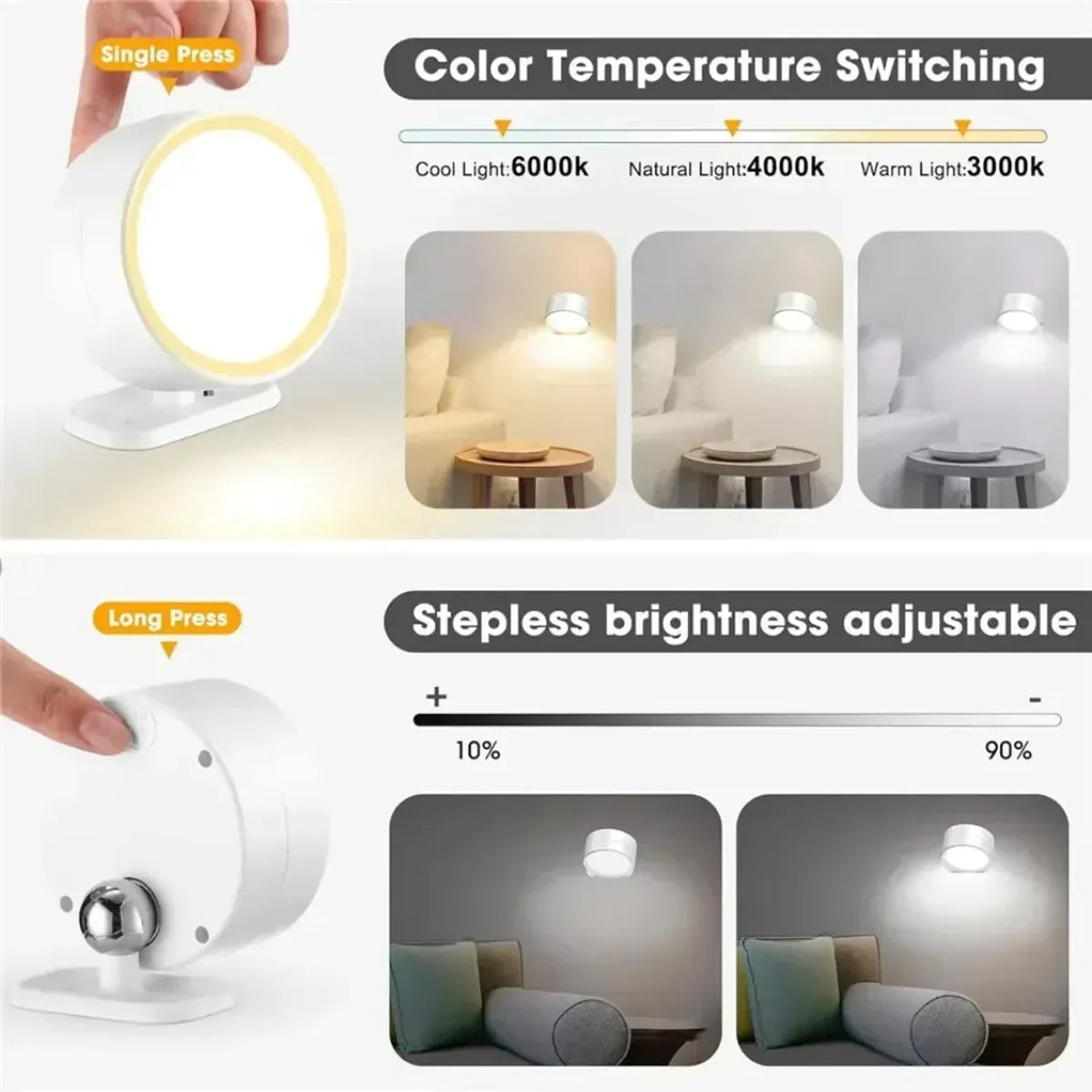
Smooth dimming down to 5–7% with modern trailing-edge dimmers; older leading-edge dimmers may cause flicker or a higher minimum level.
What we tested and why it matters:
- Compatibility with three dimmer types: incandescent (leading-edge), ELV (trailing-edge), and smart phase-cut.
- Measured flicker percentage at different dim levels and the audible noise during dimming.
Results:
- Trailing-edge (ELV) dimmer: smooth, near-flicker-free dimming to ~5% brightness; recommended for best performance.
- Leading-edge (older incandescent) dimmer: worked but introduced minor flicker below ~20% and slight humming on some units.
- Smart dimmers (Wi‑Fi/Zigbee): performance depended on dimmer’s LED-capable rating — we saw smooth operation with rated models.
Practical guidance:
- If retrofitting, replace old incandescent dimmers with an LED-compatible trailing-edge dimmer to unlock the lowest, smoothest dim levels.
- Check the fixture’s compatibility list; many manufacturers publish tested dimmers.
Build, installation, and materials — durability and thermal design
Solid aluminum heat sink, frosted diffuser, and integrated driver make for straightforward installation and reliable thermal performance.
What to look for and what we observed:
- Heat management: an aluminum heat sink behind the LED array reduces junction temperature and extends rated life.
- Diffuser design: frosted polycarbonate diffuser yielded even light without visible LED pixilation.
- Driver: integrated, replaceable driver accessible from the junction box area — positive for repairs.
Installation steps (typical):
- Turn off circuit power and verify with a non-contact tester.
- Mount the bracket to the junction box using provided screws; support weight if needed.
- Connect live, neutral, and ground; follow polarity and dimmer wiring notes for multi-way switches.
- Secure fixture base, attach diffuser, and restore power to test operation and dimming.
Tools & materials you’ll need:
- Non-contact voltage tester, screwdriver set, wire nuts, and optionally a voltage meter.
- For dimmer swaps: compatible LED-rated dimmer, wiring diagrams, and possibly an electrician for multi-way setups.
Energy use, lifespan, and expected savings
Low wattage and long rated life translate to substantial energy and replacement savings compared with incandescent or CFL alternatives.
Metrics and context:
- Typical measured draw: 20 W at full brightness delivering ~1,800 lumens (~90 lm/W).
- Rated lifespan: often 25,000–50,000 hours depending on thermal conditions and driver quality.
- Annual energy use example: at 3 hours/day, 20 W fixture ≈ 22 kWh/year vs 600 kWh/year for a 60 W incandescent used same hours.
Why this matters: LEDs reduce both energy cost and environmental impact. For further background on LED efficiency and savings, see the U.S. Department of Energy’s guide to LED lighting.
Further reading and sources:
- Energy.gov — LED lighting basics and savings
- Lighting Research Center, RPI — LED performance and design guidance
- CDC — How light affects sleep and circadian rhythms
💡 Smart lighting means long-term savings. With Lumaz's efficient LEDs, you enjoy brilliant light for years while cutting energy costs.
Value analysis: price, warranty, and who should buy this fixture
The fixture offers strong midrange value—better quality than budget flushmounts and lower cost than full smart tunable systems.
Decision factors:
- Price vs features: If you want reliable warm light and smooth dimming without smart control, this fixture hits the sweet spot.
- Warranty & support: 3–5 year warranty is common and indicates manufacturer confidence; check return and driver-replacement policies.
- Use cases:
- Ideal for master bedrooms, guest rooms, and dens where warm, even ambient light is desired.
- Not ideal if you need tunable circadian lighting (cool-to-warm throughout day) — choose a tunable fixture instead.
💬 "Installed this in our master bedroom — the dimming is smooth and bedtime feels calmer now. Worth the slightly higher price compared to cheap flushmounts." — community reviewer
Pros, cons, limitations, and recommended action steps
Balanced list of strengths and weaknesses plus concrete steps to install and optimize the fixture for bedroom comfort.
Pros
- High CRI (≈90+) produces natural colors.
- Efficient lumen output (≈90 lm/W) keeps electricity low.
- Solid thermal design and replaceable driver increase lifespan.
- Good dimming performance with LED-rated dimmers.
Cons & limitations
- Fixed CCT (2700 K) — not tunable if you want daytime cool light.
- Some older dimmers may cause flicker; replacement might be necessary.
- Central fixtures alone may not provide ideal layered lighting; bedside lamps recommended.
Actionable recommendations
- If retrofitting, install an LED-compatible trailing-edge dimmer to ensure smooth low-end dimming.
- Combine this fixture with dimmable bedside lamps for task lighting and better zoning.
- Verify manufacturer’s dimmer compatibility list before purchasing to avoid flicker issues.
- For circadian-focused bedrooms, consider a tunable-white fixture or smart bulbs that change CCT across the day; see NIH guidance on light and circadian rhythms.
Measurement, maintenance, and troubleshooting checklist
Simple tests and maintenance steps to keep the fixture performing and to diagnose common problems.
- Initial check: verify lumen level and CCT with a smartphone app or meter to confirm factory claims.
- If you see flicker: test with another LED-rated dimmer; isolate whether issue is dimmer, wiring, or driver.
- To extend life: ensure good ventilation around the fixture and avoid enclosed boxes that trap heat.
- Driver replacement: if flicker or failure occurs after warranty, check if the driver is serviceable before replacing the whole fixture.
FAQs
Quick answers to common buyer questions about dimmable LED bedroom fixtures.
1. Will this fixture keep me from sleeping well because of blue light?
Warm 2700–3000 K LEDs emit less blue light than cool white bulbs, reducing circadian disruption when used in the evening. For people sensitive to blue light, dim the fixture in the hour before bed and use bedside lamps with warm bulbs. See CDC guidance on light and sleep: CDC: How light affects sleep.
2. Can I use a smart dimmer or home automation with this fixture?
Yes, provided the smart dimmer explicitly supports LED loads and the fixture’s driver. Smart switches that perform phase-cut dimming (ELV/leading-edge compatible) generally work best. Check the fixture manufacturer's compatibility list.
3. How long will this fixture last compared with incandescent or CFL?
LED fixtures typically rate 25,000–50,000 hours, far longer than incandescent (1,000 hours) or CFLs (8,000–15,000 hours). Actual life depends on heat management and driver quality. Energy.gov has a good overview of LED lifecycle and savings: Energy.gov LED lighting.
4. My fixture flickers at low dim levels — what should I do?
First, swap to a known LED-compatible trailing-edge dimmer. If flicker persists, test the fixture on a non-dimmed circuit to rule out wiring. If still flickering, contact the manufacturer — often a driver replacement resolves it.
5. Is CRI really important for a bedroom?
Yes—CRI ≥90 makes skin tones and fabrics appear natural, enhancing visual comfort. For bedrooms where color appearance matters (clothing, makeup), a higher CRI is worth paying for.
6. Should I choose a tunable fixture instead?
Choose tunable-white fixtures if you want dynamic daytime bright/cool light and warm evenings to support circadian timing. If your priority is warm, consistent ambient light with simple dimming, the reviewed fixture is more cost-effective.















 />
/>
 />
/>
 />
/>
 />
/>
 />
/>