

Best solar string lights and fixtures for durable outdoor décor
Table of Contents
- Why choose solar string lights and fixtures for outdoor décor
- How solar string lights work: components and key performance metrics
- Durability features to prioritize: materials, ratings and replaceable parts
- Best solar light types for specific outdoor uses
- Top durable solar outdoor lights by category (recommended features and examples)
- Installation and placement for maximum performance
- Maintenance, troubleshooting and lifecycle expectations
- Cost, energy savings and environmental impact
- Buying checklist and final recommendations
- Frequently asked questions (FAQs)
Outdoor décor needs lighting that looks great and lasts through weather, seasons and low maintenance cycles. This guide identifies durable solar string lights and fixtures, explains how to choose them, and gives installation, maintenance and cost guidance backed by research.
Why choose solar string lights and fixtures for outdoor décor

Solar lights cut wiring, lower running costs, and simplify seasonal décor while offering comparable brightness to low‑wattage mains LEDs.
Benefits include no trenching or outlets, near-zero electricity cost, and easier repositioning for changing displays.
- Zero-grid energy for the fixture — solar charges batteries during daylight.
- Simple DIY install — stake, clip, or hang without an electrician.
- Lower long-term maintenance when you pick high-quality components (panels, batteries, LEDs).
✨ Illuminate your evenings sustainably. Lumaz solar lights blend advanced LED tech with elegant, energy-efficient design for your perfect ambiance.
How solar string lights work: components and key performance metrics
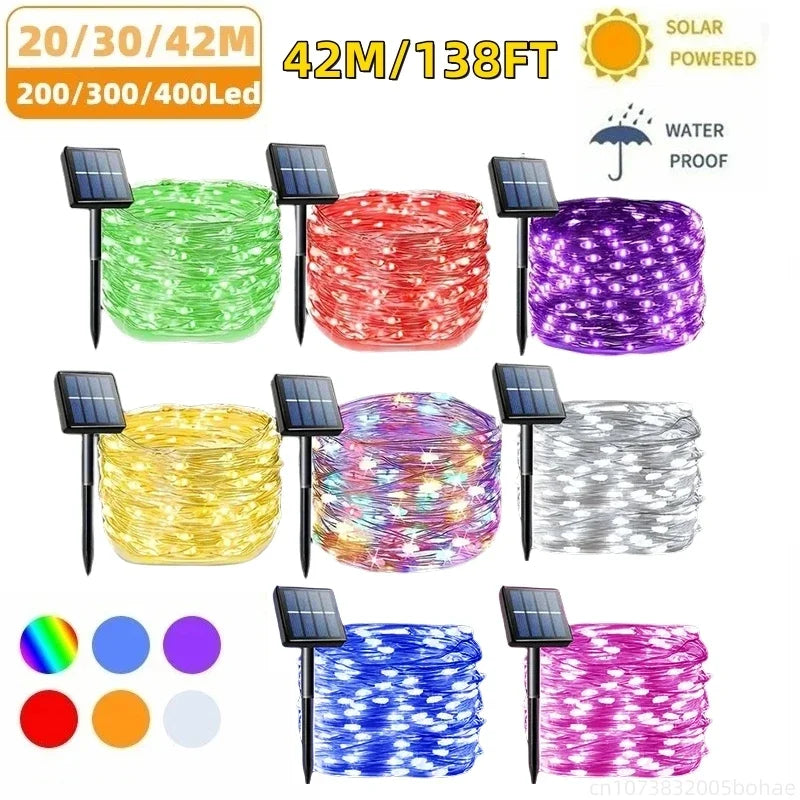
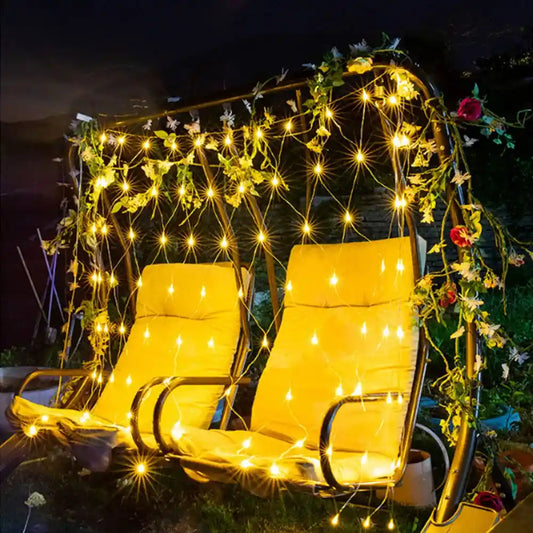
Solar Fairy String Lights, LED Solar Outdoor String Lights For Garden Decoration
Solar lights combine a PV panel, rechargeable battery, LED(s), controller and sometimes a motion or dusk/dawn sensor.
Look for panel wattage, battery capacity, lumen output, run time and IP rating when evaluating models.
- Solar panel: converts sunlight to electricity; rated in watts (typically 0.5–5 W for décor lights).
- Battery: usually NiMH or Li-ion (mAh); capacity determines nightly run time.
- LEDs: measure brightness in lumens (not watts); color temperature in Kelvin (warm 2700–3000 K recommended for décor).
- Controller: charge controller and sensor that prevents over‑discharge and enables dusk‑to‑dawn operation.
Key metrics to compare:
- Nominal lumen output (useful brightness measure).
- Battery capacity (mAh) and chemistry — LiFePO4 or Li-ion hold charge better than older NiMH.
- IP rating (IP65–IP67 for reliable outdoor exposure).
- Solar panel rating and expected full-charge time under standard test conditions (STC).
Durability features to prioritize: materials, ratings and replaceable parts

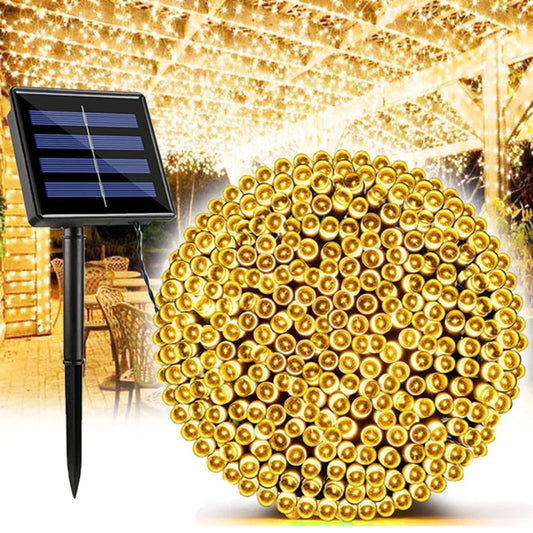
1/2/4PCS Led Crystal Globe Lights Solar String Lights Outdoor with 8 Modes Waterproof
Durability depends on material choice, water ingress protection, UV resistance, and whether batteries or bulbs can be replaced.
Choose fixtures with corrosion-resistant hardware, high IP ratings, and replaceable batteries to extend life.
- Housing material: powder-coated aluminum, marine-grade stainless steel, or UV-stabilized polycarbonate resist corrosion and fading.
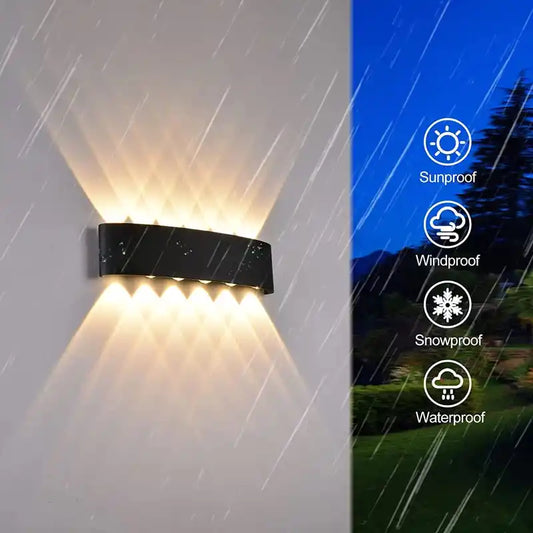
- IP rating: IP65 resists jets of water; IP67 survives temporary immersion — aim for IP65+ in exposed areas.
- Seals and gaskets: look for silicone or EPDM rubber seals and covered connections.
- Serviceability: replaceable batteries and modular LEDs lower lifetime cost and waste.
Best solar light types for specific outdoor uses
Match the fixture type to the use-case: atmospheric string lights, durable globe bulbs, path stakes, or spot fixtures for accenting architecture.
Each type has trade-offs in brightness, coverage, and durability.
- String lights (decorative): ideal for patios, pergolas and events; choose thick-gauge wiring and weatherproof sockets.
- Globe string lights: larger bulbs for vintage looks; ensure shatterproof materials for wind-exposed areas.
- Pathway stakes: low to medium brightness, focused on ground-level guidance and safety.
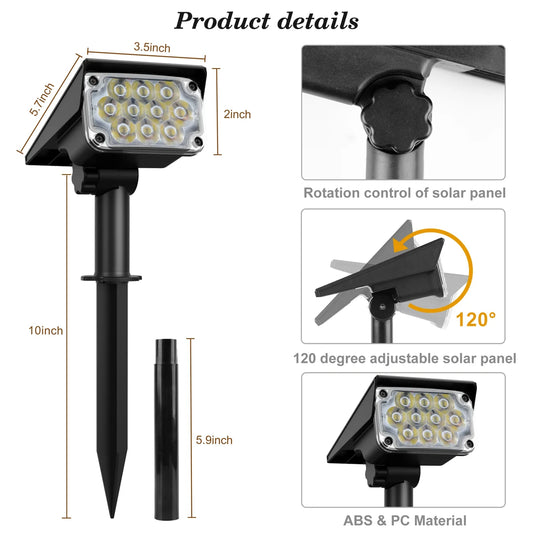
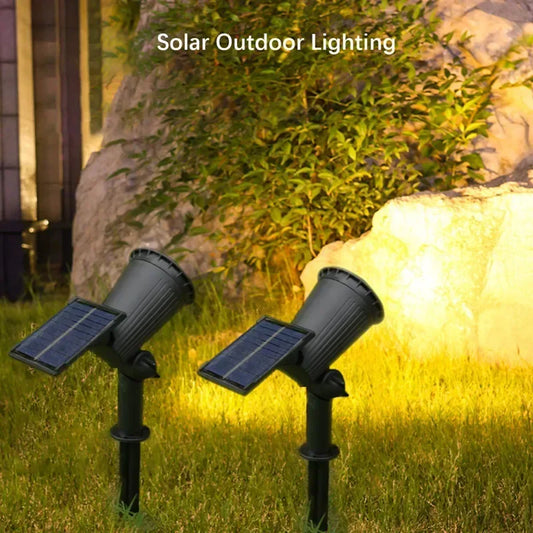
- Solar spot/flood fixtures: higher lumen output for highlighting trees, facades or steps; require larger panels and batteries.
Top durable solar outdoor lights by category (recommended features and examples)
This table compares categories and example features; choose by mounting style, brightness need and maintenance preference.
| Category | Typical Use | Typical Brightness | Battery / Panel | Durability Notes | Best for |
|---|---|---|---|---|---|
| Decorative string lights | Patios, pergolas, arbor | 200–1,000 lumens total | 800–3,000 mAh; 0.5–2 W panel | Weatherproof wiring; replaceable bulbs ideal | Ambience lighting with easy install |
| Globe bulbs (shatterproof) | Dining areas, walkways | 400–1,200 lumens | 1,200–4,000 mAh; 1–3 W panel | UV-resistant globe; reinforced sockets | Stylish, larger light points |
| Pathway stakes | Walkways, flower beds | 30–200 lumens each | 300–1,500 mAh per stake; shared panel options | Low profile; water-resistant seals | Safety and small-scale lighting |
| Spot/flood fixtures | Accent trees, signs, facades | 300–3,000 lumens | 2,000–10,000 mAh; 2–10 W panel | Heavier-duty mounting; heat dissipation | High-impact accent lighting |
Representative models vary by market. When shopping, seek models that list lumen output, battery specs, IP rating, and whether batteries are user‑replaceable.
🌟 "We swapped our wired patio lights for solar string lights last summer — set up in 20 minutes and they stayed bright through cloudy weeks. Replacing the battery in year three was straightforward." — neighborhood lighting forum
Installation and placement for maximum performance
Proper placement determines run time and brightness more than brand alone; position panels for full sun and test run times after install.
Follow these steps for reliable performance:
- Site the solar panel with southern exposure (northern hemisphere) and avoid shade for best charging.
- Mount panels at an angle equal to your latitude for year-round performance, or slightly steeper for winter retention.
- Keep panels clean — dust and pollen can reduce output 10–25% or more over time.
- Attach strings to sturdy anchors with weather-rated clips or grommets to prevent wind damage.
Placement tips:
- Avoid under dense tree canopy; even dappled shade reduces battery charge significantly.
- If fixtures dim early, test running on a clear day to confirm system charging and battery health.
- For longer run time, use multiple panels or a larger panel unit shared among fixtures.
Maintenance, troubleshooting and lifecycle expectations
Solar décor requires minimal maintenance: periodic cleaning, battery checks and winter storage or protection as needed.
Expect 3–8 years of good service for consumer-grade units; higher-end units with replaceable Li-ion batteries and robust enclosures can last 8–12+ years.
- Routine: clean panels every 3 months, inspect seals annually, and replace batteries when capacity drops below ~50%.
- Battery life: rechargeable batteries typically last 500–1,500 cycles depending on chemistry and temperature exposure.
- Common problems: dimming (usually battery aging or shading), flicker (loose connections), or failure to turn on (sensor fault or dead battery).
Troubleshooting checklist:
- Confirm panel gets 4+ hours direct sun; relocate if necessary.
- Test battery voltage and replace if below spec.
- Inspect wiring and connectors for corrosion; clean with contact cleaner and apply dielectric grease.
- Reset the controller (many units have an on/off switch or reset button) and test on a sunny day.
Cost, energy savings and environmental impact
Solar decorative lights lower grid electricity use but return on investment depends on fixture cost, durability, and local electricity prices.
Solar fixtures typically lower lifecycle emissions compared with continuously powered grid LED lighting, especially when batteries and panels are long‑lasting and recyclable.
- Operational cost savings are modest for low-wattage décor: a 10 W equivalent LED on mains for 4 hours nightly consumes ~14.6 kWh/year.
- At $0.15/kWh, that’s roughly $2.20/year saved per 10 W installation — savings accumulate if many fixtures are replaced.
Environmental and policy context:
- U.S. Department of Energy provides guidance on solar PV performance and benefits: energy.gov: Solar Photovoltaic Basics.
- National Renewable Energy Laboratory researches PV performance and degradation; consult NREL for panel longevity and best practices: nrel.gov.
Buying checklist and final recommendations
Use this checklist to select resilient, high‑value solar string lights and fixtures for outdoor décor.
- Brightness listed in lumens and rated run time under typical conditions.
- Battery chemistry (prefer LiFePO4 or high-grade Li-ion for longevity) and replaceability.
- IP rating ≥ IP65 for exposed installations; IP67 for immersion risk.
- Warranty of at least 2 years for consumer units; longer for premium fixtures.
- Manufacturer transparency about panel wattage, battery capacity and expected cycles.
Final recommendation: invest a bit more in a unit with a replaceable battery and an IP65+ rating. That upfront cost reduces replacement frequency and waste, making solar décor both durable and economical.
Further reading & resources
- Energy.gov — Solar Photovoltaic Basics: https://www.energy.gov/eere/solar/articles/solar-photovoltaic-basics
- National Renewable Energy Laboratory (NREL) — Solar Research and Data: https://www.nrel.gov/
Frequently asked questions (FAQs)
Can solar string lights work in cloudy or northern climates?
Yes, but performance depends on panel size and battery capacity. In consistently cloudy or high-latitude locations select larger panels, higher-capacity batteries, and Li-based chemistry to retain charge through shorter daylight periods.
How long do solar light batteries typically last and can I replace them?
Rechargeable battery life varies: NiMH ~2–4 years, Li-ion/LiFePO4 often 4–8+ years depending on cycles and temperature. Prefer models with user-replaceable battery packs and check manufacturer specifications before buying.
Are IP ratings important for string lights hung under a pergola?
Yes. Even under cover, fixtures can be exposed to wind-driven rain and humidity. Aim for IP65 or higher for long-term durability; covered areas may tolerate lower ratings but risk corrosion over time.
Will solar lights attract insects?
White and cooler (higher Kelvin) LEDs attract more insects. Choose warm white LEDs (2700–3000 K) and shielded bulbs to reduce attraction if insects are a concern.
Can I mix solar and wired lights in one display?
Mixing is possible but keep control systems separate. Solar units have independent controllers and batteries; avoid tying them into the same circuit as wired lights unless using a professionally designed hybrid controller.
Related Articles:
- Key Factors for Choosing Solar Light Batteries
- Top 5 Outdoor Solar Lights for 2025
- The Complete Christmas Lights Buying Guide
- Which Christmas Lights Are Best?
- When Is the Best Time to Hang Christmas Lights?
- How to Choose and Use Christmas Light Clips?
- Fairy Lights: Guide to Creating Magical Spaces
- Solar String Lights: Everything You Need to Know
- How to Store Holiday Decorations Quickly and Efficiently














 />
/>
 />
/>
 />
/>
 />
/>
 />
/>