

Best Bedside Reading Lights for Different Sleep Styles (Shift Workers, Seniors, and Night Readers)
Table of Contents
- How sleep styles change bedside light needs
- Key features to prioritize when choosing a bedside reading light
- Best bedside lights for shift workers
- Best bedside lights for seniors
- Best bedside lights for night readers
- Side-by-side comparison of recommended bedside lights
- Mounting, placement, and installation tips
- Health, circadian impact, and the research
- How to measure, choose, and maintain your bedside light
- Limitations, trade-offs, and recommended next steps
- Frequently asked questions
How sleep styles change bedside light needs
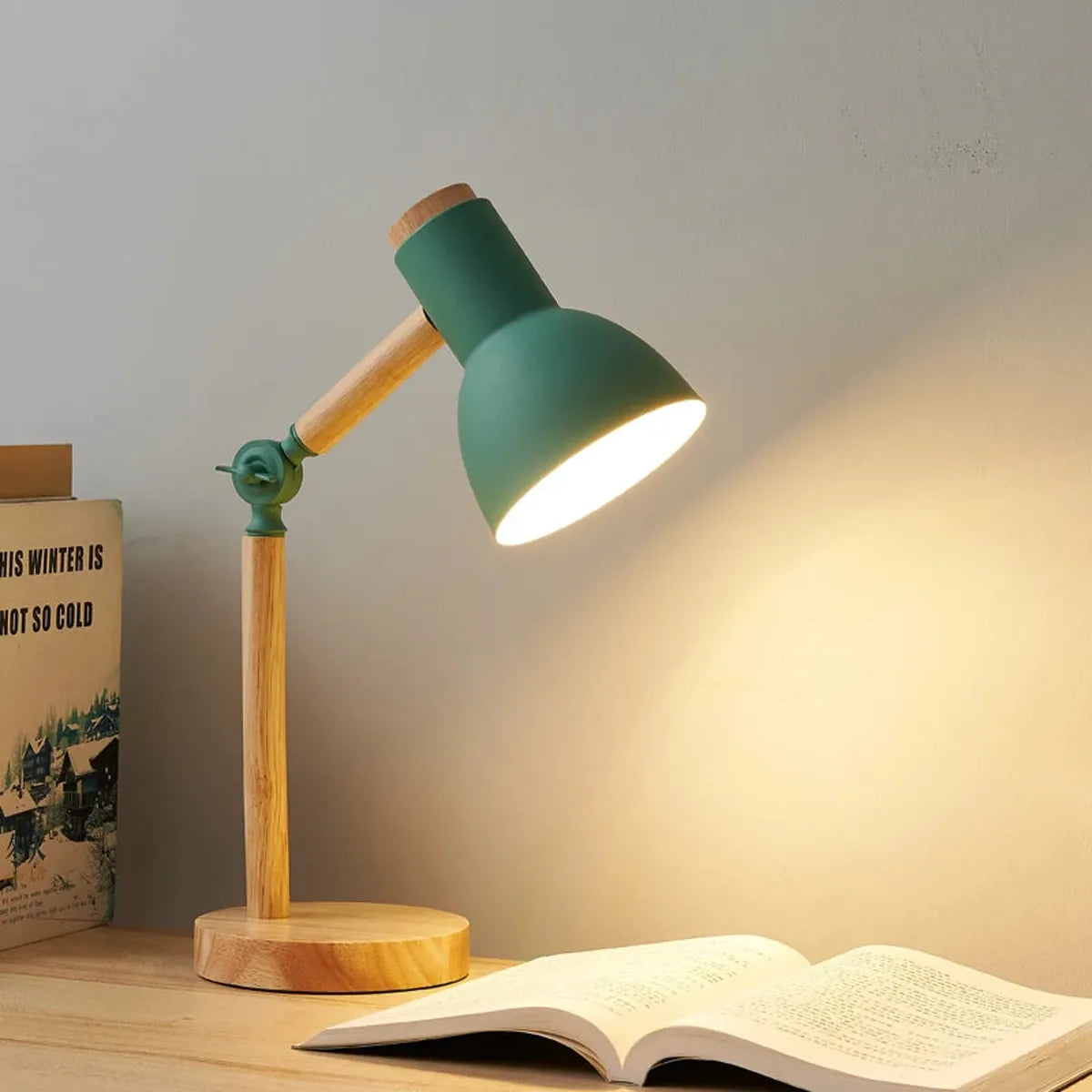
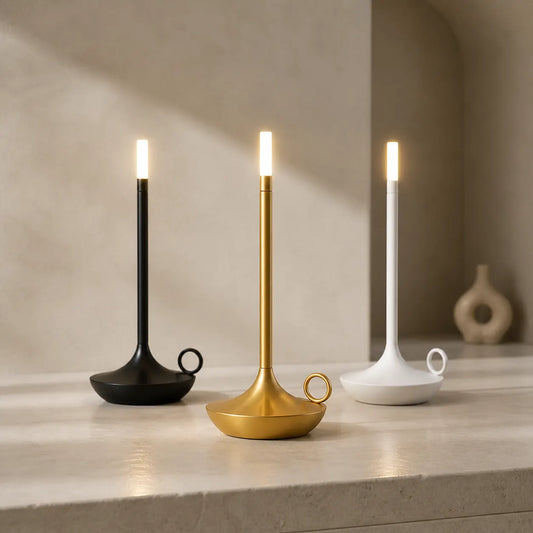
Creative Nordic Table Lamp for personalized sleep lighting
Different sleep schedules and sensory needs create distinct bedside-lighting requirements for comfort, safety, and circadian health. Match light type, color temperature, and control options to whether you work nights, need senior-friendly features, or love late-night reading.
Key features to prioritize when choosing a bedside reading light
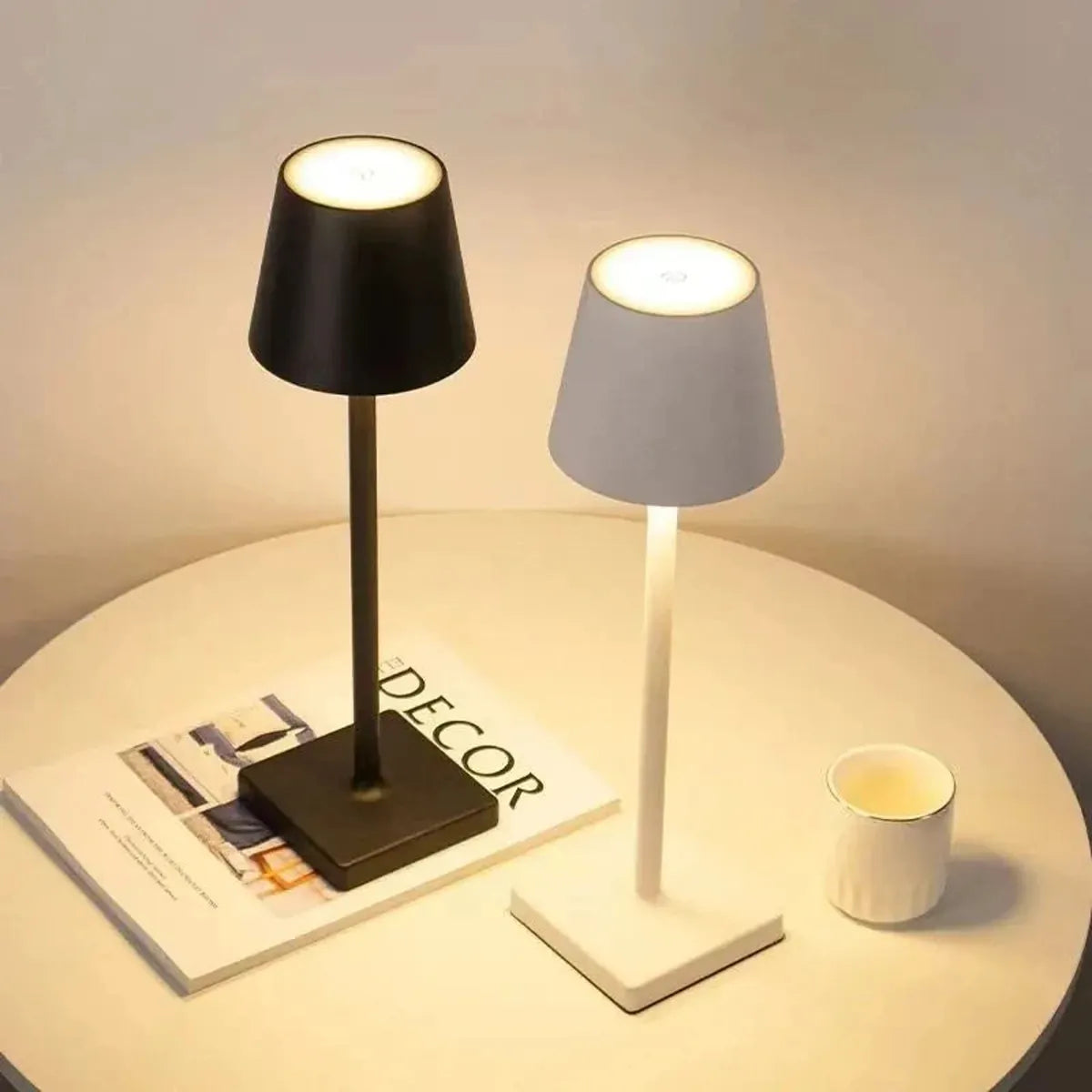
LED Desk Lamp Usb Rechargeable Bar Ambiance Table Lamp Wireless Touch Lamps
Focus on brightness control, color temperature, mounting, and safety—these features directly affect sleep quality and usability. Prioritize adjustable color (warm to cool), smooth dimming, and easy controls.
- Color temperature (Kelvin): 2200K–3000K is warm and sleep-friendly; 3000K–4000K is neutral for tasks; >4000K is bluish and alerting.
- Dimming range & smoothness: Fine-grain dimming (not just three steps) helps you dial in comfort without sudden flashes.
- CRI (Color Rendering Index): CRI ≥ 90 helps seniors and readers see contrast and color accurately—useful for reading small print or medication labels.
- Mounting & reach: Clamp, swing-arm, wall, or table options affect ergonomics and night safety.
- Controls: Physical switches, touch, rotary dimmers, or smart-home integration—choose what you can operate easily in low light.
- Power & redundancy: Battery or rechargeable options protect against outages; hardwired or plug-in offers continuous power.
💡 Prioritize energy-efficient, reliable, and stylish lighting for your bedside table. Lumaz LED lights offer smarter, brighter solutions for the perfect read.
Best bedside lights for shift workers
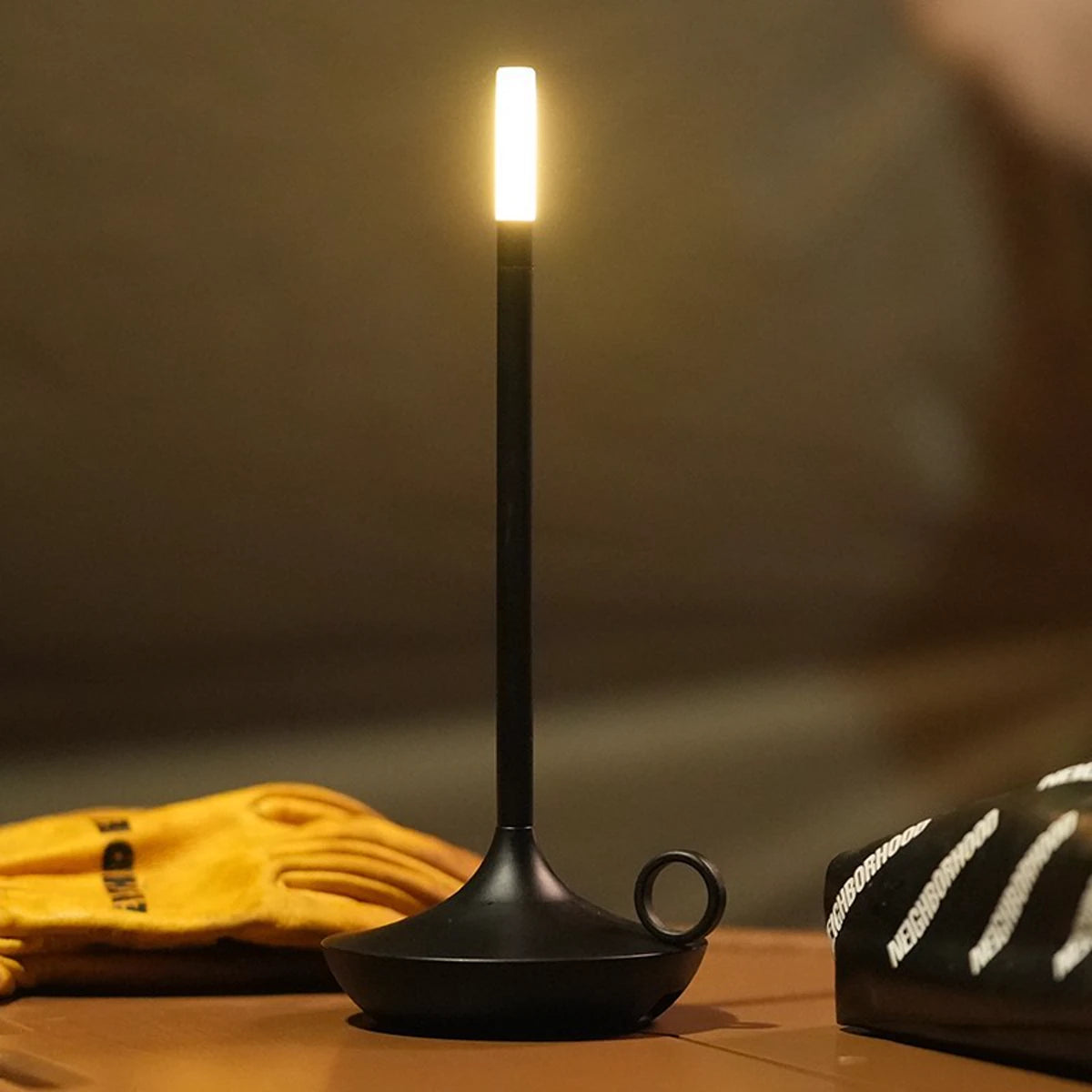
LED Candlelight Table Lamp with USB Charging Touch Night Light
Shift workers need lights that minimize circadian disruption and support quick transitions between sleep and wake. Use warm/red modes for pre-sleep and brighter cool light when alertness is required.
Practical recommendations:
- Choose lamps with a very warm low setting (≤2,700K) or explicit red/night modes to avoid suppressing melatonin before sleep.
- Use smart bulbs or fixtures that schedule color-temperature changes (warm for sleep prep, cooler for work-readiness).
- Consider blackout curtains and a dedicated red/orange bedside lamp for middle-of-night check-ins—red light is less disruptive to circadian rhythms than blue light.
Why this matters: research shows short-wavelength (blue) light shifts circadian timing and suppresses melatonin, so avoiding blue light close to intended sleep helps daytime sleepers (shift workers) wind down more effectively (NIH: Circadian Rhythms).
Best bedside lights for seniors
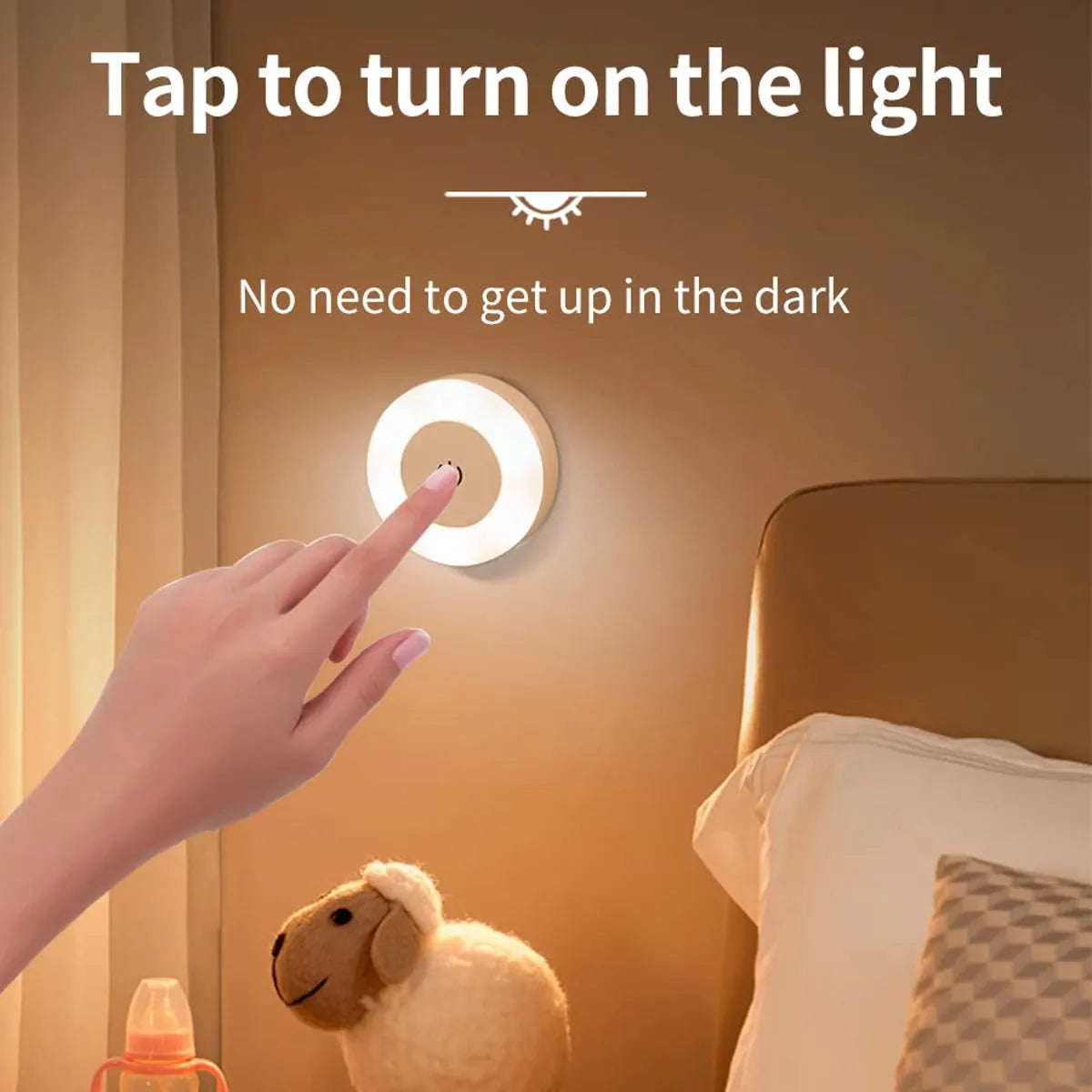
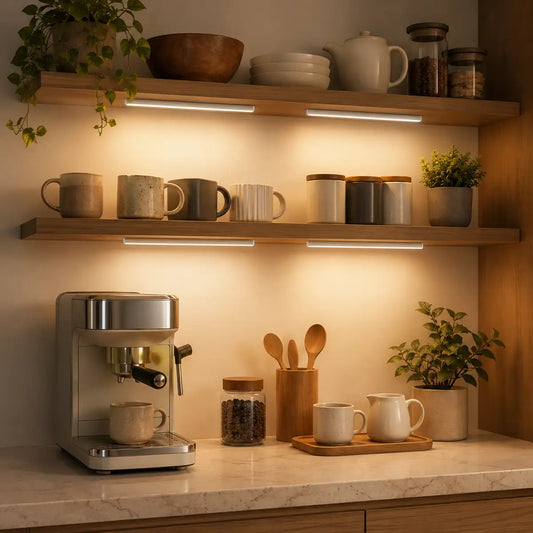
Touch Switch Dimmable LED Puck Lights Rechargeable Night Light with Magnetic
Seniors benefit from high-CRI, glare-controlled lamps with easy-to-use controls and safety features; adequate lumen output improves contrast and reduces fall risk at night.
Design and safety priorities for older adults:
- High CRI (≥90): Improves color/contrast for reading labels and medication guides.
- Anti-glare design & adjustable head: Reduces eye strain and prevents direct light in the eyes.
- Large, tactile controls: Big knobs or remote controls are easier to operate for limited dexterity.
- Nightlight mode: Low-lumen (5–30 lm) warm nightlight for safe trips to the bathroom without fully awakening.
Recommended lamp categories:
- High-CRI LED table lamps or swing-arm lamps (for adjustable task light).
- Floor lamps with large base and integrated dimmer for bedside reading and ambient illumination.
- Battery-backed or rechargeable lights to avoid tripping over cords during late-night use.
Best bedside lights for night readers
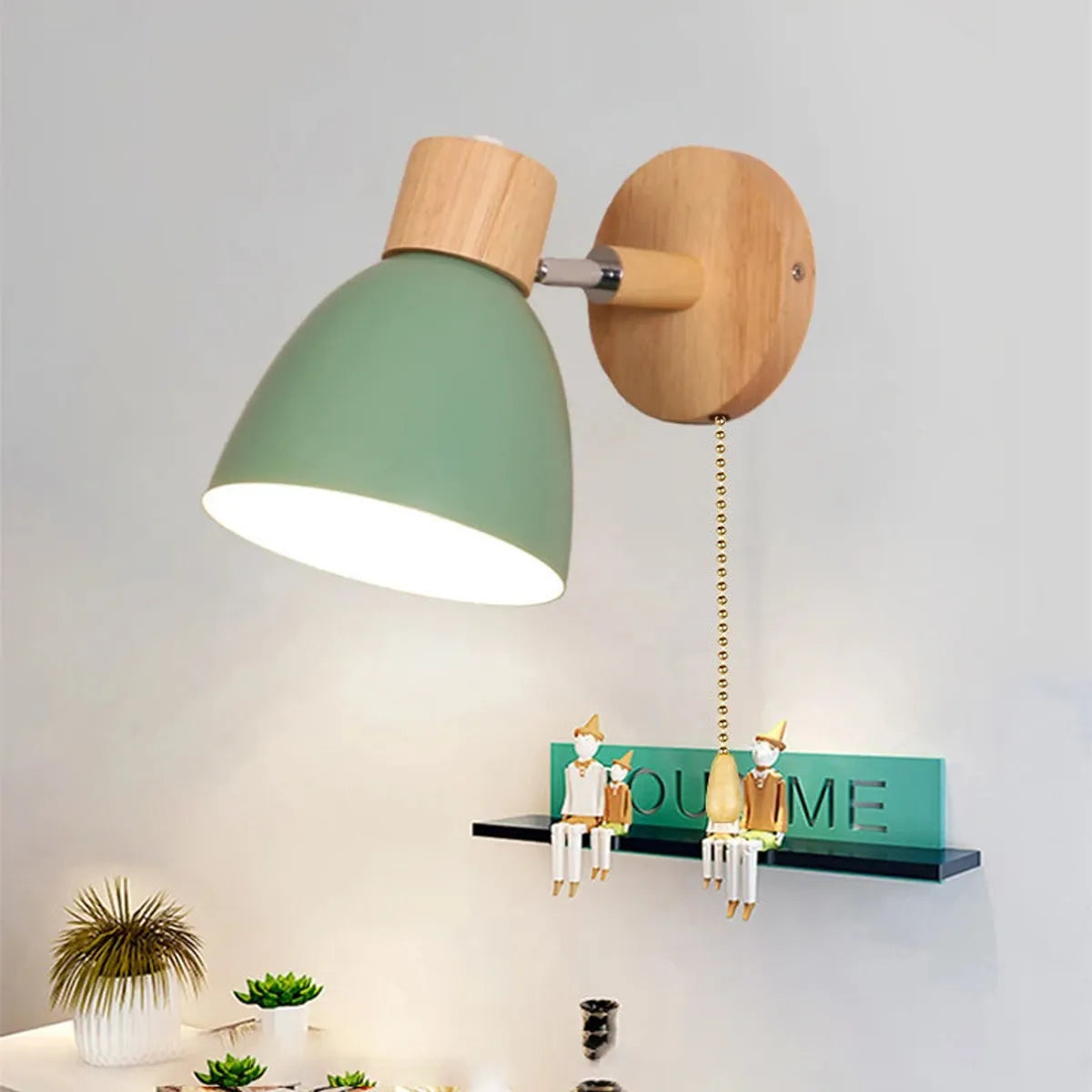
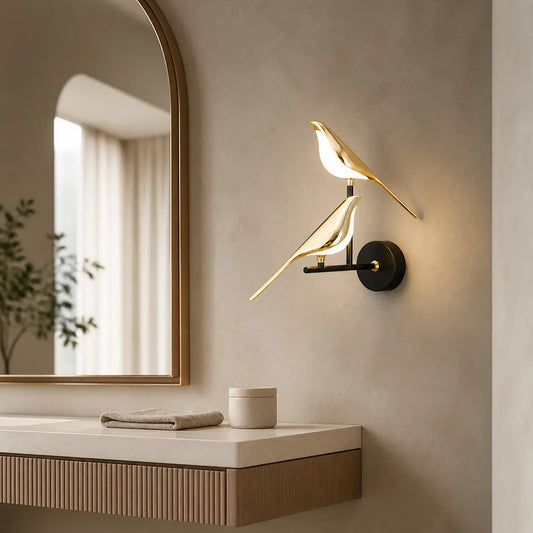
Wooden Nordic Wall Lamp With Switch Modern Wall Sconce with Macaroon Color Steering Head
For people who read for pleasure at night, the ideal lamp provides focused, flicker-free light, a wide dimming range, and a warm color temperature to preserve sleep readiness.
Practical setup tips for long reading sessions:
- Place the light so it illuminates the page without lighting the whole room—a directed beam reduces blue-light spill.
- Choose 2,000–3,000K color temperature for minimal circadian impact while keeping text clear.
- Use lamps with high CRI to prevent color distortion and improve contrast of black text on white pages.
📚 "I switched to a warm, dimmable clip lamp and my late-night reading no longer ruins my sleep schedule—less wakefulness the next morning." — Community reviewer
Side-by-side comparison of recommended bedside lights
Quick comparative table to match common user needs (shift workers, seniors, night readers) with lamp features and practical strengths.
| Model / Type | Best for | Color Temp Range | Controls | Mounting | Notable feature |
|---|---|---|---|---|---|
| Smart White Ambiance + bedside fixture (e.g., Philips Hue ecosystem) | Shift workers, night readers | 2200K–6500K | App, voice, dimmer | Table / wall | Schedules color temp to support sleep/wake |
| High-CRI LED swing-arm lamp (e.g., OttLite-style) | Seniors, detailed reading | 3000K–4000K | Rotary or tactile switch | Clamp / table | CRI ≥ 90 for better contrast |
| Warm-dimmable clip lamp / rechargeable (e.g., Anker/TaoTronics clip) | Night readers, travel | 2200K–4000K | Touch or button dimming | Clip/portable | Rechargeable for outages |
| Red/night-mode bedside lamp (low blue) | Shift workers, middle-of-night check-ins | Emits red/orange only | Simple switch | Table | Minimizes melatonin suppression |
Mounting, placement, and installation tips
Correct lamp placement and mounting ensure usable light where you need it and reduce unwanted glare or tripping hazards. Position for page illumination and safe navigation.
- Reading position: Aim for 300–500 lux on the page at typical reading distance (30–40 cm). Use a lux meter app or handheld lux meter for verification.
- Clamp and swing-arm lamps: Mount 10–20 inches above the reading surface, angled to avoid shining in the eyes.
- Wall-mounted swing arms: Install so the light can be pushed out of the way and provides an unobstructed path to the bed.
- Power routing: Keep cords tucked and secured to reduce fall risk; prefer USB-powered lamps for tidy cable management.
Quick installation checklist:
- Measure reach and ensure arm covers reading zone.
- Confirm plug orientation and space for dimmer/remote.
- Test at night to evaluate glare and brightness at low settings.
Health, circadian impact, and the research
Light timing, intensity, and spectrum strongly influence circadian rhythms; avoiding blue-rich light before sleep helps melatonin production and sleep onset.
Key evidence and guidance:
- The National Institutes of Health explains how circadian rhythms are synchronized by light exposure, emphasizing timing as a primary cue (NIH: Circadian Rhythms).
- Harvard Medical School notes that blue wavelengths suppress melatonin more strongly than longer wavelengths, supporting the use of warm light at night (Harvard Health: Blue light has a dark side).
Practical takeaways:
- Use warm (≤3000K) bedside lighting for at least 30–60 minutes before desired sleep to support melatonin production.
- Use bright, cool lighting when you need alertness (for some shift workers, that might be daytime sleep offset), but avoid exposing the face to blue light right before bed.
- For unavoidable night-shifts, consider wearing blue-blocking glasses during pre-sleep wind-down and using a red-tone night lamp for middle-of-sleep checks.
How to measure, choose, and maintain your bedside light
Choose by matching measurable metrics—lumens, Kelvin, CRI, lux at reading distance—and maintain for hygiene and longevity. Test before committing.
Metrics to compare
Use these measurable attributes when shopping or testing lamps.
- Lumens: Overall light output—150–800 lm is typical for bedside lamps; aim for 300–500 lm for comfortable reading.
- Lux: Illuminance at the page—target 300–500 lux for sustained reading; consult lamp specs or measure directly.
- Color Temperature: Choose 2200–3000K for evening comfort; 3000–4000K for task reading.
- CRI: CRI ≥ 90 recommended for seniors or tasks requiring color accuracy.
Step-by-step selection process
- Define primary use: reading, wakefulness for shift work, or nighttime safety.
- Prioritize controls and mounting type consistent with mobility and dexterity.
- Test the lamp in your bedroom during intended use hours—pay attention to glare and color spill.
- Measure lux on your reading surface if possible; adjust placement or choose a different lamp if readings are too low/high.
Maintenance tips
- Clean LED surfaces with a dry microfiber cloth; avoid liquids on electronics.
- Replace bulbs per manufacturer guidance; some integrated LEDs have long life but no replaceable bulb.
- Check rechargeable battery health annually for portable lamps and replace when capacity drops noticeably.
Limitations, trade-offs, and recommended next steps
No single lamp solves every need—trade-offs exist between portability, color control, CRI, and cost. Choose the lamp that prioritizes your highest needs first.
Common trade-offs:
- Smart bulbs offer scheduling and color control but are typically more expensive and rely on firmware ecosystems.
- High-CRI fixtures are excellent for seniors and tasks but may have fewer warm/red-only modes.
- Rechargeable portable lamps are flexible but may not deliver continuous high-lumen output for long reading sessions.
Recommended next steps:
- If you’re a shift worker, start with a warm/red bedside lamp and consider smart scheduling for shift-based color changes.
- Seniors should prioritize high-CRI, anti-glare fixtures with large tactile controls and a nightlight mode.
- Night readers should test warm-dimmable lamps (2,200–3,000K) to minimize sleep disruption while keeping text sharp.
References & further reading
Frequently asked questions
Can I just use a smart bulb to make my current lamp sleep-friendly?
Yes—replacing a standard bulb with a tunable white or warm-dimmable smart bulb is a cost-effective way to add color-temperature control and scheduling. Ensure the lamp fixture can dissipate heat for the bulb and check whether the bulb’s minimum dim level is low enough for your sleep preferences.
Are red night lights really better for middle-of-night awakenings?
Red/orange light emits little to no short-wavelength (blue) light, which suppresses melatonin less than white/blue light. For quick tasks like checking the time or attending to a child, red light is less disruptive to sleep than bright white light.
What brightness should seniors use for bedside reading vs. ambient night lighting?
For reading, aim for 300–500 lux at the page. For ambient night lighting, 5–30 lumens (very low) is usually sufficient to navigate safely without fully waking the person.
Is a rechargeable clip-on lamp enough for long night reading sessions?
Rechargeable clip-on lamps are convenient and portable; many provide sufficient lumen output for short to medium reading sessions. For long sessions, check battery runtime at your preferred brightness—if runtime is short, consider a plug-in or higher-capacity rechargeable model.
How do I test if a lamp will disrupt my sleep?
Try a one-week test: use the lamp in the same way you intend to, and track sleep onset time and morning alertness. Also, use warm settings for 30–60 minutes before bed and avoid blue-rich light within an hour of sleep. For objective measures, use wearable sleep trackers or a sleep diary to detect changes.
Related Articles:
- The Ultimate Guide to Bedroom Lights
-
LED Bedroom Lights vs Incandescent: Efficiency
- Floor Lamps vs. Ceiling Lights for Bedroom: Which is Better?
- Smart Bedroom Lights vs. Traditional Bedroom Lights
- LED Strip Lights vs. Fairy Lights for Bedroom Decoration
- Top Bedroom Lighting Trends for 2025
- Soft White vs Daylight Bulbs: Key Differences
- Top 7 Statement Lighting Ideas for Bedrooms 2025














 />
/>
 />
/>
 />
/>
 />
/>
 />
/>