

Arbeitsplatzbeleuchtung unter Schränken vs. Umgebungsbeleuchtung: Worin liegt der Unterschied?
Inhaltsverzeichnis
- Einleitung – Die Rolle von Arbeits- und Umgebungsbeleuchtung in Unterbauschränken verstehen
- Was ist Arbeitsplatzbeleuchtung?
- Was ist Umgebungsbeleuchtung?
- Vergleich von Arbeitsplatzbeleuchtung und Umgebungsbeleuchtung: Wie man beides für eine optimale Beleuchtung nutzt
- Die besten Leuchten für kombinierte Arbeits- und Umgebungsbeleuchtung
- Wie Sie die richtige Kombination aus Arbeits- und Umgebungsbeleuchtung basierend auf Ihrer Raumaufteilung auswählen
- Häufig gestellte Fragen
- Fazit: Die richtige Balance zwischen Arbeits- und Umgebungsbeleuchtung für Ihren idealen Raum
Einleitung – Die Rolle von Arbeits- und Umgebungsbeleuchtung in Unterbauschränken verstehen
Die Beleuchtung unter Küchenschränken basiert auf zwei unterschiedlichen Ebenen: Arbeitsbeleuchtung für präzises Arbeiten und Umgebungsbeleuchtung für mehr Komfort. Die Kombination beider Elemente verbessert die Sicht, reduziert Blendung und schafft ein harmonisches Gesamtbild in Vorbereitungs-, Koch- und Essbereichen.
Aus der Entfernung von einer Armlänge verstärken sich kleine Sehfehler. Gezielte Arbeitsplatzbeleuchtung sorgt für die nötige Helligkeit und optische Klarheit zum Schneiden, Messen und Lesen von Etiketten. Umgebungsbeleuchtung umgibt den Arbeitsbereich mit weichem, gleichmäßigem Licht, um Kontraste zu regulieren und eine ruhige und angenehme Atmosphäre zu schaffen.
Warum diese Unterscheidung wichtig ist
- Arbeitsleuchten lösen alle Anforderungen an Detailgenauigkeit und Sicherheit direkt auf der Arbeitsfläche.
- Ambientebeleuchtung sorgt für allgemeinen Komfort, Stimmung und räumliche Kontinuität.
- Durch die Schichtung wird die Helligkeit dort gehalten, wo sie benötigt wird, während gleichzeitig harte Hotspots an anderen Stellen vermieden werden.
Was ist Arbeitsplatzbeleuchtung?
Die Arbeitsplatzbeleuchtung ist hell, regulierbar und auf die Arbeitsfläche gerichtet. In Küchen und an Schreibtischen sorgt sie für die nötige Helligkeit bei präzisen Arbeiten, ohne den Raum übermäßig auszuleuchten.
Hauptmerkmale der Arbeitsplatzbeleuchtung
Eine effektive Arbeitsplatzbeleuchtung setzt eine messbare Lichtleistung und eine optische Steuerung voraus, die für Arbeiten im Nahbereich geeignet sind.
- Zielbeleuchtungsstärke: 30–50 Footcandles auf der Arbeitsfläche für sicheres Schneiden und Lesen.
- Optik: Frontgerichtete Streuung zur Minimierung von Punktbildung und spiegelnder Blendung auf Steinoberflächen.
- Farbqualität: CRI ≥ 90 für eine präzise Farbwiedergabe von Lebensmitteln und eine verbesserte Kontrastwahrnehmung.
- Stabilität: geringes Flimmern und sanftes Dimmen für Komfort bei langen Vorbereitungsphasen.
- Gleichmäßigkeit: Anstreben eines Hell-Dunkel-Verhältnisses von ≤ 3:1 über die gesamte Aufgabenzone.
Die besten Leuchten für Arbeitsplatzbeleuchtung
Die Arbeitsflächen unter den Schränken sollten flach und durchgehend sein, um Lücken und Schattenstreifen zu vermeiden.
- Lineare LED-Leisten mit integrierten Diffusoren für eine gleichmäßige Ausleuchtung entlang der Schrankfronten.
- Hochdichte LED-Streifen mit Aluminiumprofilen und mattierten Linsen zur Vermeidung von Hotspots.
- Kompakte Pucks für Akzentarbeiten, im Abstand von 8–12 Zoll angeordnet, um helle Flecken zu vermeiden.
- Dimmbare Treiber und lokale Schalter für schnelle Szenenwechsel zwischen Vorbereitung und Abend.
Platzierungsregeln
- Montieren Sie die Lampe 2–3 Zoll von der Vorderseite des Schranks entfernt, um das Licht auf den Arbeitsbereich zu lenken.
- Überbrücken Sie Lücken über Spülbecken und Haushaltsgeräten mit kurzen Segmenten, um die Kontinuität zu wahren.
- Verwenden Sie pro Schrankkasten ein Befestigungselement oder durchgehende Leisten mit Verbindern, um Fugen zu vermeiden.
Was ist Umgebungsbeleuchtung?
Die Ambientebeleuchtung erfüllt den Raum mit sanftem, gleichmäßigem Licht. Sie ist nicht auf eine bestimmte Arbeitsfläche ausgerichtet; ihre Aufgabe ist es, Komfort, Atmosphäre und visuelle Harmonie zu schaffen.
Hauptmerkmale der Umgebungsbeleuchtung
Umgebungslicht reduziert Kontraste und trägt dazu bei, dass der Raum größer und ruhiger wirkt.
- Lichtverteilung: Weite Abstrahlwinkel und indirekte Lichtwege minimieren die Blendwirkung.
- Einheitlichkeit: Angleichung der Farbtemperatur aller Leuchten, um einen „zweifarbigen“ Weißton zu vermeiden.
- Komfort: Geringere Beleuchtungsstärke als in den Arbeitsbereichen, um ein Verhältnis von etwa 2:1 zu gewährleisten.
- Integration: Abstimmung mit Tageslicht und Deckenbeleuchtung zur Vermeidung von Überbeleuchtung.
Die besten Leuchten für stimmungsvolle Beleuchtung
Die Raumbeleuchtung gehört eher zur Raumebene als zur Unterseite der Schränke, muss aber mit der darunterliegenden Arbeitsebene harmonieren.
- Deckenbeleuchtung: Einbau- oder blendfreie Aufbauleuchten mit breitem Lichtkegel.
- Indirekte Akzente: Voutenbeleuchtung, Sockelleuchten oder Regalbeleuchtung sorgen für eine sanfte Lichtverteilung.
- Verteilte LED-Streifen: Sanftes Uplight oder Wandflutung zur Reduzierung von Kontraststreifen.
- Pendelleuchten: Diffuses Licht über den Kücheninseln als Ergänzung zur Arbeitsbeleuchtung unter den Schränken.
Komfortabstimmung
- Um visuelle Dissonanzen zu vermeiden, sollte die Farbtemperatur (CCT) über alle Schichten hinweg angeglichen werden (z. B. 3000–3500K).
- Verwenden Sie die Dimmfunktion, um die Umgebungshelligkeit an die Tageszeit und die jeweilige Aktivität anzupassen.
- Um Glanzreflexe auf glänzenden Oberflächen zu minimieren, sollten matte Linsen und indirekte Lichtwege bevorzugt werden.
- Beachten Sie die Schwankungen des Tageslichts und passen Sie die Abendszenen entsprechend an.
Vergleich von Arbeitsplatzbeleuchtung und Umgebungsbeleuchtung: Wie man beides für eine optimale Beleuchtung nutzt
Arbeitsbeleuchtung und Umgebungsbeleuchtung lösen unterschiedliche Probleme. Arbeitsleuchten ermöglichen präzises Arbeiten an der Arbeitsfläche, während Umgebungsbeleuchtung für eine gleichmäßige Helligkeit und Atmosphäre im Raum sorgt.
Gestaffelte Beleuchtung: Kombination von Arbeits- und Umgebungsbeleuchtung für verschiedene Zonen
Durch die Kombination mehrerer Lagen bleibt die Helligkeit dort erhalten, wo sie wichtig ist, und der Tragekomfort überall sonst.
- Vorbereitungszonen: Höhere Beleuchtungsstärke für den Arbeitsbereich mit neutral-warmem Farbtemperatursystem für optimale Sicht.
- Essbereiche: Gedämpftes Ambiente mit warmen Farbtönen zur Entspannung des Auges.
- Verkehrszonen: Mäßige Umgebungsbeleuchtung zur Lenkung der Bewegung ohne Blendung.
Wichtige Überlegungen zur Gestaltung der Arbeits- und Umgebungsbeleuchtung
- Für einen ausgewogenen Kontrast sollte ein Helligkeitsverhältnis von 2:1 zwischen Arbeits- und Umgebungslicht eingehalten werden.
- Platzieren Sie die Unterbauleuchten nach vorne, um Blendeffekte durch die Küchenrückwand zu vermeiden.
- Sorgen Sie für eine durchgehende Abdeckung entlang der Leitungen; vermeiden Sie Lücken von mehr als 2,5 cm zwischen den Diffusoren.
- Koordiniertes Dimmen, damit Szenen synchron wechseln, ohne dass es zu Farbabweichungen kommt.
Vergleichstabelle
| Aspekt | Arbeitsplatzbeleuchtung | Ambientebeleuchtung |
|---|---|---|
| Hauptzweck | Präzision an der Arbeitsfläche | Komfort und räumliche Kohärenz |
| Typische Beleuchtungsstärke | 30–50 fc auf Theken | 10–20 FC insgesamt |
| Strahl/Optik | Kontrollierte, nach vorne gerichtete Diffusion | Weiträumig, indirekt oder diffus |
| Farbqualität | CRI ≥ 90 | CRI 80–90 |
| Beste Ausstattung | Lineare Stäbe, hochdichte Streifen | Einbauleuchten, Pendelleuchten, Hohlkehlen |
| Bedienelemente | Dimmen, lokale Schalter | Szenendimmung, globale Steuerung |
👨👩👧 „Nachdem wir Arbeitsflächenleisten unter den Küchenschränken mit sanftem Deckenlicht kombiniert haben, wirkt die Küche heller, aber gleichzeitig ruhiger. Die Zubereitung der Speisen ist einfacher, und es gibt abends keine grellen Blendeffekte mehr.“
Informationen zu Effizienz und Kontext der Vorschriften finden Sie in den US-amerikanischen Energiegesetzen des Energieministeriums (US DOE Energy Codes) und im Energy Saver . Informationen zur visuellen Ergonomie finden Sie in Cornell Ergonomics .
Die besten Leuchten für kombinierte Arbeits- und Umgebungsbeleuchtung
Manche Leuchten können je nach Lichtleistung, Optik und Aufstellungsort beide Funktionen erfüllen. Wählen Sie vielseitige Optionen und konfigurieren Sie diese für jede Zone.
Aufgabenorientierte vs. Umgebungsluft in der Küche
Küchen profitieren von durchgehenden Arbeitsleisten unter den Schränken sowie von stimmungsvoller Deckenbeleuchtung oder Pendelleuchten.
- Unterbauleuchten: 300–500 Lumen/Fuß, diffus, 2–3 Zoll vorderer Rücksprung.
- Deckenbeleuchtung: blendfreie Einbauleuchten mit abgestimmter Farbtemperatur (3000–3500K).
- Pendelleuchten über Kücheninseln: diffuses Licht; zusammen mit den Arbeitsleuchten dimmbar zur Szenensteuerung.
- Sockel- oder Regalleuchten: dezente Akzente, um den Kontrast bei Nacht zu verringern.
Aufgabenorientiertes Arbeiten vs. Umgebungsarbeit im Homeoffice
Schreibtische benötigen außerdem eine Arbeitsfläche und eine Klimatisierung, um die Augen zu schonen.
- Aufgabe: Schreibtischleuchten oder verstellbare Lampen mit hohem Farbwiedergabeindex (CRI) und geringem Flimmern.
- Ambientebeleuchtung: indirekte Bodenstrahler oder Deckenleuchten mit breitem Lichtkegel.
- Steuerung: Arbeitsfläche zum Lesen abdunkeln; Umgebungslicht für Bildschirmarbeit reduzieren.
- Farbe: neutral-warm, Farbtemperatur ca. 3000–3500K für ein ausgewogenes Verhältnis von Klarheit und Komfort.
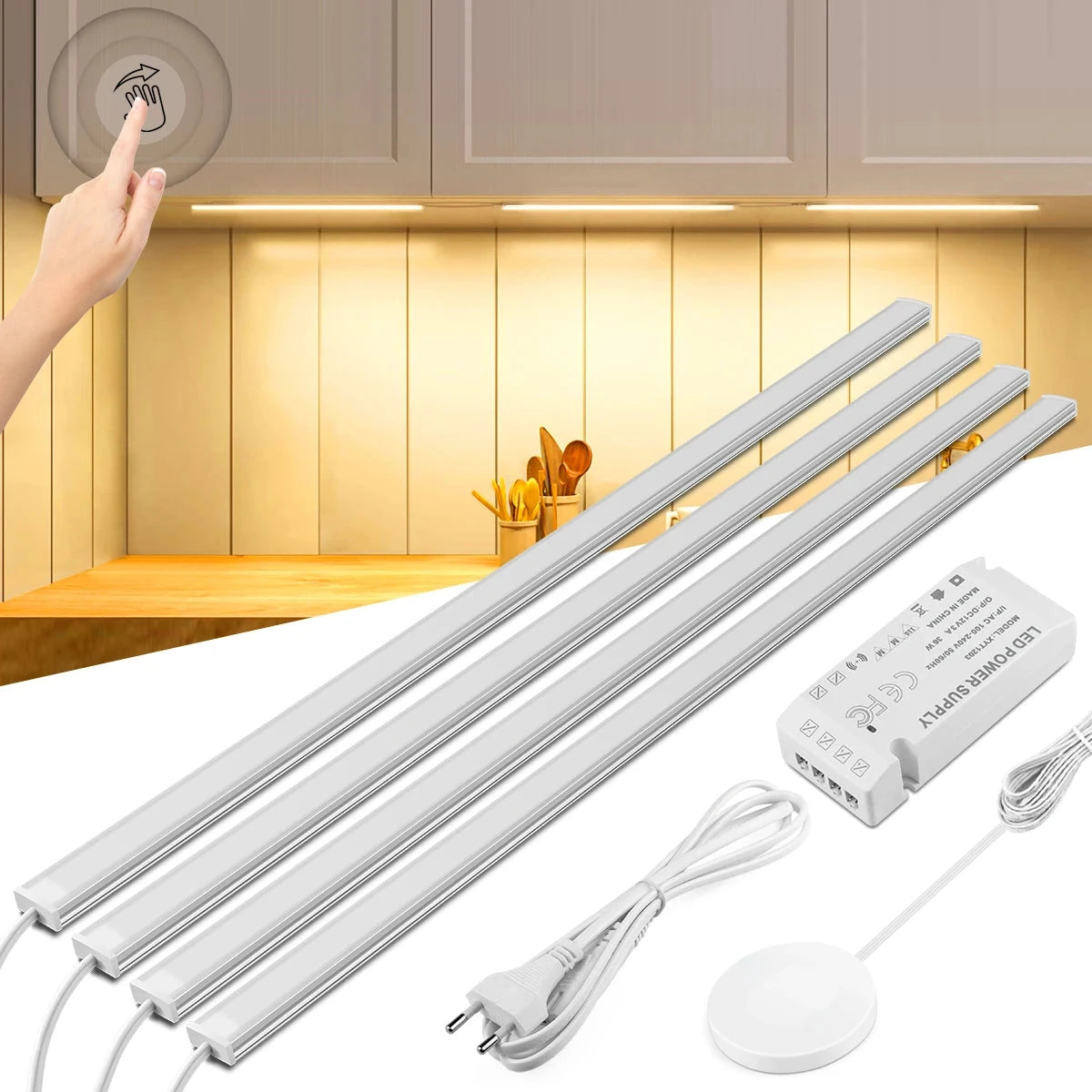
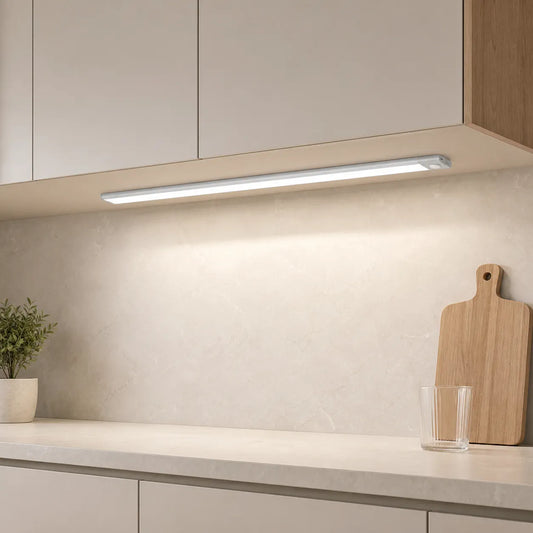
Für eine nahtlose Kombination aus Arbeits- und Umgebungsbeleuchtung bietet die berührungsempfindliche LED-Unterbauleuchte mit Wischsensor ein schlankes, ultradünnes Design, das perfekt unter Küchenschränke passt. Die bohrfreie Installation und der reaktionsschnelle Sensor sorgen für praktisches Arbeitslicht und ein sanftes, stimmungsvolles Licht – ideal für Küchen oder Homeoffices, wo beide Funktionen benötigt werden.
Wie Sie die richtige Kombination aus Arbeits- und Umgebungsbeleuchtung basierend auf Ihrer Raumaufteilung auswählen
Beginnen Sie mit der Zoneneinteilung und den Aktivitäten, anschließend legen Sie Helligkeitsverhältnisse und Lichtverhältnisse fest. Wählen Sie Leuchten und Bedienelemente, die den räumlichen Gegebenheiten und Ihren persönlichen Gewohnheiten entsprechen.
Praktische Tipps zur Beleuchtung verschiedener Zonen
- Zonen definieren: Vorbereitung, Kochen, Spüle, Essbereich, Verkehrswege.
- Zielvorgaben: 30–50 fc für Arbeitszonen; 10–20 fc für Umgebungsluft.
- Wählen Sie die Optik: Diffusionsbalken für Aufgabenbeleuchtung; breites indirektes Licht für Umgebungsbeleuchtung.
- Farbanpassung: 3000–3500K über alle Schichten hinweg; CRI ≥ 90 für die Aufgabe.
- Präzise platzieren: 2–3 Zoll Abstand zur Vorderseite unter den Schränken; Blendung durch die Küchenrückwand vermeiden.
- Für Kontinuität sorgen: Stäbe mit minimalen Lücken verbinden; Senken mit kurzen Segmenten überbrücken.
- Szenen steuern: Dimmer so koppeln, dass sich Aufgaben- und Umgebungslicht gemeinsam anpassen.
- Test bei Nacht: Spiegelungen auf dem Stein prüfen; Dimmung für angenehmes Licht einstellen.
- Dokument: Lichtstromdichte, Leuchtenlängen und Szenenvoreinstellungen beachten.
- Iterieren: Passen Sie die Lichtverteilung an, wenn eine Zone ungleichmäßig oder zu hell erscheint.
💡 Ausgewogene Lichtebenen sparen Energie und erhöhen den Komfort. Mit Lumaz LEDs erhalten Sie intelligente Lichtleistung, harmonisch abgestimmte Farben und stufenloses Dimmen – für eine präzise und gleichzeitig einladende Atmosphäre in jeder Zone.
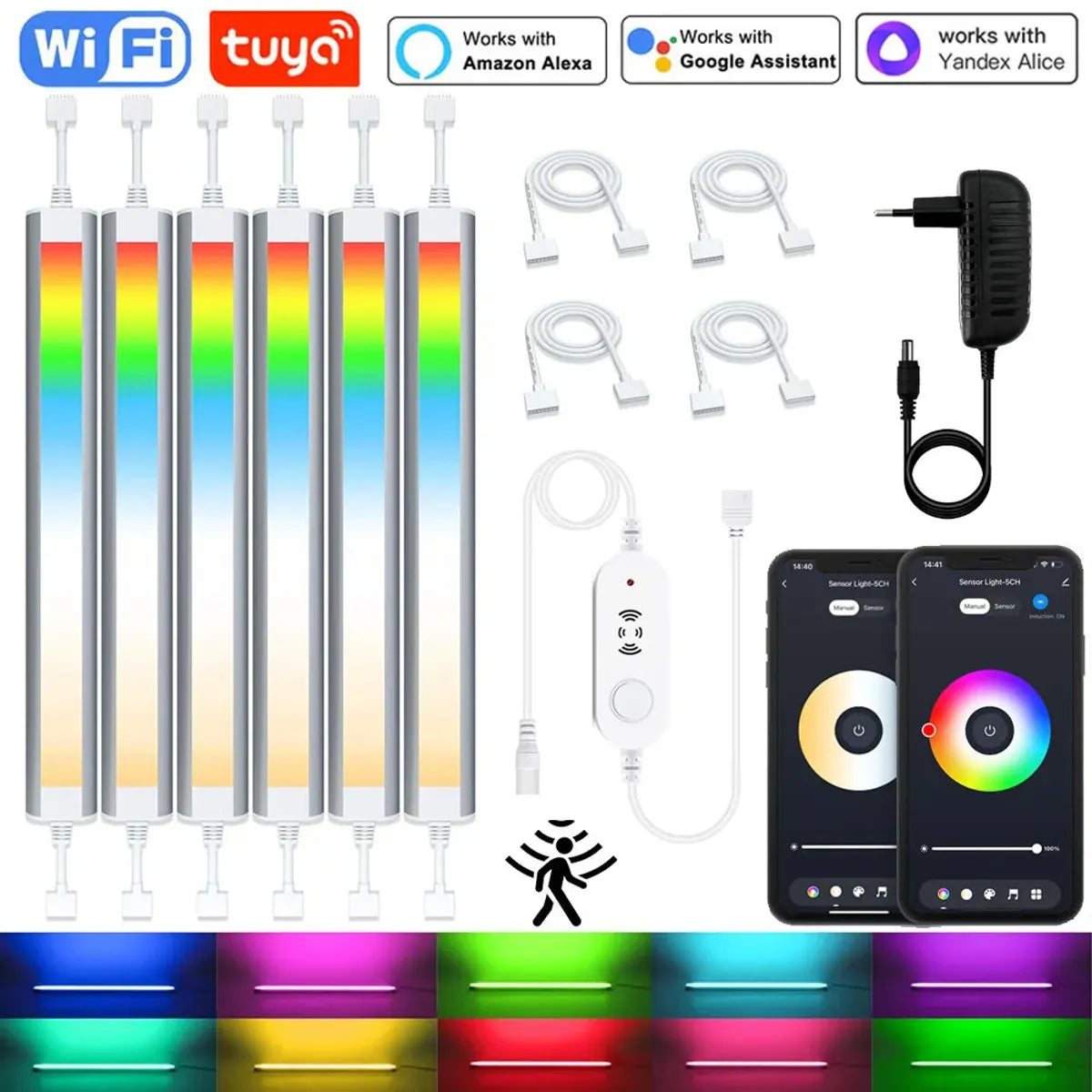
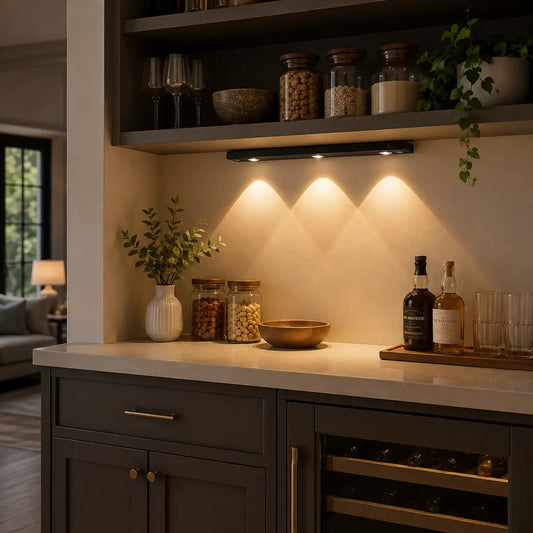
Für Räume, die flexible Beleuchtungslösungen erfordern, bietet die 12V Tuya WiFi LED-Unterbauleuchte die Möglichkeit, sowohl Arbeits- als auch Umgebungsbeleuchtung dank ihrer dimmbaren RGBCCT-Funktion individuell anzupassen. Mit Bewegungssensoren optimiert sie die Beleuchtung optimal an die Raumaufteilung und sorgt so für energieeffizientes Licht, das sich sowohl an Funktionalität als auch an Atmosphäre anpasst.
Häufig gestellte Fragen
Welche Farbtemperatur eignet sich sowohl für die Arbeits- als auch für die Umgebungslichtebene?
Verwenden Sie 3000–3500K, um Klarheit und Wärme auszubalancieren; halten Sie den Aufgaben-CRI ≥ 90.
Wie kann ich Blendeffekte durch Unterbauleuchten verhindern?
Montieren Sie die Leuchten im vorderen Bereich, wählen Sie diffuse Lichtleisten und dimmen Sie sie bei Dämmerungsaufnahmen.
Kann eine Leuchte beide Funktionen erfüllen?
Ja, vielseitige lineare LEDs können sowohl Aufgaben mit höherer Leistung als auch Umgebungslicht mit geringerer Leistung durch Diffusion und Dimmung bewältigen.
Wie hell sollte eine kleine Küche insgesamt sein?
Halten Sie die Umgebungstemperatur bei etwa 10–20 fc und die Arbeitstemperatur bei 30–50 fc, um ein angenehmes Verhältnis zu gewährleisten.
Sind Plug-in-Optionen akzeptabel?
Für Mietwohnungen sind sie gut geeignet. Achten Sie auf eine ordentliche Kabelführung und Zwischenabblenddimmer; für Festinstallationen empfiehlt sich eine feste Verkabelung.
Benötige ich einen hohen Farbwiedergabeindex (CRI) für die Umgebungsbeleuchtung?
Die Umgebungsbeleuchtung kann einen CRI-Wert von 80–90 aufweisen, für präzises Arbeiten ist jedoch ein CRI-Wert von ≥ 90 erforderlich.
Fazit: Die richtige Balance zwischen Arbeits- und Umgebungsbeleuchtung für Ihren idealen Raum
Nutzen Sie Arbeitsbeleuchtung für präzises Arbeiten und Umgebungsbeleuchtung für mehr Komfort. Richtig kombiniert, optimieren Sie die Beleuchtung unter Küchenschränken und schaffen so ein harmonischeres und entspannteres Raumgefühl.
Wichtigste Erkenntnisse
- Für einen ausgewogenen Kontrast sollte das Verhältnis von Aufgabe zu Umgebung etwa 2:1 betragen.
- Bei Theken sollte ein Lichtstrom von 30–50 fc angestrebt und für mehr Komfort diffuse Optik verwendet werden.
- Gleichen Sie die Farbtemperatur über alle Ebenen hinweg an und verwenden Sie Dimmung für Szenen.
- Um Schatten zu vermeiden, sollte unter den Schränken eine durchgehende, lückenlose Abdeckung geschaffen werden.
Weiterführende Literatur
Entdecken Sie den vollständigen Leitfaden zu diesem Thema: Unterbaubeleuchtung für jeden Wohnbereich: Küchen, Regale, Schreibtische und Schränke














 />
/>
 />
/>
 />
/>
 />
/>
 />
/>