

Best Shelf Lighting Ideas for a Modern Home
Table of Contents
- What Is Shelf Lighting and Why It Matters
- Core Goals by Shelf Type (Display, Task, Ambient, Navigation)
- Shelf Lighting Types: Strips, Bars, Pucks, Recessed, Backlighting
- Placement by Shelf Material: Wood, Glass, Floating, Built‑ins
- Color Temperature and Brightness for Shelves
- Power and Control Options (Plug‑In, Hardwired, Rechargeable, Motion, Smart)
- Room Layouts: Living Rooms, Kitchens, Offices, Media Consoles
- Common Shelf Lighting Mistakes and Fixes
- Installation and Cable Management Tips
- Planning Checklist and Measurement Guide
- FAQs
- Conclusion
What Is Shelf Lighting and Why It Matters
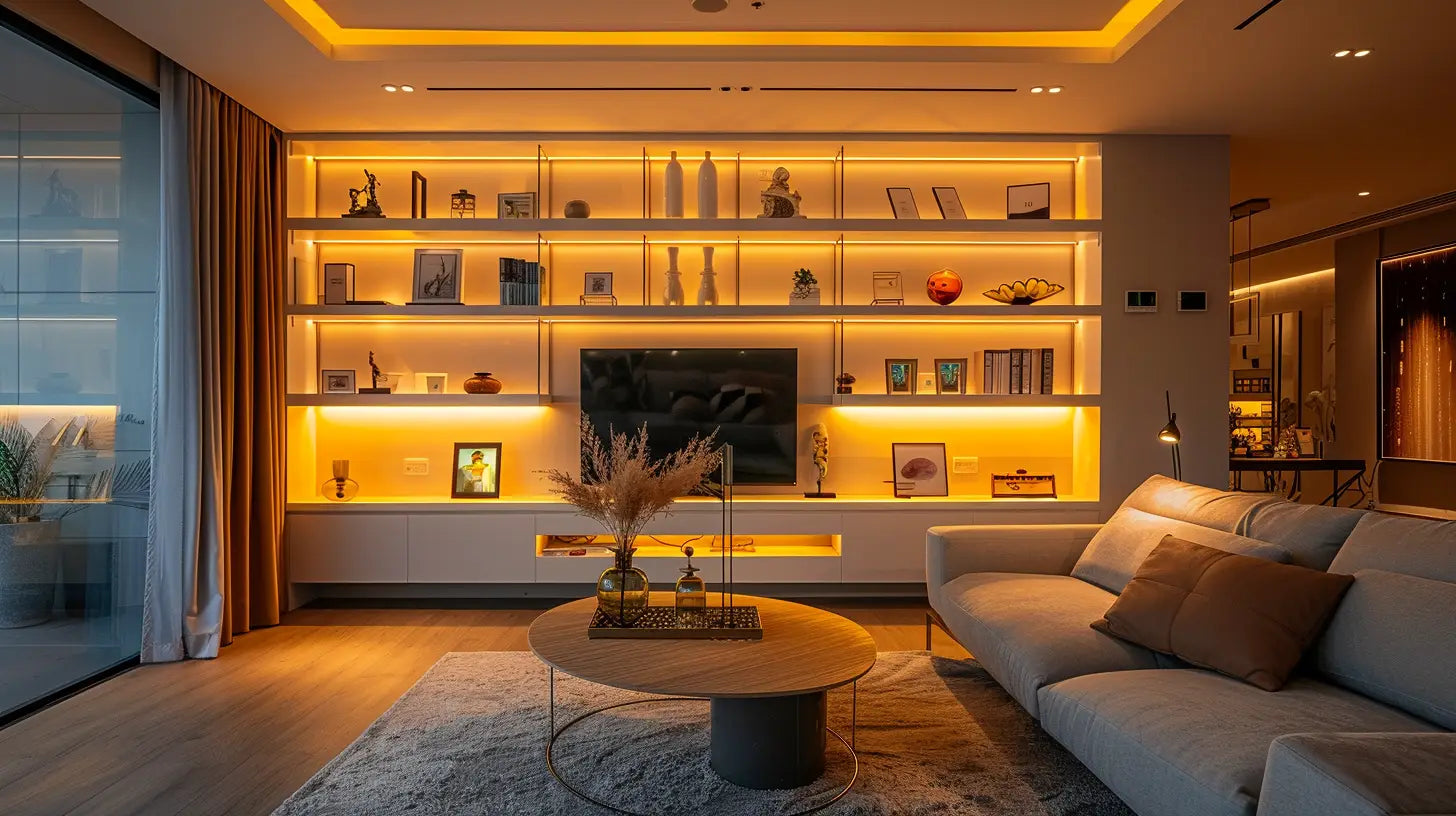
Shelf lighting is a directed, low‑glare layer integrated into shelving to illuminate objects and surfaces. It enhances clarity, depth, and ambience across display walls, bookcases, kitchen shelves, and media consoles.
Benefits vs. Room Lighting Alone
- Reduces shadowing from overhead fixtures by bringing light closer to the target plane.
- Improves perceived brightness with lower energy due to directional LEDs U.S. DOE.
- Creates a polished, contemporary look when emitters are concealed and diffused.
Layering Strategy
- Ambient: set overall room level; shelves add targeted glow.
- Task: raise local brightness at eye‑level objects or work surfaces.
- Accent: highlight textures, books, ceramics, and glass without glare.
Core Goals by Shelf Type (Display, Task, Ambient, Navigation)
Define intent first. Goals determine output, optics, and placement for comfortable, efficient results.
Goal Definitions
- Display: Subtle, warm glow that flatters materials; diffusion to avoid sparkle on glass.
- Task: Higher output near working planes (kitchen shelves over prep, desk hutches).
- Ambient: Low, even backlighting for mood; avoid visible emitters and harsh edges.
- Navigation: Very low level with motion activation for night paths.
Metrics and Targets
- Display shelves: ~5–15 foot‑candles with warm CCT and diffusion.
- Task near shelves: ~30–50 foot‑candles; neutral CCT (3000–3500K).
- Ambient/backlighting: ~1–5 foot‑candles; conceal sources to maintain softness.
Shelf Lighting Types: Strips, Bars, Pucks, Recessed, Backlighting
Choose form factors by coverage and concealment needs. Strips create continuous lines; bars provide uniform task light; pucks add emphasis; recessed mini‑downlights deliver discreet spots; backlighting adds depth.
Comparison Table
| Type | Coverage | Install Ease | Best Use | Notes |
|---|---|---|---|---|
| LED Strips | Continuous, seamless | High (adhesive/channels) | Long runs; conceal in profiles | Use frosted lenses to hide diodes |
| LED Bars | Uniform task | Medium (clips/screws) | Kitchen shelves; deep bookcases | Overlap beams slightly to avoid seams |
| Puck Lights | Localized spots | High (adhesive/screws) | Feature objects; small niches | Space 8–12 in; add diffusion to reduce hotspots |
| Recessed Mini‑Downlights | Focused cones | Low–medium (requires recess) | Discreet display highlights | Check recess depth; avoid glare angles |
| Backlighting (rear strip) | Soft halo | Medium (concealed gap) | Glass shelves; ambient glow | Prefer opal covers; hide tape behind upstand |
Smart Practices
- Create scenes for “display”, “reading”, and “evening”.
- Prefer local control for critical functions; use cloud as optional convenience.
- Document default scenes to recover quickly after power outages.
Rechargeable Runtime Tips
- Lower brightness and add motion to extend time between charges.
- Plan cadence (e.g., weekly) and group bars on accessible shelves.
- Use USB‑C for convenient, standardized charging.
Efficiency and Longevity
- LEDs deliver high efficacy and long life, reducing energy and replacement costs U.S. DOE.
- Pair LEDs with controls (dimming, occupancy) for further savings U.S. DOE.
Optics and Profiles
- Choose opal lenses to blend diodes; clear lenses suit task‑first installs.
- Corner profiles wash vertical faces; flat profiles suit underside mounting.
- Heat‑sinking improves life and consistency on high‑output runs.
When to Choose Each
- Strips: long, straight runs where concealment and continuous glow matter.
- Bars: deeper shelves or where uniform task light is the priority.
- Pucks: spotlighting single objects or small compartments.
- Recessed: discreet, high‑finish installs with adequate recess depth.
- Backlighting: glass or acrylic shelves needing ethereal glow without visible emitters.
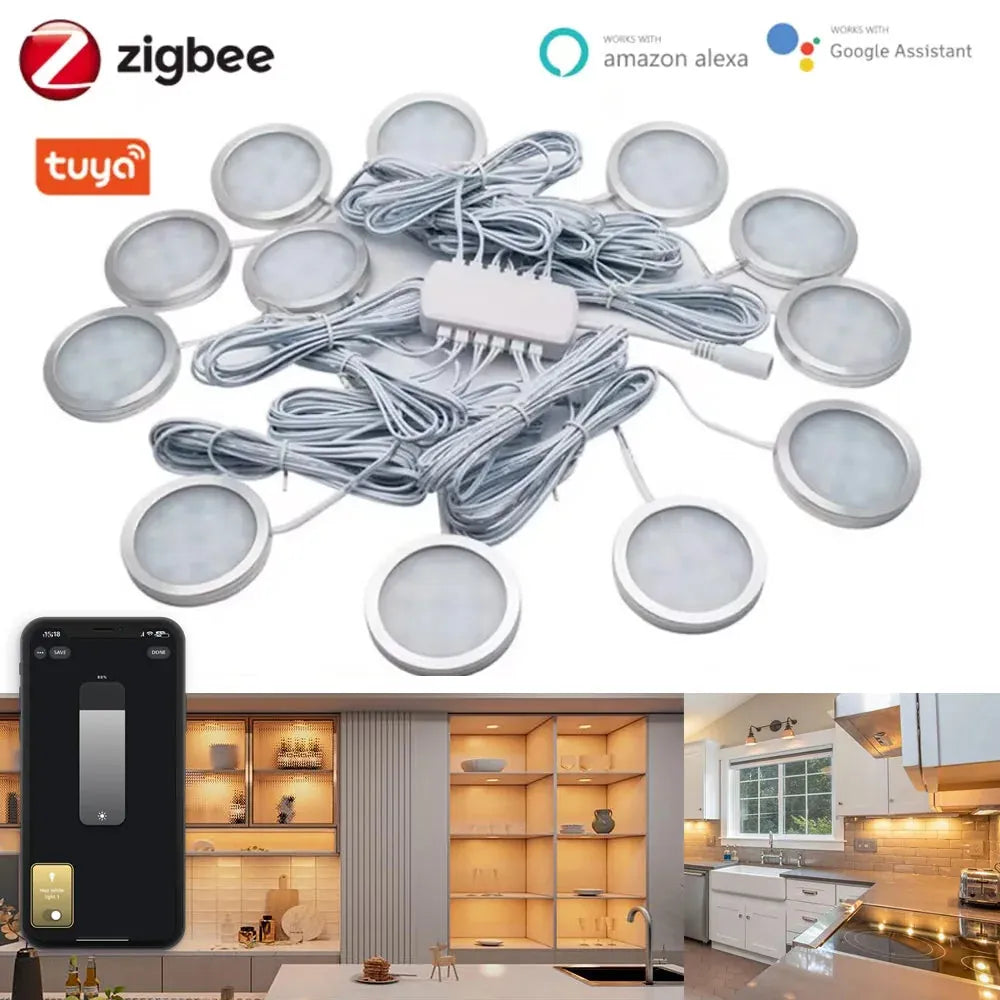
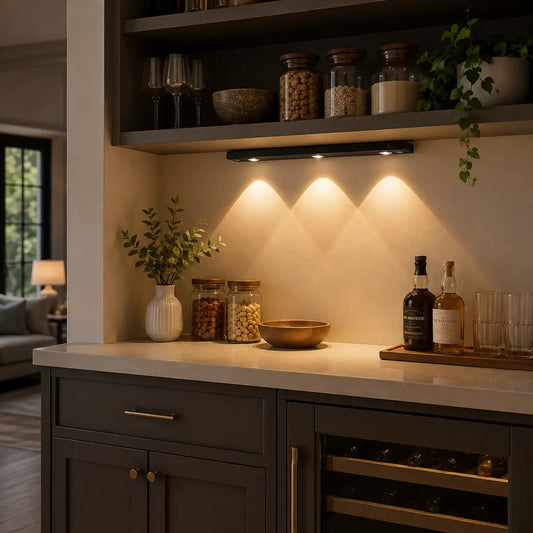
For advanced control and seamless integration, the Tuya Zigbee Smart Under Cabinet LED Puck Lights offer app and voice control, perfect for backlighting and highlighting shelves. This full kit provides easy installation and customizable lighting, making it a smart choice for any modern home.
Placement by Shelf Material: Wood, Glass, Floating, Built‑ins
Material and construction affect optics and concealment. Place fixtures to avoid direct view and visible dotting, and to preserve clean lines.
Wood Shelves
- Front‑edge rule: mount strips within ~1–2 in of the lip for task clarity.
- Cut shallow channels to recess profiles and hide diodes.
- Neutral CCT (3000–3500K) shows paper and wood grain naturally.
Glass Shelves
- Prefer backlighting behind an upstand to avoid seeing emitters through glass.
- Use opal diffusers to prevent sparkle and multi‑image artifacts.
- Lower output maintains elegance; avoid harsh edge highlights.
Floating Shelves
- Conceal wiring through brackets or routed channels.
- Recess profiles slightly to shield emitters from sight lines.
- Angle fixtures toward objects to reduce backsplash glare.
Built‑ins and Bookcases
- Mini downlights for single‑object niches; bars for longer runs.
- Match CCT/CRI across shelves for visual consistency.
- Test beam overlap with painter’s tape before fastening.
Beam and Angle
- Angle bars down and slightly forward to minimize backsplash glare.
- Overlap adjacent beams 10–20% to eliminate seams.
- Use narrower beams for deep niches; wider beams for broad shelves.
Color Temperature and Brightness for Shelves
Set color and output by use case. Warm tones flatter materials; neutral tones suit reading or task. Use diffusion for comfort.
Rules of Thumb
- Display: 2700–3000K, CRI ≥90, ~5–15 foot‑candles.
- Task near shelves: 3000–3500K, CRI ≥90, ~30–50 foot‑candles.
- Ambient/backlighting: 2700–3000K, very low output; prioritize concealment.
LEDs’ directionality supports targeted task and accent uses with dimming and occupancy for extra savings U.S. DOE.
Room‑Specific Quick Specs
| Space | Goal | CCT | CRI | Target fc | Suggested Layout |
|---|---|---|---|---|---|
| Living room displays | Accent | 2700–3000K | ≥90 | 5–15 | Backlighting with opal diffusers; low output |
| Kitchen shelves | Task | 3000–3500K | ≥90 | 30–50 | Front‑edge bars/strips; diffusion for comfort |
| Bookcases | Accent/reading | 3000–3500K | ≥90 | 10–25 | Mini downlights for features; strips recessed in profiles |
| Media consoles | Ambient | 2700–3000K | ≥80 | 1–5 | Concealed backlighting behind panels; very low output |
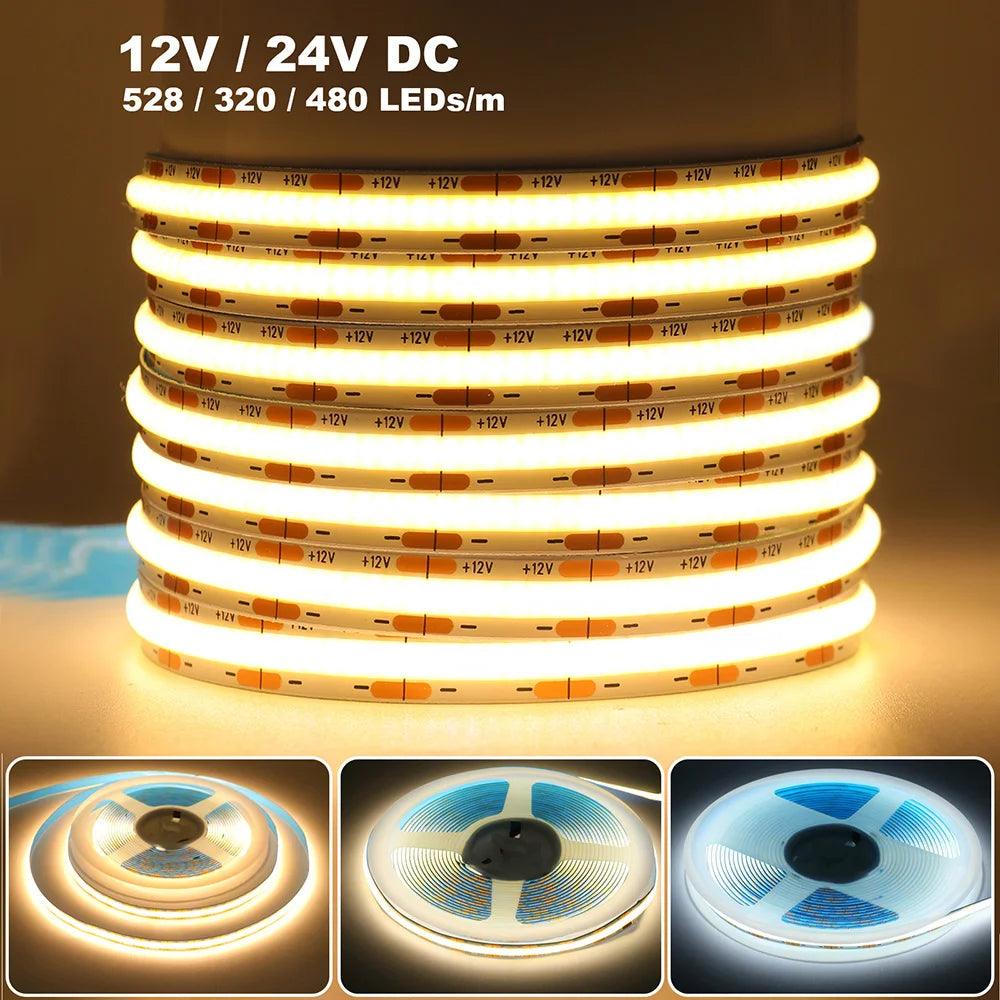
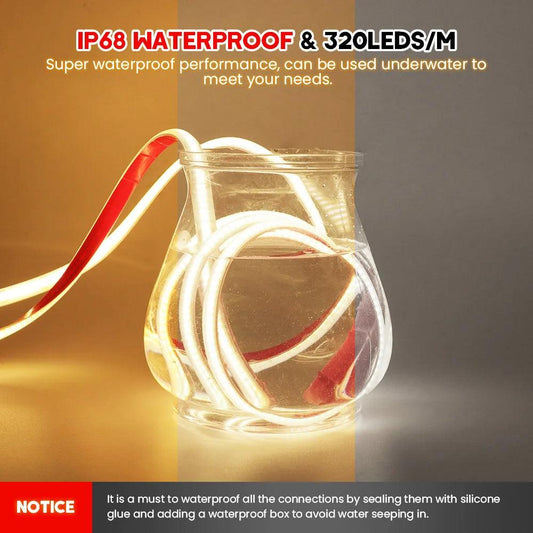
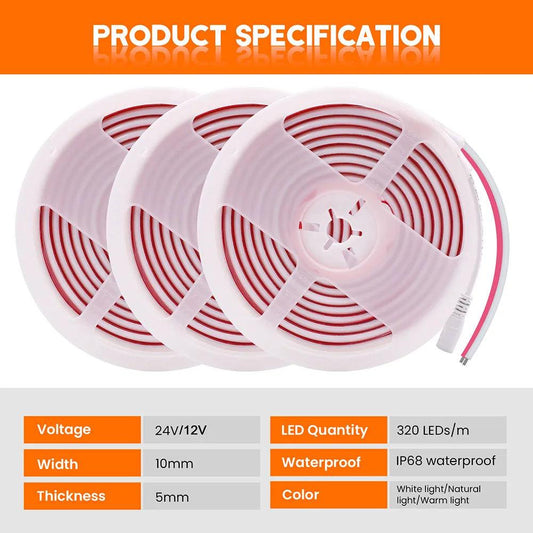
For shelving that requires bright, even illumination, the 24V High Density COB LED Strip Light provides powerful lighting with its high LED density and three adjustable color temperatures. Whether you're showcasing collectibles or organizing essentials, its dimmable feature allows you to tailor the lighting to suit the mood or task.
Power and Control Options (Plug‑In, Hardwired, Rechargeable, Motion, Smart)
Choose power/control by permanence, cable routing, and convenience. Hardwired integrates neatly; plug‑in is fast; rechargeable suits rentals; motion and smart automate use.
Scenario Guidance
- Renovations: Hardwire bars/mini downlights; use wall dimmers or smart switches.
- Existing built‑ins: Plug‑in strips/bars; hide adapters inside cabinetry.
- Glass displays: Backlighting with concealed strips; sensors optional.
- Rental setups: Rechargeable bars with motion; adhesive profiles to preserve finishes.
Efficient luminaires and controls are recommended by federal guidance for cost‑effective performance U.S. DOE FEMP.
Decision Table
| Scenario | Power | Control | Pros | Cons |
|---|---|---|---|---|
| Renovation | Hardwired | Wall dimmer/smart | Clean look; integrated control | Requires electrician; higher upfront |
| Built‑ins | Plug‑in | Inline dimmer | Fast DIY; adapters hidden | Outlet dependence; cord management |
| Glass display | Plug‑in/hardwired | Motion/timer | Hands‑free; avoids over‑lighting | Sensor tuning; potential false triggers |
| Rental | Rechargeable | Motion/manual | No wiring; removable | Charging cycles; lower peak output |
Room Layouts: Living Rooms, Kitchens, Offices, Media Consoles
Map layouts to room function. Choose optics and power routes appropriate to each space.
Living Rooms
- Backlight glass or recess strips in profiles for soft glow.
- Use warm CCT with dimming for evening ambience.
- Hide emitters and cabling for a minimalist finish.
Kitchens
- Bars or dual‑row strips near front edge for task clarity.
- Coordinate CCT/CRI with adjacent under‑cabinet runs.
- Inline dimmers simplify scene changes between prep and evening.
Home Offices
- Neutral CCT (3000–3500K) to keep paper colors accurate.
- Place fixtures to avoid monitor glare and harsh reflections.
- Use mini downlights for single‑object highlights.
Media Consoles
- Low‑level backlighting reduces eye strain in dark rooms.
- Conceal strips behind panels; avoid visible diodes.
- Integrate with smart scenes for movie night.
Open Shelving vs. Enclosed Cabinets
- Open shelving: prioritize concealment and diffusion; lower output keeps ambience refined.
- Enclosed cabinets: door switches or motion sensors; vertical mounting improves shelf reach.
- Match color across layers to avoid mixed tones between shelves and adjacent fixtures.
Home Bars
- Front‑lighting for bottles; backlighting for glass shelves with opal covers.
- Use dimmers to avoid specular glare on glass and liquids.
- Consider motion sensors for late‑night navigation.
Bathrooms
- Warm CCT for comfort; low output to avoid mirror glare.
- Prefer sealed profiles; follow moisture and listing requirements.
- Use localized pucks for display niches; avoid harsh highlights.
Common Shelf Lighting Mistakes and Fixes
Frequent errors include visible diodes, mismatched color, and glare. Conceal sources, standardize CCT/CRI, and use diffusion and beam overlap.
Checklist
- Conceal fixtures in channels; avoid bare tape on sight lines.
- Match CCT/CRI across shelves to prevent visual patchwork.
- End‑to‑end runs; overlap bar beams slightly to remove seams.
- Add dimming for comfort; consider motion for display cases.
🗣️ “We switched to backlighting on glass shelves, matched color to 3000K, and the display went from glittery glare to soft, gallery‑grade glow.”
💡 Smart lighting means smart savings. With Lumaz LEDs, you get superior energy efficiency, lower bills, and a lifespan that makes the math work brilliantly for you.
Expanded Mistakes and Fixes
- Mixed protocols: ensure drivers and dimmers share dimming method to prevent flicker.
- Over‑bright accents: reduce output; increase diffusion for comfort.
- Ignored routing: plan cable paths before fastening; add strain relief.
- Visible adapters: hide inside cabinetry; maintain ventilation.
Installation and Cable Management Tips
Pre‑test with painter’s tape, then commit with profiles and tidy routing. Keep adapters accessible and vents unobstructed.
Steps
- Sketch runs and power points; confirm outlet access or driver placement.
- Mock placement; measure foot‑candles at objects and surfaces.
- Route cabling through shelves or brackets; add strain relief.
- Install profiles with opal lenses; set angles to avoid reflections.
- Set dimming ranges and sensor timeouts to suit behavior.
Cable Management
- Hide adapters inside cabinetry; use grommets and clips for clean lines.
- Label runs by zone for simpler troubleshooting.
- Ensure ventilation around drivers per listing.
Tools and Materials
- Aluminium profiles with opal lenses; corner or flat as needed.
- Low‑profile clips/screws, painter’s tape, strain‑relief grommets.
- Inline dimmers or smart plugs; compatible drivers for dimming protocols.
Adhesives vs Fasteners vs Magnets
- Adhesives: fast install; use high‑bond tape; avoid raw finishes.
- Fasteners: most secure; pre‑drill to protect wood veneers.
- Magnets: good for steel shelving or removable profiles.
Safety and Compliance
- Follow fixture listings for clearances and thermal management.
- Use efficient, listed products to reduce energy and heat U.S. DOE.
- Consider ENERGY STAR certified lamps/fixtures for trusted performance.
Planning Checklist and Measurement Guide
Plan by intent, material, layout constraints, and controls. Standardize color settings and document scenes for easy recovery.
Checklist
- Define goal: display, task, ambient, navigation.
- Select type: strip, bar, puck, recessed, backlighting.
- Choose color/CRI: match adjacent fixtures for consistency.
- Pick power/control: hardwired, plug‑in, rechargeable, motion, smart.
- Mock up, measure, and finalize mounts and routing.
Guidance on energy‑efficient products and controls is available from federal programs U.S. DOE FEMP.
Measurement Guidance
- Measure illuminance at the shelf surface and viewer eye line.
- Use a basic lux meter; convert to foot‑candles (fc ≈ lux ÷ 10.764).
- Check multiple points to avoid bright centers and dim edges.
Scene Presets
- Display: warm, low output; focus on concealment.
- Reading: neutral tone; moderate output; minimal glare.
- Evening: warm, very low output; backlighting preferred.
FAQs
How do I light glass shelves without seeing LEDs?
Use concealed backlighting with opal diffusers behind an upstand. Avoid under‑shelf strips that are visible through glass.
What color temperature is best for books and wood?
Warm 2700–3000K enhances wood grain; 3000–3500K keeps paper colors accurate for reading.
Are rechargeable bars good for rentals?
Yes. They avoid wiring and preserve finishes; plan charging cadence and use motion to extend runtime.
How do I prevent glare on glossy items?
Angle fixtures toward objects, add diffusion, and lower output. Conceal emitters from sight lines.
Can shelf lighting integrate with smart scenes?
Yes. Pair dimmable drivers or smart plugs with schedules/voice control for effortless ambience.
Do I need an electrician for shelf lighting?
Hardwired installs should be handled by an electrician, especially when adding new circuits or wall controls. Plug‑in and rechargeable options are DIY‑friendly.
How do I avoid “dotting” on glossy surfaces?
Use aluminium profiles with opal diffusers, mount slightly recessed, and angle away from specular surfaces to soften reflections.
Does CRI matter for books, art, and décor?
Yes. CRI ≥90 preserves color fidelity and material textures, keeping books, art, and ceramics looking natural under shelf lighting.
Conclusion
Choosing the right shelf lighting can enhance both the functionality and aesthetic appeal of your home. By selecting the appropriate lighting type, considering factors like color temperature and brightness, and ensuring proper placement, you can highlight your shelves and create a stylish ambiance. Whether you're using display, task, or ambient lighting, thoughtful planning and installation will help avoid common mistakes and improve your overall space. With the right power and control options, your shelf lighting will not only look great but also function seamlessly.
Further Reading
Explore the full guide for this topic: Under Cabinet Lighting for Any Home Space: Kitchens, Shelves, Desks, and Cabinets














 />
/>
 />
/>
 />
/>
 />
/>
 />
/>