

Best Under Cabinet Lighting for Small Kitchens
In a Small Kitchen, Light the Surfaces and Hide the Lighting System
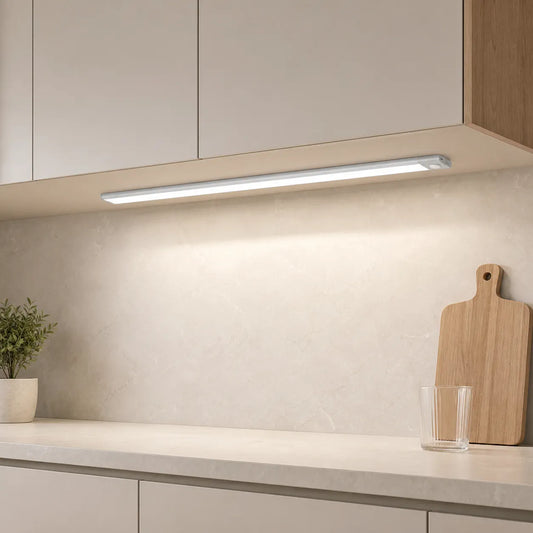
The best under-cabinet lighting for a small kitchen is usually a concealed, dimmable linear source over the counters that are actually used—not a visible fixture under every cabinet. The light should make the worktop read as one clear surface while the LEDs, adapters, cords, and unnecessary switches disappear from normal standing and seated sightlines.
This gives a small kitchen two benefits at the same time: hands and tools remain visible during preparation, and the room avoids the visual fragmentation caused by bright dots, repeated fixture bodies, exposed cable loops, and mismatched pools of light. Begin with the room and its sightlines; choose products only after the light and hardware roles are defined.
Prioritize
- One visually continuous task layer across the main preparation and cleanup surfaces.
- A concealed source that cannot be seen from the doorway, dining seat, or normal working position.
- A simple control and power route that do not add objects to an already busy backsplash.
Reduce or remove
- Decorative pucks repeated beneath every cabinet when no focal effect is needed.
- Several unrelated color tones or brightness levels within the same compact view.
- Visible adapters, dangling charging cables, and sensors placed where they interrupt the cabinet line.
Build a Three-Layer Plan Without Adding Three Sets of Fixtures
A layered kitchen does not need every possible type of light. Each layer needs a separate job, and one existing fixture may already perform that job well. Use the following sequence to decide what the small kitchen is missing.
| Layer | Job in a small kitchen | Keep the room visually quiet | Do not ask it to do |
|---|---|---|---|
| Task | Reveal the main prep, sink-side cleanup, and frequently used appliance surfaces | Use one concealed linear language across connected work zones; dim it when full output is unnecessary. | Illuminate unused cabinet undersides merely for symmetry. |
| Ambient | Make faces, circulation space, cabinet fronts, and the room boundary readable | First use the existing ceiling, pendant, or adjoining-room light; correct only the dark room-wide gaps that remain. | Carry all countertop work from behind the user's body. |
| Decorative or accent | Create one intentional focal point or evening mood | Choose one feature—the pendant, open shelf, toe-kick, or display—not all of them at once. | Compensate for an under-lit worktop with more visible bright objects. |
If the main counter is already mapped and the remaining question is how ceiling, pendant, task, and decorative light should share the room, continue to Layered Kitchen Lighting: Balance Task, Ambient and Decorative Light. This page stays focused on the small-kitchen design constraint: useful light with fewer visible components.
Adapt the Lighting Line to the Kitchen Layout
Do not calculate a small kitchen from total wall length. Mark the active counters and the sightline from the main doorway or adjoining room, then treat every hood, window, tall cabinet, corner, or missing upper cabinet as a possible boundary between lighting groups.
One-wall kitchen
Create one calm horizontal line
Prioritize the main prep and cleanup stretch. Keep the fixture type, visible light character, and cable route consistent across connected cabinets; let a hood or window end the run instead of crossing it with exposed wire.
Galley kitchen
Light work zones, not both walls equally
Map the active zones on each side separately. Match the light appearance where both runs are visible together, but do not add a second full run solely to create symmetry if that counter is not used.
Compact L or broken run
Let architecture define the groups
Use separate groups when a corner, appliance, cabinet-depth change, or cable crossing would make the installation conspicuous. Coordinate their dimming and light color so the groups still read as one design.
For exact prep, sink, cooking, and appliance coverage, use the Kitchen Counter and Work-Zone Lighting Plan. It turns the active zones into source positions and power paths. The small-kitchen plan then removes any fixture or connection that does not earn its place through task value or a deliberate visual role.
Plan Four Things That Can Create Visual Clutter
The luminous source is only one part of the installation. Before ordering, draw a route for the fixture, non-luminous cable, adapter or hub, and control. A clean light line with a visible transformer on the backsplash is not a clean installation.
- Source: place the strip or bar behind the cabinet's front edge where reflected light reaches the counter but the source is shielded from the doorway and nearby seating.
- Cable: follow cabinet seams, inside corners, or an inside-cabinet route. Stop and create a second group when the only connection would cross a visible wall, window, hood, or open shelf.
- Adapter or hub: keep it concealed, ventilated as required by the product instructions, and accessible for service. Do not permanently bury a component that may need inspection or replacement.
- Control: place one deliberate control near the natural approach to the kitchen or work zone. A hand-sweep sensor should be reachable without displaying another switch on the backsplash.
If the cabinet lip does not hide the fixture from important sightlines, test a small shield or use the existing valance decision guide before changing the entire lighting layout. When no acceptable cable route exists, use the No-Wiring Under Cabinet Lighting Solutions to choose a removable configuration and plan a charging location rather than leaving cables permanently visible.
Choose the Fixture by the Visual Result It Must Create
Use a Cut-to-Fit COB Strip for a Quiet, Continuous Task Line
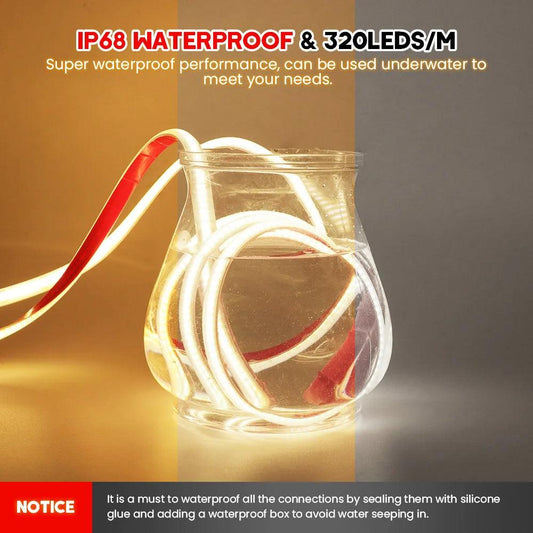
Best for: connected counters where the light should read as a smooth part of the cabinetry. Plan one strip run across each uninterrupted active zone, test it behind the front lip, and route the hub and adapter out of normal view. Use dimming to reduce the task layer when the kitchen shifts from preparation to dining or evening use.
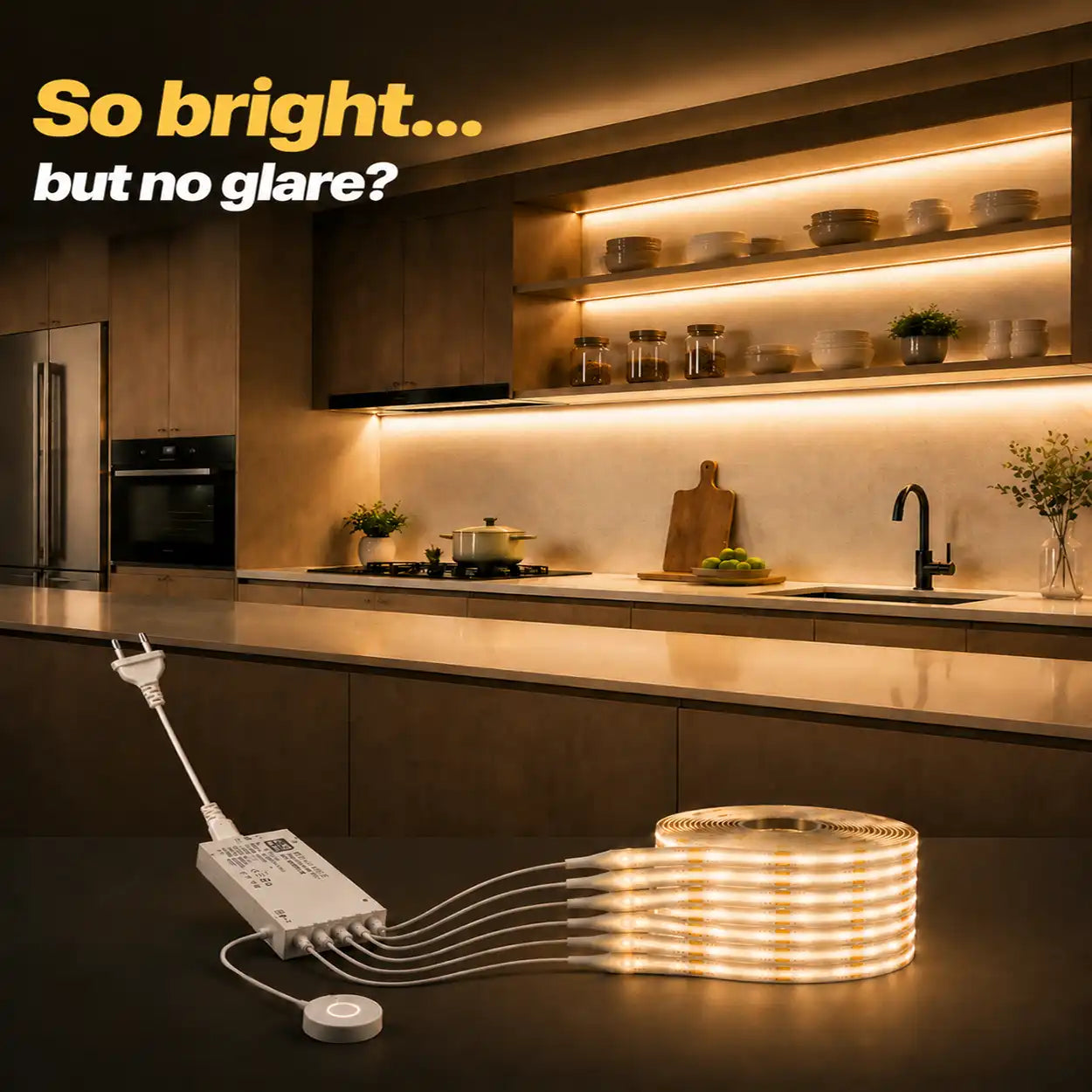
- Best fit: the main prep and cleanup run has continuous power and a route that can conceal the hub, adapter, and connecting cable.
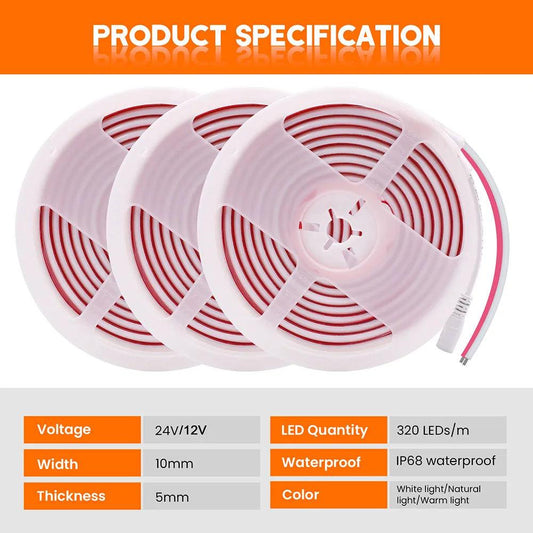
- Planning facts: 1m, 2m, 3m, and 5m lengths; 2- to 6-strip kits; cuttable every 2.5cm; warm, neutral, or white options.
- Why this model: the 320 LEDs/m COB construction produces a smoother, dot-free line, while stepless dimming and through-wood control support a visually quiet installation.
- Not ideal when: the run must be removable or the power components cannot be routed safely and discreetly.
Use an Ultra-Thin Bar for a Defined Straight Zone
Best for: one short counter or several cabinet-width zones where a rigid, aligned fixture looks cleaner than a custom strip route. Match the bar to the usable underside length, align it with the activity rather than the cabinet door, and place the hand-sweep control where it works without adding a visible wall control.
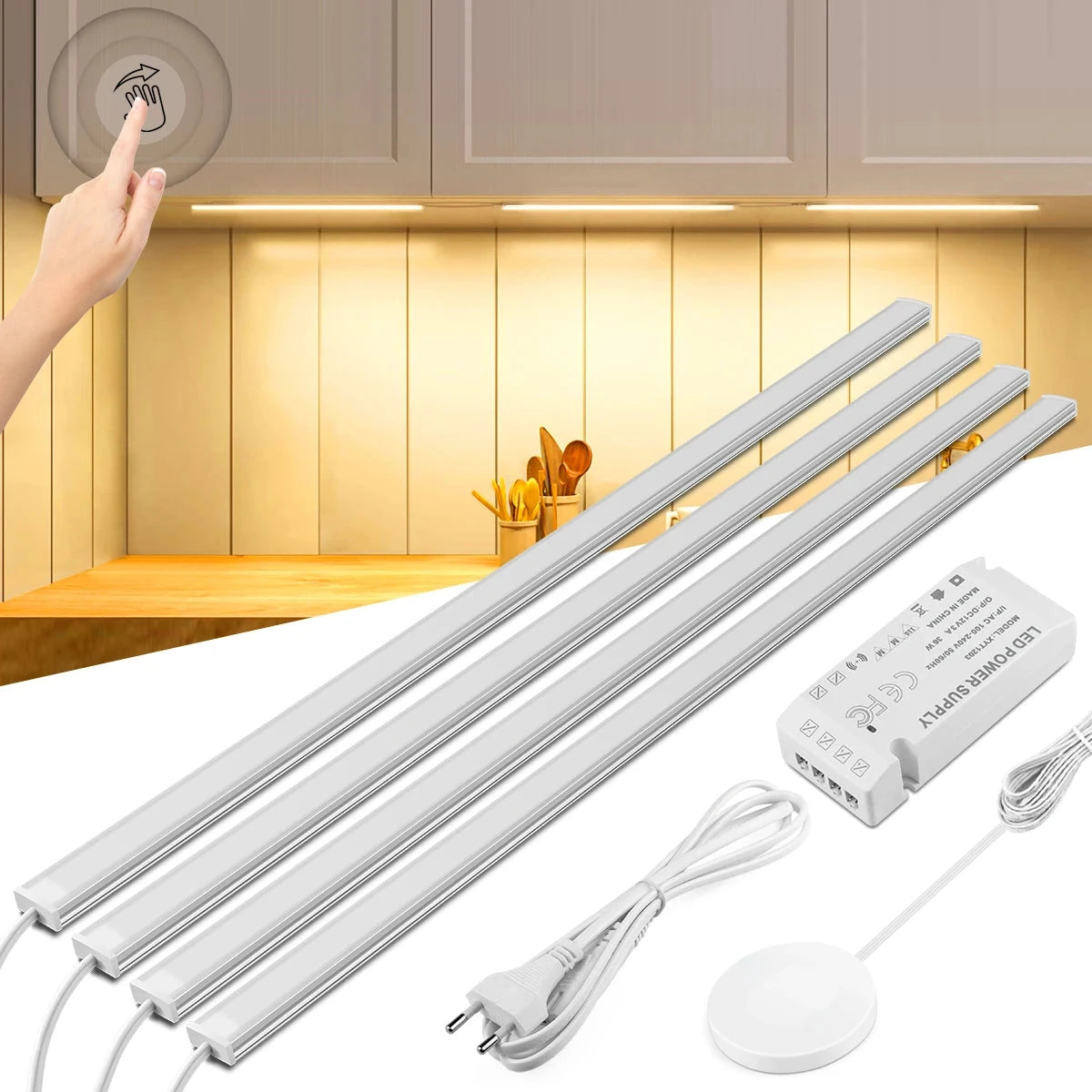
- Best fit: a 30cm, 40cm, or 50cm straight task area with an outlet and a cabinet edge that can conceal the 7mm body.
- Planning facts: 1- to 6-light kits, warm-white or cool-white choices, stepless dimming, and hand-sweep control.
- Why this model: the slim rigid form creates a disciplined cabinet-width installation while gesture control avoids another frequently touched switch.
- Not ideal when: the cabinet run bends, changes length irregularly, or needs a continuous custom-fit line; use the COB strip kit instead.
Test Counter Visibility and Perceived Openness in the Same Mock-Up
A small kitchen can look bright in a photo and still work poorly, or illuminate the counter well while exposing an untidy system from the adjoining room. Temporarily position the proposed source and walk through this test before fixing clips, channels, or adhesive mounts.
- Return the real objects. Put the kettle, toaster, dish rack, and other daily items back on the counter; an empty worktop hides shadows and cable conflicts.
- Test the task view. Stand at the cutting board, sink-side surface, and appliance station. Confirm that hands and the working area remain visible when the body blocks the ceiling light.
- Test the doorway view. Look from the main approach and any dining seat. The counter should appear clearer without revealing LED dots, fixture bodies, bright connectors, or cable loops.
- Dim the task layer. Find a lower evening setting that maintains a calm horizontal glow without competing with the room's pendant or ambient layer.
- Check reflective surfaces. View polished stone, glass, stainless appliances, and glossy backsplashes from several positions. If the source appears as a distracting line, adjust placement and dimming or use the glossy-countertop glare plan.
- Remove one element. Turn off or temporarily remove the least useful accent, puck, or visible control. If the kitchen still performs well and looks calmer, leave that element out of the final plan.
Small-kitchen completion test: the main work zones are visible, the room boundary remains readable, one intentional feature may attract attention, and the lighting hardware does not become another layer of countertop clutter.
Questions That Change a Small-Kitchen Lighting Plan
Should every upper cabinet have a light?
No. Light the cabinet sections above active preparation, cleanup, and appliance zones. Extend the line only when it preserves useful coverage or a deliberate continuous visual effect; an unused counter does not need a fixture solely for symmetry.
Are puck lights a good choice for a small kitchen?
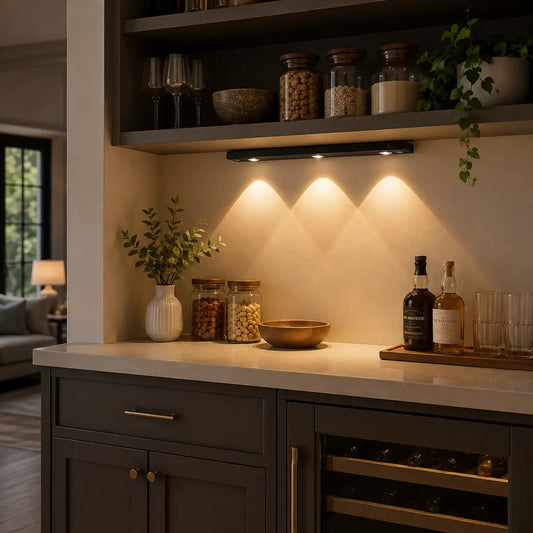
They can suit one compact focal point or niche, but repeated pools and visible discs may make a small room feel busier. Use a concealed linear source when the goal is an uninterrupted working surface and reserve pucks for an intentional accent.
Can under-cabinet lighting make the kitchen feel larger?
It can make the counter plane clearer and reduce the dark band beneath wall cabinets. The strongest effect comes from smooth coverage, concealed hardware, controlled contrast, and fewer competing light sources—not from maximizing brightness.
What if the kitchen has very shallow cabinets?
Temporarily test a 7mm bar or slim strip behind the front edge and view it from the doorway and nearby seating. If the source remains visible, add a discreet shield or valance, or reconsider the mounting surface rather than pushing the light so far back that it illuminates only the backsplash.
Should both sides of a galley kitchen match?
Match the visible light character and color when both sides are seen together, but size each run by its own tasks and cabinet structure. A secondary wall does not need equal fixture quantity or brightness if it is mainly storage or circulation space.
Move from the Room Plan to the Product Comparison
Finish with a short specification for each lighting group: active counter, usable underside length, source position, concealed cable path, control location, preferred light appearance, and sightlines from which the fixture must remain hidden. Then compare current Lumaz under-cabinet products by form, length, power, dimming, and control behavior.
Do not buy from the room's square footage or cabinet count. The small-kitchen advantage comes from using fewer, better-defined lighting elements: one dependable task line, sufficient ambient context, and only the decorative light that contributes a clear visual purpose.

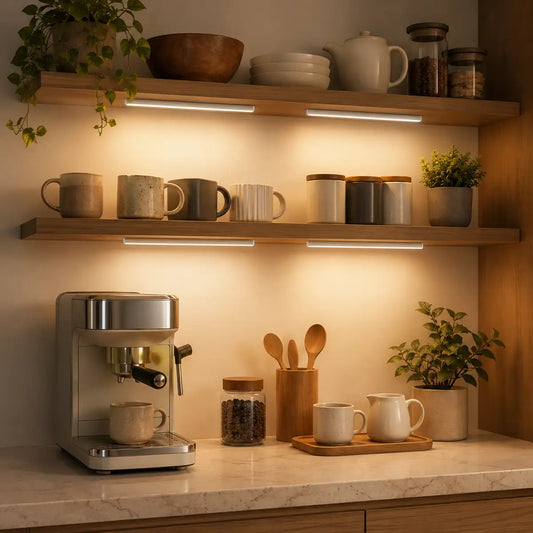

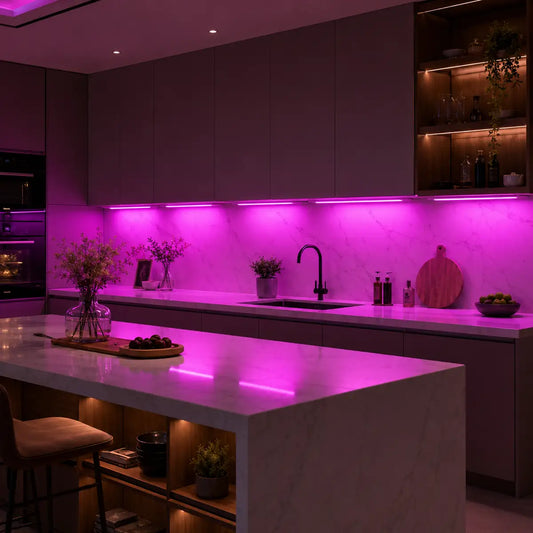












 />
/>
 />
/>
 />
/>
 />
/>
 />
/>