

Living with Under Cabinet Lighting: Longevity, Safety & Maintenance
Table of Contents
- What Is the Expected Lifespan of Under Cabinet Lighting?
- Is Under Cabinet Lighting Safe for Long-Term Use?
- How Often Does Under Cabinet Lighting Need Maintenance?
- How to Clean and Care for Under Cabinet Lighting Properly
- Power Supplies and Drivers: The Most Overlooked Component
- Common Long-Term Issues and How to Prevent Them
- When Should You Repair, Replace, or Upgrade?
- Are Smart Under Cabinet Lights Reliable Long Term?
- Safety Certifications and What They Really Mean
- Under Cabinet Lighting in Rental or Long-Term Homes
- Frequently Asked Questions About Long-Term Use
- Final Thoughts: Designing Under Cabinet Lighting That Lasts
What Is the Expected Lifespan of Under Cabinet Lighting?
Most quality under‑cabinet LEDs are rated for tens of thousands of hours, but real‑world lifespan depends on heat, power quality, and usage patterns.
LED Rated Lifespan vs Real-World Usage
Rated life (often 30,000–50,000 hours) assumes controlled thermal conditions and stable power. Kitchens introduce heat, oil, and variable use, so practical life is shaped by environment, not just datasheets.
- Lumen maintenance curves (e.g., L70) reflect gradual dimming over time rather than abrupt failure.
- Daily cycles, ambient heat near ovens, and enclosure effects accelerate wear compared to lab tests.
- Consistent low‑level scenes at night reduce thermal stress and extend usable comfort.
Factors That Shorten or Extend Lifespan
- Heat and ventilation: Aluminum channels and airflow help dissipate heat efficiently.
- Power quality: Stable drivers and matched control types prevent electrical stress.
- Usage profile: Short, frequent bursts cause less heat accumulation than extended high output.
- Cleaning habits: Removing dust and oil films maintains thermal performance and optical clarity.
- Component matching: Keep sensors, dimmers, and drivers compatible to avoid flicker‑inducing stress.
🙂 “Four years in, our under‑cabinet run is a bit softer at night, but still calm and uniform—routine wipe‑downs and a good driver made the difference.”
Detailed Insight:
Is Under Cabinet Lighting Safe for Long-Term Use?
Well‑designed systems are safe over years when heat, wiring, and placement follow basic best practices. Most risks stem from poor installation, not the lights themselves.
Heat Generation and Thermal Management
LEDs produce less heat than legacy lamps, but drivers and dense light bars still warm. Use aluminum extrusion, diffusers, and modest output levels to keep surfaces cool and comfortable. Research guidance from the RPI Lighting Research Center emphasizes thermal design and verification.
- Favor continuous channels over bare tape for better heat conduction.
- Avoid sealing fixtures in tight cavities; leave slim airflow paths.
- Validate surface temperature after long prep sessions; trim output if hotspots appear.
Electrical Safety: Voltage, Drivers, and Wiring
Low‑voltage systems with properly rated drivers and secure connections are reliable over the long term. Confirm strain relief, conductor gauge, and protected routing near sinks and heat sources. See OSHA — Electrical Safety for safe practices around wiring and outlets.
- Keep wiring away from steam, high heat, and sharp bends; use cable clips and grommets.
- Match dimmers and drivers (e.g., TRIAC/ELV/0–10V) to avoid shimmer and stress.
- Use GFCI protection near wet areas; confirm IP ratings for fixtures in splash zones.
Fire Risk Myths vs Reality
Normal operation with proper drivers, wiring, and ventilation poses very low fire risk. Incidents typically trace to miswired adapters, overloaded supplies, or poor mounting in enclosed spaces—issues corrected by sound installation.
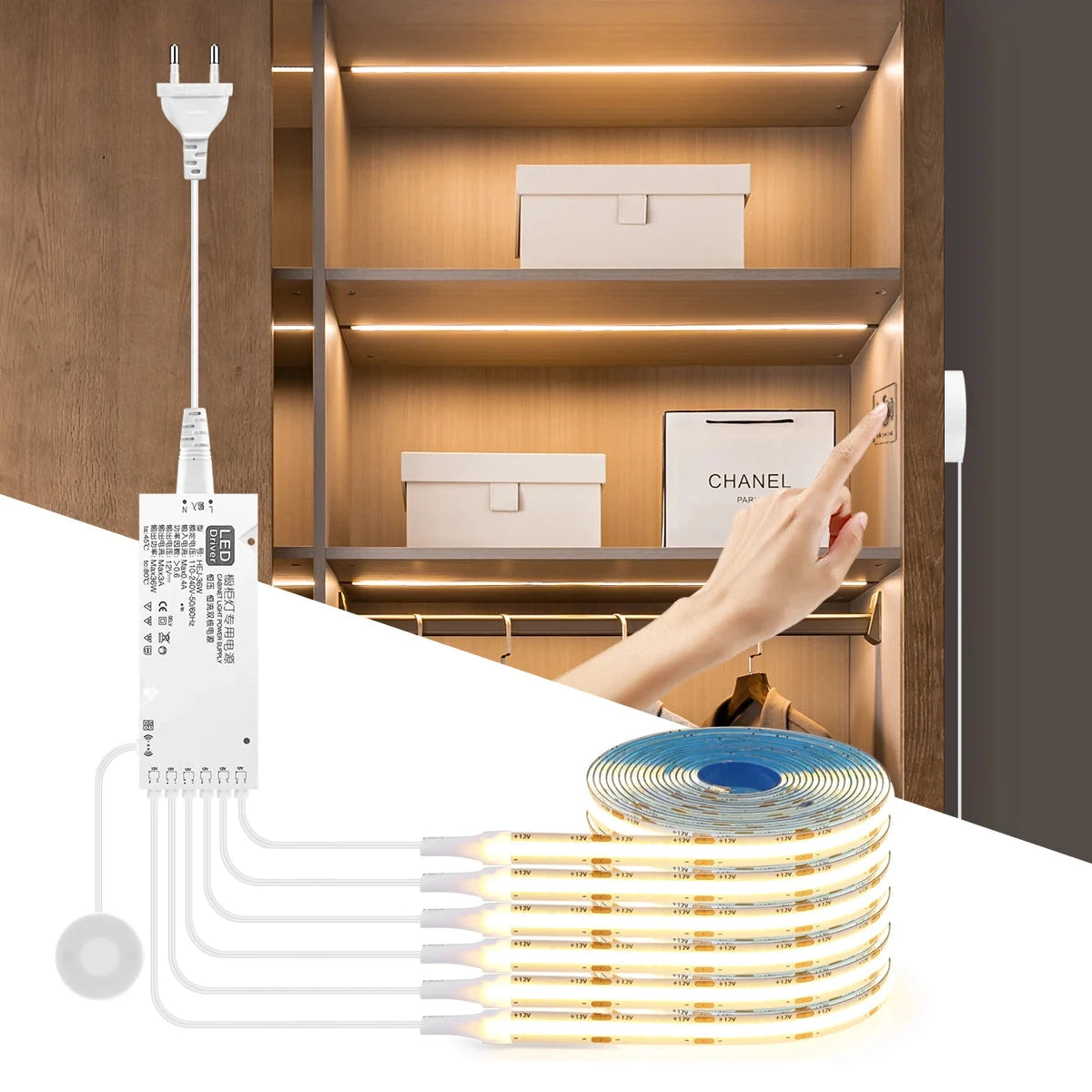
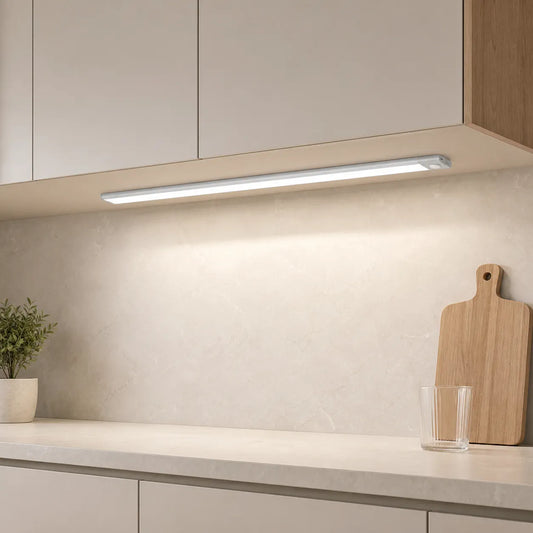
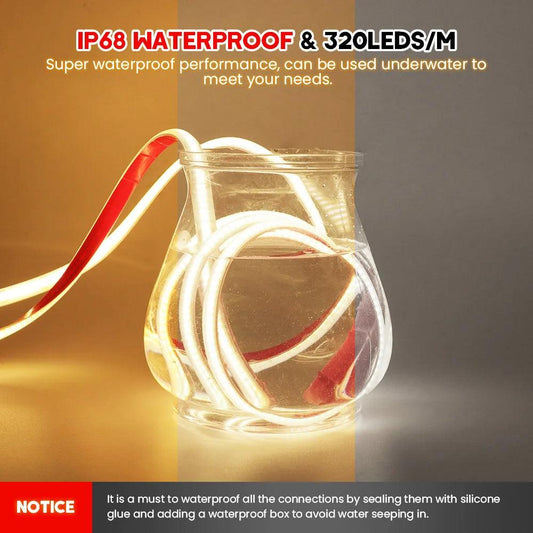
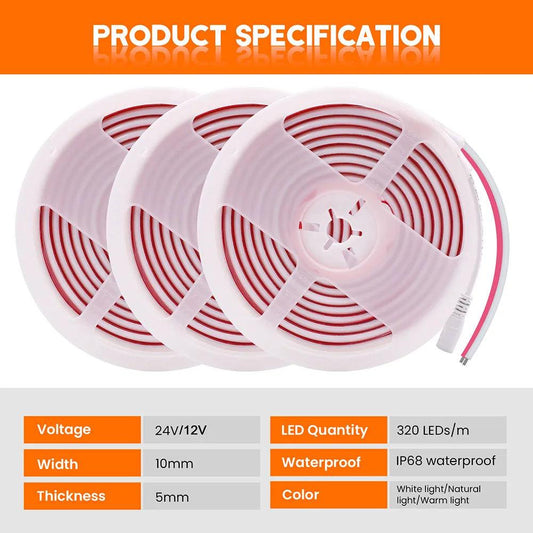
Under cabinet lighting can be safe for long-term use when installed correctly, with attention to heat dissipation, proper wiring, and placement. The Through-Wood Touch Sensor COB LED Strip Light offers stepless dimming and 320 LEDs/m, providing efficient lighting without excessive heat generation. With its touch sensor control, it allows you to adjust brightness with ease, ensuring optimal performance over time while adhering to safety standards.
How Often Does Under Cabinet Lighting Need Maintenance?
Under‑cabinet lighting requires light maintenance: periodic cleaning and occasional checks of connections. Routine care prevents most issues before they appear.
Maintenance Differences: Strip Lights vs Puck vs Bars
| Type | Typical Tasks | Frequency | Common Pitfalls |
|---|---|---|---|
| LED Strips | Wipe diffusers, check adhesive and connectors | Monthly wipe; quarterly connector check | Adhesive creep, oil film insulating heat |
| Puck Lights | Clean lens, inspect screw mounts | Monthly wipe; semiannual mount check | Lens haze, loose hardware |
| Light Bars | Dust fins, verify driver ventilation | Monthly dust; quarterly ventilation check | Blocked fins, trapped heat near backsplash |
Typical Maintenance Tasks Over Time
- Clean optics and channels to maintain brightness and thermal performance.
- Inspect connectors, drivers, and cable clips for looseness or wear.
- Re‑validate scenes (Prep/Evening/Night) for comfort as ambient conditions change.
How to Clean and Care for Under Cabinet Lighting Properly
Gentle, regular cleaning keeps light uniform and components cool. Kitchens demand more frequent care than low‑pollution spaces.
Cleaning in Kitchens vs Other Spaces
- Kitchens: Use mild soap and a soft microfiber cloth; avoid soaking seams.
- Offices/Display: Dust fins and wipe lenses; oil films are rare, so cycles can be longer.
- Always power off before cleaning; keep moisture away from drivers and connectors.
What to Avoid When Cleaning LED Fixtures
- Abrasives or harsh solvents (e.g., acetone) that haze lenses and weaken adhesives.
- High‑pressure sprays that force moisture into seams and connectors.
- Over‑wet cleaning near drivers; use minimal solution and dry thoroughly.
Power Supplies and Drivers: The Most Overlooked Component
Drivers often determine system stability and lifespan. They may fail before LEDs and deserve the same attention in placement and maintenance.
How Long Do LED Drivers Typically Last?
Quality drivers can approach tens of thousands of hours, but heat and load conditions shorten practical life. Keep drivers ventilated, within rated loads, and matched to dimming technology.
- Derate output for warmer cavities; avoid maxing rated load.
- Mount away from ovens and dishwashers; leave airflow gaps.
- Prefer drivers with robust low‑end dimming for calm night scenes.
Signs of a Failing Power Supply
- Flicker or shimmer, especially at low brightness.
- Audible buzz or intermittent resets.
- Uneven brightness across runs; warm housings in cool ambient conditions.
Common Long-Term Issues and How to Prevent Them
Most long‑term problems are predictable: gradual dimming, flicker from mismatched components, and heat build‑up. Prevent them with periodic checks and matching parts.
Dimming Over Time
- Expect mild lumen depreciation; adjust scene brightness slightly over years.
- Clean optics to recover lost output from dust/oil films.
- Confirm diffuser integrity; replace yellowed plastics for neutral color.
Flickering or Inconsistent Brightness
- Match drivers and dimmers; keep one control type per run.
- Check connectors and cable gauge; avoid long voltage‑drop paths.
- Verify sensors and controllers support local triggers for fast response.
When Should You Repair, Replace, or Upgrade?
Decide based on safety, cost, and comfort. Repair small faults; replace failing drivers; upgrade when new efficiency or control materially improves daily use.
Repair vs Full Replacement Considerations
- Repair: Loose connectors, minor flicker, dusty optics, isolated hot spots.
- Replace: Failing drivers, persistent shimmer, damaged optics, unreliable sensors.
- Upgrade: Efficiency gains, stable low‑end dimming, better scene coordination.
Upgrading for Better Efficiency or Control
- Adopt drivers with improved low‑end performance for night guidance.
- Use presence sensing in prep zones; motion near sinks and paths.
- Favor open, widely supported control standards to avoid lock‑in.
Are Smart Under Cabinet Lights Reliable Long Term?
Hardware ages slowly; software and protocols change faster. Reliability hinges on local control, modular components, and vendor support maturity.
Software, Connectivity, and Obsolescence
- Prefer local automations and triggers; cloud adds convenience but not basic function.
- Choose devices with over‑the‑air updates and stable low‑end dimming behavior.
- Keep manual overrides for resilience when networks or apps change.
How to Future-Proof a Smart Lighting Setup
- Use broadly adopted standards and avoid niche protocols.
- Keep sensors, controllers, and drivers modular for easier replacements.
- Document scene settings; maintain a baseline for seasonal or firmware shifts.
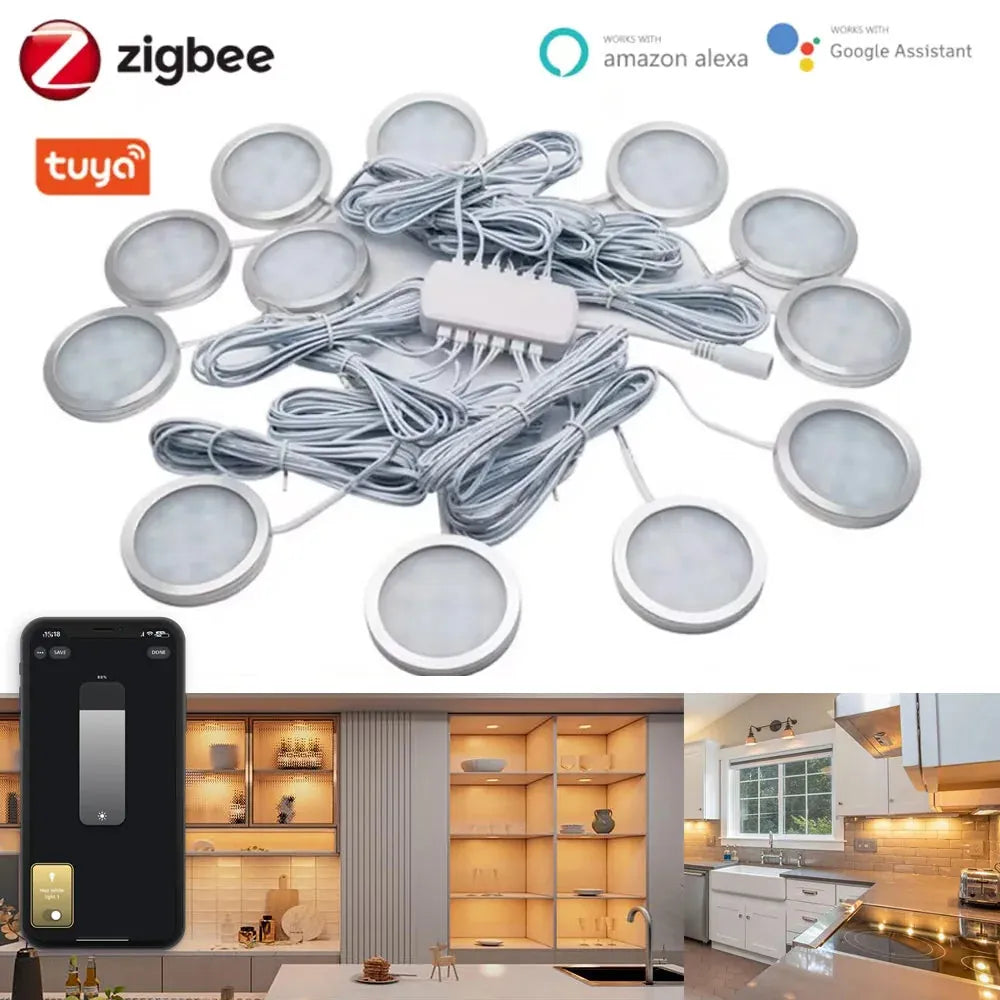
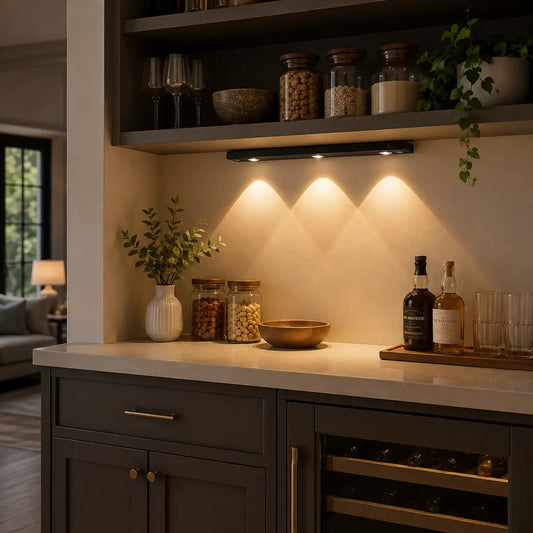
Smart under cabinet lights can be reliable long-term if they are designed with modular components and strong vendor support. The Tuya Zigbee Smart Under Cabinet LED Puck Lights offer app and voice control via platforms like Alexa or Google Assistant, ensuring flexibility in how you control your lighting. While Zigbee allows for more stable communication between devices, certain functions like remote app control may still depend on an internet connection. The full kit offers an easy setup and long-term reliability when paired with compatible hubs or smart assistants.
Safety Certifications and What They Really Mean
Certifications address different risks: electrical safety, emissions, and hazardous substances. Each adds confidence, none guarantees perfection.
UL, ETL, CE, and RoHS Explained
- UL/ETL: Independent safety testing for electrical products; see UL — What UL certification means.
- CE: Conformity marking in the EU covering safety and performance directives.
- RoHS: Restricts hazardous substances, supporting safer long‑term indoor use.
Why Certification Matters for Long-Term Use
- Improves insurance acceptance and compliance with building policies.
- Signals tested behavior under thermal and electrical stress.
- Helps filter unreliable products in long‑term renovations.
Under Cabinet Lighting in Rental or Long-Term Homes
Rental setups prioritize non‑permanent mounting and easy power; owned homes can optimize wiring, drivers, and channels for years of consistency.
Non-Permanent Solutions and Their Longevity
- Adhesive‑mounted strips: Quick to install; re‑adhesion may be needed over time.
- Rechargeable lights: Convenient but battery capacity declines; plan replacement cycles.
- Clip‑on bars: Repositionable; check cable strain and connector wear.
What Homeowners Should Plan for Over 5–10 Years
- Driver refresh or relocation for thermal relief if cabinets are warm.
- Optic and diffuser replacements to maintain color and uniformity.
- Periodic scene tuning to keep night guidance calm and flicker‑free.
Frequently Asked Questions About Long-Term Use
Can under‑cabinet lights be left on all night?
Yes at low levels with proper drivers and ventilation. Keep night scenes gentle to minimize heat and preserve comfort.
Do LEDs lose brightness over years?
Gradual lumen depreciation is normal. Clean optics and adjust scene brightness to maintain clarity over time.
Is it safe to install near sinks?
Use IP‑rated fixtures and GFCI protection. Route cables away from steam and confirm sealed connectors.
How do I stop flicker at low brightness?
Match drivers and dimmers; avoid mixing control types. Verify local triggers if sensors are used.
Will smart lights still work after protocol changes?
Favor widely supported standards and keep manual overrides. Local automations maintain core function even if apps evolve.
🔧Lumaz emphasizes long-term system stability by prioritizing aluminum channels, compatible drivers and dimmers, and periodic scene tuning to maintain calm, reliable lighting in daily life.
Final Thoughts: Designing Under Cabinet Lighting That Lasts
Longevity comes from thermal design, matched components, and gentle daily use. Maintain cleanliness, verify scenes, and plan modest driver refresh over the years.
After considering all the factors mentioned, you can explore more product options and detailed buying guides on our Under Cabinet Lighting Hub Page to find the best solution for your needs.
Additional Guides in This Topic
Related Lighting Guides
- Under Cabinet Lighting for Any Home Space: Kitchens, Shelves, Desks, and Cabinets
- Under Cabinet Lighting Installation: What’s Possible in Your Home
- How to Choose Under Cabinet Lighting: A Complete Decision Guide
- Complete Guide to Smart Under Cabinet Lighting: Controls, Sensors & Automation
- Light Quality for Under Cabinet Lighting: Color, Brightness & Comfort














 />
/>
 />
/>
 />
/>
 />
/>
 />
/>