

The Future of Bedroom Lighting: Invisible Tech and Smart Dimmers for Ultimate Comfort
Table of Contents
- Why Invisible Tech and Smart Dimmers Matter
- What “Invisible Bedroom Lighting” Really Is
- Smart Dimmers and Control Layers
- Comfort Metrics That Actually Change Sleep
- A Practical Scene Playbook You Can Copy
- How to Upgrade Without Remodeling the Bedroom
- Risks, Reliability, and How to Avoid Regret
- FAQs
- Conclusion
Why Invisible Tech and Smart Dimmers Matter
Future-facing bedroom lighting is not about more gadgets. It is about getting the right light at the right time with the least effort, using hidden sources and dependable dimming so the room feels calm by default.
When people search for “invisible bedroom lighting” and “smart dimmers,” they usually want one of three outcomes: a softer room with less glare, a simple bedtime routine that actually sticks, or a modern look that hides the tech. This cluster page focuses on those real decisions—what to build, what to buy, and what to avoid.
What “Invisible Bedroom Lighting” Really Is
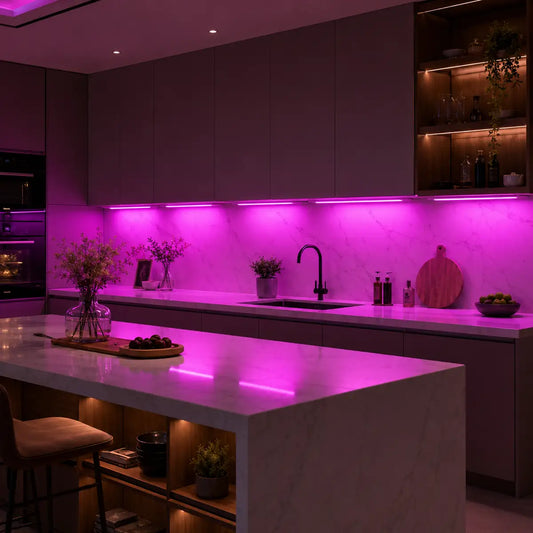
Invisible bedroom lighting means you see the effect, not the source: light is concealed in architecture (coves, joinery, headboards, toe-kicks) so the bedroom feels soft and designed instead of “lit by bulbs.”
Where invisible light improves comfort the most
- From the bed: concealed sources reduce direct glare in pillow sightlines.
- On vertical surfaces: wall wash or reflected light makes a room feel brighter without increasing harshness.
- For night navigation: low, hidden path lighting keeps you safe with minimal stimulation.
A practical toolkit for invisible bedroom lighting
- Cove lighting: a hidden strip aimed at a ceiling or upper wall for calm ambient light.
- Backlit headboard: indirect light behind the headboard for wind-down comfort and depth.
- Under-bed / toe-kick glow: low-level light that guides your feet, not your eyes.
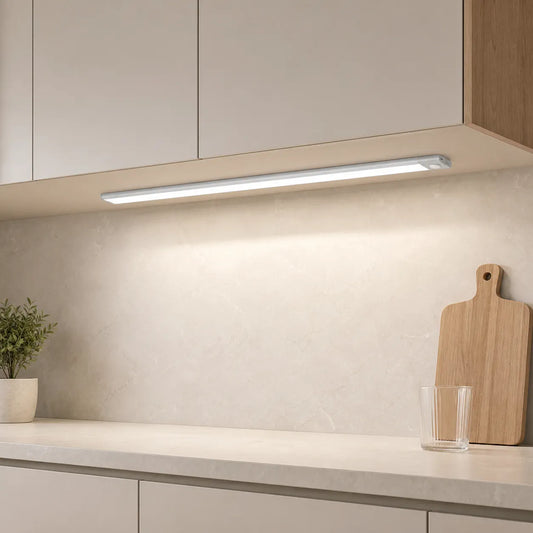
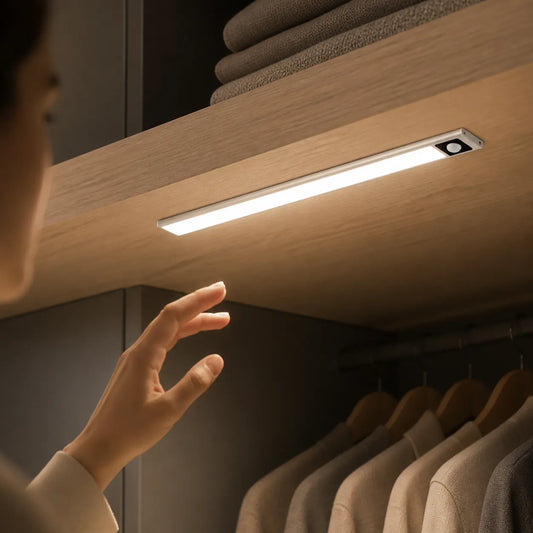
- Closet and wardrobe task light: contained light where you need detail, kept off the bed zone.
Spec checklist for hidden LED strips (so the result looks premium)
- Diffusion and dot control: use channels and diffusers so you see glow, not points.
- Color quality: prioritize high color quality for fabrics and skin tones (CRI 90+ as a baseline).
- Warm range: choose warm settings for evening and night navigation.
- Serviceability: plan how you will access drivers and connections later.
- Heat management: use appropriate channels and avoid trapping strips where heat cannot dissipate.
Decision rules designers use (simple, but high impact)
- If you can see a light source from bed, it is not “invisible” enough. Hide or shield it first.
- If the room looks flat at night, add vertical light. Aim light at walls or curtains to create softness.
- If you want calm without darkness, separate layers. Keep a low ambient base and add task light only where needed.
🙂 “Once I hid the light source, the room stopped feeling ‘bright’ even at the same brightness level. It finally felt like a bedroom, not a workspace.”
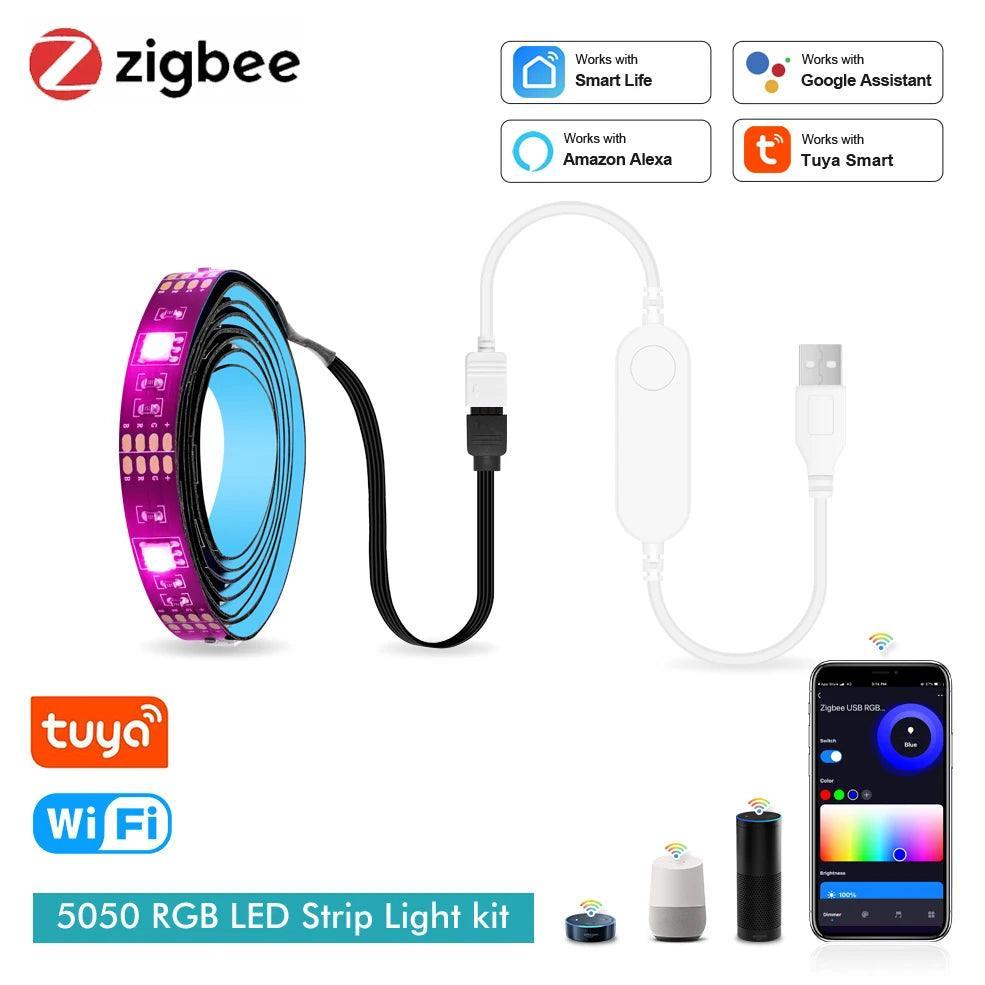
Invisible bedroom lighting creates a soft, ambient glow without visible light sources, enhancing the design without drawing attention to the fixtures themselves. The Tuya Zigbee & WiFi RGB LED Strip Light is ideal for this effect, offering discreet installation options like behind headboards or under toe-kicks, while its smart app control allows you to easily adjust the lighting to create the perfect mood, all without the need for visible bulbs.
Smart Dimmers and Control Layers
Smart dimmers matter because they make comfort repeatable: one action can set a low-glare evening mode, and schedules can prevent the bedroom from staying in “full brightness” too late.
Bulbs vs fixtures vs switches: where should “smart” live?
| Control layer | Best for bedrooms when you want | Main trade-off | Decision rule |
|---|---|---|---|
| Smart bulbs | Tunable white / warm-dim comfort in lamps and accents | Wall switches can break smart control | Choose bulbs if your bedroom uses lamps as primary comfort lighting |
| Smart dimmer (switch) | Reliable everyday control of ceiling lights for everyone | Compatibility varies with LED drivers and loads | Choose a smart dimmer if your main light is a ceiling fixture you use daily |
| Smart fixture | Clean integration (built-in diffusion, hidden sources) | Harder to replace and can increase lock-in | Choose fixtures when you are already renovating or upgrading hardware |
Common dimming methods (what you are actually buying)
| Dimming method | Where you see it | Bedroom strength | Bedroom risk |
|---|---|---|---|
| Phase-cut (forward/reverse) | Many wall dimmers for line-voltage fixtures | Simple retrofit path | Compatibility varies; low-end performance can be uneven |
| 0–10V | Some drivers and architectural lighting | Predictable control when matched correctly | Usually requires the right driver and wiring plan |
| Digital systems (e.g., DALI) | Higher-end architectural installs | Granular control and scalability | More complexity than most bedrooms need |
| In-driver PWM | Many LED strips and integrated fixtures | Can achieve very smooth low-level dimming | Quality depends on driver; poor implementations can flicker |
Compatibility checklist (what prevents flicker and frustration)
- Neutral wire requirement: many smart dimmers need one; verify before buying.
- Minimum load: low-watt LED circuits can behave poorly on some dimmers.
- LED driver match: integrated fixtures and LED strips depend on drivers; control must match driver capability.
- Low-end performance: your bedroom comfort depends on stable dimming at very low output.
- Fallback control: the bedroom should still work if Wi‑Fi fails.
💡 Lumaz tip: Treat “smart dimming” as a comfort feature, not a feature list. If your dimmer cannot hold a calm low level without flicker, it does not belong in a bedroom.
Comfort Metrics That Actually Change Sleep
Bedroom lighting feels “sleep-friendly” when evening light is dimmer, warmer, and lower glare than daytime light, making it easier to wind down without sitting in darkness.
Intensity and timing matter more than perfect color
Light is a strong cue for circadian timing. The NIH notes that light information helps regulate circadian rhythms and the timing of melatonin (nigms.nih.gov). A controlled study found that ordinary room light before bedtime suppressed melatonin onset and shortened melatonin duration compared with dim light (pmc.ncbi.nlm.nih.gov).
Practical takeaway: do not chase one “magic” bulb. Build a system that makes it easy to dim earlier and avoid harsh sources from bed.
Four comfort metrics to prioritize
- Low-end dimming stability: the light stays smooth at very low output.
- Glare control: you do not see the light source directly when lying down.
- Color quality: choose high color quality for fabrics and skin tones (CRI 90+ is a practical baseline).
- Warm evening range: use warm settings for wind-down and night navigation.
Two fast at-home tests
- Pillow test: lie down and look at typical sightlines. Any visible “point source” is a glare risk.
- Hand-wave test: wave a hand under dimmed light. If you see strobing or strain, consider different dimming, diffusion, or control.
A Practical Scene Playbook You Can Copy
The best smart bedroom lighting uses a few reliable scenes that match real routines. If you build three scenes and can trigger them in one action, you will actually use them.
Core scenes (keep it simple)
| Scene | Goal | Light behavior | Typical placement |
|---|---|---|---|
| Evening | Calm visibility without feeling “bright” | Warm, dim, indirect ambient + one shaded lamp | Cove/headboard + bedside lamp |
| Read | Light the page, not the whole room | Directional task light, ambient stays low | Bedside reading light or shaded lamp |
| Night Path | Safe movement with minimal stimulation | Very low, warm light near the floor | Under-bed/toe-kick/plug-in night light |
Automation that helps (and automation that hurts)
- Helps: scheduled Evening mode 1–2 hours before bed; motion-triggered Night Path at very low brightness.
- Hurts: motion sensors that turn on bright overhead lights at night; complex rules that require constant tweaking.
How to Upgrade Without Remodeling the Bedroom
You can get most “future bedroom lighting” benefits with a staged plan: start with a calm evening layer and a night path, then add invisible architectural light if you later renovate.
Three upgrade paths (choose the smallest one that solves your problem)
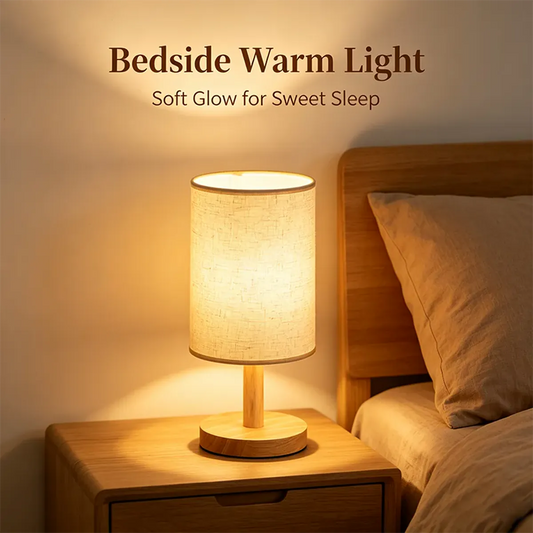
- Renter-friendly: smart bedside lamp + warm night light. No wiring changes.
- Comfort-first: add a reliable smart dimmer for the main light + one hidden glow layer (behind headboard or under-bed).
- Invisible-tech build: cove or wall-wash ambient + dedicated reading task light + floor-level night path.
Where to place money for the biggest comfort gain
- First: glare control and low-end dimming (because you use it nightly).
- Second: a night path solution (because it changes safety without waking you up).
- Third: hidden architectural ambient layers (because they change the feel of the room).
For energy efficiency, LEDs remain the best default; the U.S. Department of Energy notes that LEDs use less energy and last longer than incandescent lighting (energy.gov).
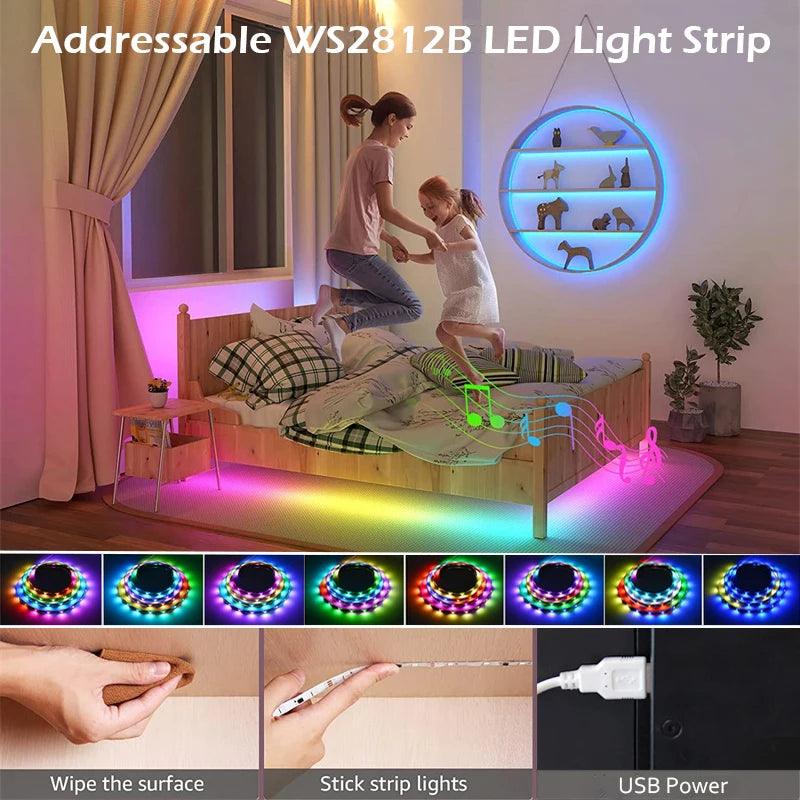
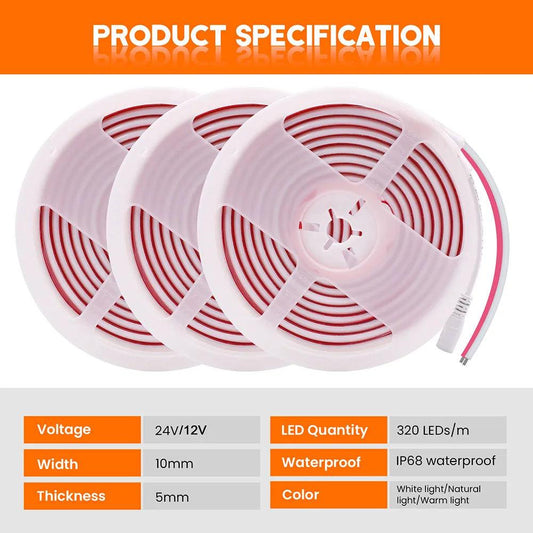
Upgrading your bedroom lighting doesn't require a full remodel—start small with a calming evening layer and a night path, then gradually add more advanced features. The RGBIC Dream Color USB LED Strip Light is a great first step, offering vibrant, customizable lighting that can be easily controlled via Tuya WiFi Smart, providing an instant upgrade to your space without the need for a renovation.
Risks, Reliability, and How to Avoid Regret
Smart bedroom lighting should reduce friction, not create new failure modes. Design for reliability first, then add features you will actually use.
Common risks (and the fix)
- Wi‑Fi dependency: keep a physical control path so lights still work during outages.
- Account and privacy creep: prefer systems that still function locally and keep bedroom automations minimal.
- Over-automation: automate only what you want to happen every time, especially at night.
- Incompatible dimming: verify dimmer, LED driver, and load compatibility before committing to a switch.
- Visible “LED dots”: use diffusion or dotless profiles so you see glow, not points.
- Status LEDs: avoid bright indicators facing the bed.
One decision rule that keeps systems sane
If a guest cannot turn on a comfortable light in 5 seconds without instructions, your system is too complex for a bedroom.
FAQs
These answers cover common search questions that come up when people compare invisible tech, smart dimmers, and bedroom comfort.
Are smart dimmers better than smart bulbs in a bedroom?
Often yes for the main light because they are intuitive and reliable. Smart bulbs are excellent for lamps and tunable warm comfort, but they can fail when someone uses a wall switch.
Do invisible LED strips help sleep?
They can, if you hide the source and keep it dim and warm at night. Strips are most effective as indirect ambient or night path lighting, not as the room’s brightest light.
When should I switch the bedroom into “evening mode”?
A practical starting point is 1–2 hours before bedtime. The goal is consistency: dimmer, warmer, and lower glare than daytime light.
What causes flicker when dimming LEDs?
Most flicker issues come from compatibility problems between the dimmer, LED driver, and low loads, or from poor low-end dimming performance. The fix is usually a better-matched dimmer or a different driver/control method.
Is circadian lighting the same as medical light therapy?
No. Bedroom circadian-friendly routines are about calmer evenings and gentler mornings. Medical light therapy has specific timing and intensity requirements and should be treated as clinical territory.
Conclusion
The future of bedroom lighting is quiet: hidden sources, low glare, and smart dimmers that make comfort repeatable. If you build a simple scene system (Evening, Read, Night Path) and design for reliability first, your bedroom will feel more restful without becoming a complicated tech project.
Further Reading
Explore the full guide for this topic: Smart Bedroom Lighting Guide: Systems, Controls, and Real-Life Benefits
















 />
/>
 />
/>
 />
/>
 />
/>
 />
/>