

Bedroom Lights: The Complete Guide to Choosing, Installing, and Saving with LED and Smart Lighting
Table of Contents
- Why choose LED and smart lighting for bedrooms?
- Understanding light metrics: lumens, kelvin, CRI, and dimmability
- Selecting bulbs and fixtures: LED types, form factors, and mounting
- Color temperature and circadian effects: lighting for sleep and wake
- Smart lighting features: hubs, protocols, apps, and voice control
- Installing bedroom lights: safe wiring, retrofits, and step-by-step
- Dimmers, switches, and sensors: compatibility and recommended products
- Energy savings and cost calculator: how to estimate ROI
- Privacy, security, and network concerns with smart bulbs
- Troubleshooting common issues and maintenance tips
- Case studies and recommended setups for typical bedroom layouts
- Frequently Asked Questions
- Conclusion
Why choose LED and smart lighting for bedrooms?
LED and smart lighting combine efficiency, control, and wellness benefits, making them the best long-term choice for bedrooms. They save energy, enable precise light scenes, and can support healthier sleep patterns when used correctly.
Switching to LED and smart lighting in bedrooms isn't just a trend—it's a measurable improvement in cost, comfort, and control. LEDs use significantly less electricity than incandescents and last far longer, reducing replacement and disposal costs. Smart systems add scheduling, dimming, color tuning, and voice control so lighting can adapt to sleep cycles, reading needs, and ambiance. The U.S. Department of Energy notes that LED replacements can save 50–75% of lighting energy compared with incandescent bulbs, with even greater lifetime savings when combined with controls (energy.gov).
Understanding light metrics: lumens, kelvin, CRI, and dimmability
Know the four key metrics—lumens, color temperature (K), CRI, and dimmability—to match light to tasks and atmosphere.
Choosing the right bulb is about more than watts. Use these metrics to specify brightness, color, and quality:
- Lumens – Brightness output. Bedrooms typically need 1,500–3,000 lumens total depending on size and tasks.
- Color temperature (Kelvin) – 2700–3000K for warm, relaxing light; 3500–4100K for neutral tasks; 5000K+ feels daylight-like and can be too stimulating before sleep.
- CRI (Color Rendering Index) – 80+ is fine for most bedrooms; 90+ is recommended where accurate color is important (makeup, clothing).
- Dimmability & TRIAC/LED drivers – Verify bulbs are labeled dimmable and compatible with your dimmer type (leading/trailing edge or smart dimming).
How to read packaging and specs
Quick checklist for bulb selection: lumens, kelvin, CRI, base type, dimmable flag, and lifespan (hours).
- Confirm lumens for desired brightness (e.g., 800 lm approximates a 60W incandescent).
- Pick a color temperature that supports your bedroom routine (2700–3000K for evenings).
- Choose CRI ≥ 90 if you need accurate color; otherwise 80–85 is acceptable.
- Check compatibility with dimmers or smart modules to avoid flicker.
Further Reading:
Selecting bulbs and fixtures: LED types, form factors, and mounting
Match bulb form factors (A19, GU10, PAR, candle) and fixtures (ceiling, recessed, sconces) to room layout and lighting goals.
Common bulb types and where they work best:
- A19/A60 – General lamps and table fixtures.
- BR/ PAR – Directional ceiling or recessed cans for task or accent lighting.
- GU10/MR16 – Track and spot lighting for accent or reading zones.
- Candelabra (E12) – Chandeliers and decorative fixtures.
- Integrated LED fixtures – Slimline panels and LED-downlights that reduce maintenance but require fixture replacement if they fail.
Fixture considerations
Decide between retrofitting existing fixtures or installing integrated LEDs based on budget and longevity goals.
Retrofitting with LED bulbs is low-cost and fast. Integrated LED fixtures offer better thermal management and cleaner lines but are higher upfront and less modular. For recessed cans, check housing type (IC-rated for insulation contact) and trim size; choose LED retrofit kits rated for your housing.
Practical selection tips
- For ambient lighting, choose a central ceiling fixture or flush mount yielding 1,500–3,000 lumens total.
- For reading, use directional spots (300–700 lumens per task light) at adjustable angles.
- Layer light: ambient + task + accent to avoid glare and create depth.
Color temperature and circadian effects: lighting for sleep and wake
Use warm, dim light in the evening and brighter, cooler light in the morning to support natural circadian rhythms and improve sleep quality.
Blue-enriched light (higher kelvin) suppresses melatonin and increases alertness. For better sleep hygiene, reduce blue light exposure in the 2–3 hours before bedtime. Harvard Medical School summarizes how evening exposure to blue light can delay sleep onset and disrupt circadian rhythm (health.harvard.edu).
Recommended color schedules
Simple color management routines you can apply with smart bulbs or tunable fixtures.
- Wake-up: 4000–5000K for 15–30 minutes to signal wakefulness.
- Daytime: 3500–4100K for tasks and higher visual acuity.
- Evening wind-down: 2700–3000K starting 2–3 hours before bed.
- Nightlight: 1800–2200K or dim amber for bathroom trips to minimize circadian disruption.
Smart lighting features: hubs, protocols, apps, and voice control
Smart lighting provides automation, scenes, and remote control via hubs (Zigbee/Z-Wave), Wi‑Fi bulbs, or Bluetooth; choose based on reliability and ecosystem compatibility.
Key smart features to evaluate:
- Protocols – Zigbee/Z-Wave (mesh networks, requires hub), Wi‑Fi (direct, easier setup, higher network load), Bluetooth (local control, limited range), Matter (emerging interoperability standard).
- Hub vs. hubless – Hubs add reliability and local control; hubless Wi‑Fi bulbs are simpler but can strain home Wi‑Fi and cloud services.
- Scenes & Routines – Pre-programmed scenes for wake, reading, romance, or night modes.
- Voice assistants – Amazon Alexa, Google Assistant, Siri/HomeKit compatibility.
- Geofencing & Schedules – Automatic on/off when you leave/arrive or at set times.
Choosing the right ecosystem
Match brand compatibility with your existing devices and long-term plans; prioritize Matter or local-control options for future-proofing.
If you already use a platform (Alexa, Google, HomeKit), pick bulbs and switches certified for that ecosystem. For privacy and responsiveness, devices supporting local processing or Matter offer advantages as the standard matures.
Installing bedroom lights: safe wiring, retrofits, and step-by-step
Follow safety-first steps for installation: power off, verify circuits, and use the correct fixture and housing for the location.
Basic installation workflow for retrofitting a ceiling light or replacing a fixture:
- Turn off the circuit at the breaker and verify power is off with a non-contact voltage tester.
- Remove existing fixture and note the conductor colors (hot, neutral, ground).
- Mount the new bracket or box rated for the fixture weight (use a fan/fixture-rated box if needed).
- Connect matching wires using rated wire nuts: black (hot) to hot, white (neutral) to neutral, and green/bare (ground) to ground.
- Secure fixture, install bulbs or LED modules, and restore power to test.
Recessed and retrofit can lights
Choose IC-rated trims for insulated ceilings and select LED retrofit kits sized to the can (4", 5", 6").
For recessed cans: ensure the retrofit kit has a compatible socket adapter or is designed for your can size. If your home has knob-and-tube or outdated wiring, consult a licensed electrician.
When to call a pro
- Knob-and-tube, aluminum wiring, or unknown/unsafe wiring.
- Replacing fixtures that require new junction boxes or ceiling reinforcement.
- Installing integrated smart circuits, multi-location dimmers, or adding new circuits.
Dimmers, switches, and sensors: compatibility and recommended products
Good controls improve comfort and energy savings—pick dimmers and sensors rated for LED loads and the smart ecosystem you use.
Control options and how they help:
- LED-compatible dimmers – Use dimmers specifically marked for LEDs and check minimum/maximum load ratings to avoid flicker.
- Smart switches – Replace wall switches with smart switches if you prefer physical controls that control all bulbs in a fixture, including non-smart lamps.
- Occupancy sensors – Ideal for closets and bathrooms; can reduce wasted on-time.
- Ambient light sensors – Adjust brightness based on daylight for consistent lux levels.
Recommended wiring and device combos
Examples of reliable combinations: Zigbee hub + in-wall smart switch for local control; Wi‑Fi dimmable bulb for easy retrofit; Bluetooth mesh for single-room setups.
- For whole-home integration: Zigbee bulbs + Philips Hue or SmartThings hub + wall dimmers that support smart hubs.
- For single-room quick upgrades: Wi‑Fi smart bulbs (TP-Link Kasa, LIFX) combined with a smart assistant.
- For reliable physical control: Replace mechanical switch with an in-wall smart dimmer (Lutron Caseta recommended for many setups) and pair with smart bulbs if needed.
The right dimmers, switches, and sensors not only enhance comfort but also contribute to energy savings, so it’s crucial to select compatible options for your LED setup. The USB-powered RGBIC Smart Corner Floor Lamp is a great addition to any smart ecosystem, offering dimmable settings and music sync capabilities for effortless mood adjustments, while its USB-powered design makes it an easy retrofit for any room layout.

Energy savings and cost calculator: how to estimate ROI
Estimate savings by comparing LED wattage to the incandescent equivalent, accounting for hours used, electricity rate, and bulb lifetime.
Use this formula for annual energy cost per bulb:
Annual kWh = (Wattage ÷ 1000) × hours per day × 365; Annual cost = Annual kWh × $/kWh
Example comparison (table shows typical values):
| Bulb Type | Typical Wattage | Lumens | Annual Energy (kWh)* | Annual Cost ($0.16/kWh) | Estimated Lifetime (hrs) |
|---|---|---|---|---|---|
| Incandescent (60W) | 60 W | 800 lm | 219 kWh | $35.04 | 1,000 hrs |
| LED (9W) | 9 W | 800 lm | 32.9 kWh | $5.26 | 25,000 hrs |
| Smart LED (10W) | 10 W | 800 lm | 36.5 kWh | $5.84 | 25,000 hrs |
*Assumes 10 hours/day use. Replace $/kWh with your local rate. Calculation source: typical DOE energy guidance (energy.gov).
Quick ROI example
Replacing one 60W incandescent with a 9W LED, used 3 hours per day, at $0.16/kWh:
- Annual kWh incandescent = (60/1000) × 3 × 365 = 65.7 kWh → $10.51/year
- Annual kWh LED = (9/1000) × 3 × 365 = 9.855 kWh → $1.58/year
- Annual savings per bulb = $8.93; if LED costs $5 and incandescent $1, payback is under 1 year.
For whole-room retrofits, multiply per-bulb savings by number of fixtures and consider smart scheduling to increase savings (turning lights off when not used).
💡 See how Lumaz LED lights slash your energy bills. Our advanced tech offers significant savings with a quick, impressive ROI.
Privacy, security, and network concerns with smart bulbs
Smart bulbs can be entry points to networks; secure them by isolating IoT devices, using strong passwords, and choosing vendors with robust firmware update policies.
Practical security steps:
- Place smart bulbs and smart hubs on a separate guest/IoT VLAN or SSID to isolate them from sensitive devices like laptops and phones.
- Change default credentials on hubs and routers; enable WPA3 or WPA2 encryption.
- Keep firmware updated; choose brands with clear update policies and strong track records.
- Prefer local-control systems where possible to reduce cloud dependency and data exposure.
Also remember physical security: smart scenes integrated with locks or cameras can create privacy risks if misconfigured. Review app permissions and third-party integrations carefully.
Troubleshooting common issues and maintenance tips
Resolve flicker, connectivity, and color drift problems with compatibility checks, firmware updates, and proper installation.
Common issues and fixes:
- Flicker – Ensure dimmer compatibility and confirm bulbs are labeled dimmable. Replace incompatible dimmers with LED-rated models.
- Connectivity dropouts – Add a Zigbee/Z-Wave repeater or reduce Wi‑Fi congestion; place hubs centrally.
- Color inconsistency – Use same-brand bulbs or ensure bulbs use the same firmware profile; replace aging LEDs with manufacturers’ recommended replacements.
- Slow app response – Check cloud service status, update firmware, or switch to local control options.
Maintenance checklist
Small proactive steps extend system life and reliability.
- Clean fixtures and lenses every 6–12 months to avoid light output loss.
- Review firmware updates quarterly.
- Test schedules and scenes after daylight saving time changes.
- Keep spare bulbs of the same model for consistent replacement color/brightness.
💬 "Swapping three ceiling bulbs to warm tunable LEDs and adding a bedside dimmer transformed our evenings—fewer wake-ups and easier mornings." — a community reviewer
Case studies and recommended setups for typical bedroom layouts
Practical configurations for small, medium, and master bedrooms, plus product-type recommendations for each use-case.
Three realistic setups:
Small bedroom (100–150 sq ft)
Objective: maximize ambient light with minimal fixtures.
- One central flush-mount LED (1,500 lumens) on a dimmer.
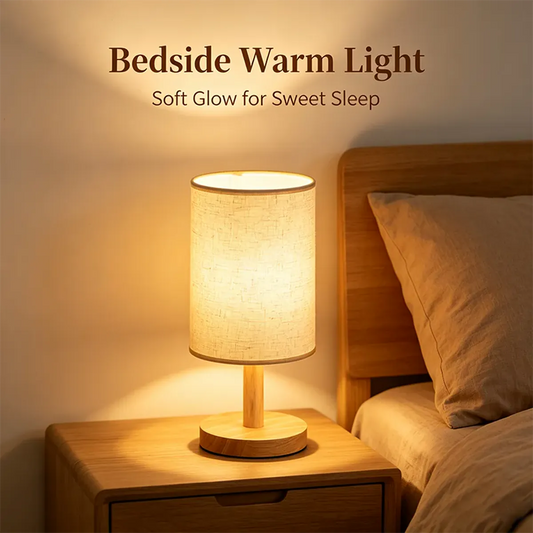
- Bedside smart bulbs (A19 tunable white) for reading and scenes.
- Simple schedule: warm dim at 9:30 PM, nightlight mode at 1:00 AM.
Medium bedroom (150–250 sq ft)
Objective: layered lighting for reading, dressing, and ambience.
- Recessed can lights (4–6) on a 3-way dimmer for ambient control.
- Two adjustable bedside sconces or swing-arm lamps with 400–700 lm directional bulbs.
- Closet sensor light and motion-activated bathroom nightlight.
- Smart hub for scenes and wake-up routines.
Master bedroom with en-suite
Objective: full automation and luxury—tunable white + accent lighting.
- Central pendant with integrated dimmable LED for ambient lighting.
- Tunable white recessed trims for task and circadian control.
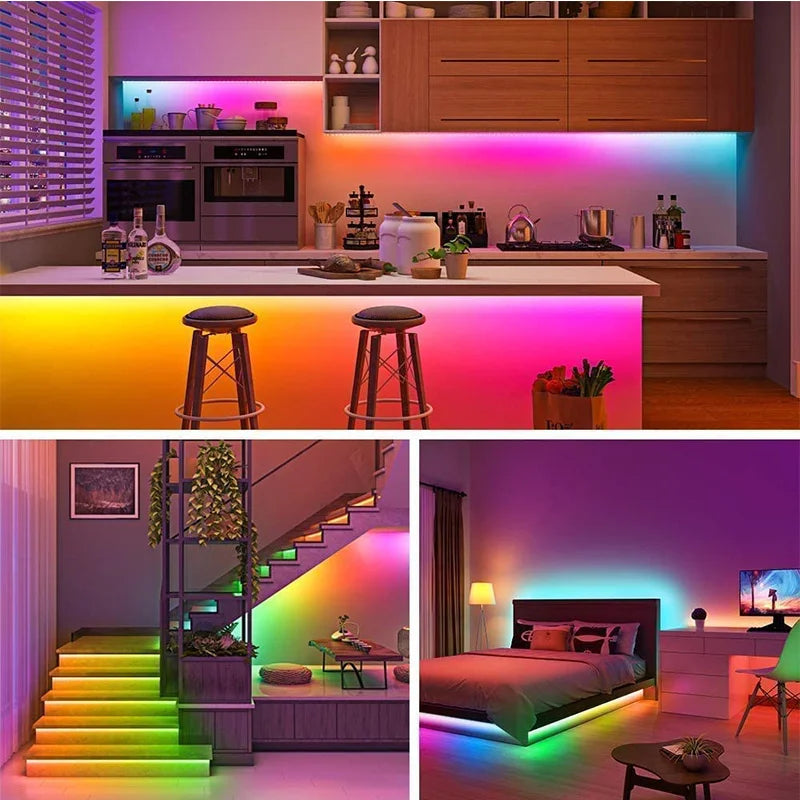
- Accent wall washers or cove lighting with RGBW for mood scenes.
- Smart switch at door plus voice control and geofencing for arrival/bed routines.
Recommended product categories: Lutron Caseta for reliable dimming and in-wall control, Philips Hue or Sengled for robust color/tunable bulbs, and TP-Link Kasa for budget Wi‑Fi options. For whole-home mesh and future-proofing, favor devices supporting Matter next-generation interoperability.
Frequently Asked Questions
Short, practical answers to common queries not fully covered in the main sections.
Are smart bulbs worth the extra cost?
Yes if you value automation, convenience, and scene control. For pure energy savings, basic LEDs deliver most value. Smart bulbs add lifestyle benefits (schedules, color tuning) and marginal additional energy use—consider mixed setups: smart switches for main fixtures and inexpensive LEDs for auxiliary lighting.
Can LEDs affect sleep quality?
Yes—exposure to blue-rich light (higher kelvin) in the evening can suppress melatonin and delay sleep. Use warm (2700K) lighting and dimming in the 1–3 hours before bed to reduce impact; consider tunable white bulbs to automate this change (Harvard Health).
Do smart bulbs work when the wall switch is off?
No—most smart bulbs require power. Use a smart switch or keep the switch on and control via the app or smart button. For multi-switch setups, choose smart switches that maintain traditional control while enabling smart features.
How much can I save by switching to LEDs?
Savings depend on usage and rates, but LEDs typically use 50–80% less energy than incandescent bulbs. Using controls and occupancy sensors increases savings. The U.S. Department of Energy provides guidance and averages for household savings (energy.gov).
Are integrated LED fixtures better than bulbs?
Integrated fixtures often have superior thermal design and sleeker aesthetics, but they’re less modular—when the LED driver fails, the whole fixture may need replacement. Bulb-based fixtures are easier to upgrade or replace over time.
How do I choose between Wi‑Fi, Zigbee, and Bluetooth?
Use Wi‑Fi for easy, single-room setups without a hub; Zigbee/Z-Wave for reliable mesh networking and whole-home setups with a hub; Bluetooth for simple local control and small areas. Favor Matter-compatible devices for future-proof interoperability.
Conclusion
In conclusion, selecting the right LED and smart lighting for your bedroom can transform the space, enhancing both its functionality and ambiance. By understanding key lighting metrics, choosing compatible fixtures, and integrating smart features, you can create a personalized lighting experience that supports your daily routines and improves your sleep quality. With proper installation, energy-saving tips, and regular maintenance, you’ll enjoy a comfortable and efficient bedroom environment for years to come.
Further Reading
Explore the full guide for this topic: Smart Bedroom Lighting Guide: Systems, Controls, and Real-Life Benefits














 />
/>
 />
/>
 />
/>
 />
/>
 />
/>