Motion-Sensor Under Cabinet Lighting for Hands-Free Kitchen Tasks
Best Overall Hands-Free Control for an Everyday Prep Counter
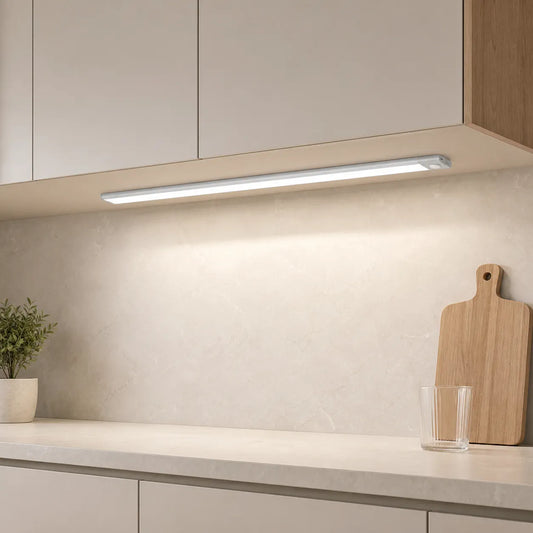
Best overall for a frequently used kitchen counter with an outlet: the Lumaz Touch & Hand Sweep Sensor Under Cabinet LED Light Bar. A deliberate wave is better matched to chopping, mixing, and cleanup than room-motion control: it avoids touching a switch with wet or food-covered hands, yet the light stays in the state you selected instead of depending on continued body movement.
Best fit
- A main prep, sink-side cleanup, or coffee counter used for more than a quick visit.
- A 30cm, 40cm, or 50cm straight cabinet section with a safe route to continuous power.
- A cook who wants touch-free switching without aisle traffic turning the light on.
Choose differently when
- No outlet or acceptable cable route exists; use a rechargeable Lumaz motion-sensor bar.
- The light should turn on simply because someone enters a dark pantry; use PIR.
- The target is one shelf or cabinet compartment; use a compact PIR puck.
Lumaz solution principle: choose the trigger by the action that should turn the light on. Use hand-wave control for a deliberate cooking session, PIR for a predictable approach into a dark zone, and always-on or manual control when an automatic shutoff would interrupt the task. Then choose continuous power when daily use would make charging a chore.
Match the Control to the Kitchen Action
| User situation | Recommended control | Why it fits | Choose differently when |
|---|---|---|---|
| Chopping, mixing, washing produce, or cleaning for an extended session | Hand-wave bar on continuous power | A deliberate gesture starts or ends the session without touching the fixture, and the light does not need to infer whether the cook is still present. | There is no safe power route, or the user wants the light to appear automatically on approach. |
| Short visits to a dark secondary counter, pantry entrance, or utility cabinet with no wiring | Rechargeable PIR light bar | Automatic activation is useful when the approach path is clear and the visit is brief. | People or pets pass the sensor repeatedly, or the task continues while the user stands relatively still. |
| One deep cabinet, pantry shelf, or small storage compartment | Rechargeable PIR puck | A compact local light suits reach-in actions and can switch off after a short visit. | The user needs sustained countertop light; the 25-second automatic shutoff is too short for meal preparation. |
| A long task where any automatic timeout would be disruptive | Always-on or manual mode | The user decides exactly when the light changes state, so stillness cannot switch it off mid-task. | Hands-free arrival is more important than continuous control, or users often forget to turn the light off. |
Three Sensor Configurations That Behave Differently
Configuration 1 · Deliberate control for active cooking
Wave Once, Then Keep the Prep Counter Lit
Recommended setup: install one powered hand-sweep bar beneath each straight cabinet section that serves an active task zone. Put the sensing end near the front underside where a short, intentional wave is comfortable, but offset it from the path of cabinet doors, hanging towels, and routine countertop reach.
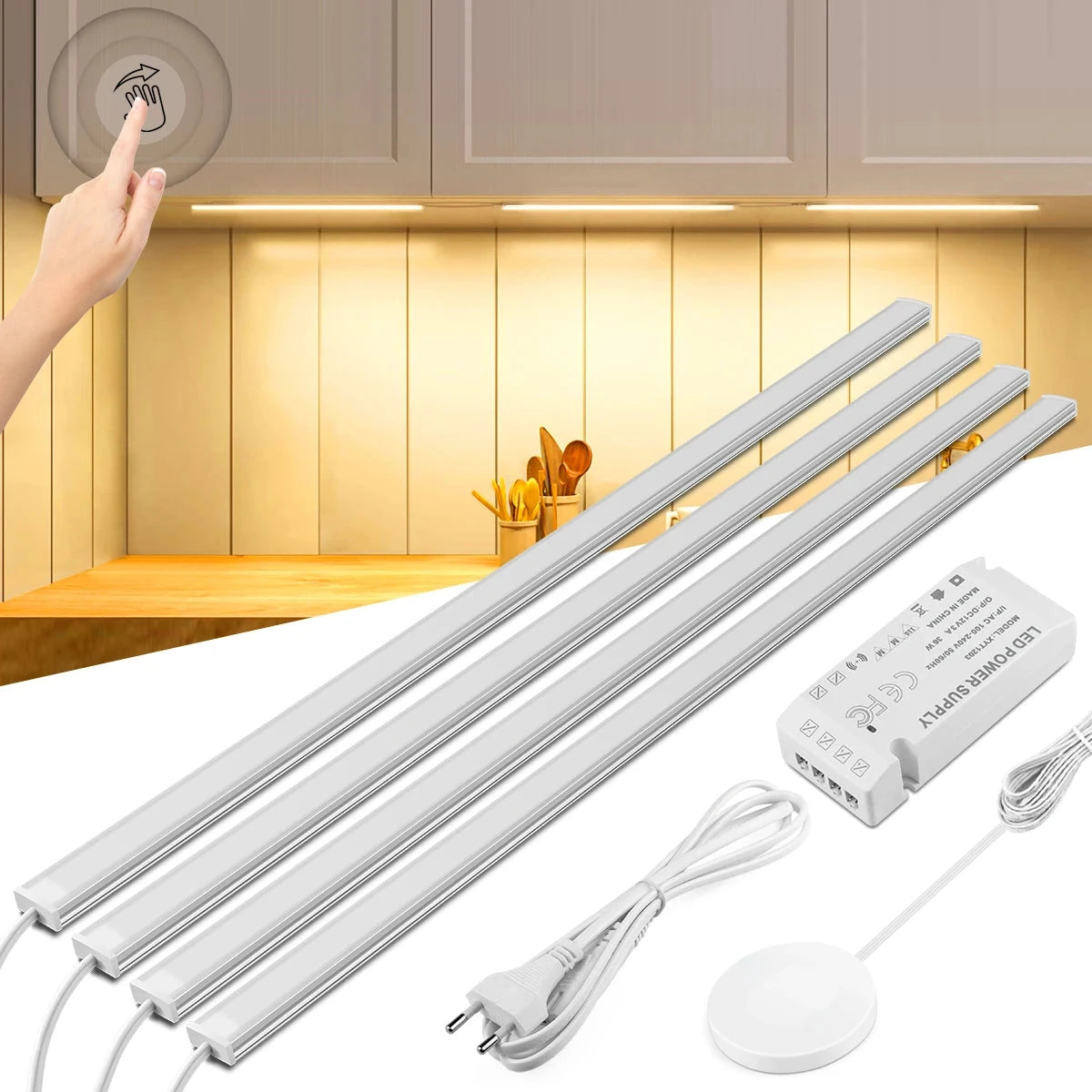
- Best fit: a straight prep, baking, sink-side, or coffee section used for sustained tasks.
- Fixture facts: 7mm aluminum body; 30cm, 40cm, and 50cm lengths; 1- to 6-light kits; US or EU power adapter.
- Why this model: hand-sweep switching avoids surface contact, while stepless dimming and continuous AC power support a full cooking session without battery maintenance.
Best fit
A cook starts the light with a clean or wet hand before handling food, leaves it on while working, and switches it off with another deliberate wave after cleanup. This avoids both switch contact and motion-sensor timeouts.
Not ideal when
The sensor would sit beside a frequently opened cabinet door or where every reach for a utensil crosses it. Move the sensor end or choose the Lumaz rechargeable bar in always-on mode if a reliable gesture corridor cannot be created.
Prevent accidental hand-wave triggers
- Before fixing the clips, hold the bar in place and repeat normal actions: open the nearest door, reach for oil, lift a mixing bowl, wipe the backsplash, and carry a pan past the counter.
- Keep the sensing end accessible from the working position but away from the busiest reach path. A sensor does not have to be centered with the light.
- Test the intended wave from the side and front. Finalize the position only when the deliberate gesture is easy and ordinary prep movements do not reproduce it.
- Route the adapter cable away from the sink, heat, drawer slides, and cabinet hinges, following the product instructions.
Configuration 2 · Automatic light where approach is predictable
Use PIR for Brief Visits, Then Override It for Cooking
Recommended setup: mount a rechargeable PIR bar beneath a secondary cabinet, at a pantry entry, or above a short landing zone. Aim the sensor toward the person's approach rather than across the room. For chopping, kneading, or any task that continues while the body is relatively still, select always-on mode before starting.

- Best fit: a rental, pantry approach, or lightly used counter where cable routing is impractical.
- Control facts: always-on, night motion-sensor, all-day motion-sensor, and off modes, plus stepless dimming.
- Why this model: magnetic installation and 10cm to 50cm lengths make the bar removable, while separate motion modes and always-on control let the user change behavior for short visits versus active work.
Best fit
A person approaches the same dark zone from one direction, takes an item or sets down groceries, and leaves. The sensor can face that path without also watching the kitchen's main circulation lane.
Not ideal when
The sensor faces an open doorway, pet route, or busy aisle, or the counter is used for long daily cooking sessions. Choose the powered Lumaz hand-sweep bar to reduce unintended activation and eliminate charging.
Mode choice matters: use night motion mode when automatic light is needed only in a dark space; use all-day motion mode only where daytime activation is genuinely useful. Use always-on mode for a sustained task instead of trying to keep a PIR sensor active with repeated gestures.
Configuration 3 · Small cabinet or pantry target
Reserve a PIR Puck for Short Reach-In Actions
Recommended setup: use one puck per small compartment or shelf zone that needs local visibility. Place it where an opening door or approaching hand enters the sensing field without blocking the light, and keep it out of the main kitchen aisle so general movement does not consume battery.
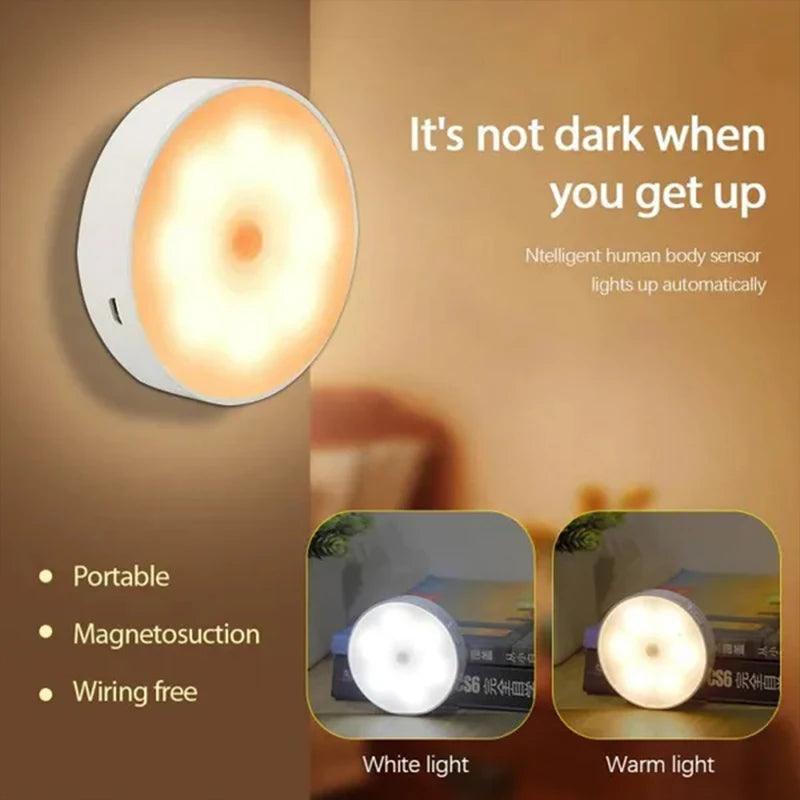
- Best fit: a pantry shelf, deep cabinet, or dark corner opened for a quick retrieval.
- Sensor facts: infrared sensor with Fresnel lens, 120° sensing angle, listed 3–6m distance, and 25-second auto-off time.
- Why this model: the compact 8.3 × 8.3 × 2cm magnetic puck places automatic local light where a full bar is unnecessary, and its known shutoff time makes the use case easy to judge before purchase.
Best fit
Opening a deep pantry, selecting a spice, or retrieving a small appliance normally takes less than a minute and naturally produces movement near the shelf.
Not ideal when
The light must remain on while hands are nearly still or while a recipe is read. The listed 25-second auto-off makes this puck a poor primary prep light; choose the Lumaz hand-sweep bar or a bar with always-on mode.
Place the Sensor Before You Fix the Light
- Name the intended trigger. Decide whether the light should react to a person entering, a hand approaching, or one deliberate wave. If that event is not specific, false activations are difficult to prevent.
- Map competing movement. Open cabinet doors and drawers, walk the main aisle, move a towel, let a pet pass, and repeat the normal reach for utensils. These actions reveal whether the proposed sensor view is too broad.
- Temporarily mount the fixture. Use removable tape or hold the magnetic plate in place. Test after dark and in normal daytime conditions because the selected sensor mode and ambient light can change behavior.
- Aim PIR across the approach, not across the room. Keep the detector from facing an open doorway, heating vent, window, or busy circulation lane. The goal is to see the intended user without watching unrelated movement.
- Create a clean wave corridor. Put a hand-wave sensor where a short gesture is easy from the working stance but routine reaching, doors, towels, and cleaning cloths do not pass immediately in front of it.
- Verify task light separately. A sensor can trigger reliably while the light is badly placed. Stand at the cutting board and confirm that the bar illuminates the front working edge without exposing the LEDs at eye level.
Plan for response reliability: an activation-delay specification is not listed for these bars or pucks. Test the final orientation before permanent mounting; if immediate, repeatable response is essential, favor a deliberate hand-wave or always-on control over a broad PIR trigger.
Choose Rechargeable or Continuous Power by Use Frequency
Continuous power
Use it for the main cooking counter
Choose a powered bar when the light may remain on through preparation, cooking, and cleanup. It removes charging as a failure point and is the stronger fit for several lights controlled as one planned system.
Trade-off: the adapter and cable need a safe, discreet route away from water, heat, hinges, and drawer slides.
Rechargeable power
Use it for short or lightly used zones
Choose a magnetic rechargeable bar or puck when drilling and visible wiring are unacceptable, or when the light serves a pantry, cabinet, or secondary counter for brief visits.
Trade-off: brightness, motion frequency, selected mode, and visit duration all affect how often charging is needed. Plan an accessible charging spot rather than assuming a fixed runtime.
Manual or always-on fallback
Use it when the task cannot tolerate a timeout
Set the rechargeable Lumaz bar to always-on mode for chopping or recipe work, or use the powered hand-wave bar as a deliberate session control. Manual certainty is more valuable than automation when stillness could turn off the light.
Trade-off: the user must remember to switch the light off, and always-on use increases energy consumption or charging frequency.
Fix the Behavior Before Replacing the Fixture
| Observed problem | First placement or mode check | Change the configuration when |
|---|---|---|
| Light turns on when someone walks past | Angle PIR away from the room and toward the intended approach; use night motion mode if daytime activation is unnecessary. | The sensor cannot be shielded from a busy aisle—switch the task zone to deliberate hand-wave control. |
| Light does not trigger on entry | Check that the sensor is not hidden by a cabinet lip, door, stored item, or the user's body; test the relevant day/night mode. | The only practical mount faces away from the approach—use a deliberate switch location instead. |
| Light switches off during food preparation | Do not treat a short automatic cycle as a sustained-task control. Select always-on mode where available. | The zone is used daily for long sessions—install the continuous-power hand-wave bar. |
| Charging feels too frequent | Reduce unintended triggers, choose night-only motion where appropriate, and use only the brightness needed for the task. | Frequent intended use is the cause—continuous power is the more maintainable configuration. |
Questions That Can Change the Control Choice
Is PIR or hand-wave control better over a kitchen counter?
Hand-wave control is usually better for an active prep counter because the cook deliberately starts a session and expects the light to remain on. PIR is better for a pantry entrance, secondary counter, or cabinet where arrival itself should trigger a short period of light.
Should the sensor face the person or the work surface?
A PIR sensor should watch the intended approach while avoiding the room's main traffic. A hand-wave sensor should face an accessible gesture corridor. The LEDs still need separate front-to-back placement so they illuminate the working edge of the counter.
Will a rechargeable motion light work for everyday meal preparation?
It can work when wiring is unavailable, especially if the bar offers always-on mode, but daily long sessions increase charging demand. For a main counter with a safe outlet route, the continuously powered Lumaz hand-wave bar is the lower-maintenance choice.
Continue with the Right Lumaz Path
Collection hub
Compare Lumaz Under Cabinet Lighting
Use the collection after choosing PIR, hand-wave, or manual control to compare current bar, strip, puck, power, and control variants.
Next decision · Coverage
Fix Dark Kitchen Countertops with Task Lighting
Continue here when the control is settled but the light still needs to reach the cutting board evenly without glare or body shadow.
Next decision · No wiring
Plan a No-Wiring Under Cabinet Setup
Continue here when the kitchen cannot accept new wiring and you need to compare rechargeable bars, pucks, and flexible battery-powered layouts.