Replacing Old Puck Lights: Puck, Bar or LED Strip?
Keep Pucks If You Like the Light Pools; Change Formats If You Want a Continuous Counter
Replace old puck lights with new pucks when their spacing and focused light still work for the room, and the new fixtures can fit or cleanly cover the existing cabinet openings. Choose a slim light bar when you want more even light beneath straight cabinet sections. Choose a diffused LED strip when the run is long, irregular, or needs a nearly continuous line. Moving from pucks to a bar or strip also means planning what happens to the old holes, old wiring, and driver before the new light goes up.
Start by finding out whether the old lights are plug-in, low-voltage, or direct-wired, and whether only one puck failed or the entire run stopped working. A new fixture's shape alone cannot tell you whether its power system can reuse the old one. If the labels or wiring are unclear, have an electrician identify them before ordering parts or retiring the old system.
Inspect Four Things Before Shopping
Take a photograph of the old fixtures, any driver or transformer label, the wall control, and the underside of the cabinet. Measure one old opening only after the system is safely isolated and the fixture can be examined without disturbing unknown wiring. You are collecting information for a replacement decision, not diagnosing an energized circuit.
- Which part failed? If one puck is dark while the others work, the problem may be local to that fixture or connection. If every puck is dark, the common driver, switch, or supply may be involved. Neither pattern proves a cause by itself.
- What power did the old system use? Record any voltage, AC or DC marking, driver output, dimmer model, and connector type. An old halogen transformer is not automatically suitable for new LEDs; the new light and driver must be specified together.
- How were the pucks mounted? A recessed puck leaves a cutout; a surface puck may leave screw holes, adhesive, or a discolored circle. Note the opening diameter, cabinet-bottom thickness, trim diameter, and any visible heat marks.
- Do you still want this light pattern? Look at the counter after dark. If distinct pools suit a display or small nook, preserve them. If food prep falls between bright circles, a linear light is a more meaningful upgrade than simply buying brighter pucks.
Puck cutouts are not one universal size. For example, published Liteline Pro Puck instructions show a 2-inch recessed opening, while a different Liteline slim puck specification lists a 2¼-inch cutout. Measure your old hole and the new fixture's required opening and trim before assuming one will cover the other.
What Changes When You Choose Puck, Bar, or Strip?
| Replacement | Best reason to choose it | Old-hole plan | Power and control check |
|---|---|---|---|
| New puck lights | You want the same focused pools, or a display cabinet looks better with separate highlights. | Confirm recessed cutout and trim coverage; for surface pucks, check whether old holes need a plug, cover, or finish repair. | Match the new puck's voltage, driver type, load, connector, and dimming method; do not assume the old driver is reusable. |
| Slim LED light bar | A straight prep or sink zone needs more consistent light without designing a custom strip channel. | Check whether the bar and its mount really cover the old marks; repair visible holes rather than hiding them under a fixture that must later be removed. | Choose an approved direct-wire fixture for an existing permanent feed, or plan an accessible outlet and cord route for a plug-in bar. |
| LED strip in a diffuser or COB strip | You want a continuous line across a long or uneven cabinet run and fewer bright circles on the worktop. | Plan a tidy patch, underside panel, or cabinet finish for the former puck sites; a thin strip rarely hides large round cutouts by itself. | Specify the correct strip voltage, driver or adapter, control, run lengths, and route between cabinet sections. |
The table is about an upgrade from an existing puck installation. If you are starting with untouched cabinets and simply choosing a shape for the layout, the existing strip, bar, and puck layout comparison serves that broader decision.
Do Not Let the Old Holes Decide the New Lighting Effect
It can be tempting to buy new pucks only because the cabinet already has round openings. That is sensible when the light pools are useful and a compatible replacement fits. When the main complaint is uneven countertop light, plan the repair work as part of a bar or strip upgrade instead of preserving a layout you no longer like.
Small marks or screw holes
Check whether a new fixture's mount will cover them without interfering with service. Otherwise, a finish-matched repair can leave the cabinet underside ready for a new light position.
Large recessed openings
Measure each opening and inspect the cabinet floor. A suitable trim ring, cabinet-bottom repair, or removable underside panel may be needed before a bar or thin strip looks intentional. Do not make an inaccessible electrical connection behind a cosmetic cover.
Heat stains, brittle wiring, or damaged wood
Address the old fixture and surface condition before covering it. A new LED can change the light effect; it does not repair heat damage or make deteriorated wiring safe.
Ask the installer what will happen to every old cable and driver if the replacement uses a different power route. Old energized conductors must not be left loose or buried behind a bar, strip channel, or cabinet panel. For low-voltage products, Armacost's driver selection guidance shows why the supply must match the light's voltage and power needs; keep the exact product instructions with the plan.
Lumaz Options for Three Different Replacements
These examples correspond to different finished looks. The products below are not guaranteed replacements for your old puck cutouts or old driver. Check the mounting dimensions and the complete power route before ordering.
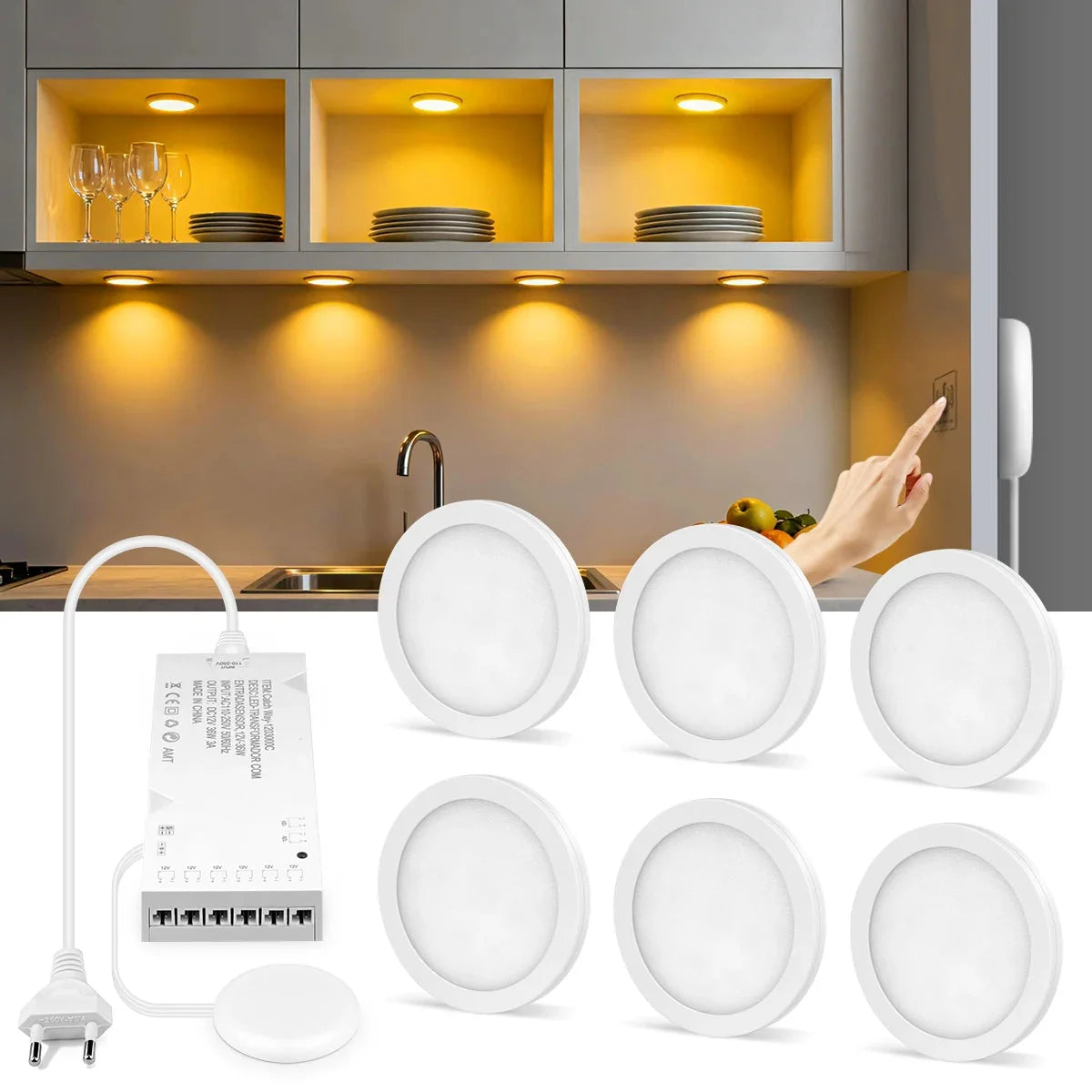
- Choose from 1–6 or 10 pucks when separate light pools still suit the counter or display.
- The kit uses a supplied plug-in adapter and hidden touch control, so plan an outlet rather than assuming the old driver can power it.
- Measure and mock up one old opening: this kit is not documented as a drop-in fit for every recessed puck hole.
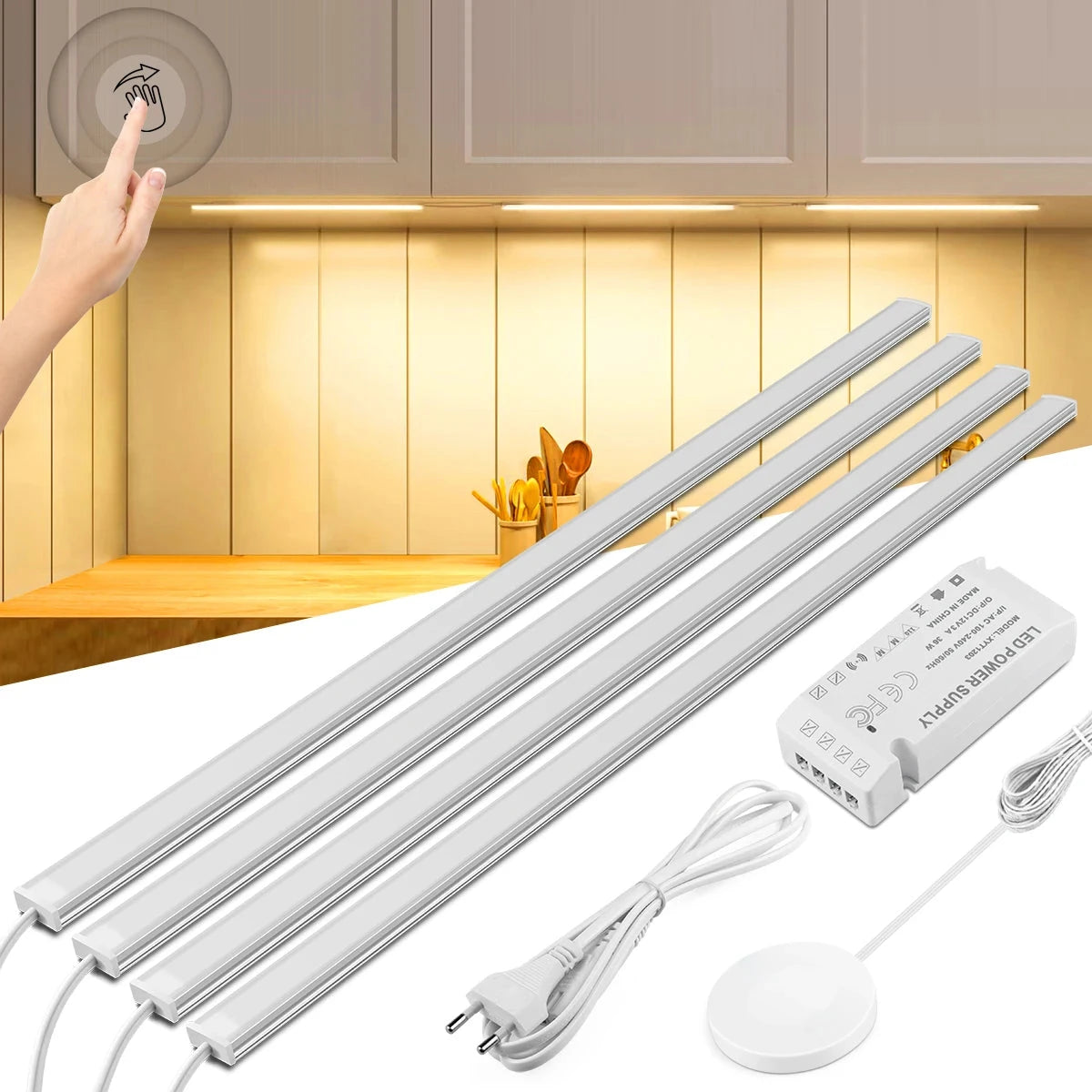
- 30, 40, and 50cm plug-in bar options give a straighter wash over a prep or sink section.
- Hand-sweep switching and touch dimming suit a work zone you turn on intentionally.
- Plan the adapter outlet, cable concealment, and repair of any old puck openings outside the new bar's footprint.
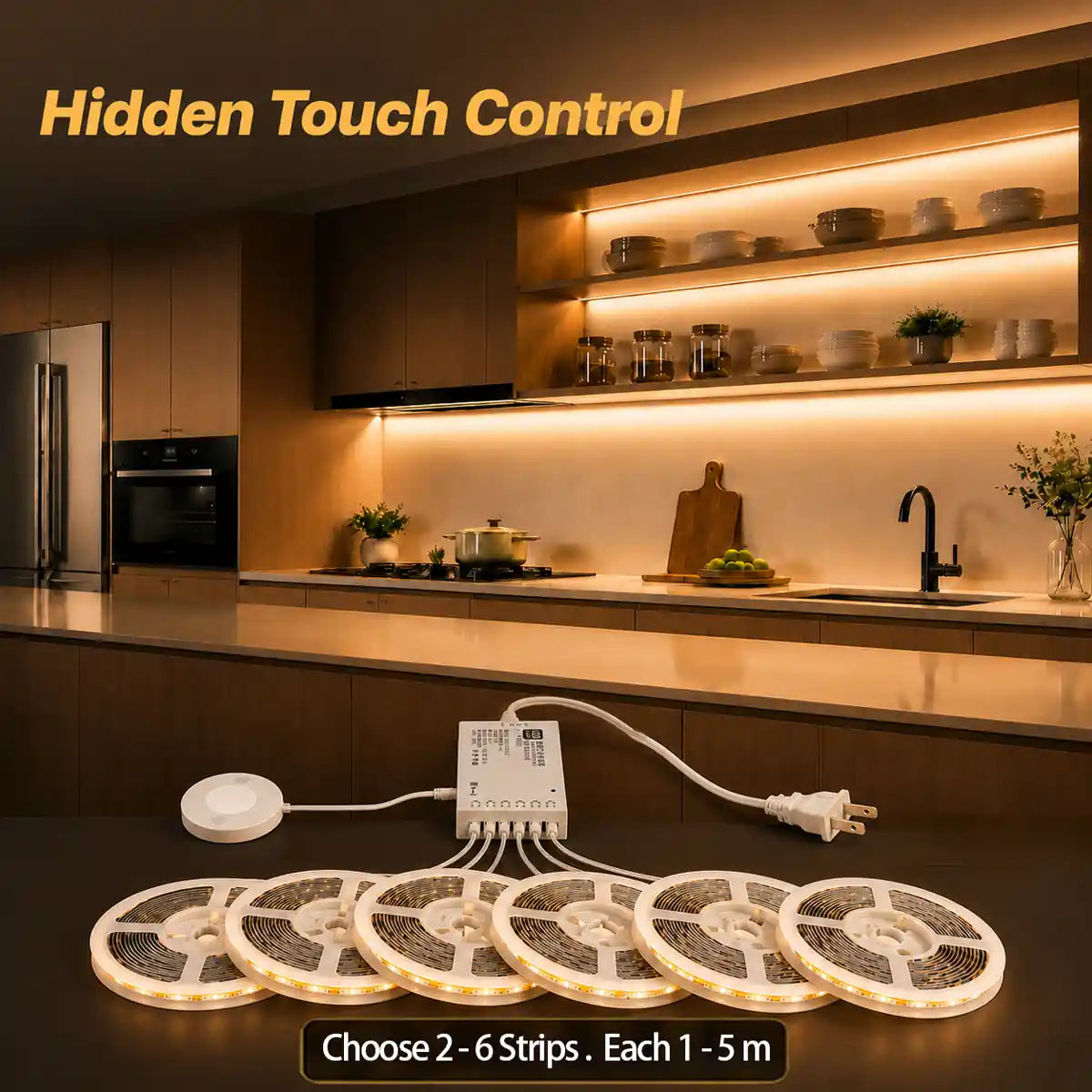
- The plug-in kit includes COB strips, a centralized adapter, and touch dimming for a smoother line across the cabinet.
- Cuttable strip lengths and multiple-run kit choices can suit uneven cabinet sections.
- Repair or cover the former puck holes as a separate finish task, and confirm the adapter and controller have an accessible home.
If you are retaining a professionally specified 12V driver-fed puck system rather than moving to a new plug-in kit, Lumaz also lists 12V Aluminum Under Cabinet LED Puck Lights - Surface Mount, Multiple Wattage Options. They are surface-mounted components, not a promise that the old recessed holes, driver, or connectors will match. Compare the exact diameter and electrical specifications first.
A Practical Decision for the Cabinet You Have
- Keep pucks if the old placement lights the right spots, the cutouts can be reused or neatly covered, and a compatible complete power system is available.
- Move to bars if straight cabinet sections need fuller task coverage and you can route a suitable power supply while repairing visible old holes.
- Move to a strip if you want an unbroken line across a long or irregular run and are willing to plan a driver or adapter, channel or mounting surface, and cabinet-bottom repair.
Before purchasing the whole kitchen's worth, compare one proposed fixture at the old puck position and over the actual worktop. Check whether the old hole remains visible from normal standing and seated viewpoints, whether the backsplash reflects bright spots, and whether the control is convenient. For spacing after you choose a format, use the strip, bar, and puck spacing guide.
Old Puck Replacement Questions
Can I replace a recessed puck with a surface-mounted LED puck?
Possibly, but only after measuring the old cutout, the new puck's body and trim, cabinet thickness, and the route for its wire. A surface puck may not cover a large recessed opening. Plan a suitable repair or panel if the hole remains visible.
Can I reuse the old puck-light transformer or driver?
Do not assume so. Compare the new light's required voltage and current or constant-voltage supply, total load, polarity, connectors, and dimming method with the old driver's label and instructions. If these details are missing or the old system is hardwired, have a qualified installer specify the replacement.
Will a light bar cover my old puck holes?
Only if its actual mount and position cover the openings without obstructing safe wiring or future service. Many slim bars are narrower than an old recessed puck cutout. Check a paper template or one sample fixture before relying on coverage.
Should I replace one failed puck or the whole set?
If one puck failed and a matching, compatible replacement exists, a single-unit replacement may preserve a layout you like. If the common driver is failing, the lights are mismatched, or the light pools no longer serve the counter, compare a complete new system before replacing fixtures one by one.
Continue With the Right Next Step
Broader hub
Explore Under Cabinet Lighting
Compare new fixture forms after deciding what the old system leaves behind.
Practical next step
Check the Driver or Transformer
Understand when a new LED setup needs a separate supply before reusing any old power components.
Related alternative
Plan the New Light Spacing
Lay out pucks, bars, or strips once you have selected the replacement format.