

Best LED Path Lights Reviewed: Affordable, Durable, and Stylish Picks
Table of Contents
- Why choose LED path lights? — Fast benefits and long-term savings
- Key specs that determine performance — What to compare before buying
- Top LED path lights reviewed — Best options for budgets and needs
- Comparison table — Quick specs and buying guidance
- Installation & placement guide — Layout, spacing, and wiring basics
- Energy, cost, and performance metrics — What to expect over time
- Common problems and troubleshooting — Quick fixes for typical issues
- Environmental and safety considerations — Minimize light pollution and health impacts
- When to choose solar vs wired LED path lights — Decision checklist
- Maintenance checklist — Keep your path lights performing for years
- FAQs — Quick answers to common LED path light questions
Why choose LED path lights? — Fast benefits and long-term savings
LED path lights deliver bright, efficient illumination with long lifespans and low maintenance, making them the best value for walkways and landscape borders. They consume far less energy than incandescent and many halogen options.
LEDs convert more electricity into visible light, reducing electricity use and replacement frequency. The U.S. Department of Energy highlights LED efficiency and lifetime advantages, which directly translate to lower operating costs and fewer maintenance trips: https://www.energy.gov/energysaver/led-lighting.
💡 Experience immediate ambiance and lasting efficiency. Lumaz LED path lights deliver brilliant, affordable illumination for years to come.
Key specs that determine performance — What to compare before buying
Focus on lumens, color temperature, CRI, IP rating, power source, and construction materials—these specs control brightness, color, durability, and suitability for your site.
- Lumens: The real measure of brightness. For walkways 100–400 lm per fixture is common depending on spacing.
- Color temperature (CCT): 2700K–3000K for warm, residential feel; 3000K–4000K for crisper white light.
- Color Rendering Index (CRI): 80+ is good; 90+ shows colors accurately under light.
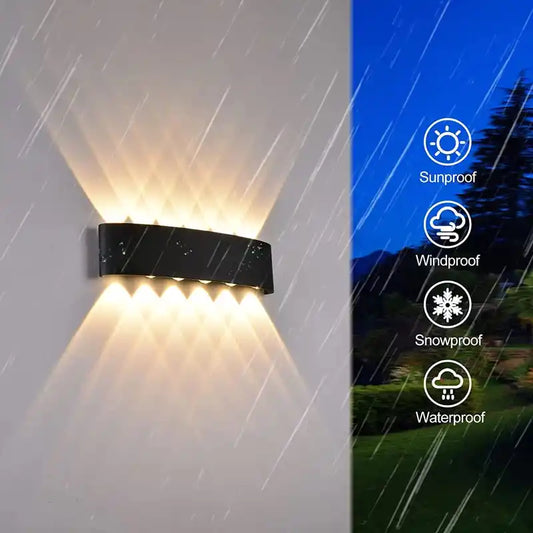
- IP rating: IP65 or higher for reliable outdoor performance against water and dust.
- Power source: Low-voltage wired (12V), line-voltage (120V), or solar. Choose based on reliability, installation cost, and maintenance.
- Materials & finish: Stainless steel, die-cast aluminum, or heavy-duty polymer resist corrosion; look for powder-coated finishes and sealed driver compartments.
Further Reading:
Top LED path lights reviewed — Best options for budgets and needs
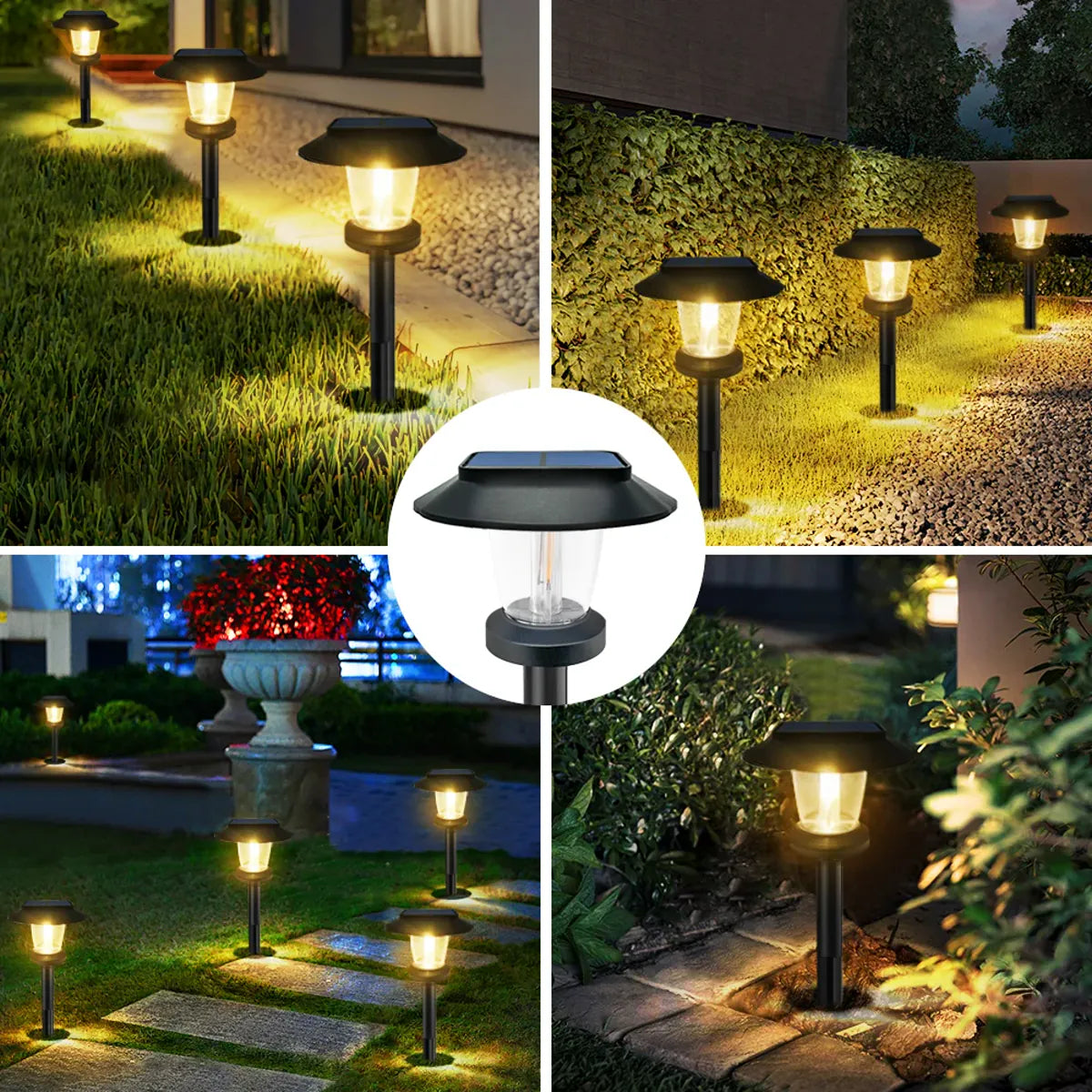
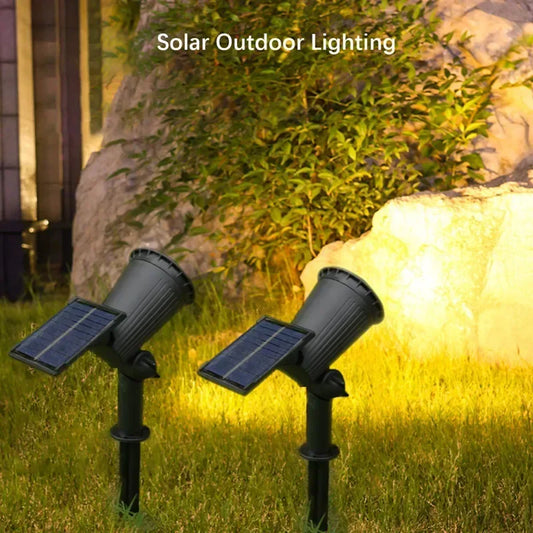
Outdoor Solar Pathway Lights LED Landscape Waterproof for Garden Walkway Driveway
Below are durable, affordable, and stylish picks chosen for brightness, build quality, warranty, and user feedback.
1. Budget pick: Solar stake LED path light
Low upfront cost, easy install—good daytime charging and soft warm glow at night.
- Power: Solar
- Lumens: ~20–60 (varies)
- Best for: Short-term projects, renters, decorative borders
- Limitations: Dependent on sun exposure, shorter useful life for battery
2. Best value wired pick: 12V LED low-voltage path light
Balance of consistent output, easy dimming, and long life with modest installation cost.
- Power: 12V transformer + cable
- Lumens: 100–300
- Best for: Permanent installations, consistent lighting across seasons
- Limitations: Requires transformer and trenching/wire routing
3. Premium pick: Die-cast aluminum integrated LED fixture
Top performance, weatherproofing, high CRI options, long warranty for heavy-use landscapes.
- Power: Low-voltage or line-voltage options
- Lumens: 200–500
- Best for: High-end residential and commercial pathways
- Limitations: Higher upfront cost
4. Decorative pick: Lantern-style LED path light
Stylish designs for front walkways—offers aesthetic appeal with practical illumination.
- Power: Often wired; some solar models
- Lumens: 80–300
- Best for: Curb appeal and entryway definition
💬 "Installed a row of low-voltage LEDs last spring — noticeably safer and my electric bill hardly budged. Simple to maintain." — Neighborhood homeowner
Comparison table — Quick specs and buying guidance
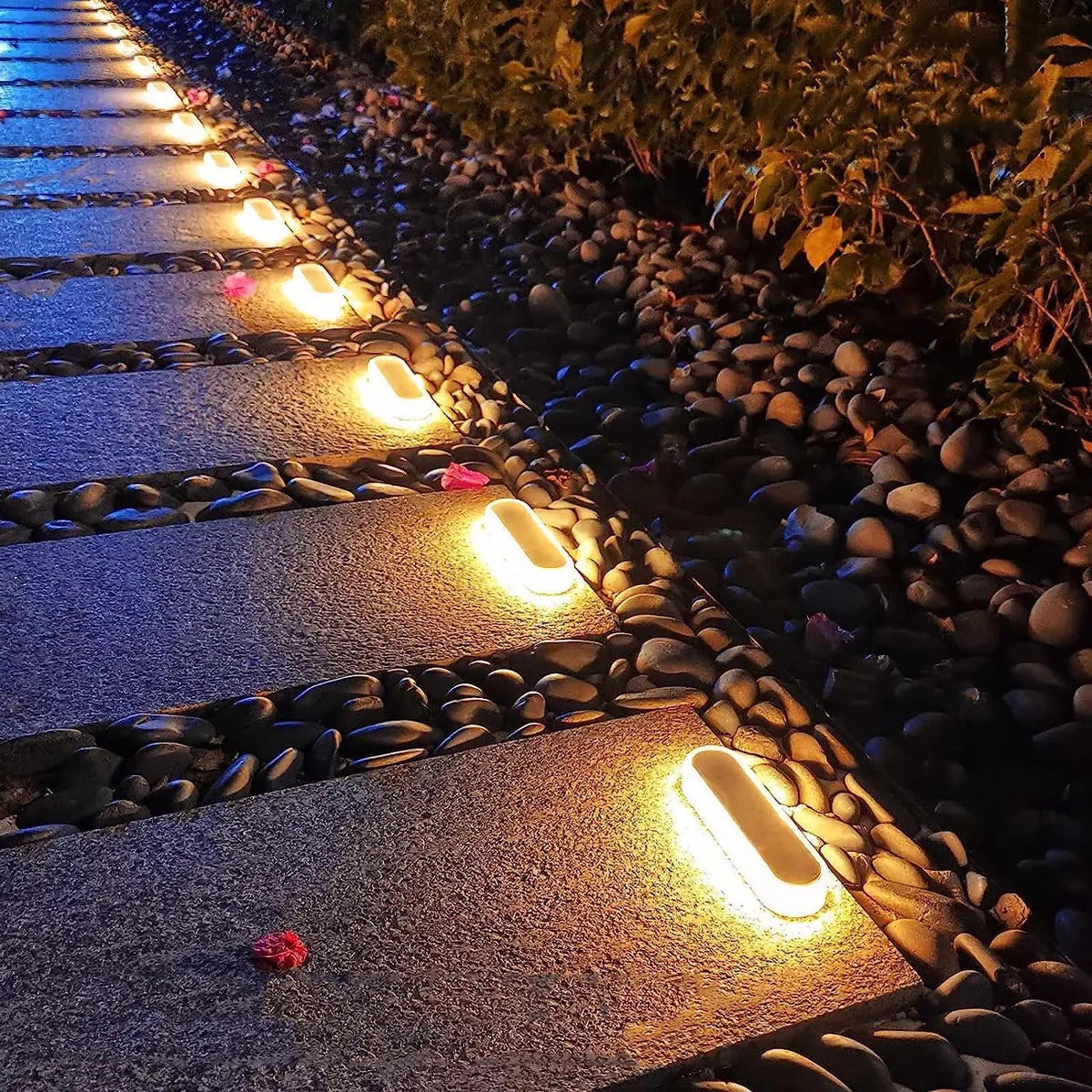
Solar Deck Lights Outdoor Step Lights Waterproof IP68 Stick on Step Stairs Driveway
Side-by-side data to help you choose quickly based on budget, brightness, and weather resistance.
| Model/Type | Power | Typical Lumens | IP Rating | Approx. Price | Best For |
|---|---|---|---|---|---|
| Solar Stake LED | Solar | 20–60 | IP44 | $15–$40 | Decorative, renters |
| 12V Low-Voltage Classic | 12V (transformer) | 100–300 | IP65 | $30–$80 | Permanent residential |
| Die-Cast Premium | 12V/120V | 200–500 | IP66 | $80–$200 | High-end landscapes |
| Lantern-Style | 12V/120V/Solar | 80–300 | IP65 | $40–$150 | Entryways, curb appeal |
Installation & placement guide — Layout, spacing, and wiring basics
Follow spacing and mounting best practices to get even, safe illumination that complements landscape features.
Steps to achieve a professional result:
- Plan layout: Mark the path, measure length, and choose mounting points; typical spacing is 6–12 feet for 100–200 lm fixtures.
- Choose power: Decide between solar, low-voltage (12V), or line-voltage (120V) based on reliability and wiring complexity.
- Install transformer and run wire (low-voltage): Locate transformer near an outdoor outlet; use rated cable and bury to local code depths.
- Mount fixtures: Stake into lawn soil, screw into hardscapes, or use anchors for concrete.
- Test and adjust: Power up at dusk, check glare and shadows, and rotate/aim fixtures for even coverage.
Tool checklist:
- Shovel or trenching tool (for buried cable)
- Wire connectors rated for outdoor use
- Drill and anchors for hard surfaces
- Voltage tester and basic hand tools
Energy, cost, and performance metrics — What to expect over time
LEDs typically deliver 50–80% energy savings versus incandescent, with rated lifetimes from 25,000 to 50,000 hours; track lumens/watt and lifetime for comparisons.
- Energy efficiency: LEDs often achieve 80–120 lumens per watt; compare lumens, not watts, when shopping.
- Lifetime: Many integrated LED fixtures are rated 25,000–50,000 hours—translating to 10+ years for typical nightly use.
- Cost example: A 10-fixture low-voltage LED run (150 lm each) at 5W each = 50W total. At $0.13/kWh and 10 hours/night: monthly cost ≈ $1.95. Incandescent equivalent would be several times higher.
For energy-saving guidance and LED performance research, see the U.S. Department of Energy's overview of LED lighting: https://www.energy.gov/energysaver/led-lighting
Common problems and troubleshooting — Quick fixes for typical issues
Flicker, dim light, corrosion, or aging batteries are common; most have straightforward fixes or design choices to avoid them.
- Dim or inconsistent light: For solar fixtures, check sun exposure and replace rechargeable batteries after 2–4 years. For wired fixtures, check voltage drop and wire gauge.
- Flicker or failure with dimmers: Use LED-compatible dimmers and drivers; many cheap dimmers designed for incandescent cause flicker.
- Corrosion and water ingress: Choose IP65+ fixtures and seal junctions with outdoor-rated silicone; check for damaged seals.
- Uneven coverage: Adjust beam angles or spacing; add path lights at turns or steps for safety.
Environmental and safety considerations — Minimize light pollution and health impacts
Use warm color temperatures, shielded fixtures, and targeted lighting to reduce glare, energy waste, and circadian disruption.
Key actions:
- Choose 2700K–3000K to reduce blue-rich light that can affect night vision and wildlife.
- Use full-cutoff or downward-shielded fixtures to limit light trespass and skyglow.
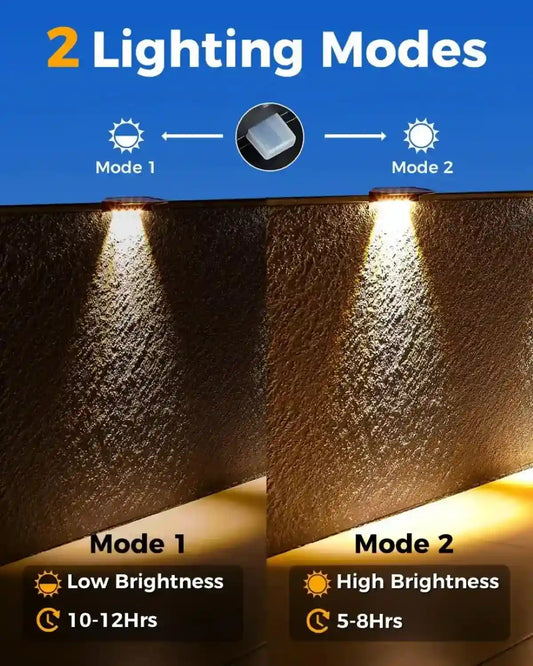
- Install motion sensors or timers to reduce unnecessary nighttime lighting.
Research has linked nighttime exposure to blue-rich light with circadian disruption. For clinical and environmental insights, see research summaries at the U.S. National Library of Medicine: https://www.ncbi.nlm.nih.gov/pmc/articles/PMC6465294/
When to choose solar vs wired LED path lights — Decision checklist
Solar is easy but less consistent; wired (low-voltage) is reliable but costlier to install. Choose by priorities—cost, consistency, and maintenance.
- Choose solar if: You need no-wiring installation, have ample sun exposure, and prefer low upfront cost.
- Choose low-voltage wired if: You want consistent brightness year-round, easy dimming, and a centralized transformer for control.
- Choose line-voltage or premium fixtures if: You need higher lumen output and are installing on commercial properties or high-traffic areas.
Maintenance checklist — Keep your path lights performing for years
Routine cleaning, seasonal checks, and battery replacement (solar) extend fixture life and preserve output.
- Clean lenses twice yearly to remove dirt and reduce lumen loss.
- Inspect seals and connections annually to prevent moisture ingress.
- Replace solar rechargeable batteries every 2–4 years depending on cycles and temperature exposure.
- Test transformers and timers in spring and fall to ensure seasonal performance.
FAQs — Quick answers to common LED path light questions
Are LED path lights safe for gardens and pets?
Yes. LED fixtures produce little heat at the lens and can be safely placed near plantings and walkways. Use warm CCTs (2700K–3000K) to be gentler on plants and wildlife.
Can I dim LED path lights and use smart controls?
Wired low-voltage and compatible LED drivers can be dimmed with LED-rated dimmers. For smart control, choose fixtures with compatible drivers or use smart transformers/timers that support LED loads.
How long will solar path lights last compared to wired LEDs?
Solar fixtures have shorter effective service life due to rechargeable battery wear (2–4 years) though LEDs themselves last longer. Wired LEDs typically last longer overall (10+ years) with fewer component replacements.
What color temperature is best for a front walkway?
2700K–3000K creates a warm, welcoming appearance and minimizes glare; 3000K–4000K is good for brighter, more modern aesthetics but may be harsher on eyes and wildlife.
Do LED path lights need special disposal?
Most LEDs contain small electronics and should be recycled through local e-waste programs when the fixture is discarded. Batteries from solar lights require separate recycling or hazardous waste handling.
How far apart should I space path lights?
Typical spacing is 6–12 feet for 100–200 lumen fixtures; narrower spacing (4–6 ft) for decorative low-lumen lights or wider spacing for higher-lumen fixtures after testing alignment.
Related Articles:
- 6 Tips to Choose the Best Solar Flood Light for Home
- Enhance Home Security with Lights & Motion Sensors
- How to Set an Outdoor Lighting Timer
- Solar String Lights: Tips for Long-Lasting Outdoor Use
- Garden Lights: Ultimate Guide & Expert Tips
- Solar Spot Lights: Ultimate Guide to Choosing
- Top 5 Solar Pathway Lights to Brighten Your Garden 2025














 />
/>
 />
/>
 />
/>
 />
/>
 />
/>