

Best outdoor lighting for patios and pathways: 12 energy-efficient LED picks
Table of Contents
- Introduction: efficient outdoor lighting that balances safety and ambiance
- Selection criteria for patio and pathway LED lighting
- Important technical metrics explained
- 12 top energy-efficient LED picks — quick comparison table
- Best pathway lights: safe, low-glare options
- Best patio and deck lights: ambience plus task lighting
- Best directional/flood and accent lights for landscape and security
- Solar-powered LED options: where they make sense and their limits
- Installation, spacing, and energy-saving tips
- Maintenance, lifespan, and environmental considerations
- Final selection checklist and buying strategy
- FAQs
Introduction: efficient outdoor lighting that balances safety and ambiance
Choosing energy-efficient LED lighting for patios and pathways improves safety, cuts electricity use, and creates inviting outdoor living spaces. This guide explains what to buy, how to place fixtures, and which 12 LED options work best for common yard scenarios.
Selection criteria for patio and pathway LED lighting
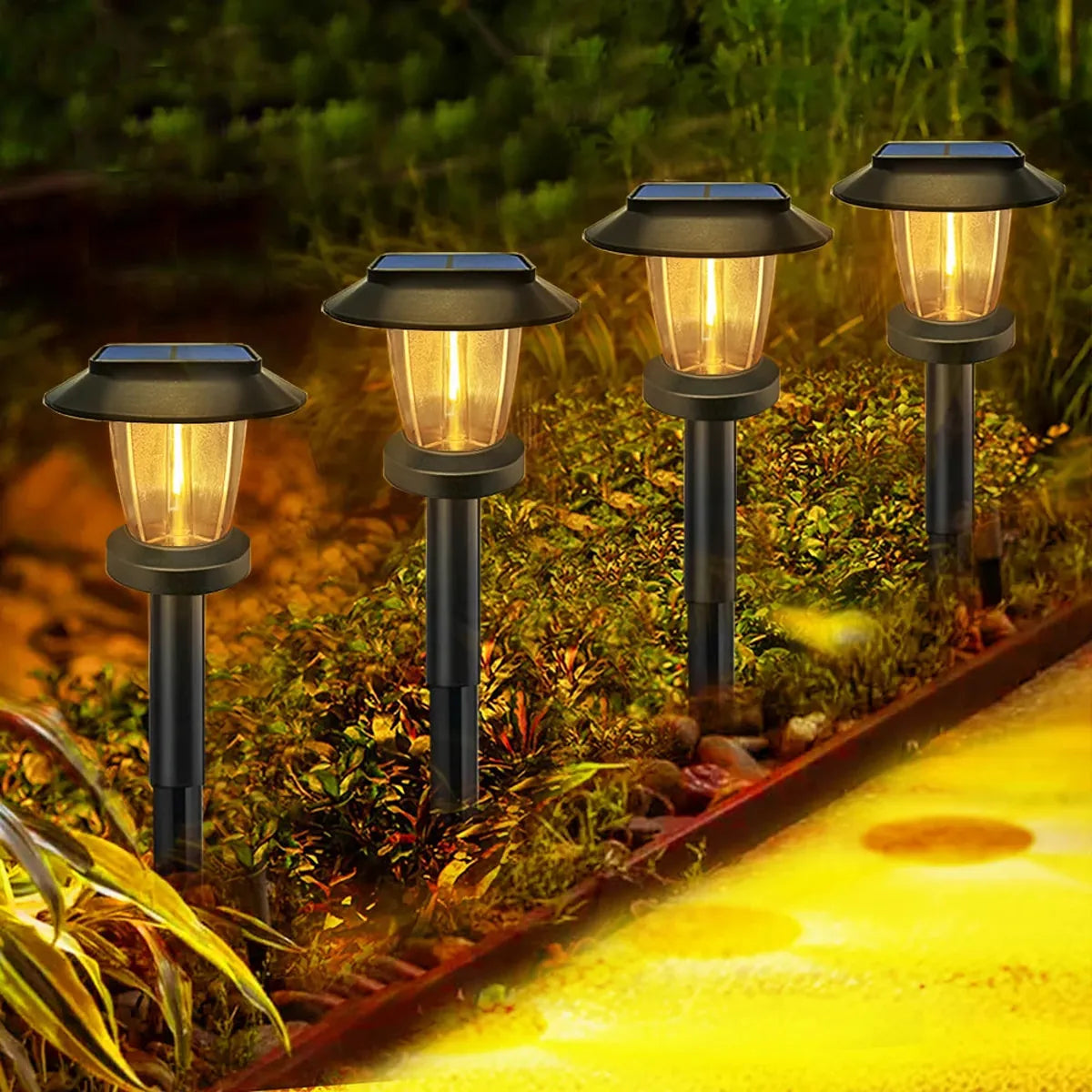
Outdoor Solar Pathway Lights LED Landscape Waterproof for Garden Walkway Driveway
Use practical criteria—light output, color, durability, controls, and cost—to match fixtures to use and budget.
Before buying, evaluate these priorities to ensure lights meet safety, aesthetic, and energy goals:
- Brightness needs — lumens required for paths, steps, and seating areas.
- Color & appearance — color temperature (K) and CRI for ambience and accurate colors.
- Weatherproofing — IP ratings and material resilience for outdoor exposure.
- Controls — timers, motion sensors, dimming, or smart integration to save energy.
- Installation type — hardwired vs. low-voltage vs. solar; consider wiring cost vs. reliability.
- Energy metrics — lumens per watt and expected annual kWh use.
💡 When choosing LED lighting, prioritize efficiency, durability, and style. Lumaz delivers all three with affordable, high-quality solutions for a smarter, brighter home.
Important technical metrics explained
Understand lumens, color temperature, CRI, IP rating, and efficiency to compare fixtures objectively.
Key metrics to evaluate:
- Lumens (lm) — total light output. Pathway lights: 100–300 lm each; seating areas: 400–1,500 lm total.
- Color temperature (K) — 2700–3000K for warm patios, 3000–4000K for brighter task/security lighting.
- CRI — Color Rendering Index; ≥80 preferred for natural color.
- Lumens per watt (lm/W) — efficiency measure. Modern LEDs often deliver 80–120 lm/W.
- IP rating — ingress protection. Outdoor fixtures should be IP65 or higher in exposed areas.
For energy guidance and efficiency expectations, the U.S. Department of Energy has an accessible overview of LED benefits and performance: energy.gov — LED lighting. For environmental effects and light pollution considerations, see EPA resources: epa.gov — light pollution.
12 top energy-efficient LED picks — quick comparison table
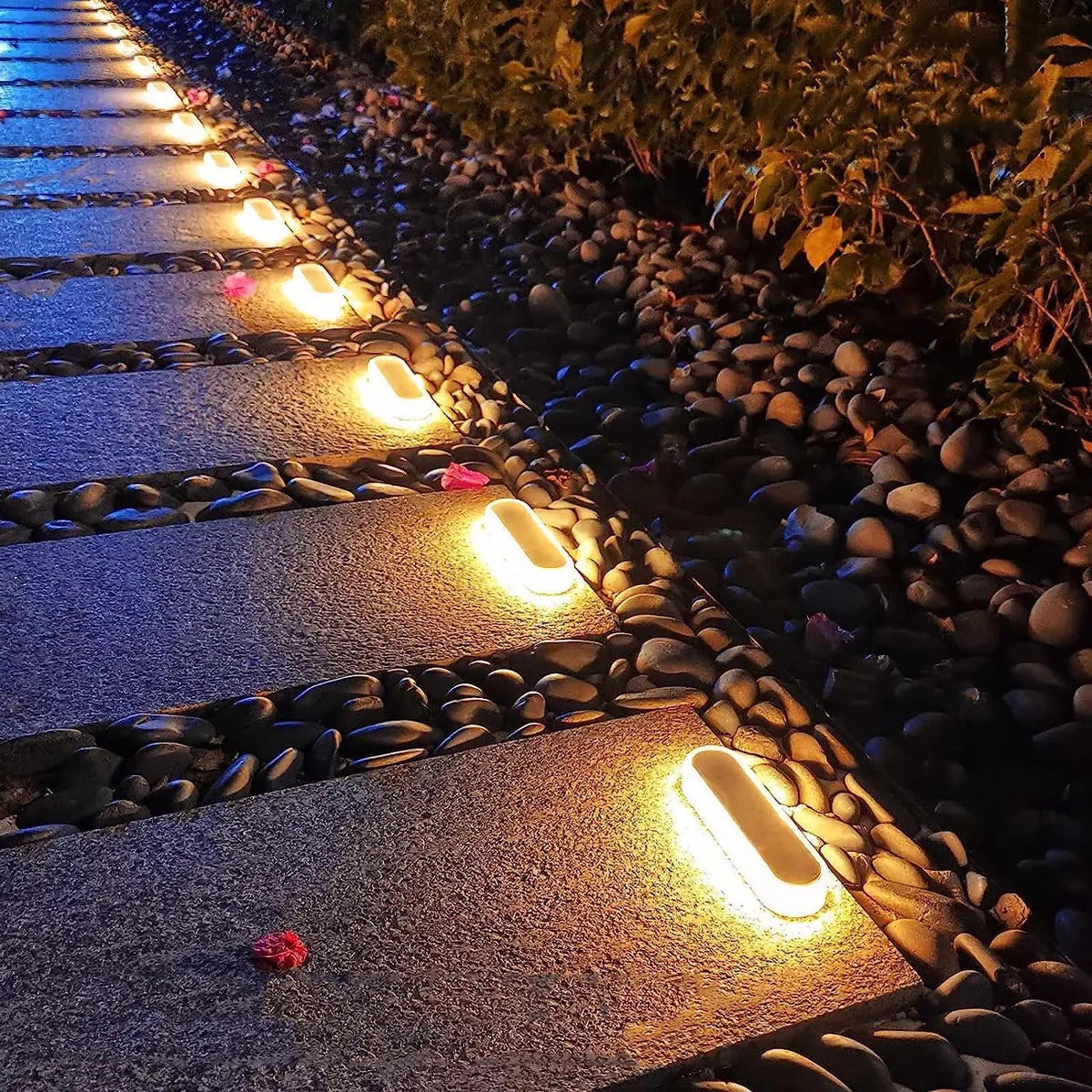
Solar Deck Lights Outdoor Step Lights Waterproof IP68 Stick on Step Stairs Driveway
This table summarizes 12 recommended LED fixtures by type, output, power draw, color temp, IP rating, and typical application.
| Pick | Fixture type | Lumens | Watts | Color Temp | IP Rating | Power | Best use |
|---|---|---|---|---|---|---|---|
| 1 | Low-voltage pathway stake LED | 150 | 3 | 3000K | IP44 | Low-voltage | Garden paths |
| 2 | Hardwired recessed step light | 100 | 4 | 2700K | IP65 | Hardwired | Stairs & risers |
| 3 | LED bollard (short) | 300 | 8 | 3000K | IP65 | Low-voltage/line | Driveways & long paths |
| 4 | Accent spot LED (adjustable) | 600 | 9 | 3000–4000K | IP66 | Line-voltage | Landscape accents |
| 5 | Warm-string LED (dimmable) | 1200 (total) | 12 | 2700K | IP65 | Plug-in/line | Patio ambience |
| 6 | Smart integrated deck light | 500 | 7 | 3000K | IP65 | Low-voltage | Deck & seating |
| 7 | Solar pathway LED (battery) | 80 | 1.5 | 3000K | IP44 | Solar | Small gardens |
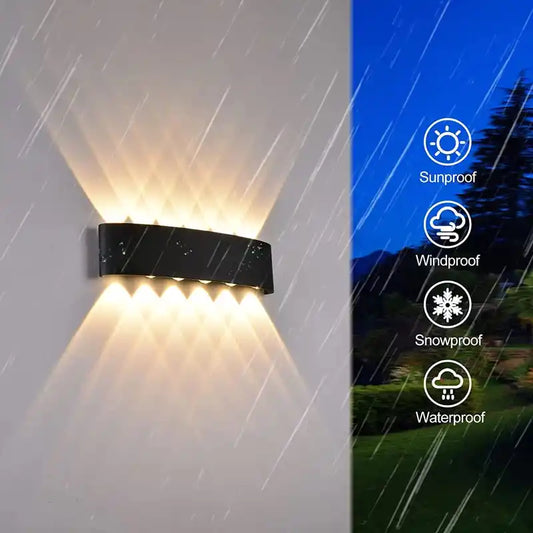
| 8 | Solar integrated wall light | 200 | 3 | 3000K | IP65 | Solar | Entryway accent |
| 9 | Flood LED (motion sensor) | 1200 | 15 | 4000K | IP66 | Line-voltage | Security & wide illumination |
| 10 | Under-rail LED strip | 400 (per 5m) | 8 | 3000K | IP67 | Low-voltage | Railings & steps |
| 11 | Compact wall sconce (warm) | 600 | 8 | 2700K | IP65 | Line-voltage | Porch & patio walls |
| 12 | Integrated hardscape LED (paver light) | 100 | 4 | 3000K | IP67 | Low-voltage | Paved paths & edging |
Best pathway lights: safe, low-glare options
Pathway lighting emphasizes low-glare guidance: choose fixtures that provide even illumination and narrow cut-off distributions.
Top pathway choices and why they work:
- Low-voltage pathway stakes — inexpensive, easy to install, 100–200 lm per stake; use 6–10 ft spacing depending on lumen output.
- Bollards — higher output and more decorative; great for driveways or main walkways where 300+ lm improves visibility.
- Recessed paver lights — unobtrusive, IP67-rated for decks and paved paths; ideal for flush installation where trip hazards must be minimized.
Installation tip: test lighting layout at night before finalizing wiring or hardscaping—temporary fixtures help refine spacing and direction.
Best patio and deck lights: ambience plus task lighting
Patios need a mix of ambient and task sources: string lights, wall sconces, under-rail strips, and recessed deck lights together create layered lighting.
Recommended fixture types by function:
- Warm LED string lights (2700K) for overhead ambience and entertaining.
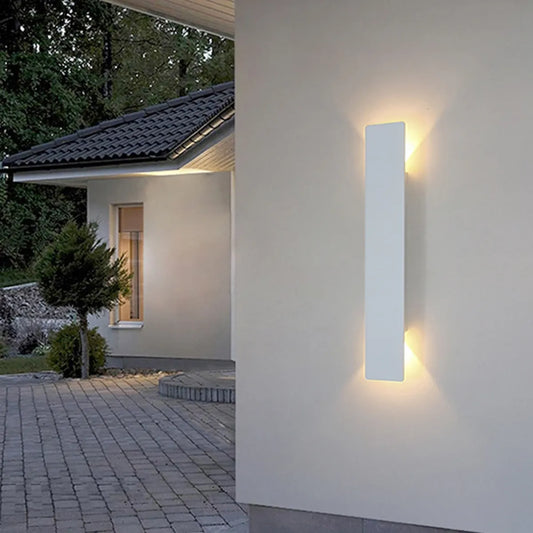
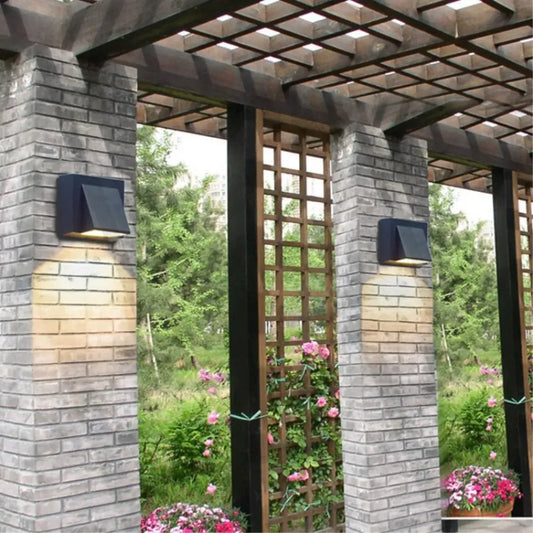
- Low-glare wall sconces to provide perimeter light without washing the seating area.
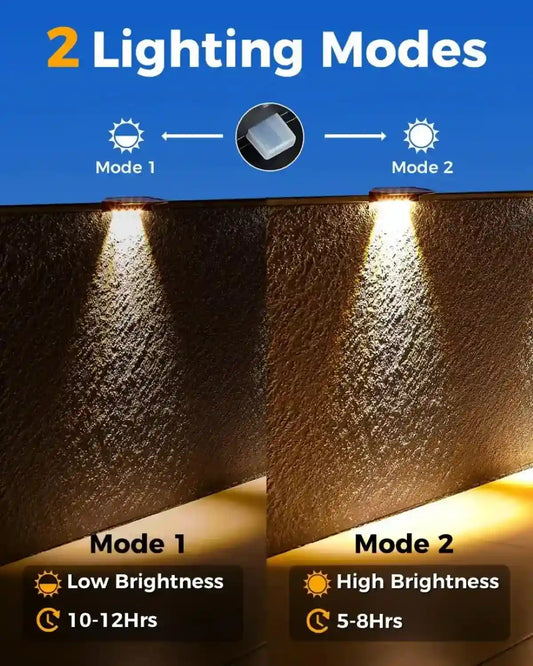
- Under-rail or recessed step lights to mark edges and prevent trips.
Energy tip: use dimmers and smart controls to reduce wattage during casual use. Dimming LEDs significantly lowers power draw and extends fixture life.
Best directional/flood and accent lights for landscape and security
Accent and flood LEDs highlight features and provide security—selecting beam angle, lumen output, and controls is key.
How to choose accent/flood fixtures:
- Beam angle — narrow (~10–25°) for tree and monument uplighting; wider (~40–60°) for wash lighting on walls.
- Lumens — use 400–700 lm for accents, 800–1,500 lm for area floodlighting.
- Controls — add motion sensors and photocells to avoid unnecessary overnight run time.
For safety and compliance, place security floods out of reach to prevent tampering and orient them to avoid glare into neighbors' windows.
Solar-powered LED options: where they make sense and their limits
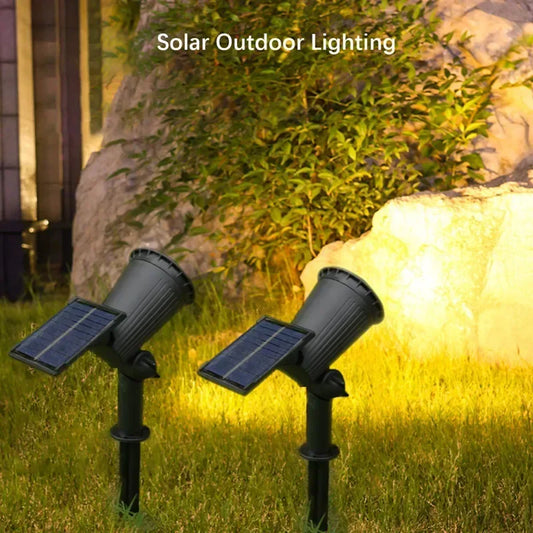
Solar LEDs are great for low-use areas or where wiring is impractical, but daylight availability and battery capacity limit performance.
Pros and cons of solar LED fixtures:
- Pros: zero grid energy, easy installation, lower upfront labor cost.
- Cons: reduced output on cloudy days, shorter runtime in winter, lower lumens vs. wired equivalents.
When to choose solar:
- Remote beds or detached structures where running cable is costly.
- Supplementary decorative lighting rather than primary safety light.
- Areas with consistent daytime sun exposure (6+ hours direct sunlight).
🌟 "I swapped 10 stake lights to solar and eliminated wiring hassles—great for the garden beds, but I keep hardwired lights on steps for reliability." — neighborhood homeowner
Installation, spacing, and energy-saving tips
Proper placement and controls deliver the most energy savings while improving safety and comfort.
Practical installation guidelines:
- Pathways: place fixtures 6–12 ft apart for 150 lm fixtures; adjust spacing for higher/lower lumen outputs.
- Steps: mount 75–125 lm step lights at each riser or every 2–3 steps for even footing illumination.
- Patios: aim for 200–400 lux (ambient) across seating zones; combine task lights with dimmable ambience.
- Security: use motion-activated 800–1,200 lm floods directed away from neighbors' sight lines.
Energy-saving controls and behaviors:
- Use timers and photocells to avoid daytime operation.
- Prefer occupancy sensors for security lights to limit full-power run time.
- Install dimmers or smart lighting scenes to reduce output during casual use.
- Choose fixtures with high lm/W and replace older halogen or CFL outdoor lights for immediate savings.
According to the U.S. Department of Energy, LEDs use at least 75% less energy and last 25 times longer than incandescent lighting, which translates to real cost and maintenance savings over time (DOE: LED lighting).
Maintenance, lifespan, and environmental considerations
LED fixtures require less maintenance than incandescent but still need periodic checks for dirt, corrosion, and firmware updates on smart devices.
Maintenance checklist:
- Clean lenses semiannually to avoid light loss from dirt and pollen.
- Check seals and gaskets yearly; replace fixtures with cracked housings to maintain IP rating.
- Update smart device firmware and test battery backups for solar units seasonally.
- Replace at end-of-life (typically 25,000–50,000 hours); recycle LEDs where possible.
Environmental note: minimize uplight and blue-rich light at night to reduce light pollution and wildlife disruption. Choose warm color temps (≤3000K) and cut-off fixtures where possible—EPA and conservation groups recommend lower color temperatures to protect nocturnal species (EPA: light pollution).
Final selection checklist and buying strategy
Use a checklist to match fixtures to roles, then prioritize controls and quality to maximize energy savings and longevity.
Quick buying checklist:
- Define each light’s role (pathway, step, accent, security).
- Set lumen and color temp targets for each role.
- Choose IP-rated fixtures for exposure level (IP65+ for heavy exposure).
- Decide between hardwired, low-voltage, or solar based on access and reliability.
- Specify controls: photocell, timer, motion sensor, or smart integration.
- Check warranty (3–5 years typical) and replaceable components (drivers, batteries).
Investing a bit more in quality LED fixtures and intelligent controls typically pays back through lower energy bills and fewer replacements. For technical deeper reading on luminous efficacy and LED testing, the Lighting Research Center at Rensselaer Polytechnic Institute provides peer-reviewed research and best practices: lrc.rpi.edu.
FAQs
Common questions about patio and pathway LED lighting, answered concisely.
How many lumens do I need for a typical backyard path?
For a safe, well-lit path, aim for 100–300 lumens per fixture depending on spacing; use closer spacing for lower-lumen fixtures and wider spacing for 300+ lumen bollards.
Is warm (2700–3000K) or cool (4000K) LED better outside?
Use warm (2700–3000K) on patios and seating areas for cozy ambience; use 3000–4000K for accenting architectural elements and 4000K+ only where strong task/security lighting is needed.
Are solar LED lights reliable year-round?
Solar LEDs work well in sunny climates and for supplemental lighting. Their runtime drops in winter or shaded locations. For critical safety areas (steps), prefer wired or battery-backed fixtures.
Can I dim outdoor LEDs and still save energy?
Yes—dimming reduces power draw and extends lifespan. Use fixtures and drivers rated for dimming (and compatible with your dimming method: TRIAC, 0–10V, or smart protocols).
What IP rating do I need for lighting near sprinklers or pools?
Choose IP65+ for general exposure to water spray; IP67 or higher for fixtures that may be submerged or exposed to heavy cleaning or standing water.
How much will LEDs reduce my outdoor lighting electricity cost?
Reduction varies, but replacing a 60W halogen with a 10W LED of similar output saves roughly 50–150 kWh/year per fixture depending on usage. Multiply by fixture count and run hours to estimate household savings.
Implement these recommendations to design an outdoor lighting scheme that meets safety needs, minimizes energy use, and enhances your property's nighttime appeal. If you want a customized layout or a wiring plan, I can help create a lighting map with suggested fixture types and spacing tailored to your yard—tell me your property dimensions and preferred fixtures and I’ll draft a plan.
Related Articles:
- 6 Tips to Choose the Best Solar Flood Light for Home
- Enhance Home Security with Lights & Motion Sensors
- How to Set an Outdoor Lighting Timer
- Solar String Lights: Tips for Long-Lasting Outdoor Use
- Garden Lights: Ultimate Guide & Expert Tips
- Solar Spot Lights: Ultimate Guide to Choosing
- Top 5 Solar Pathway Lights to Brighten Your Garden 2025














 />
/>
 />
/>
 />
/>
 />
/>
 />
/>