

How to Choose the Best Solar Garden Lights for Your Outdoor Space
Table of Contents
- Introduction: How to Choose Solar Garden Lights That Actually Work
- Quick Decision Guide: Match the Light to the Job
- Step 1: Check Sun Exposure First
- Step 2: Choose Brightness and Beam (Not Just Lumens)
- Step 3: Battery, Runtime, and Cold-Weather Reality
- Step 4: Weatherproofing and Build Quality
- Step 5: Aesthetics Without Sacrificing Performance
- Installation: Layout and Spacing Rules
- Common Problems and Fixes (Why Solar Lights Are Dim)
- FAQs
- Conclusion
Introduction: How to Choose Solar Garden Lights That Actually Work
Choosing the best solar garden lights is less about picking a “top-rated” product and more about matching energy and optics to your yard. If you know your sun exposure, brightness needs, and weather conditions, you can pick lights that look great and stay reliable across seasons.

Solar garden lights convert sunlight into stored electricity and then power LEDs at night. That means performance depends on the panel’s access to sun, the battery’s capacity and health, and how the controller manages output (steady low, step-down, or motion-boost).
🔎 Lumaz tip: Most “solar lights are too dim” issues come from shade + small panels + high output modes. Start with sun exposure and mode settings before you blame the product.
Further Reading:
For a plain-language overview of how solar energy works (and why sunlight intensity and panel placement matter), see the U.S. Department of Energy’s solar basics (energy.gov).
Quick Decision Guide: Match the Light to the Job
The fastest way to choose solar garden lights is to decide what the space needs to do at night. Different jobs require different beam shapes, brightness strategies, and mounting styles.
| Use case | Best light type | Typical brightness strategy | Common mistake |
|---|---|---|---|
| Walkways & borders | Path lights | Low, diffuse, consistent | Buying “high lumens” that creates glare and short runtime |
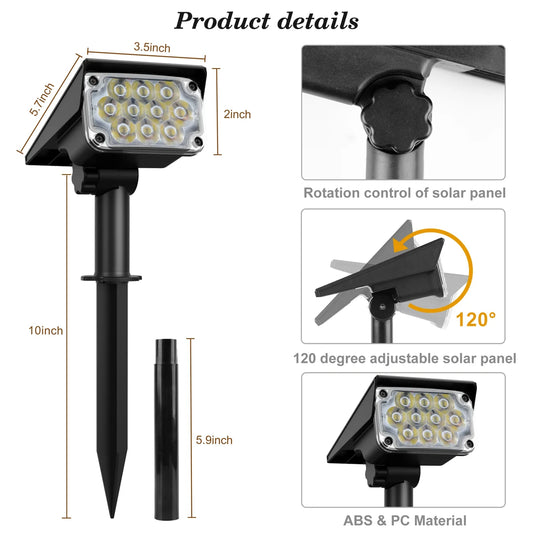
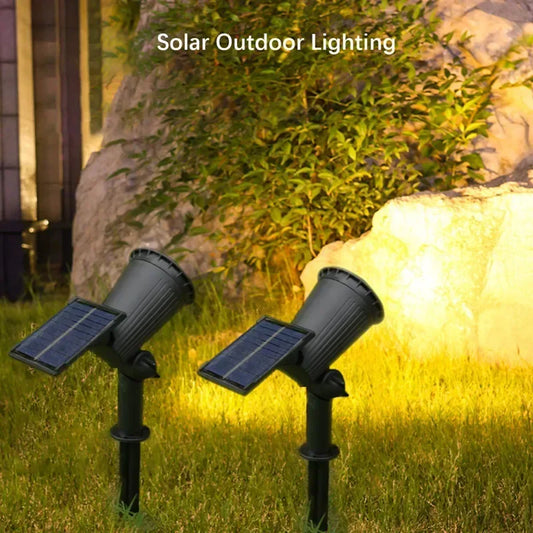
| Focal points (statues, shrubs) | Accent/spot lights | Medium output, narrow beam | Using a wide beam that washes everything and looks weak |
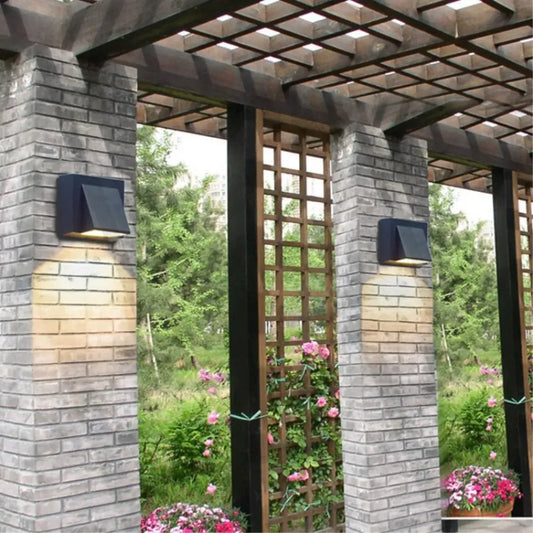
| Driveways & entry security | Flood/wall lights with motion | Dim baseline + bright motion boost | Running max brightness all night (battery drains early) |
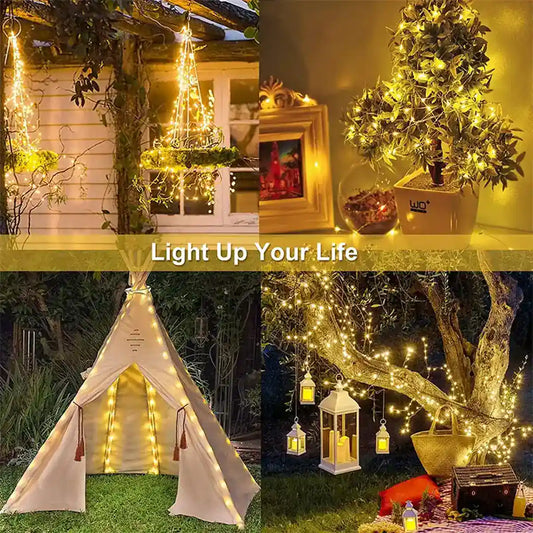
| Patios & gatherings | String lights | Warm, low output, decorative | Expecting task lighting from ambiance products |
| Steps & deck edges | Step/deck lights | Low glare, aimed down | Mounting too high and creating harsh eye-level points |
💬 “Once we stopped shopping by lumens alone and picked diffuse path lights for the walkway and a narrow-beam spot for the tree, everything looked brighter—without upgrading to ‘stronger’ lights.”
Step 1: Check Sun Exposure First
Solar lights can’t outperform your yard’s charging conditions. Before you compare brands, confirm where you can reliably get direct sun and where you cannot—this single step prevents most disappointment.
What matters in real yards:
- Direct sun hours: a sunny afternoon is more valuable than “all-day bright shade.”
- Season shifts: winter sun angles and longer shadows reduce charging.
- Shade movement: trees and rooflines may shade the same area during peak charging hours.
Decision rules you can use immediately:
- If the install spot is shaded most of the day, choose a light with a separate solar panel (panel in sun, light in shade) or switch to low-voltage/hardwired.
- If you want bright security lighting, prefer motion-based modes so the light spends most of the night at low power.
For deeper solar performance guidance (angle, irradiance, and why site conditions matter), NREL’s solar resources are a strong technical reference (nrel.gov).
Step 2: Choose Brightness and Beam (Not Just Lumens)
Brightness is measured in lumens, but what you see depends on beam angle, mounting height, and glare. The goal is “useful visibility” (edges, steps, focal points), not maximum output.
Practical lumen targets (real-world expectations vary by season and placement):
- Pathway markers: gentle output that supports navigation without glare.
- Accent/spotlighting: moderate output with a controlled beam to make a feature pop.
- Security lighting: high peak output is best delivered via motion boost, not constant mode.
Beam decision rule: if you’re lighting a specific object (tree, statue, sign), a narrow beam usually looks brighter than a wide flood at the same lumen rating because it concentrates light where you need it.
Further Reading:
Step 3: Battery, Runtime, and Cold-Weather Reality
Battery performance determines whether your lights stay bright deep into the night and how they behave in winter. Most solar lights “fail” by getting dim sooner as the battery ages or as charging declines in colder months.
- Battery chemistry: lithium-based packs often support higher output; NiMH cells are common in smaller lights and can be easier to replace in some designs.
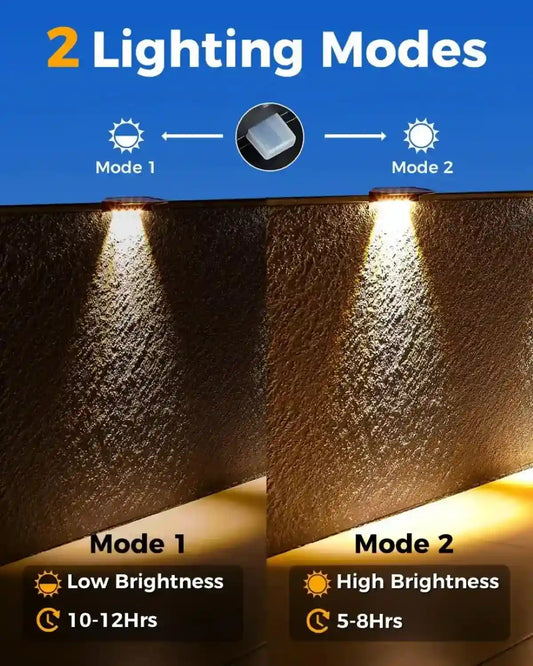
- Mode strategy: a light that steps down after a few hours may look impressive early but disappoint later; motion-boost often delivers better perceived performance for security.
- Replaceability: if you can replace the battery, you can extend the product’s useful life when runtime drops.
Decision rule: if you need consistent “all evening” glow, pick conservative steady modes and prioritize charging conditions. If you need bright output, pick motion-based modes and ensure the panel gets direct sun.
Step 4: Weatherproofing and Build Quality
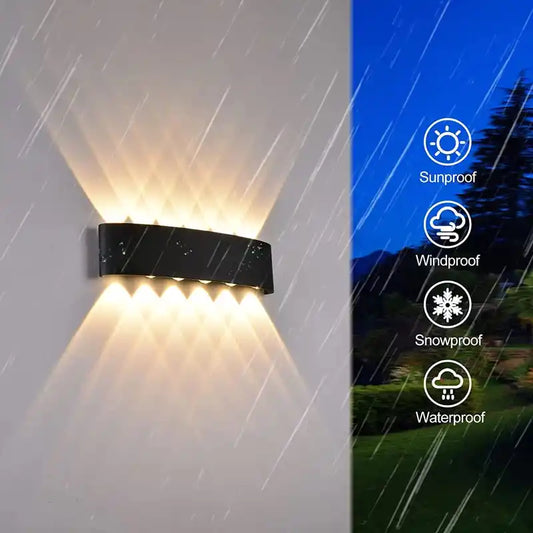
Outdoor solar lights live in a harsh environment: rain, sprinkler spray, dust, heat, and freeze-thaw cycles. Better sealing and stable mounting often matter more than an extra feature.
- IP rating: IP65 is typically fine for rain and spray; higher ratings help in harsher exposure or low mounting where water pools.
- Materials: corrosion-resistant metals and UV-stable plastics last longer outdoors.
- Stable stakes and mounts: a light that tilts over time creates glare and ruins the lighting pattern.
Quick check: if your yard gets heavy wind-driven rain, snow buildup, or frequent sprinkler spray, prioritize sealing and rigid construction over decorative effects.
Step 5: Aesthetics Without Sacrificing Performance
Great garden lighting looks intentional. The key is to choose effects and finishes that match your style while keeping the light comfortable to look at and reliable to charge.
- Color temperature: warm white (about 2700K–3000K) is typically best for patios and gardens; cooler white can feel harsh unless used for security or very modern styles.
- Glare control: diffusers, shielding, and downward aiming matter more than “brightness” for comfort.
- Consistency: repeating one or two fixture styles usually looks more premium than mixing many.
Design rule: use path lights for rhythm and navigation, then add a smaller number of accents for focal points. This creates depth without over-lighting the entire yard.
Installation: Layout and Spacing Rules
Solar garden lights perform best when they’re installed like a lighting plan, not like scattered decoration. Layout determines uniformity, comfort, and how “bright” the space feels.
- Start with safety lines: steps, edges, and turns in pathways.
- Place for uniformity: avoid alternating bright/dark patches by spacing evenly.
- Aim accents at targets: test at dusk and adjust until shadows look natural.
- Protect charging: keep panels away from dense foliage and locations that get shaded during peak sun hours.
Sanity test: install one light in your “worst” spot first (partial shade, winter exposure). If it performs acceptably there, the rest of the plan will be easier.
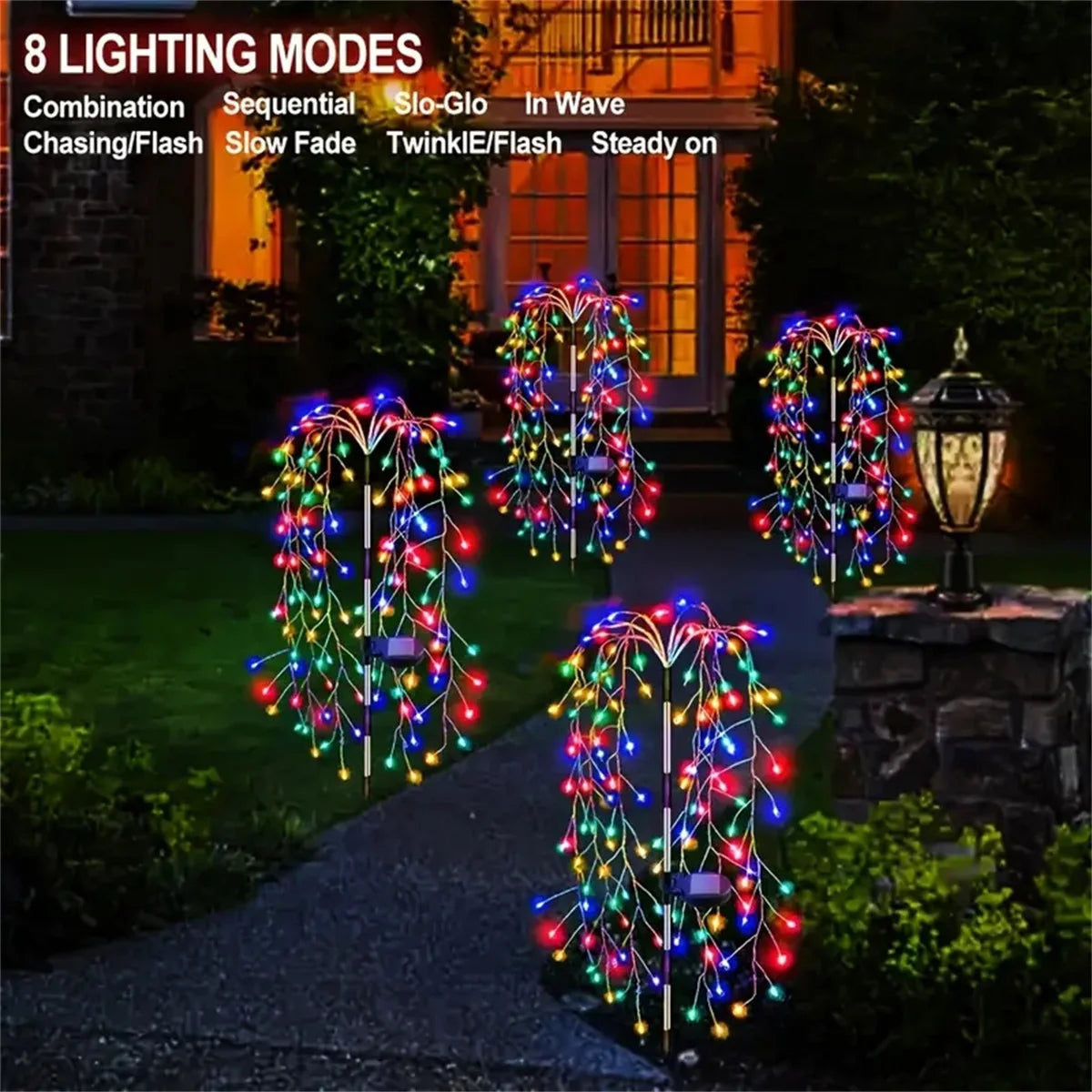
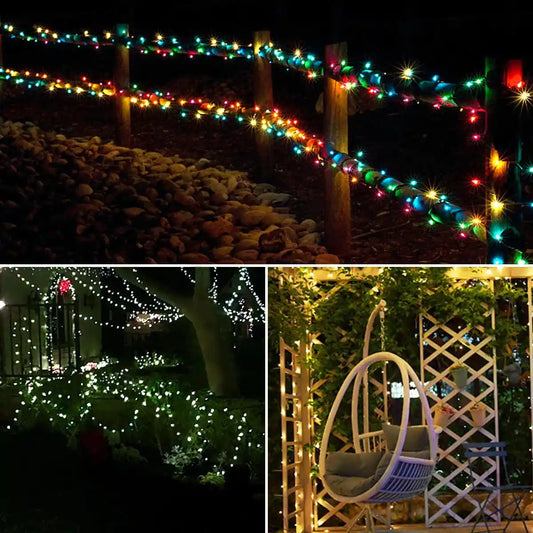
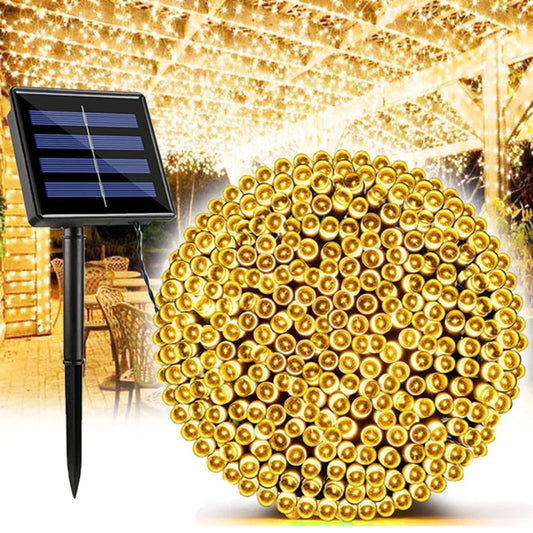
For optimal performance, solar garden lights should be strategically spaced to create an even, inviting glow. The 200 LED Solar Firecracker Garden Lights feature 8 lighting modes and high brightness beads, allowing you to customize the layout of your garden with uniform illumination, while being waterproof for reliable outdoor use in all weather conditions.
Common Problems and Fixes (Why Solar Lights Are Dim)
If solar lights are dim or inconsistent, the cause is usually installation conditions, dirty panels, battery aging, or mode settings. Troubleshoot in this order to avoid replacing lights unnecessarily.
- Panel in shade: move the light (or choose a separate panel design) so the panel gets direct sun.
- Dirty panel: wipe dust and pollen; a hazy panel can cut charging noticeably.
- Wrong mode: switch from max/constant to a conservative mode or motion-boost.
- Battery aging: if runtime keeps shrinking after good sun exposure, the battery may need replacement (if serviceable).
- Water ingress: flicker or random shutoffs after rain can indicate compromised sealing.
FAQs
These quick answers cover the most common solar garden lighting questions that affect buying decisions and real-world satisfaction.
Do solar garden lights work in winter?
Yes, but output and runtime often drop due to shorter days and lower sun angles. Choose conservative modes and ensure panels stay unshaded.
Can solar lights charge on cloudy days?
They can, but charging is reduced. Larger panels and conservative brightness strategies typically perform better than “always max” modes.
How many solar lights do I need for a pathway?
Prioritize uniform spacing over peak brightness. More low-glare fixtures usually looks better than fewer very bright fixtures.
Warm white or cool white for a garden?
Warm white is usually best for comfort and ambiance. Cool white is better reserved for security or modern looks where higher contrast is desired.
Why do my solar lights turn off after a few hours?
Most often the battery didn’t charge fully (shade, winter, dirty panels) or the light is in a high-output mode that drains energy early.
Conclusion
The best solar garden lights are the ones that match your yard’s sun exposure and your nighttime goal: diffuse, consistent light for walkways; narrow-beam accents for focal points; and motion-boost floods for security. Start with placement and modes, prioritize sealing and stable mounting, and your outdoor lighting will look better and perform more reliably across seasons.
Further Reading
Explore the full guide for this topic: Best Outdoor Solar Lights: Complete Buying & Comparison Guide
Related Articles
- The Ultimate Guide to Solar Spot Lights
- Solar Post Lights Buying Guide
- How to Choose Solar Wall Lights: 5 Key Factors for Selecting
- 8 Essential Tips for Choosing the Best Solar String Lights Outdoor
- 8 Essential Tips for Choosing the Best Solar Deck Lights
- How to Choose the Best Solar Landscape Lights for Your Outdoors?














 />
/>
 />
/>
 />
/>
 />
/>
 />
/>