

How to Plan an Outdoor Lighting Layout: Zones, Layers, and Energy‑Saving LED Choices
Table of Contents
- Why plan an outdoor lighting layout?
- Map lighting zones: identify function and priorities
- Apply layering: ambient, task, accent, and safety
- Practical metrics: lumens, beam spread, mounting height, and spacing
- Choose energy‑saving LED fixtures: types, drivers, color, and efficacy
- Controls and energy strategies: sensors, zoning, and smart automation
- Site requirements, wiring, and safety (codes & IP ratings)
- Sample layout & calculation: 3-zone residential example
- Maintenance, lifecycle, and environmental considerations
- Next steps: checklist for implementing your plan
- FAQs — concise answers to common planning questions
Why plan an outdoor lighting layout?
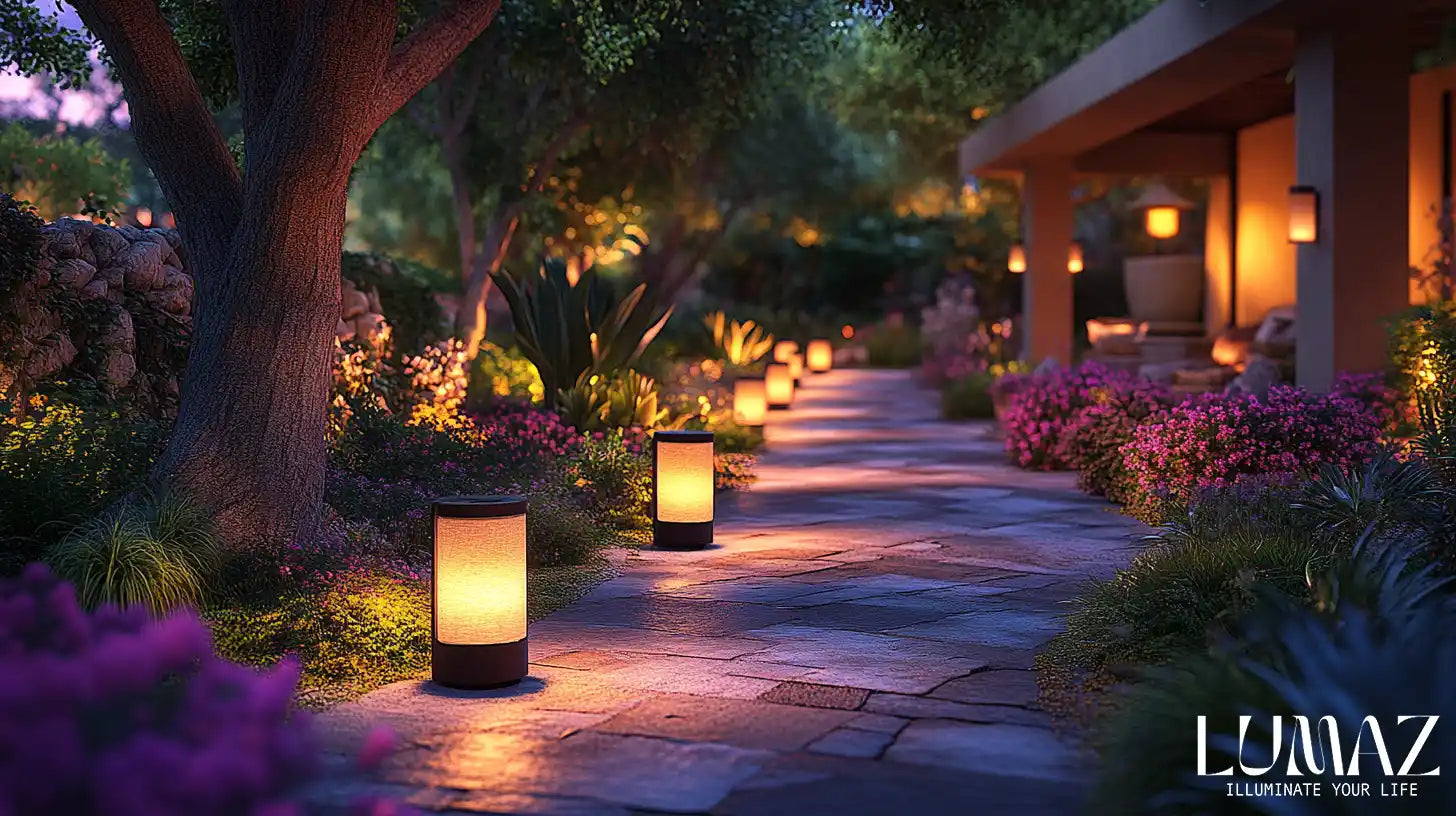
Planning outdoors lighting reduces wasted energy, prevents glare, and improves safety and curb appeal. A deliberate layout saves money and creates layered, purpose-driven illumination for every zone of your property.
Map lighting zones: identify function and priorities
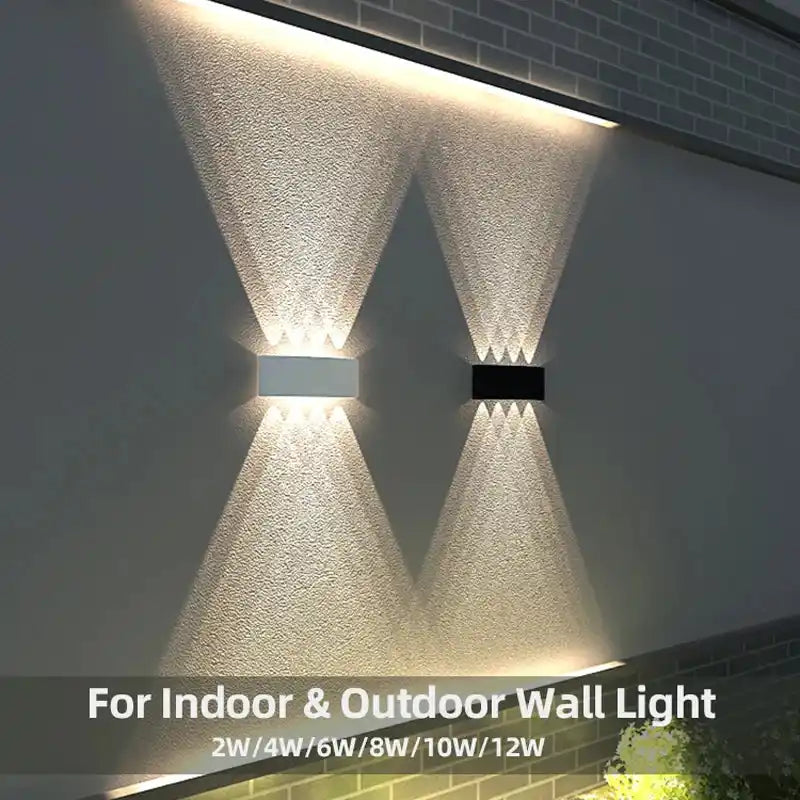
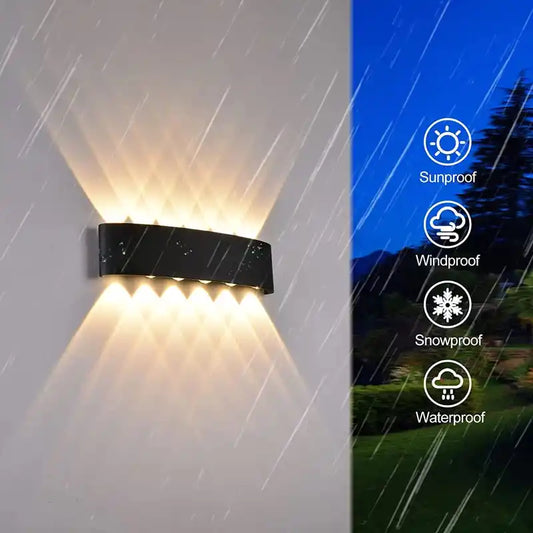
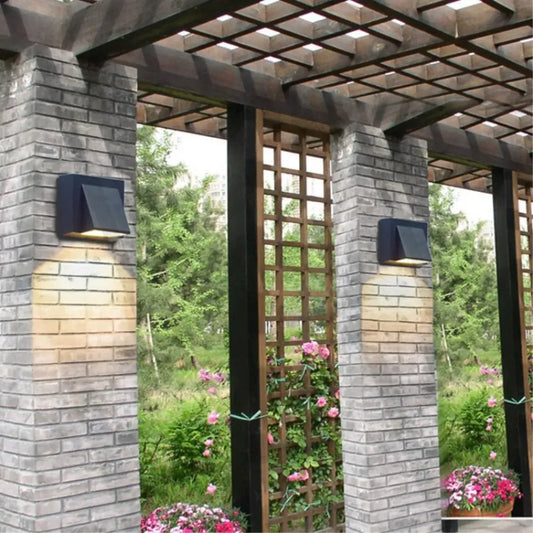
2/12W Waterproof LED Outdoor Wall Lights Aluminum Garden Porch Wall Sconce
Start by dividing the property into distinct zones—security, pathway, task, accent, and ambient—based on use and risk level.
Effective zone mapping focuses light where it’s needed and avoids over-illumination. Use a site sketch (paper or photo) and label each zone with purpose and required hours of operation.
- Security zone: Entrances, garages, blind spots — higher lumen and controls (motion/photocell).
-
Pathway zone: Walkways, steps — low-level, even illumination for safe travel.
- Task zone: Outdoor kitchens, work areas — focused light for specific activities.
- Accent zone: Trees, sculptures, façades — directional spots or uplights for visual interest.
- Ambient zone: Patios, lawns — soft general lighting for social use.
- Sketch property footprint and note fixed objects (trees, walls, steps).
- Mark primary circulation routes and focal points to inform fixture placement.
- Assign target hours and control preferences per zone (e.g., path lights from dusk–midnight).
Apply layering: ambient, task, accent, and safety
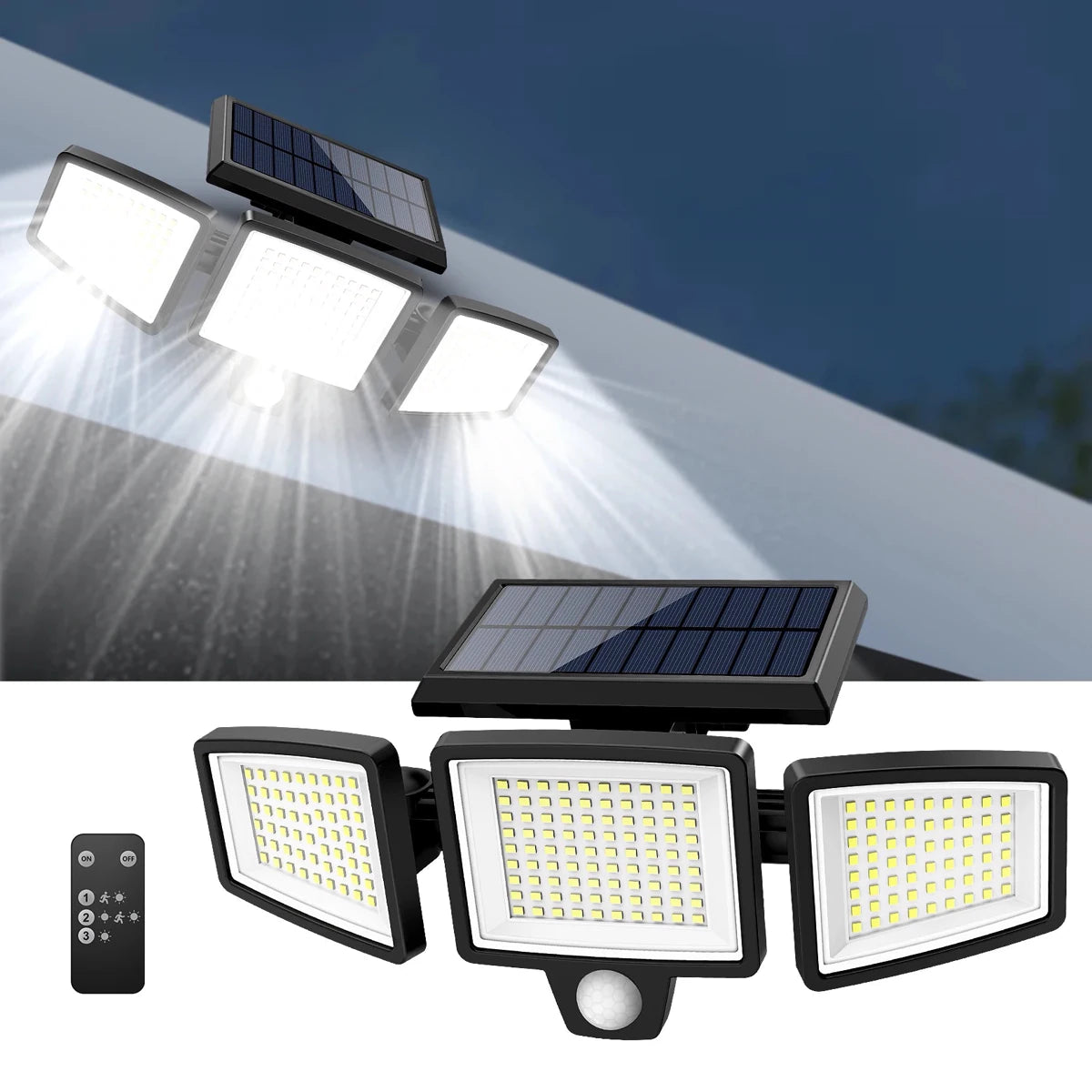
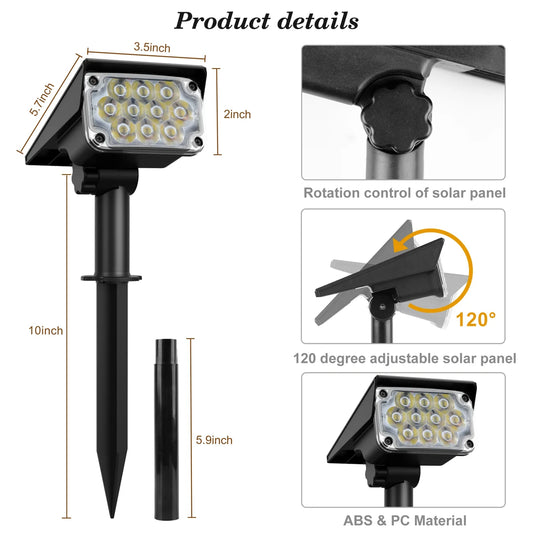
Outdoor Solar LED Wall Light with 200+ LEDs Waterproof and Motion Sensor Security Light
Layering combines different light types in each zone to meet function and atmosphere without glare.
Use three to four layers to produce depth: ambient for general visibility, task for activities, accent for features, and security for deterrence.
- Ambient: Soft wash, low glare, dimmable circuits for evenings.
- Task: Directional fixtures that deliver adequate lumens where people work or cook.
- Accent: Narrow-beam spots or uplights highlighting textures and shapes.
- Security: Broad-beam floods or wall packs with motion sensors and photocells.
Design tip: balance intensity
Prevent "light layering clash" by ensuring contrast ratios aren’t excessive—keep accent lights 2–4× brighter than ambient, and avoid security floods that overpower neighboring zones.
Practical metrics: lumens, beam spread, mounting height, and spacing
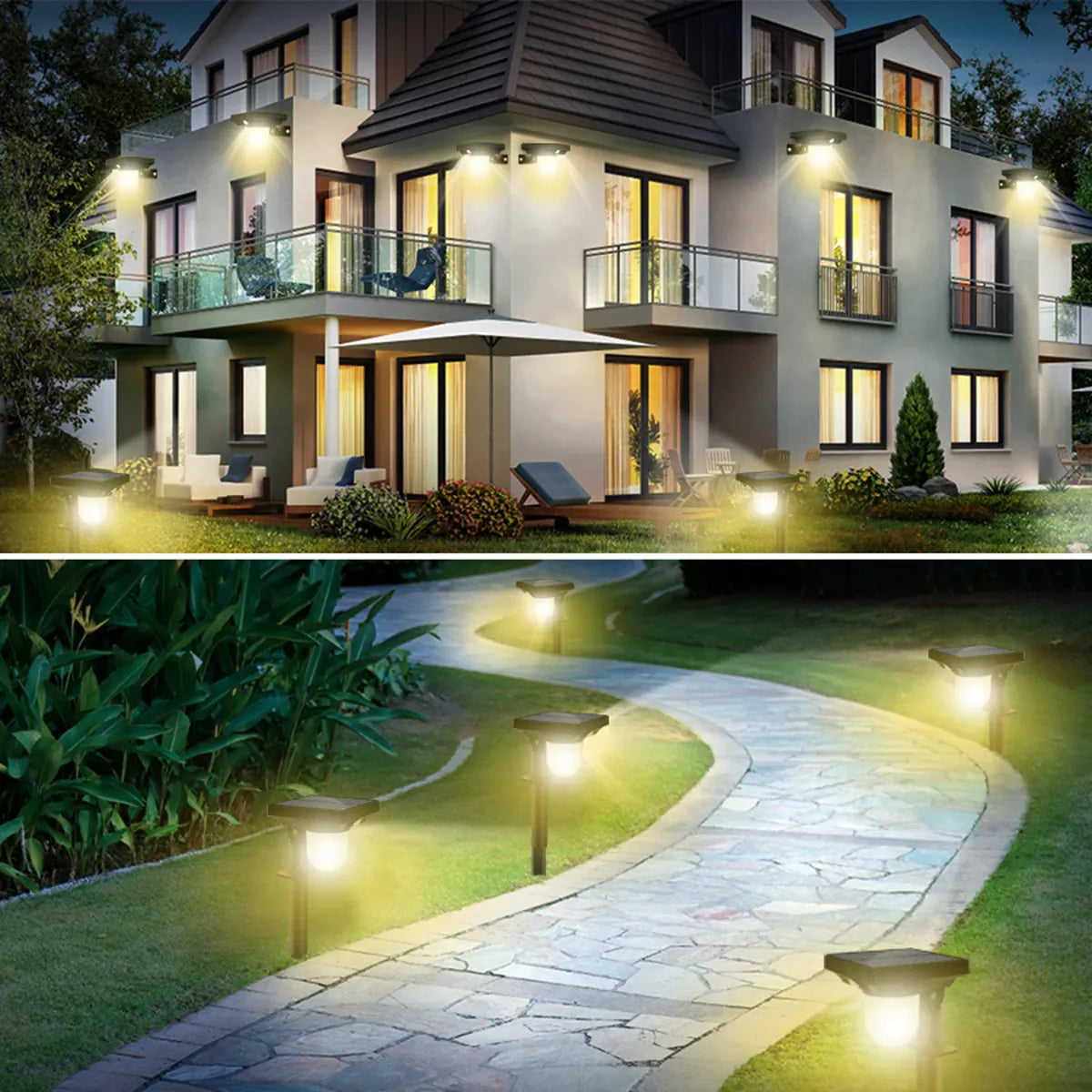
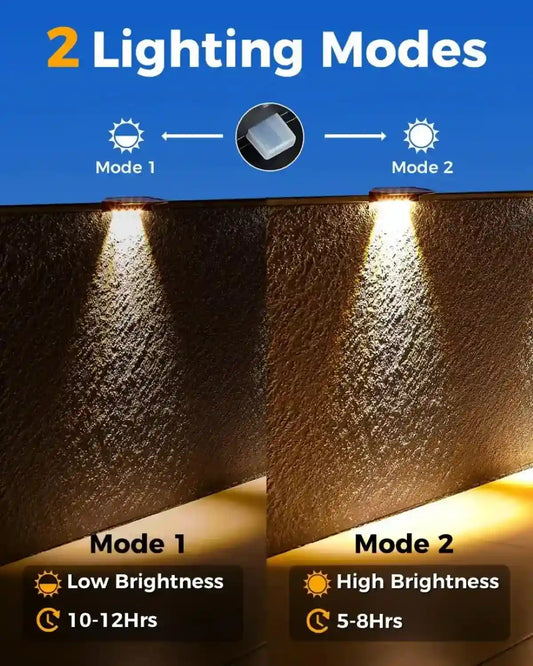
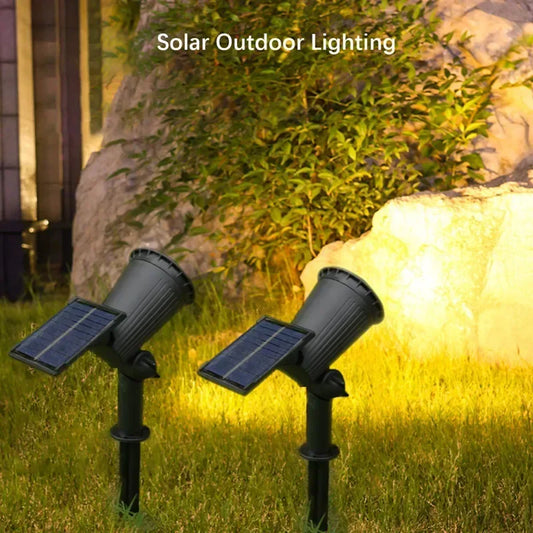
4PCS Outdoor Solar Landscape Pathway Lights with Motion Sensor Walkway Decor
Choose fixtures based on lumens and optics rather than watts; lumens measure visible output and beam spread controls coverage.
Practical recommendations help translate needs into fixture choices and quantities.
- Replace wattage thinking with lumens: LED efficacy ≈ 80–150 lm/W—match lumens to task.
- Color temperature: 2700–3000K for warm residential settings; ≤3000K reduces skyglow and supports wildlife.
- CRI ≥ 80 (90+ for art or plant/flower colors).
Common target lumen ranges (per fixture):
- Path/step lights: 100–300 lumens
- Accent spotlights: 400–1000 lumens
- Wall wash: 300–800 lumens
- Security floods: 700–2200 lumens
- String or ambient patio lighting: 50–150 lumens per bulb
Beam spread and mounting guidance:
- Narrow spot (10–24°): accenting tree trunks or sculptures at 10–20 ft distance.
- Medium flood (25–45°): small shrub/bed lighting or façade accents.
- Wide flood (60°+): general area lighting or driveway coverage.
- Mounting height rule of thumb: spacing ≈ 2–4× mounting height for even coverage (adjust for beam angle).
Choose energy‑saving LED fixtures: types, drivers, color, and efficacy
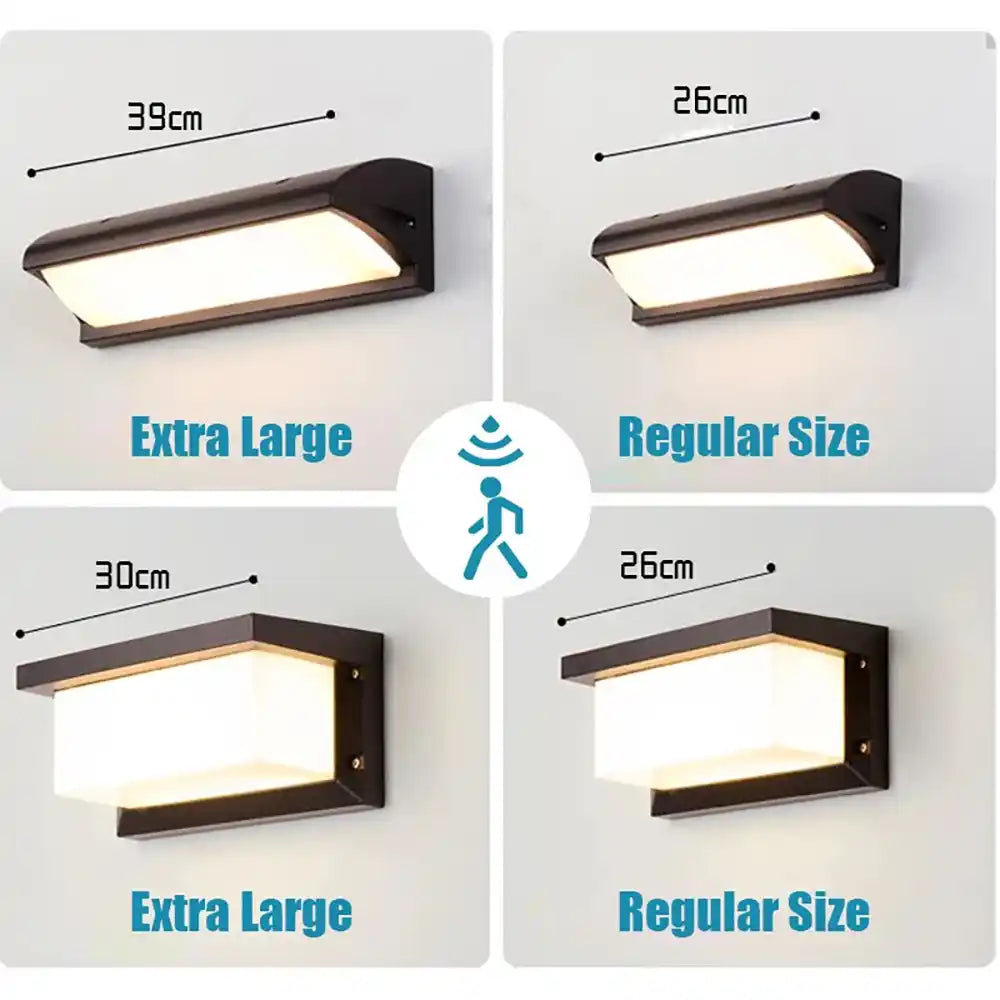
Extra Large LED Outdoor Wall Lights Waterproof Motion Sensor Outdoor Lighting
Modern LEDs deliver strong light with low energy; select fixtures by lumen output, efficacy, color, CRI, and driver quality.
Prioritize long-life fixtures, quality drivers, and the right IP rating for outdoor exposure.
|
Common LED fixture types — quick comparison |
||||
|
Fixture |
Typical Lumens |
LED Wattage (approx.) |
Best Use |
CRI / Color Temp |
|---|---|---|---|---|
|
Path/Step Light |
100–300 lm |
2–6 W |
Walkways, steps |
80+, 2700–3000K |
|
Accent Spotlight |
400–1000 lm |
5–12 W |
Trees, sculptures, façade |
80–90, 2700–3000K |
|
Security Flood |
700–2200 lm |
10–30 W |
Driveways, yards |
80+, 3000–4000K (use warm tones where possible) |
Key LED selection considerations:
- LED driver quality: choose constant-current drivers with thermal protection for long life.
- Efficacy: seek fixtures ≥ 80 lm/W; higher efficacy reduces fixture count and power draw.
- IP rating: IP65 minimum for exposed fixtures; IP67/IP68 for submerged or jet-spray sites.
- Warranty and lumen maintenance (L70/L90): prefer L70 ≥ 50,000 hours from reputable manufacturers.
For data and performance guidance, consult the U.S. Department of Energy's resources on LEDs: https://www.energy.gov/eere/ssl/solid-state-lighting, and technical reports from the National Renewable Energy Laboratory: https://www.nrel.gov.
💡 Elevate your space with reliable, stylish, and affordable LED technology. Discover smarter, brighter solutions with Lumaz.
Controls and energy strategies: sensors, zoning, and smart automation
Controls maximize energy savings and improve usability by matching light to activity and time of day.
Combine photocells, timers, motion sensors, dimming, and smart scheduling to cut runtime and boost comfort.
- Photocells: Automatically switch circuits at dusk/dawn — ideal for continuous ambient and path lighting.
- Motion sensors: Activate high-output security lights only when needed; reduces overall on-time.
- Dimming: Lower lumen output in low-use hours to save energy and extend LED life.
- Smart controls: Zone-based apps or central controllers enable schedules, scenes, and energy monitoring.
Estimated energy savings:
- LEDs vs incandescent/halogen: commonly 60–80% energy reduction per fixture (DOE data).
- Adding occupancy sensors and dimming can cut runtime energy by an additional 20–60% depending on behavior.
Site requirements, wiring, and safety (codes & IP ratings)
Outdoor installations must meet electrical code and safety practices; plan wiring, circuit capacity, and proper protection.
Use weather-rated fixtures, GFCI protection for outdoor outlets, and follow local code for trenching and conduit depth.
- Follow the National Electrical Code (NEC) rules for outdoor circuits and GFCI protection (consult local authorities and licensed electricians).
- Use exterior-grade cabling (UF or direct-burial with conduit) and seal all junctions with outdoor-rated boxes.
- Label circuits in the panel and leave a schematic for future service.
Power calculation quick method:
- List each fixture and its wattage (LED wattage, not equivalent incandescent wattage).
- Sum fixture wattages on each circuit, add 20% contingency for inrush/expansion.
- Ensure circuit load ≤ 80% of circuit breaker rating (e.g., on a 15 A × 120 V circuit usable continuous load ≈ 1440 W × 0.8 = 1152 W).
For homeowner guidance and technical detail on safe installation and outdoor electrical work, consult utility and extension resources and consider licensed electricians. See example guidance from energy agencies: https://www.energy.gov.
Sample layout & calculation: 3-zone residential example
This practical example shows fixture choices, placement, and a simple power calculation for a 50-ft front yard.
Use this as a template to adapt to your property and zoning needs.
|
Sample 3‑Zone Layout (Front yard) |
|||||
|
Zone |
Fixture Type |
Quantity |
Lumens Each |
LED Wattage Each |
Total Watts |
|---|---|---|---|---|---|
|
Path |
Low bollard |
6 |
150 |
4 W |
24 W |
|
Accent |
Spotlight (tree) |
2 |
700 |
8 W |
16 W |
|
Security |
Wall-mounted flood |
1 |
1500 |
20 W |
20 W |
|
Total |
|
|
|
|
60 W |
Calculation notes:
- Total LED wattage = 60 W. Add 20% margin = 72 W. A single 15 A × 120 V circuit (max continuous ~1152 W) easily supports this load.
- Use separate circuits for high-draw security lighting or long runs to reduce voltage drop.
🌟 "We replaced old halogens with LEDs and a motion zone — our electricity bill dropped, and the yard finally feels intentional and safe." — Neighborhood forum homeowner
Maintenance, lifecycle, and environmental considerations
Plan for 10–15+ years of fixture life, routine cleaning, and responsible disposal to maintain performance and sustainability.
LEDs degrade slowly; expect L70 (30% lumen depreciation) at 25,000–100,000 hours depending on fixture quality and thermal management.
- Routine tasks: clean lenses seasonally, check seals and mounts, inspect wiring for wildlife/UV damage.
- Replace drivers or full fixtures once lumen output falls below acceptable levels (monitor via replacement schedule).
- Recycle: many LED fixtures contain electronics—use e-waste recycling programs rather than landfill disposal.
Limitations and realistic expectations:
- LED color shifts can occur in low-cost fixtures; choose fixtures with documented lumen maintenance and warranties.
- Light trespass and neighborhood disputes: coordinate warm temps and proper aiming to reduce complaints.
- Wildlife impacts: minimize blue-heavy light and overspill near natural areas to reduce ecological disruption.
For research-backed best practices on outdoor lighting and minimizing ecological impact, consult resources such as the U.S. Department of Energy and National Renewable Energy Laboratory: DOE SSL and NREL.
Next steps: checklist for implementing your plan
Convert the plan into action with a short checklist for procurement, installation, and commissioning.
Follow these steps to ensure a successful, energy-efficient installation.
- Finalize zone map and fixture count using lumen targets from this guide.
- Choose fixtures with adequate IP rating, CRI, and L70/L90 data; verify driver and warranty.
- Design circuit layout, calculate loads, and consult a licensed electrician for code compliance.
- Select controls (photocell, motion, dimmer) and set schedules/scenes for energy savings.
- Document the system (schematics, labels) and schedule annual maintenance checks.
FAQs — concise answers to common planning questions
1. How many lumens do I need for a pathway?
For safe walking, aim for 100–300 lumens per path fixture, producing about 1–5 lux on the path surface depending on spacing and mounting height.
2. What color temperature is best for outdoor residential lighting?
2700–3000K is recommended for most residential settings: warm, pleasant light that reduces glare and light pollution while rendering colors well.
3. Can I mix LED brands and still use the same driver?
Only mix fixtures if they accept the same driver type (constant-current vs constant-voltage) and voltage. Prefer separate, dedicated drivers per fixture or consult manufacturer compatibility.
4. Do motion sensors actually save energy?
Yes—when used correctly, motion sensors reduce run-time for high-output lighting and can cut energy use substantially, especially for infrequently used security lights.
5. What IP rating do I need for landscape fixtures?
Use IP65 or higher for exposed landscape fixtures. For areas prone to water immersion or jet wash, choose IP67/IP68-rated units.
6. When should I hire a licensed electrician?
Hire a licensed electrician for circuit design, trenching, permanent wiring, and any work requiring permits or code compliance. DIY only low-voltage, plug-and-play systems if local codes allow.
Related Articles:
- Set an Outdoor Lighting Timer: Step-by-Step
- Solar String Lights: Tips for Long-Lasting Use
- Top 5 Solar Pathway Lights to Illuminate Garden
- 6 Tips to Choose the Best Solar Flood Light
- Creative Uses for Solar Rope Lights in Garden & Patio
- Enhance Home Security with Motion Sensor Lights
- Install Solar Step Lights: Step-by-Step Guide














 />
/>
 />
/>
 />
/>
 />
/>
 />
/>