

Bedroom Lighting Ideas: Layered Lighting Plans for Different Bedroom Sizes
Table of Contents
- 1. Why bedroom size changes your lighting experience
- 2. What “layered lighting” really means in a bedroom
- 3. Light brightness and color temperature: what feels right in bedrooms
- 4. Layered lighting ideas for small bedrooms (under ~120 sq ft)
- 5. Layered lighting ideas for medium bedrooms (120–250 sq ft)
- 6. Layered lighting ideas for master bedrooms (250+ sq ft)
- 7. Small vs medium vs master bedrooms: what really changes
- 8. Choosing fixtures and controls that support layered lighting
- 9. Common mistakes when planning bedroom lighting by room size
- 10. FAQs: bedroom size & lighting choices
- 11. Conclusion
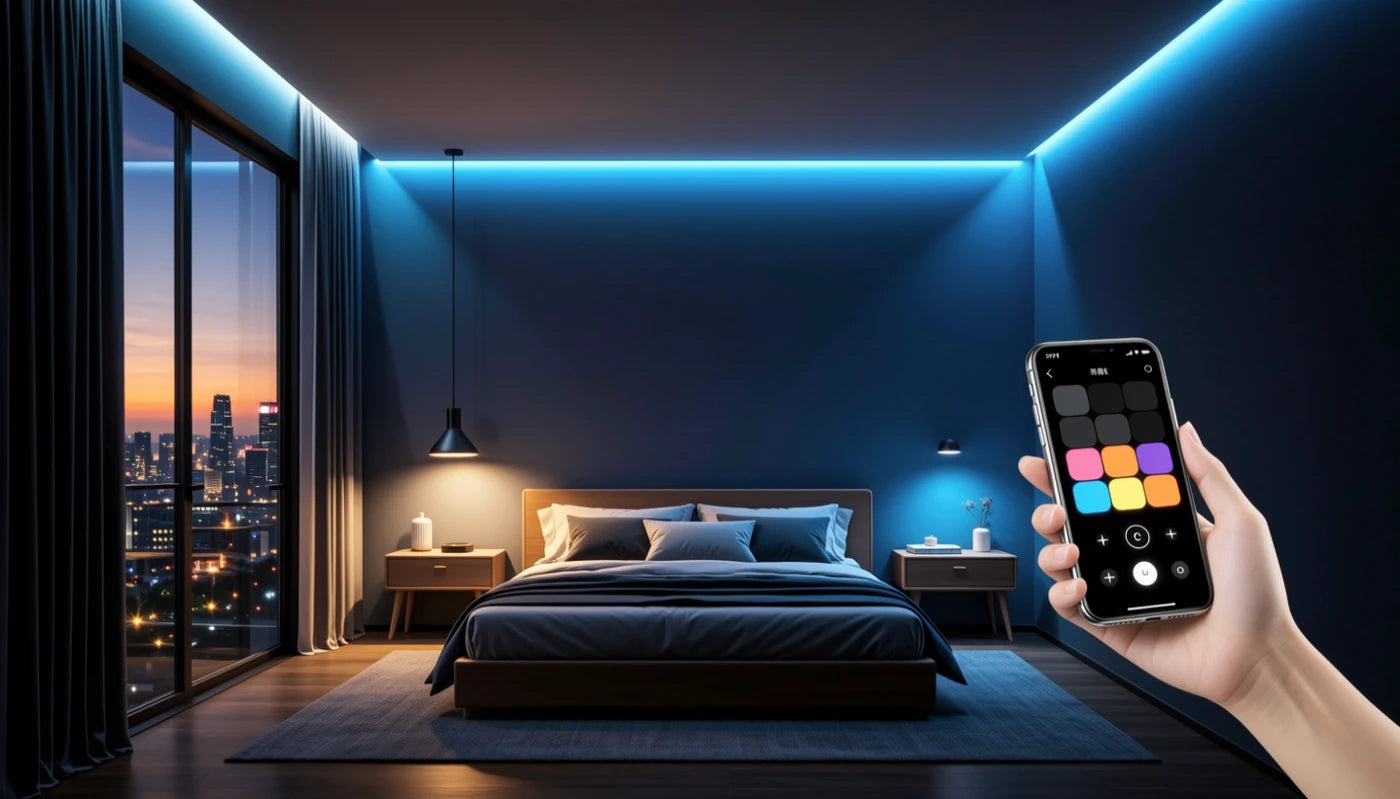
If you want to browse fixture styles while you plan, start here: bedroom lights.
1. Why bedroom size changes your lighting experience
Two bedrooms can use similar fixtures and still feel completely different at night. The difference is usually not “technology”—it is how the space feels when light hits walls, ceilings, bedding, and your eyes at rest.
Bedroom size changes the experience in a few predictable ways:
- Distance and glare sensitivity: In smaller rooms, light sources are closer to the bed and closer to your sightline, so any hotspot or exposed brightness feels stronger.
- Visual “pressure”: Bright, uniform light can make a small room feel flatter and tighter, while the same brightness in a larger room can feel clean and open.
- Shadow behavior: More furniture density in a small footprint can create harsh contrasts—bright centers with dark corners—unless the lighting is layered.
- Zone expectations: Larger rooms naturally create zones (sleeping, dressing, seating). When one light tries to serve all zones, the room tends to feel unsettled.
A useful professional lens here is contrast. Bedrooms rarely feel “bad” because they are simply dark; they feel bad when the brightest thing in the room is in the wrong place (often within your bed sightline) or when the room forces your eyes to bounce between extremes (hotspots and dead corners). Guidance on glare in daylit spaces makes the same point: glare is often created when very bright areas sit next to much darker surfaces, making visual adaptation harder (LBNL daylighting guide).
That is why size-based planning works: you are choosing a lighting “personality” that matches how the room is experienced—especially from the bed.
2. What “layered lighting” really means in a bedroom
Layered lighting is simply using three kinds of light that can be controlled independently, so the bedroom can shift from “functional” to “restful” without feeling harsh or dim.
- Ambient: the overall room light that helps you move comfortably.
- Task: focused light for reading, dressing, or any close-up activity.
- Accent: low-intensity, directional light that adds depth, softness, and mood.
Boundary note: This guide stays at the idea-and-selection level. It does not cover step-by-step execution.
In bedrooms, layering is less about “adding more lights” and more about giving each light a job. When every light has a job, you can lower overall brightness while still seeing what you need—one of the easiest ways to make a room feel calmer.
3. Light brightness and color temperature: what feels right in bedrooms
Bedrooms are unique because you use them in two emotional modes: daytime function and nighttime recovery. The lighting that feels perfect for folding laundry can feel wrong for winding down.
Brightness should feel adjustable, not fixed
A bedroom rarely needs one “correct” brightness. What feels best is a range: brighter for cleaning and dressing, softer for relaxing, and very low for late-night navigation. The practical takeaway is simple: prioritize dimmable ambient and controllable bedside task light.
Color temperature should support the mood you want
Warm light tends to feel more relaxing and forgiving on skin and textiles, while cooler light can feel more alert and crisp. In bedrooms, most people prefer warm-to-neutral light for general use and a gentle, warm feel at night.
There is also a biological reason this “day vs night” split feels so real: the circadian system uses light as a strong timing cue. The CDC notes that the circadian pacemaker is especially sensitive to light in the morning and evening, and that evening light tends to delay the clock while morning light tends to advance it (CDC/NIOSH). NIGMS also explains that the brain’s master clock coordinates daily rhythms and that light exposure influences melatonin production; it specifically calls out that light from electronic devices at night can confuse biological clocks (NIGMS).
For home decision-making, this supports a simple principle: make your bedroom lighting “bright-capable” for daytime tasks but “easy-to-dim” for evenings. A 2023 expert consensus paper in PLOS Biology summarizes evidence-led recommendations for indoor light exposure patterns that better support sleep and wakefulness across the day (PLOS Biology consensus).
If you are choosing bulbs or fixtures, focus on how you want the room to feel at night: cozy, quiet, and low-glare. If getting dressed is a priority, choose task lighting that renders colors naturally (often described as “high color rendering”).
💡 Selection mindset: In bedrooms, “good lighting” is usually the lighting you forget about—because it never feels too harsh, too dim, or too busy.
4. Layered lighting ideas for small bedrooms (under ~120 sq ft)
Small bedrooms reward restraint. The goal is to create comfort and depth without adding visual clutter or brightness that feels like pressure.
Ambient layer ideas (keep it calm)
- Choose one primary ambient source that feels soft and diffuse rather than “beam-y.”
- Prefer fixtures that hide the bright element from bed view to reduce glare when lying down.
- Use dimming as your main comfort tool so the room can shift from functional to restful.
Task layer ideas (make reading easy without lighting the whole room)
- Use dedicated bedside reading lights so you can keep ambient light lower.
- Look for adjustability and good glare control so light stays on the page, not in your eyes.
Accent layer ideas (add depth with minimal “stuff”)
- Add a low-brightness accent glow behind a headboard or along a shelf to make walls feel farther away.
- Keep accent lighting subtle; in a small room, a little glow goes a long way.
Small-bedroom scene ideas
- Wind-down: low ambient + a soft accent glow.
- Read: bedside task light + very low ambient.
- Morning reset: moderate ambient, accent off.
Why this feels better in a small room: In a tight footprint, your eyes are closer to every light source and every reflective surface, so hotspots and sharp contrasts feel more intense. A soft ambient layer keeps the room from feeling “flat-bright,” a true bedside task layer prevents you from raising the whole room just to read, and a subtle accent layer adds depth so walls feel farther away. That combination reduces glare and makes the space feel calmer from the bed—especially at night, when you are more sensitive to uncomfortable brightness transitions (LBNL daylighting guide).
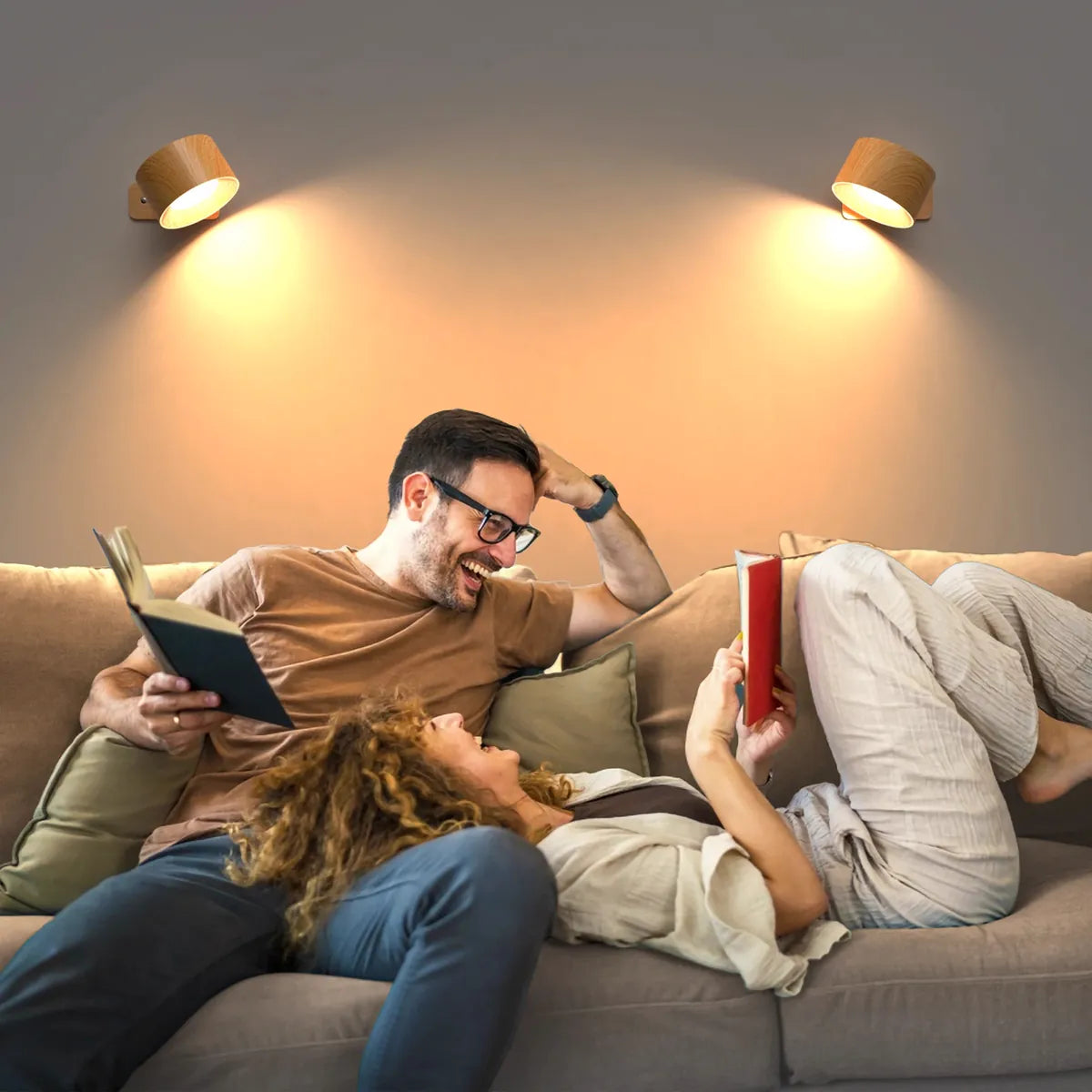
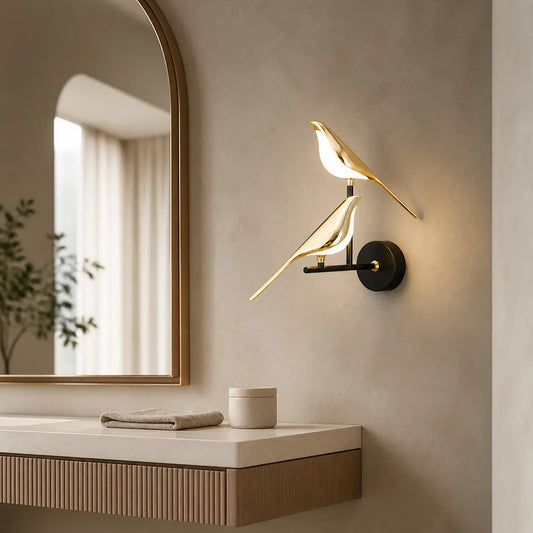
In smaller bedrooms, every layer of lighting should enhance comfort without overwhelming the space. The Wood Touch-Control LED Wall Light is an excellent choice for a task layer, offering adjustable brightness levels to make reading easier while keeping the room serene. Its 360° rotation and USB rechargeability let you position the light exactly where you need it, adding depth and functionality without cluttering your limited space.
5. Layered lighting ideas for medium bedrooms (120–250 sq ft)
Medium bedrooms are where layered lighting becomes expressive: you can balance function and atmosphere without the room feeling crowded.
Ambient layer ideas (support the whole room)
- Choose ambient lighting that feels even and comfortable across the room, then rely on task lights for precision.
- Use dimming to keep the “default night mode” softer while still having an “active mode” when needed.
Task layer ideas (separate jobs, reduce arguments)
- Give each bedside its own task light to support different routines.
- If you have a dresser, mirror, or small desk, treat it as a task zone with its own dedicated light.
Accent layer ideas (shape the mood)
- Use accent lighting to create a gentle gradient: a little light on one wall, a darker corner elsewhere.
- Highlight one feature (art, textured wall, shelving) rather than trying to accent everything.
Medium-bedroom scene ideas
- Relax: low ambient + accent on one focal wall.
- Get ready: brighter task lighting in the dressing zone + moderate ambient.
- Quiet late night: very low ambient + a path-friendly accent glow.
Why this feels better in a medium room: Medium bedrooms are big enough to support distinct “moments” (reading, dressing, winding down) but small enough that one poorly chosen light can still dominate the whole experience. Layering works here because it lets you lower the baseline while keeping specific areas functional: task lighting carries the clarity, ambient lighting carries the comfort, and accent lighting carries the mood. That separation matters at night because brighter, later light exposure can keep the brain in a more alert state; NIGMS notes that light exposure influences melatonin timing and that nighttime device light can confuse biological clocks (NIGMS).
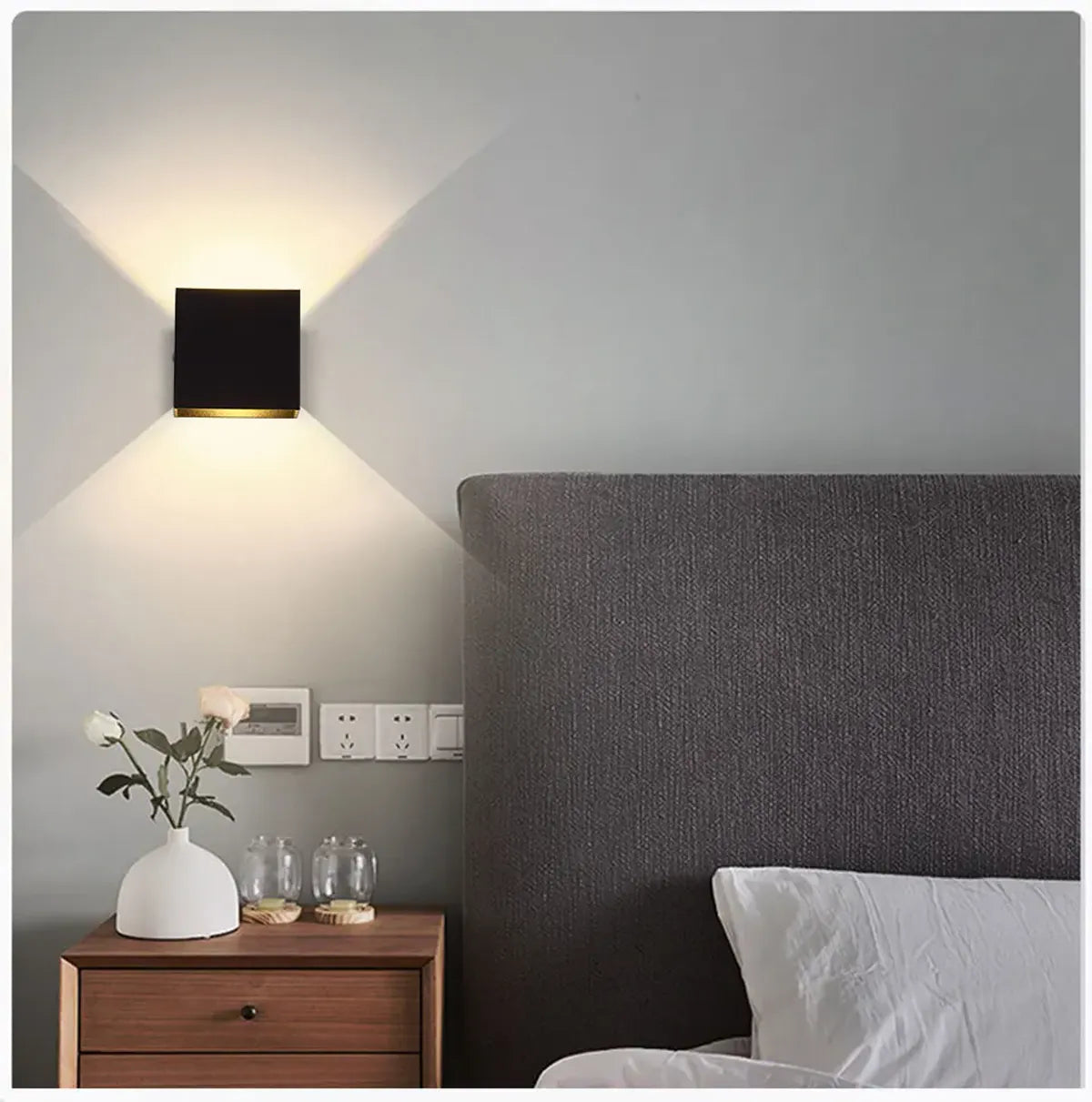
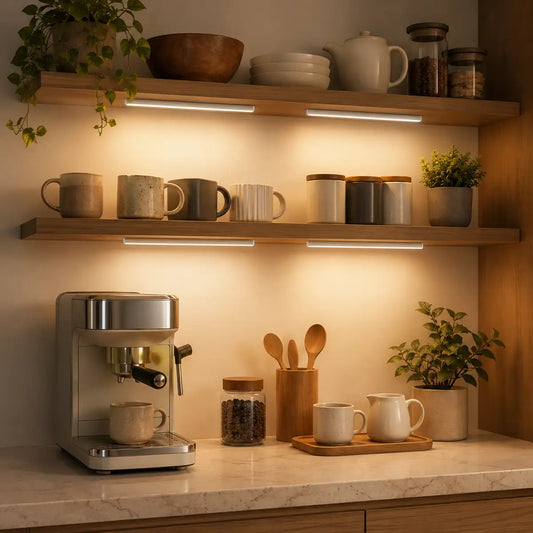
In medium-sized bedrooms, layered lighting allows you to strike the perfect balance between functionality and mood. The Modern Minimalist Square LED Wall Light offers a sleek, up-down lighting effect that complements your ambient layer, providing even light distribution while enhancing the room’s atmosphere. Its minimalist design and aluminum body seamlessly integrate into any décor, helping you create a cozy, functional space with ease.
6. Layered lighting ideas for master bedrooms (250+ sq ft)
Master bedrooms often fail when they are lit like a smaller room—one main source plus two bedside lamps. The experience improves when you embrace zones and let each zone have its own “layer mix.”
Think in zones before fixtures
- Sleep zone: calm, low-glare, easy to dim.
- Dressing zone: clearer, more accurate color, more functional.
- Seating/reading zone (if you have one): focused task light with a soft ambient background.
- Transition zone (entry, bathroom door): low, easy navigation light.
Ambient layer ideas (avoid the “single spotlight” feeling)
- Choose ambient lighting that can feel present without feeling intense.
- Make sure the sleep zone can stay soft even if other zones need more light.
Task layer ideas (clarity where you work)
- Use task lights where eyes work: reading, wardrobe choices, mirrors.
- Prioritize comfortable, natural-looking color in dressing areas so clothing and skin tones look right.
Accent layer ideas (mood freedom without chaos)
- Use accent lighting to “stitch” zones together gently, so the room feels intentional rather than fragmented.
- Keep accent lighting controllable; master bedrooms benefit from more mood options, but only when they are easy to access.
💡 A master bedroom feels premium when you can create three moods quickly: bright-and-clean, soft-and-restful, and intimate-and-low.
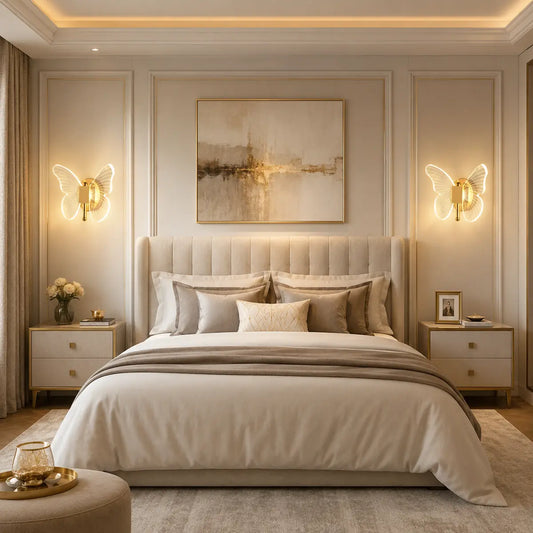
Why this feels better in a master bedroom: Bigger rooms don’t just need “more light”—they need less conflict between zones. The sleep zone should stay soft and low-glare, even if the dressing zone needs clarity, and even if someone else is reading. Zoning plus layered control lets you concentrate brighter light where it belongs while keeping the bed environment quieter and less stimulating. That aligns with the broader sleep-and-circadian guidance that timing and intensity of evening light exposure can shift sleep timing, while daytime light supports healthier rhythms (PLOS Biology consensus).
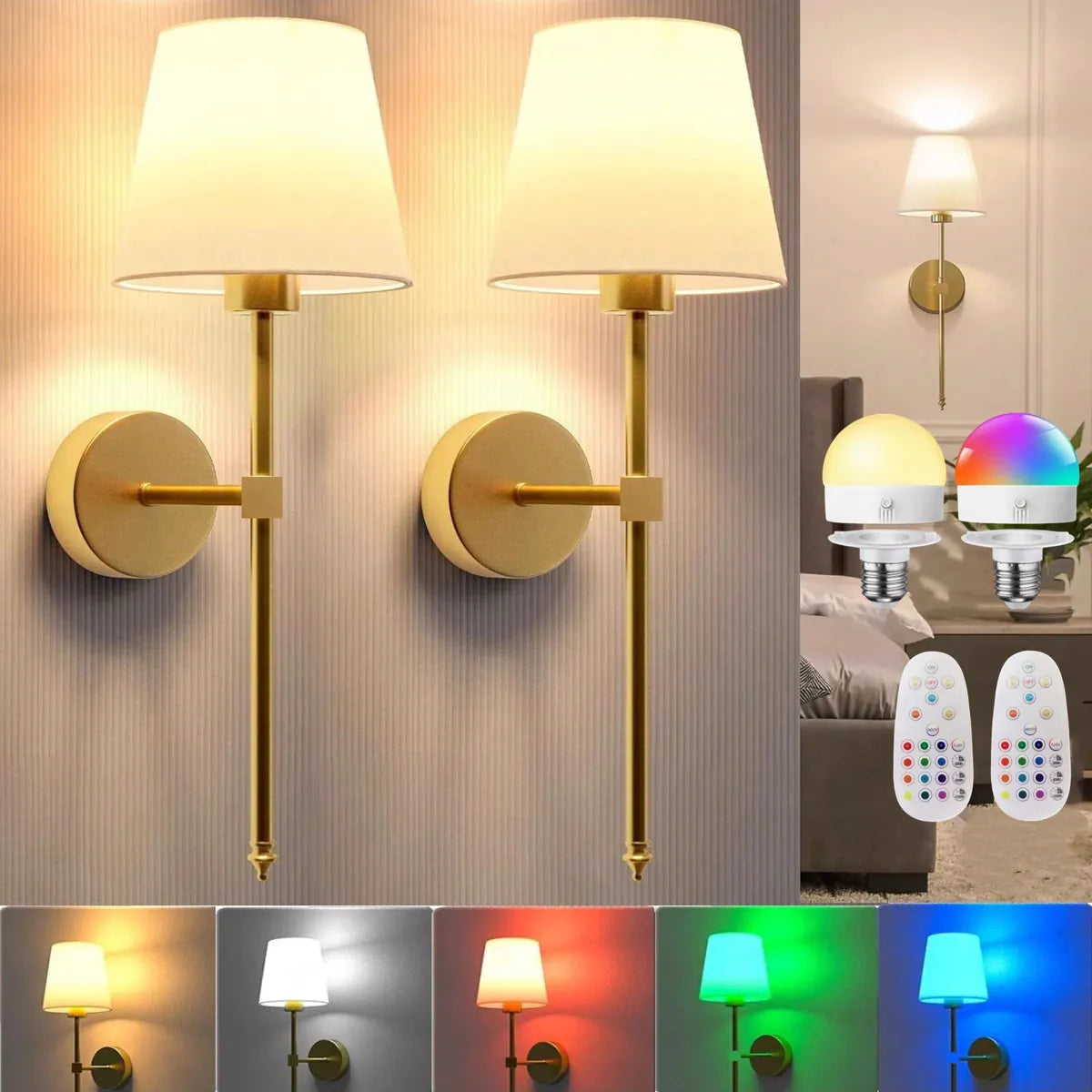
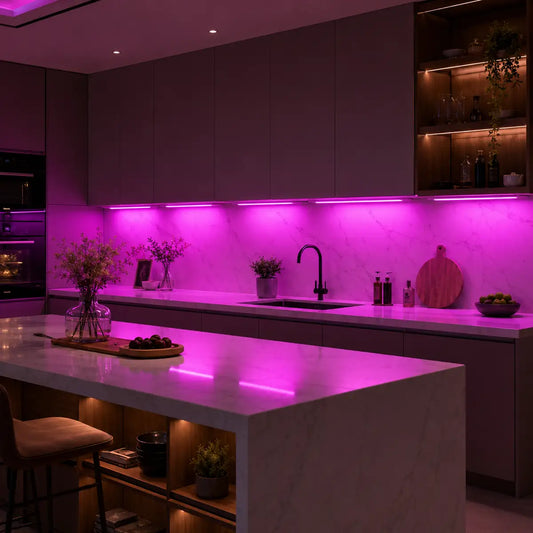
In larger master bedrooms, zoning your lighting enhances both functionality and atmosphere. The 3-Color & RGB LED Wall Lamp allows you to create distinct lighting zones with its adjustable color settings and remote dimming feature, perfect for adding mood to your accent layer. Its detachable E27 bulb offers flexibility, while its rechargeable design helps you avoid clutter, ensuring each part of the room feels inviting without overwhelming the space.
7. Small vs medium vs master bedrooms: what really changes
The goal of layered lighting stays the same—comfort plus flexibility—but the room size changes what is realistic and what matters most.
Number of lighting layers (in practice)
Small bedrooms often do best with a minimal three-layer setup (one calm ambient, one true task, one subtle accent). Medium bedrooms can support richer layering without feeling busy. Master bedrooms often need layered lighting repeated across zones.
Fixture flexibility
Small rooms punish bulky fixtures and visible hotspots. Medium rooms allow more decorative choice. Master bedrooms give you the most freedom, but only if the fixtures still support zoning and control.
Mood control potential
In small rooms, mood comes mainly from reducing glare and lowering overall intensity. In medium rooms, mood comes from balancing layers. In master bedrooms, mood comes from zoning and scene control—shaping how each area feels independently.
8. Choosing fixtures and controls that support layered lighting
Choose fixtures that are comfortable from the bed
- Glare control: look for diffused lenses, shades, baffles, or designs that hide the brightest element.
- Directionality where needed: task lights should aim where you need them, not wash the whole room.
- Visual simplicity: in small rooms especially, fewer, calmer fixtures often look and feel better.
If you want a professional shortcut: prioritize lower apparent brightness in what you see from bed, and higher usefulness in what reaches your book, dresser, or mirror. This is exactly what layering buys you—useful light where needed without turning the whole room into “alert mode.”
Choose controls that make “night mode” effortless
- Dimming: the fastest way to make a bedroom feel restful without sacrificing usability.
- Scenes: useful when you want consistent moods (read, relax, sleep, morning).
- Bedside-friendly control: the best lighting plan fails if it is annoying to adjust from the bed.
Controls are also where “human-centric” lighting becomes practical: you are not chasing perfect bulbs, you are choosing a system that makes it easy to follow a healthier daily light pattern (more light earlier, less light later). The science-based direction is well established in circadian and sleep research, including the CDC summary of timing effects and the PLOS Biology consensus recommendations (CDC/NIOSH, PLOS Biology).
Choose light sources that feel natural on skin and fabrics
When you care about dressing and mirrors, prioritize task lighting that renders color accurately and avoids harsh shadows. When you care about winding down, prioritize warmer, softer light and control.
9. Common mistakes when planning bedroom lighting by room size
These mistakes are common because they come from copying ideas from photos without adapting to how the space actually feels.
- Overlighting small bedrooms: too much uniform brightness makes the room feel flat and tense.
- Relying on one overhead source: it creates harsh contrast and makes the room feel less intentional.
- Ignoring bed sightlines: a fixture can look great from the doorway and feel awful from the pillow.
- No real task light: then you raise ambient brightness just to read or dress, which hurts comfort.
- Accent lighting that is too bright: accent should add depth, not become a second ambient layer.
- Mixing “warm” and “cool” randomly: inconsistent tone makes bedrooms feel unsettled rather than layered.
- Too many decorative statements in small rooms: visual noise competes with rest.
A more “invisible” mistake is treating the bedroom like a living room at night: keeping lighting bright and cool late into the evening because it looks crisp. If sleep and wind-down matter, the research direction is clear that timing and intensity of evening light can shift circadian rhythms (CDC/NIOSH, NIGMS).
10. FAQs: bedroom size & lighting choices
Do small bedrooms need fewer lights?
Usually, yes—but “fewer” is not the same as “single-source.” Small rooms often work best with a minimal layered setup: one comfortable ambient source, one true reading/task light, and one subtle accent glow.
What is the easiest way to make a bedroom feel more relaxing at night?
Make the default nighttime lighting lower, warmer, and glare-free. In practice, that usually means dimmable ambient light plus a soft accent option, while keeping task lighting available for reading.
How do I light a bedroom with a dresser or makeup area?
Treat it as a task zone. Choose lighting that feels clear and natural on skin and clothing, then keep the rest of the room softer so the bedroom still feels restful.
What changes most in master bedrooms?
Zoning. Master bedrooms feel best when the sleep zone stays calm even if the dressing or seating zone needs more light. Controls matter more because more zones create more “modes.”
Can I get layered lighting without adding a lot of fixtures?
Yes. Layering is about separate jobs and separate control. A room can feel layered with a small number of fixtures if you have a dedicated task light and a gentle accent option alongside comfortable ambient light.
How do I reduce glare in any bedroom size?
Choose fixtures that hide the brightest element, use diffusion, and avoid lighting that shines directly into the bed sightline. If glare is a recurring issue, lowering overall brightness and improving task lighting usually solves it faster than “adding more light.”
11. Conclusion
Bedroom lighting ideas work best when they match the feel of the space. Small bedrooms need restraint and glare control. Medium bedrooms reward balanced layers. Master bedrooms benefit from zoning and easy mood control.
If you start with layered lighting—ambient, task, and accent—then scale the approach to your room size, you will get a bedroom that supports both daytime function and nighttime recovery without feeling harsh or complicated.
Further Reading
Explore the full guide for this topic: Bedroom Lighting Design Guide: Style, Mood, and Atmosphere Explained
Related Articles
- Top Bedroom Lighting Trends for 2026: Styles, Materials & Smart Innovations
- Minimalist and Invisible Bedroom Lighting: Recessed and Integrated LED Solutions
- Sculptural Floor Lamps and Oversized Pendants: Top Lighting Ideas for Bedrooms
- Layered Lighting Techniques: How to Combine Overhead, Task, and Accent Lights in Bedrooms
- Maximizing Small Bedroom Space with Wall Sconces and Swinging Lights















 />
/>
 />
/>
 />
/>
 />
/>
 />
/>