

Bedroom Lighting Design Guide: Style, Mood, and Atmosphere Explained
Table of Contents
- 1. Why bedroom lighting design is about feeling, not fixtures
- 2. The three layers of bedroom lighting and how they shape atmosphere
- 3. Understanding mood vs atmosphere in bedroom lighting
- 4. How lighting style influences bedroom mood
- 5. Popular bedroom lighting styles and the moods they create
- 6. Using light color, contrast, and softness to shape bedroom atmosphere
- 7. Creating emotional zones in the bedroom through lighting
- 8. How smart lighting enhances mood and atmosphere (design perspective)
- 9. Common bedroom lighting design mistakes that ruin the mood
- 10. How to choose the right lighting approach for your bedroom mood
- 11. FAQs: Bedroom lighting style, mood, and atmosphere
- 12. Conclusion
1. Why bedroom lighting design is about feeling, not fixtures
Bedroom lighting design is primarily about shaping your psychological experience—comfort, safety, intimacy, calm—because the bedroom is where you are most sensitive to glare, contrast, and “too much” light. Fixtures are tools; the goal is the feeling.
What people get wrong about bedroom lighting
Most bedrooms don’t fail because the homeowner picked a “bad” light. They fail because the lighting supports the wrong experience: too bright at night, too harsh from the bed, or too flat to feel restful.
- Misconception: “I need brighter lights.” Reality: You often need better control and better direction.
- Misconception: “A beautiful fixture will fix the room.” Reality: One fixture rarely matches multiple moods.
- Misconception: “Bedroom lighting is a simple functional problem.” Reality: It’s a comfort and rhythm problem.
A bedroom-specific decision rule
If the brightest thing you can see from the bed is a bare bulb, an exposed LED point, or a hot reflector, the room will feel less restful even when it looks “styled.” Make bed sightlines your first design filter.
🗣️ Community perspective: “We bought a statement ceiling light and it looked amazing—until we lay down. From the pillow, it felt like a headlight. We didn’t need new décor; we needed the light to stop staring back at us.”
2. The three layers of bedroom lighting and how they shape atmosphere
Layered lighting means using ambient, task, and accent light as separate “roles” you can combine to create different moods without changing the room. In bedrooms, layering is less about complexity and more about reducing visual stress.
Ambient, task, accent: the simplest design model
- Ambient: the base light that makes the room navigable and sets the overall tone.
- Task: the focused light that supports close-up activities like reading or dressing.
- Accent: the low-intensity light that adds depth, softness, and emotional texture.
How each layer changes what you feel
In a bedroom, each layer has a distinct emotional effect:
- Ambient sets safety and spaciousness. Too strong: exposed, alert. Too weak: anxious, cramped.
- Task sets competence and ease. Too broad: disrupts rest. Too narrow: feels fussy and inconvenient.
- Accent sets warmth and atmosphere. Too bright: becomes a second ambient layer and feels “busy.”
A practical layering framework (no technical setup)
Use this framework to keep your plan decision-focused:
- Define your default night mood (the setting you want most evenings).
- Define your “utility” mood (cleaning, packing, outfit checks).
- Assign one layer to carry each mood: ambient carries comfort, task carries clarity, accent carries emotion.
Detailed Insight:
3. Understanding mood vs atmosphere in bedroom lighting
Mood is the short-term emotional state your lighting supports (relaxed, romantic, focused). Atmosphere is the long-term identity of the room (warm, quiet, enveloping, airy). Great bedroom lighting achieves both without fighting your daily rhythm.
Mood: fast, situational, and scene-driven
Mood is what you want right now. It changes quickly and should be easy to switch:
- Relaxed: low visual contrast, soft edges, minimal glare from bed.
- Romantic: warm, directional, more shadow, fewer bright surfaces.
- Focused: clear task light where eyes work, while the rest stays quiet.
Atmosphere: slow, spatial, and remembered
Atmosphere is what the room feels like over time—the emotional “background” your brain associates with the space. It is shaped by repeated cues: how light hits walls, whether shadows feel harsh, and whether the room calms you at night.
A simple test to separate mood from atmosphere
Ask two different questions:
- Mood question: “What do I want to feel tonight?”
- Atmosphere question: “What do I want this room to be known for?”
If your plan only answers the mood question, you may get occasional “wow” moments but still feel inconsistent. If it only answers the atmosphere question, the room may look cohesive but feel inconvenient day-to-day.
Why this matters for sleep
Light is also a timing cue for the body. NIGMS explains that the brain’s master clock coordinates daily rhythms and that evening light can influence melatonin timing (nigms.nih.gov). In design terms, a bedroom atmosphere should make it easy to move into “night mode,” not fight it.
In the context of bedroom lighting, mood and atmosphere work together to shape the experience of the space. While mood can be quickly adjusted for specific moments, like a cozy, relaxed evening, atmosphere is the enduring quality of the room—whether it feels warm, quiet, or open. A smart, dimmable light, such as the USB-powered RGBIC Smart Corner Floor Lamp, can help achieve this balance, enhancing the room's mood and atmosphere to fit your evolving needs throughout the day.

4. How lighting style influences bedroom mood
Lighting style is a consistent way of using brightness, contrast, and softness to express a mood. It’s not a shopping label; it’s a repeatable “light behavior” you can recognize and design for.
The style chain: visual language → emotional association
Style shapes mood through predictable cues:
- Softness (diffuse vs crisp): soft reads as calm; crisp reads as energetic and modern.
- Contrast (flat vs sculpted): low contrast reads as quiet; higher contrast reads as dramatic.
- Direction (everywhere vs intentional): intentional direction reads as designed and intimate.
- Surface behavior (glow vs sparkle): glow reads as cozy; sparkle reads as luxury.
A decision rule for matching style to mood
If your primary mood goal is “restful,” prioritize styles that reduce apparent brightness from the bed (soft, warm, controlled). If your goal is “hotel-luxury,” prioritize styles that combine a calm base with controlled highlights (sparkle without glare).
💡 Lumaz tip: If you want a bedroom to feel designed—not just lit—choose a clear “default mood,” then make every other mood a variation of it. The best rooms don’t switch personalities; they adjust intensity.
Detailed Insight:
5. Popular bedroom lighting styles and the moods they create
Different bedroom styles create different moods by changing softness, contrast, and perceived warmth. Use style as a decision shortcut: pick the emotional signature you want, then choose lighting behaviors that consistently deliver it.
Style comparison table (design behaviors, not products)
| Style | Light feel | Space feel | Best for mood needs |
|---|---|---|---|
| Modern / Minimal | Crisp, clean, controlled | Open, tidy, structured | Clarity, focus, low visual noise |
| Warm Contemporary | Warm, balanced, gentle contrast | Inviting, calm, polished | Everyday comfort, steady relaxation |
| Scandinavian | Soft, even, natural-feeling | Airy, bright-but-gentle | Lightness without harshness |
| Luxury / Hotel-Inspired | Calm base + controlled highlights | Layered, premium, intentional | Ritual, romance, “arrived” feeling |
| Cozy / Soft Ambient | Very soft, low contrast, warm | Enveloping, quiet, intimate | Stress relief, wind-down, sleep support |
| Smart / Adaptive | Changes across the day | Responsive, consistent | Routine support, mood stability |
Detailed Insight:
How to pick a style quickly
Use your “default night” as the tie-breaker. Most people use their bedroom at night far more than they “show” it in the day.
- If you want your mind to quiet down: choose minimal or Scandinavian behaviors (low visual noise, soft edges).
- If you want everyday comfort with flexibility: choose warm contemporary behaviors (balanced warmth, controllable contrast).
- If you want ritual and romance: choose hotel-inspired behaviors (calm base plus controlled highlights).
- If you want stable routines: choose adaptive behaviors (predictable scenes across the day).
Common trade-offs (so you don’t fight your own style)
- Crisper styles can feel modern but become unforgiving if glare is visible from bed.
- Softer styles feel restful but need at least one true task option to stay practical.
- High-contrast styles feel dramatic but can feel “busy” if too many areas compete for attention.
- Highly dynamic styles feel supportive when consistent, but feel chaotic when controls are unclear.
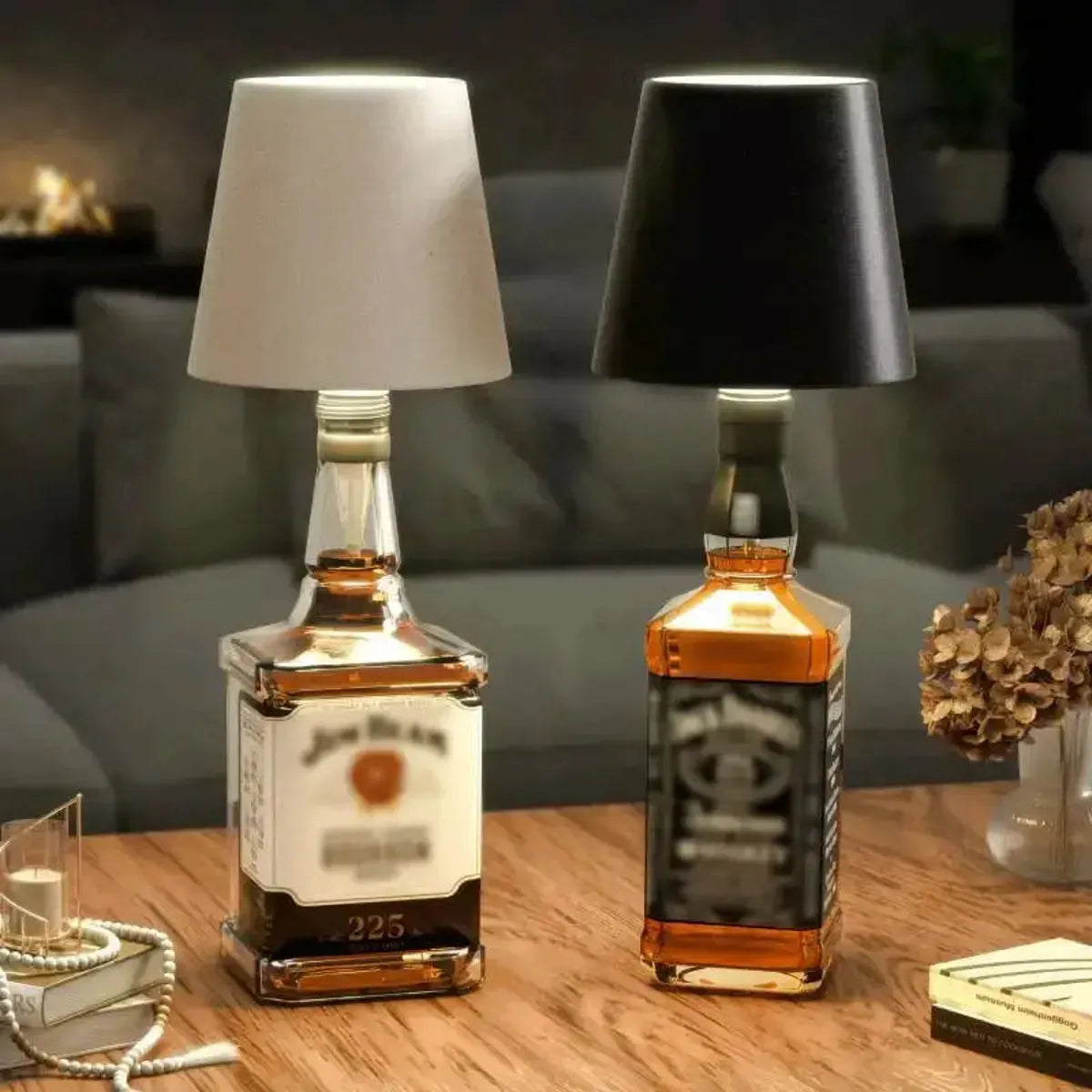
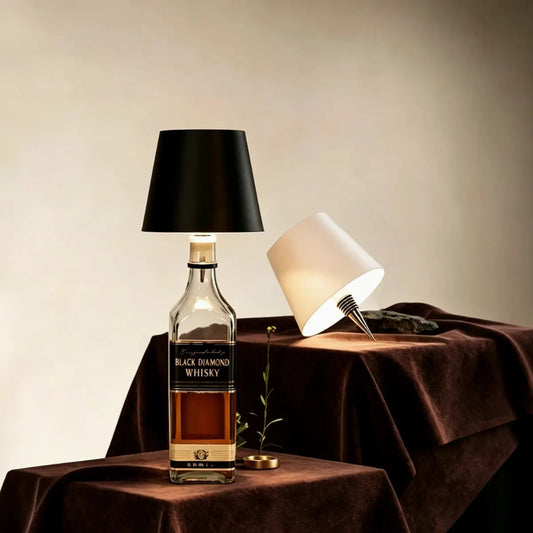
The lighting style you choose can greatly influence the mood of your bedroom, setting the tone for relaxation or energy. For a cozy, intimate atmosphere with a touch of creativity, the Creative LED Portable Headlight Bottle Table Lamp adds a unique, ambient glow. Place it on a bottle, and its portable, dimmable headlight creates a warm, inviting space that adapts to your desired mood, all while offering the flexibility of USB rechargeability.
6. Using light color, contrast, and softness to shape bedroom atmosphere
You can shape bedroom atmosphere by controlling three levers: perceived warmth, contrast, and softness. The goal is not “perfect specs,” but a repeatable feel you can maintain every night.
Light color: warm vs cool as a psychological cue
Warm light tends to read as safer and more relaxing, while cooler light reads as alert and task-forward. This is partly why “night mode” works: it lowers stimulation and signals winding down.
For the science context, a review in Sleep Medicine Clinics describes how light timing influences circadian rhythms, sleep, and alertness, with evening light generally pushing sleep later (pmc.ncbi.nlm.nih.gov).
Contrast: how to avoid “flat” or “harsh” rooms
Bedrooms feel best when contrast is intentional. A simple decision rule:
- If the room feels harsh: reduce visible hotspots and add softness (diffusion, glow surfaces).
- If the room feels flat: add one controlled accent area (a single wall, headboard glow, or art highlight).
Softness: why diffusion matters in bedrooms
Soft light makes textures and skin look better and reduces the feeling of “exposure.” In bedrooms, softness is often the difference between “bright enough” and “comfortable enough.”
A quick “bed test” for visual comfort
- Sit in bed and look toward your main ambient source.
- If your eyes want to squint, the apparent brightness is too high for your night atmosphere.
- If you can read comfortably with only the task layer on, your design is working.
Detailed Insight:
7. Creating emotional zones in the bedroom through lighting
Emotional zoning means letting different parts of the bedroom feel different on purpose: restful at the bed, clear at the wardrobe, safe along pathways. You are not adding complexity—you are reducing conflict between activities.
The three emotional zones most bedrooms need
- Sleep zone: lowest stimulation, lowest glare, easiest to dim.
- Reading / wind-down zone: controlled task light with a quiet background.
- Transition zone: safe navigation without “turning on the day.”
Why zoning improves mood consistency
Zoning prevents one activity from ruining another. Without it, you end up using bright ambient light for everything, which makes bedtime feel like a continuation of the day.
Decision rules for emotional zoning (no layouts needed)
- If one partner sleeps while the other reads: prioritize independent task control at each bedside.
- If dressing is a daily stress point: treat the wardrobe area as a clarity zone and keep the bed zone calm.
- If night trips happen often: ensure a low-level transition option exists so you avoid high-brightness lighting.
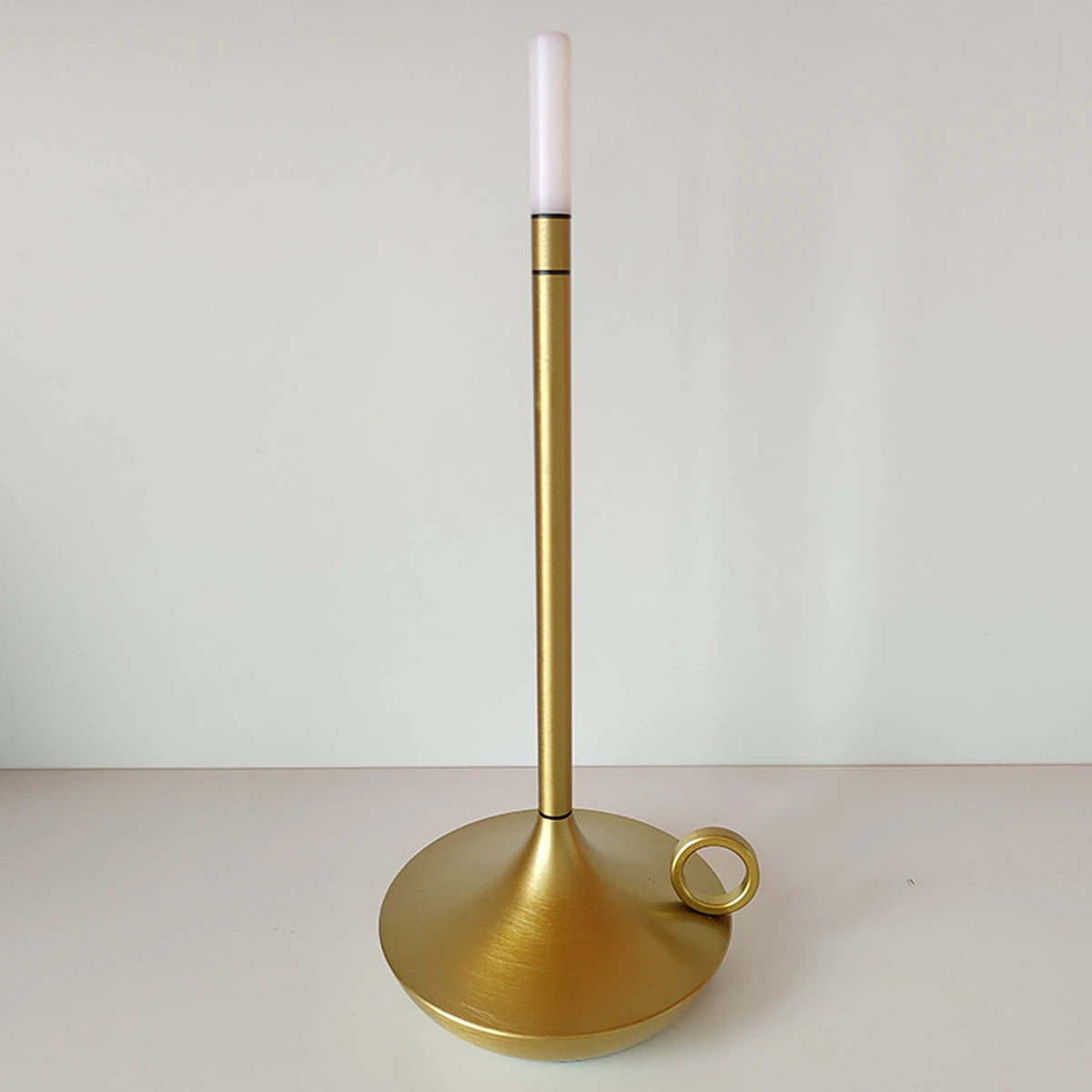
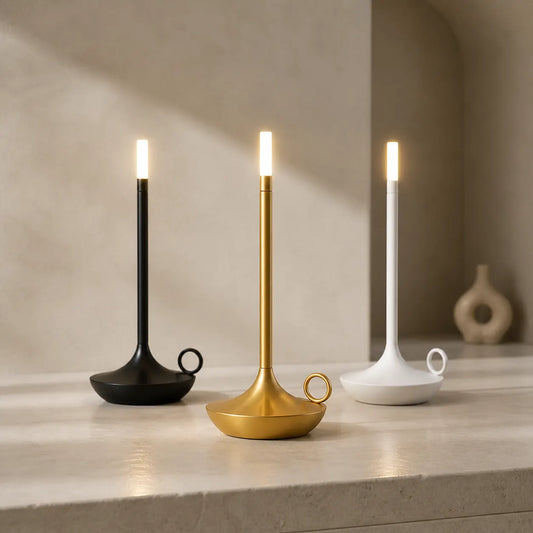
Creating distinct emotional zones in your bedroom helps maintain harmony between different activities, from restful sleep to focused reading. The Vintage Candlelight LED Table Lamp is perfect for your reading or wind-down zone, offering a soft, adjustable light that creates a calming atmosphere. With its touch dimming feature and USB rechargeability, it provides just the right amount of control, allowing you to seamlessly transition between tasks without disrupting your space’s mood.
8. How smart lighting enhances mood and atmosphere (design perspective)
Smart lighting improves bedroom mood when it reduces friction: fewer decisions, fewer steps, more consistent night routines. The value is psychological safety—knowing you can get the right atmosphere instantly.
What “smart” means in a bedroom (experience-first)
- Predictability: the room behaves the same way every night.
- Scene confidence: one action creates a reliable mood.
- Gentle transitions: changes feel gradual, not jarring.
How smart lighting supports emotional stability
A bedroom that can reliably shift into a low-stimulation state reduces decision fatigue. This matters because the circadian system is sensitive to light timing; consistent evening light patterns help reinforce a stable wind-down routine (nigms.nih.gov).
Decision rules for smart scenes (no product talk)
- If you want better sleep consistency: make “night mode” the easiest scene to activate.
- If you share a bedroom: ensure each side can control its own task mood without changing the whole room.
- If you wake at different times: create a “low-impact morning” scene that keeps the sleep zone calm.
9. Common bedroom lighting design mistakes that ruin the mood
Bedroom lighting mood is usually ruined by a small number of predictable mistakes: glare in bed sightlines, too much uniform brightness at night, and missing task layers. Fixing these is more impactful than swapping fixtures.
Mistakes that create stress, not comfort
- Visible hotspots from bed: exposed bulbs, bright reflectors, or “sparkle” aimed at your eyes.
- One-light-for-everything: using the same ambient source for reading, dressing, relaxing, and night movement.
- Evenly bright everywhere: the room looks bright but feels flat and mentally loud.
- No true task light: you raise the room brightness to compensate, which makes night feel like daytime.
- Accent lighting too intense: accent becomes a second ambient layer and adds visual noise.
- Scenes that are hard to use: if it takes multiple steps, you stop using them and the mood collapses.
A diagnostic question that catches most problems
When the bedroom feels “off,” ask: is it too bright, too sharp, or too uncontrolled from the bed? One of these is almost always the root cause.
10. How to choose the right lighting approach for your bedroom mood
Choose your bedroom lighting approach by starting with your emotional priorities, then selecting a layering strategy that makes those feelings easy to repeat. The best plan is the one you can live with nightly—not the one that looks perfect once.
Step 1: Identify your primary mood profile
- Relaxation-first: you want the room to lower stress quickly.
- Stability-first: you want consistent moods with minimal effort.
- Ritual-first: you want the room to feel special and intentional.
- Function-first: you want reading and dressing to feel easy without losing comfort.
Step 2: Choose your “default night” and design around it
Decision rule: if your default night mood is not comfortable enough, you will avoid using your lighting plan and revert to one bright switch or one dim lamp. Make the default night mood the easiest state to reach.
Step 3: Add only the layers that remove friction
Use this filter to prevent over-design:
- Add a layer if it solves a recurring moment (reading, dressing, night trips).
- Skip a layer if it only adds novelty without improving comfort or control.
Where to go next
To translate mood into a practical plan for your space, use the size-and-layout decision guide: How to Choose Bedroom Lights by Room Size and Bed Placement.
11. FAQs: Bedroom lighting style, mood, and atmosphere
What is the fastest way to make a bedroom feel more relaxing at night?
Make “night mode” easy: reduce visible hotspots from the bed, lower overall brightness, and rely on a dedicated reading/task light when needed. Your goal is a calm baseline with optional clarity—rather than one bright setting.
Can a modern/minimal bedroom still feel cozy?
Yes. Keep the visual language minimal but soften the experience: use a calm ambient base and one subtle accent glow. The room can look crisp while feeling warm if apparent brightness from bed stays controlled.
How do I avoid a bedroom that feels flat even when it’s comfortable?
Add one intentional accent focus—one wall, one piece of art, or a headboard glow—without raising the entire room. “One focal highlight” creates depth while preserving calm.
Is “warm light” always better for sleep?
Warm light is often easier to tolerate at night, but sleep comfort is mostly about overall stimulation and timing. NIGMS notes that light exposure influences the body clock and melatonin timing, so a dim, calm night pattern matters more than one bulb choice (nigms.nih.gov).
What if two people want different moods in the same bedroom?
Design for independence: each bedside should be able to create its own task mood without changing the whole room. Then keep a shared ambient baseline that stays comfortable for sleep.
How do I know if my bedroom lighting is “overdesigned”?
If you regularly avoid using most lights or scenes, the plan is too complex. A good bedroom plan has a reliable default night mood, one clear task option, and one optional accent mood—everything else is secondary.
12. Conclusion
Great bedroom lighting design is not a fixture checklist. It is a repeatable way to create the moods you need and the atmosphere you want to live in—night after night. Start with feeling, build with layered roles, and prioritize comfort from the bed.
After considering all the factors mentioned, you can explore more product options and detailed buying guides on our Indoor Lighting Hub Page to find the best solution for your needs.
Additional Guides in This Topic
- Minimalist and Invisible Bedroom Lighting: Recessed and Integrated LED Solutions
- Sculptural Floor Lamps and Oversized Pendants: Top Lighting Ideas for Bedrooms
- How to Layer Bedroom Lighting Like a Pro: Creating Ambiance and Functionality
- Integrating Portable and Built-In Lighting for a Clutter-Free Bedroom Design















 />
/>
 />
/>
 />
/>
 />
/>
 />
/>