

Using Colorful and Patterned Table Lamps to Add Personality to Your Bedroom Lighting
Colorful and patterned table lamps do two jobs at once: they add a controllable layer of light close to the bed, and they act like small-scale artwork. The best results come from treating a lamp as a lighting tool first (comfort, glare control, and usability), then using color and pattern to express your style.
Table of Contents
- 1. What a Bedroom Table Lamp Should Do
- 2. Color and Light Mood: Shade Color vs. Bulb Color
- 3. Pattern and Material: How Shades Change Light Quality
- 4. Scale, Height, and Proportion (So It Looks Intentional)
- 5. Placement Rules for Nightstands, Dressers, and Corners
- 6. How to Mix Two Lamps Without Looking Mismatched
- 7. Style Recipes: Color + Pattern Pairings by Bedroom Look
- 8. Sleep-Friendly Settings: Warm Dimming and Evening Light Hygiene
- 9. FAQs
- 10. Conclusion
1. What a Bedroom Table Lamp Should Do
A bedroom lamp is most useful when it supports three common routines: getting ready, relaxing, and reading. Unlike ceiling fixtures, table lamps are closer to eye level, so glare control and shade design matter more than sheer brightness.
Use this “designer checklist” before you think about color:
- Comfort: you should not see the bulb directly from bed.
- Task support: it should light the book/page or bedside surface without lighting the entire room.
- Ambience: it should look good at low brightness; if it only looks good at full power, it is not a bedroom lamp.
- Personality: the base or shade should carry color/pattern; the other part stays simpler for balance.
If you are choosing a new lamp category, start here: table lamps.
2. Color and Light Mood: Shade Color vs. Bulb Color
Most “colorful lamp” decisions go wrong because people treat color as paint. A lamp is different: you are looking at a colored object and looking through/at light filtered by materials.
Two colors are always happening at once
- Object color: what the base and shade look like in daylight.
- Light color: what the bulb emits at night (color temperature and dimming behavior).
A saturated shade can look playful in daylight but feel “muddy” at night if the bulb is too warm or too dim. Conversely, a cool bulb can make a warm shade look dull and can feel less relaxing in a bedroom.
A practical bedroom target
For most bedrooms, a warm bulb and dimming capability are the most forgiving combination. If you only choose one upgrade, choose a lamp that can run comfortably at low brightness and warm tone.
| Design goal | Shade direction | Bulb direction |
|---|---|---|
| Calm + cozy | Warm colors, linen/fabric, small-to-medium pattern | Warm (often 2700K-ish), dimmable or warm-dim |
| Fresh + airy | Light base color, pale pattern, high diffusion | Warm-to-neutral (avoid harsh cool), good dimming |
| Bold statement | Saturated base or high-contrast pattern (one hero) | Warm and controllable so the statement does not become harsh |
3. Pattern and Material: How Shades Change Light Quality
Pattern affects the room in two ways: it affects the lamp as an object, and it affects the luminance you see at the shade surface. Material decides whether that effect reads as soft and inviting, or busy and distracting.
Translucent vs. opaque is the real decision
- Translucent shades (linen, paper, some thin fabrics) glow. Pattern reads through the light and becomes part of the atmosphere.
- Opaque shades (thick fabric, metal) push most light up/down. Pattern reads mainly as decoration, with stronger directional lighting.
How pattern scale changes the mood
- Small patterns: texture-like, forgiving, easier to mix.
- Medium patterns: statement without dominating the room; best for most bedrooms.
- Large patterns: graphic and bold; use one large pattern “hero” and keep everything else quieter.
One designer rule that works reliably: if the shade has a busy pattern, choose a simpler base; if the base is sculptural or colorful, choose a calmer shade.
4. Scale, Height, and Proportion (So It Looks Intentional)
“Cute lamp, wrong size” is a common reason a bedroom looks unpolished. Scale is not about design taste; it is about sightlines and use.
Height: protect the eyes from the bulb
When you sit in bed, the bulb should not be visible. If you can see the bulb, you will feel glare even at low brightness. A deeper shade or a taller shade can often fix this without changing the lamp style.
Shade diameter: match the furniture footprint
A useful visual check: the shade should not look tiny on the nightstand. If the nightstand is wide and the shade is narrow, the lamp reads under-scaled and “temporary.”
Pattern intensity: scale up, simplify
As the shade gets larger, pattern becomes more dominant. Bigger shade usually means simpler pattern, unless you are explicitly making the lamp the focal point.
5. Placement Rules for Nightstands, Dressers, and Corners
Placement decides whether your lamp feels like a curated element or random decoration. In bedrooms, placement should always support a routine.
Nightstand placement (reading + wind down)
- Control glare: avoid placing the lamp where the bulb faces the bed directly.
- Support the task: position so the light hits the book surface or bedside surface, not your eyes.
- Keep switch access easy: the most beautiful lamp fails if turning it on is annoying.
Dresser placement (soft vertical light)
A table lamp on a dresser is a great way to add a warm “vertical layer.” It makes the wall and mirror zone feel brighter without adding ceiling glare, which is especially helpful in minimalist bedrooms.
Corner placement (mood + balance)
A colorful lamp in a corner is a low-risk way to add personality. It also helps balance visual weight if one side of the bedroom has a large wardrobe or heavy curtain wall.
6. How to Mix Two Lamps Without Looking Mismatched
Matching lamps are safe, but they are not required. A mixed pair looks “designed” when you intentionally share one or two variables and change the rest.
Pick your shared variables:
- Shared color: same color family, different pattern.
- Shared material: both ceramic bases, different shapes.
- Shared shade shape: both drum shades, different prints.
- Shared height: keeps the bed wall calm even with different designs.
Then choose one point of contrast:
- Contrast pattern: one pattern, one solid.
- Contrast silhouette: one sculptural base, one simple base.
- Contrast finish: matte + glossy, but keep colors related.
A reliable approach: make one lamp the “hero” (patterned or colorful) and keep the second lamp quieter.
7. Style Recipes: Color + Pattern Pairings by Bedroom Look
Use this table as a fast way to decide what kind of lamp feels natural in a specific bedroom style. The key is to repeat one element (color, material, or motif) elsewhere in the room so the lamp feels integrated.
| Bedroom style | Color direction | Pattern direction | What to repeat |
|---|---|---|---|
| Minimalist modern | One saturated accent (cobalt, rust, olive) | Small geometric or micro-stripe | Repeat accent in one pillow or artwork |
| Scandinavian | Soft pastels, light wood, off-white | Checks, subtle lines, low-contrast prints | Repeat in a throw or curtain texture |
| Boho | Terracotta, sand, deep teal, warm neutrals | Block print, ikat, botanical | Repeat in rug or cushion patterns |
| Classic | Ivory, navy, deep green, brass | Damask, toile, subtle florals | Repeat in headboard fabric or art mat |
| Coastal | White, sand, sea-glass green, pale blue | Organic stripes, soft botanicals | Repeat in bedding stripe or wicker detail |
| Retro | Mustard, avocado, burnt orange, walnut | Big geometrics (one hero), graphic florals | Repeat in a single vintage accessory |
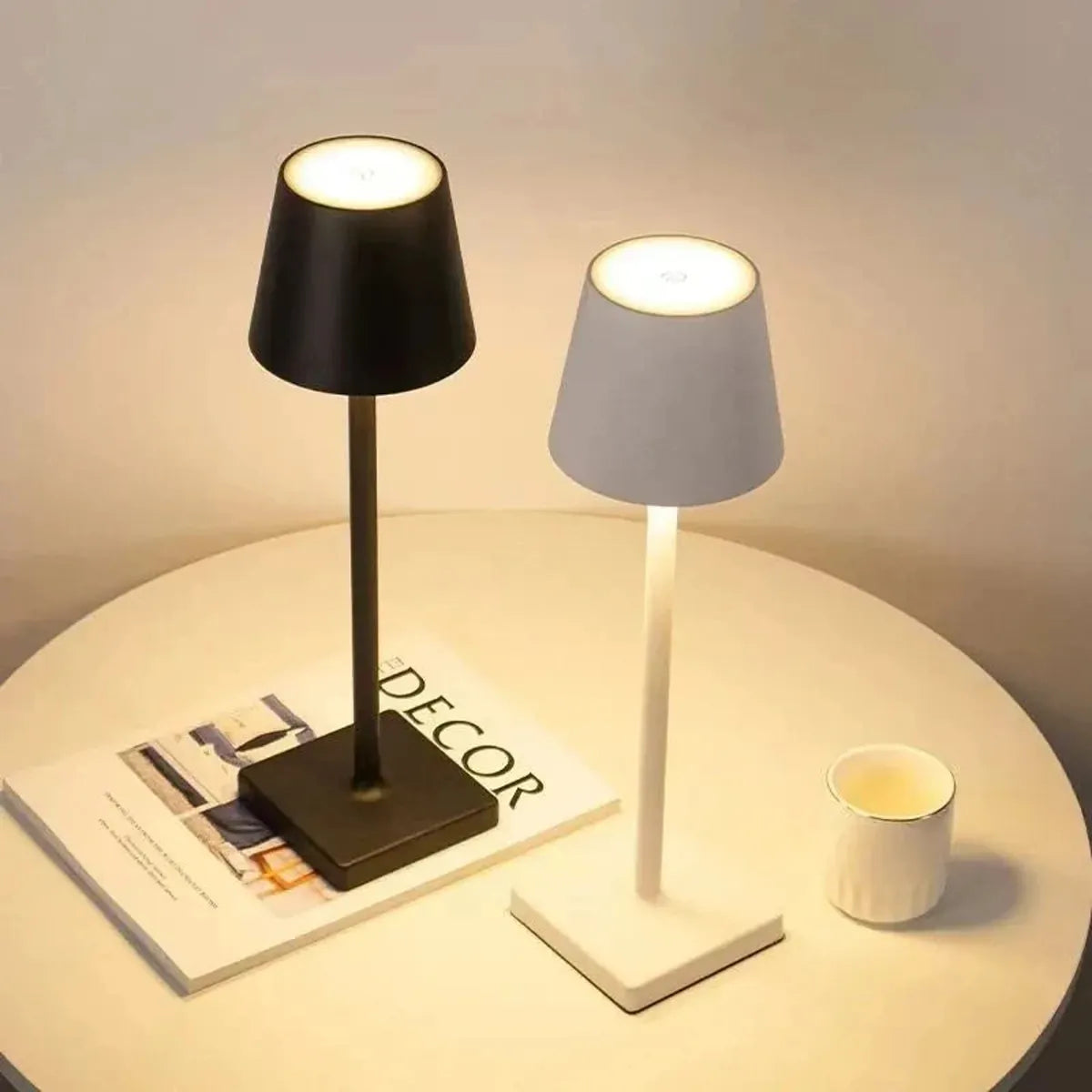
When selecting a table lamp, pairing colors and patterns that echo your bedroom's existing style creates a cohesive look. The Coffee Cup LED Desk Lamp offers a playful yet functional design with its tricolor dimming feature and waterproof durability, making it an ideal match for modern or eclectic bedrooms. Its Type-C rechargeable design ensures convenience, while its versatile look seamlessly integrates with your room’s color and material scheme, adding personality without overwhelming the space.
8. Sleep-Friendly Settings: Warm Dimming and Evening Light Hygiene
Personality is great, but a bedroom also has a job: it should support rest. Light exposure influences circadian timing; NIGMS explains how light helps regulate circadian rhythms (nigms.nih.gov). A field study found that typical evening home lighting can shift circadian phase later (pmc.ncbi.nlm.nih.gov).
Translate that into a lamp plan:
- Make evenings dimmable: the lowest setting should still look stable and pleasant.
- Prefer warmer settings at night: warmer tones typically feel calmer and are easier on the eyes.
- Use the shade to soften luminance: fabric and diffusion help reduce “bright point” discomfort.
- Create a “night path” option: if you get up at night, avoid blasting the whole bedroom with a bright lamp.
Efficiency is the easy part: LEDs are an energy-saving choice compared with older bulb types (energy.gov). The quality part is control: dimming behavior, glare, and where the light lands.
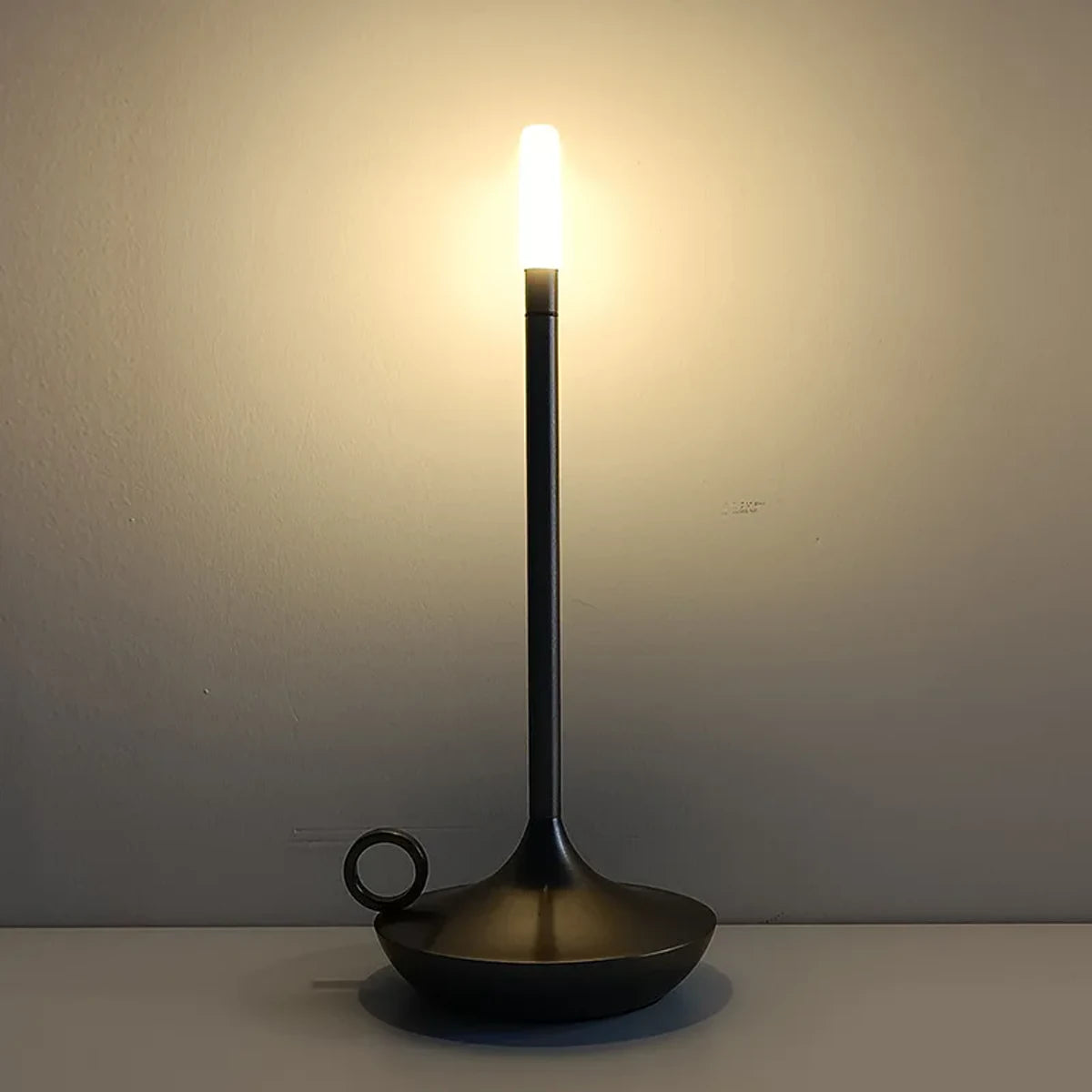
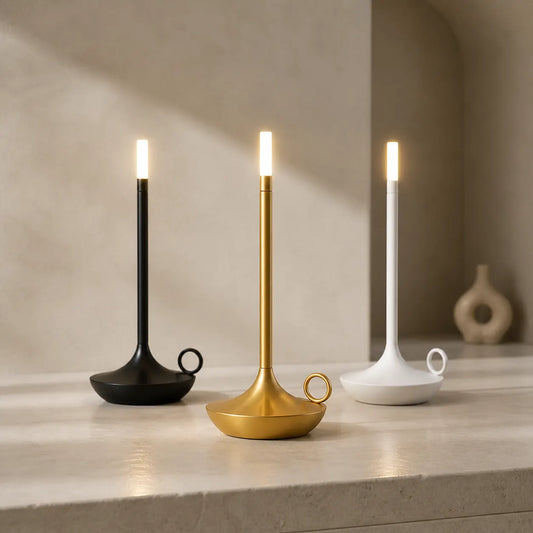
Creating a sleep-friendly environment is key to supporting your rest, and warm, dimming light can help regulate your circadian rhythms. The Vintage Candlelight LED Table Lamp is perfect for this, with its soft, touch-dimming feature that lets you adjust the light to a warm, calming level for evening relaxation. USB rechargeable, it provides a gentle, cozy glow that enhances your bedroom's tranquility without disrupting your sleep hygiene.
9. FAQs
Do colorful lamps make a bedroom feel smaller?
Not by themselves. Bedrooms feel smaller when contrast is harsh or when a lamp creates glare hotspots. If you want a calm look, use one saturated “hero” lamp and keep the rest of the palette quieter.
Should both bedside lamps match?
No. If you mix, share one variable (height, shade shape, or color family) and keep one lamp calmer than the other.
What is the easiest way to make a patterned shade look more expensive?
Use a simpler base, keep the pattern scale appropriate to the shade size, and choose a bulb that makes the shade glow evenly rather than creating a bright hotspot.
Can I use patterned lamps in a minimalist bedroom?
Yes. Choose low-contrast patterns or micro-patterns, and limit the palette. One intentional pattern reads like art; many competing patterns read like clutter.
10. Conclusion
The best colorful or patterned bedside lamp is not just decoration. It is a comfortable, controllable layer that supports how you actually use your bedroom. Get the fundamentals right first—shade diffusion, glare control, and dimming—then pick color and pattern that feel like you. With one well-chosen “hero” lamp and a simple supporting partner, you can add personality without sacrificing rest.
Further Reading
Explore the full guide for this topic: Bedroom Lighting Design Guide: Style, Mood, and Atmosphere Explained
Related Articles
- Bedroom Lighting Ideas: Layered Lighting Plans for Different Bedroom Sizes
- Top Bedroom Lighting Trends for 2026: Styles, Materials & Smart Innovations
- Vintage and Retro Lighting in Bedrooms: Blending Nostalgia with Modern Comfort
- Mood Lighting in Bedrooms: How Color and Temperature Control Improve Sleep and Relaxation
- How to Create a Cozy Bedroom Atmosphere with Warm White vs. Cool White LEDs















 />
/>
 />
/>
 />
/>
 />
/>
 />
/>