

Bedroom Lights: The Complete Guide to Choosing the Right Lighting for Every Bedroom
Table of Contents
- Introduction: Why Choosing the Right Bedroom Lighting Matters
- Understanding Bedroom Lighting Basics
- Types of Bedroom Lights: Pros, Cons, and Best Use Cases
- How to Choose Bedroom Lights Based on Your Needs
- Choosing the Right Light Color and Brightness
- Dimmable, LED, and Energy-Efficient Bedroom Lighting
- Space, Size, and Layout Considerations
- Smart vs. Traditional Bedroom Lighting
- Common Bedroom Lighting Mistakes to Avoid
- How to Build a Balanced Bedroom Lighting Setup
- Final Checklist: Choosing the Right Bedroom Lights for Your Home
- FAQs
- Conclusion: Making Confident Bedroom Lighting Choices
Introduction: Why Choosing the Right Bedroom Lighting Matters
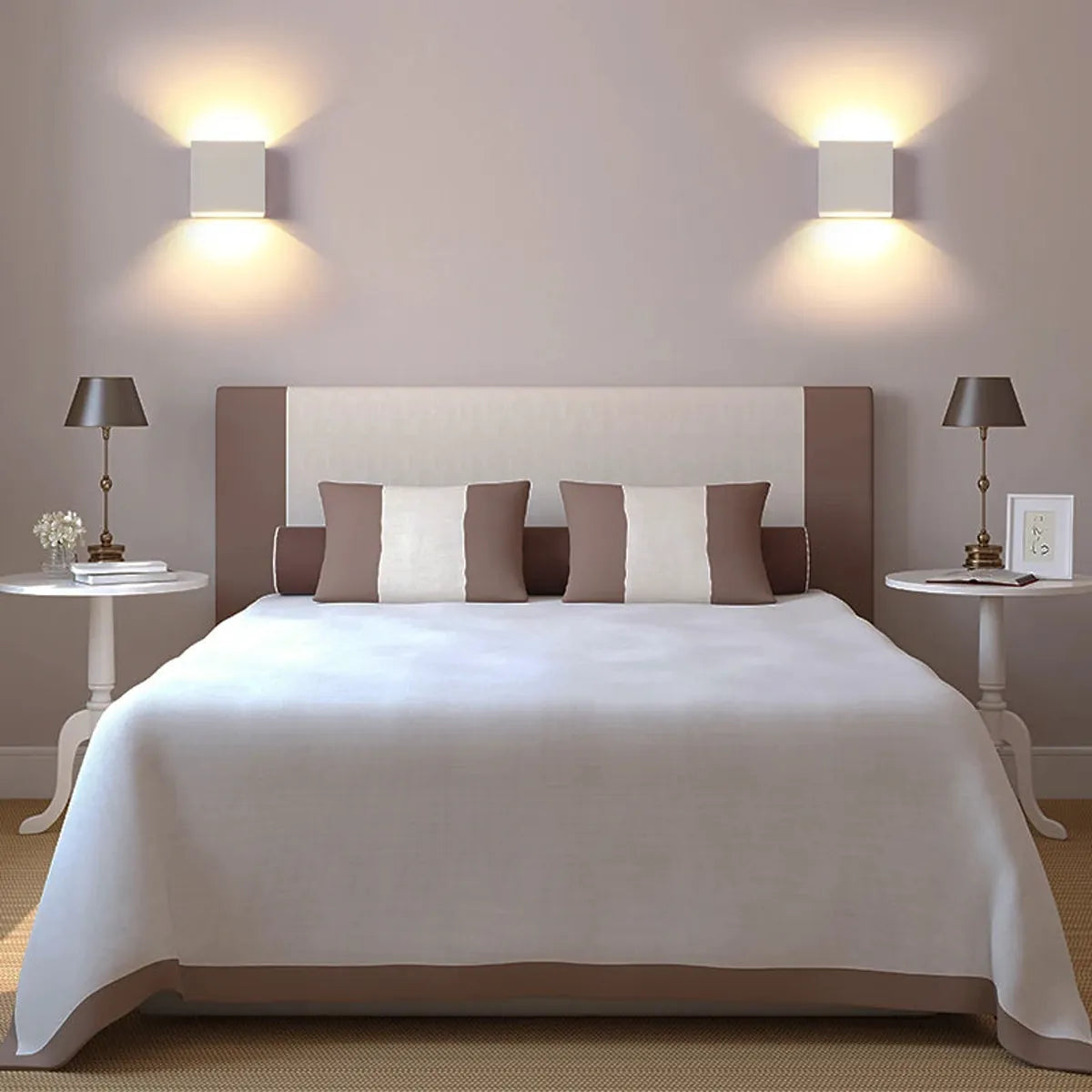
Bedroom lighting is comfort infrastructure: when it’s wrong, sleep feels harder, reading feels tiring, and the room can look smaller or harsher than it is. When it’s right, your bedroom supports calm, function, and mood without you thinking about switches.
This is a decision guide, not a mood-board. Light affects alertness and body timing, so your evening settings matter; NIGMS explains how light helps regulate circadian rhythms (nigms.nih.gov).
Understanding Bedroom Lighting Basics
Bedrooms need lighting that shifts across the day: functional when you need it, quiet when you don’t. Two ideas make this easier: what makes the bedroom unique, and how layered lighting works.
What Makes Bedroom Lighting Different from Other Rooms
Bedroom lighting is “mode-based” because one room supports rest, reading, dressing, and nighttime movement.
- Rest-first priority: the bedroom is the only room where lighting should actively help you downshift at night.
- Close viewing distances: bedside lights are near your eyes, so glare and harsh shadows matter more.
- Shared comfort: independent control matters when more than one person uses the room.
The Three Layers of Bedroom Lighting: Ambient, Task, and Accent
Layered lighting works because each layer has one job. Instead of one “do-everything” ceiling light, you distribute function across ambient, task, and accent sources.
- Ambient: overall room light for general visibility (moving around, cleaning, finding items).
- Task: focused light where your eyes work (reading in bed, vanity, desk, closet).
- Accent: small, controlled light for mood, depth, and navigation (headboard wash, art, night path).
Types of Bedroom Lights: Pros, Cons, and Best Use Cases
The best bedroom setups use a few fixture types intentionally. Focus on what each light does well, what it does poorly, and where it belongs.
Ceiling Lights, Floor Lamps, Table Lamps, and Wall Sconces
These are the most common bedroom light types because they’re flexible, widely available, and easy to match to room style. Their real difference is control and direction: how the light spreads and how easily you can adjust it from bed.
| Type | Best for | Strength | Trade-off |
|---|---|---|---|
| Ceiling light | Ambient coverage | Even visibility for the whole room | Can feel harsh at night without dimming |
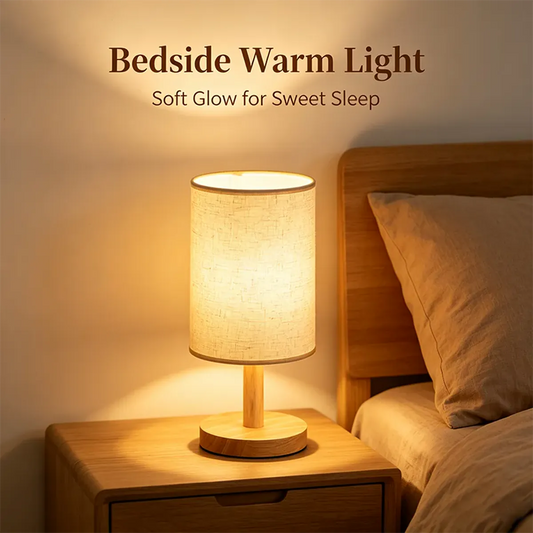
| Table lamp | Bedside reading + soft glow | Easy reach and warm atmosphere | Can cause glare if shade is too short or bulb is exposed |
| Wall sconce | Bedside task without clutter | Frees nightstand space; can be aimed | Placement matters; poor aim can shine into eyes |
| Floor lamp | Corner fill + reading chair | Good for soft ambient and flexible placement | Takes floor space; cable management can look messy |
Decision rule: if you read in bed often, you need a dedicated task source (lamp or sconce) that can be aimed and dimmed, separate from the main ceiling fixture.
Detailed Insight:
- Floor Lamps vs. Ceiling Lights for Bedroom: Which is Better?
- Table Lamps vs. Wall Sconces for Bedroom Lighting: Which Saves Space and Adds Style
Recessed, Pendant, and Integrated Lighting Options
These options look built-in and can improve control, but placement matters because they’re harder to move later.
- Recessed lights: good ambient coverage when spaced well; avoid placing directly above pillows where downlight glare is strongest.
- Pendants: useful as bedside lights when mounted low enough to light the book, not the whole room.
- Integrated lighting: headboard backlighting, closet strips, or cove lighting for soft accent; best when it’s dimmable and hidden from direct view.
For LED basics—efficiency, longevity, and why most modern fixtures are LED-first—this U.S. Department of Energy overview is a practical reference (energy.gov).
How to Choose Bedroom Lights Based on Your Needs
Start with what you do in the room and assign each activity a lighting layer. Then pick fixtures that deliver that layer without glare or control friction.
Lighting for Sleeping, Reading, Relaxing, and Dressing
Each activity has a different “success condition.” Use low, warm, indirect light for sleep; controlled task light for reading; and more even, color-accurate light for dressing.
- Sleeping: keep light warm, dim, and indirect; avoid exposed bulbs in your line of sight.
- Reading: use an aimed lamp or sconce focused on the page, with dimming if possible.
- Relaxing and dressing: use softer ambient plus a clearer task source near closets or mirrors.
Decision rule: if you can’t read comfortably without turning on the ceiling light, your task lighting is missing or mis-aimed.
Choosing Lights for Couples, Kids, and Shared Bedrooms
Shared bedrooms need independent control and predictable “quiet lighting” modes.
- Couples: give each side an independent reading light and switch, ideally with dimming.
- Kids: use a very low night light; keep bright play lighting separate and easy to shut off.
🙂 “Once we added separate bedside lights with dimmers, we stopped negotiating bedtime. One person can read quietly and the room still feels calm.”
Decision rule: if a child or guest can’t find the right switch in the dark, add a low-level path or night light that turns on reliably.
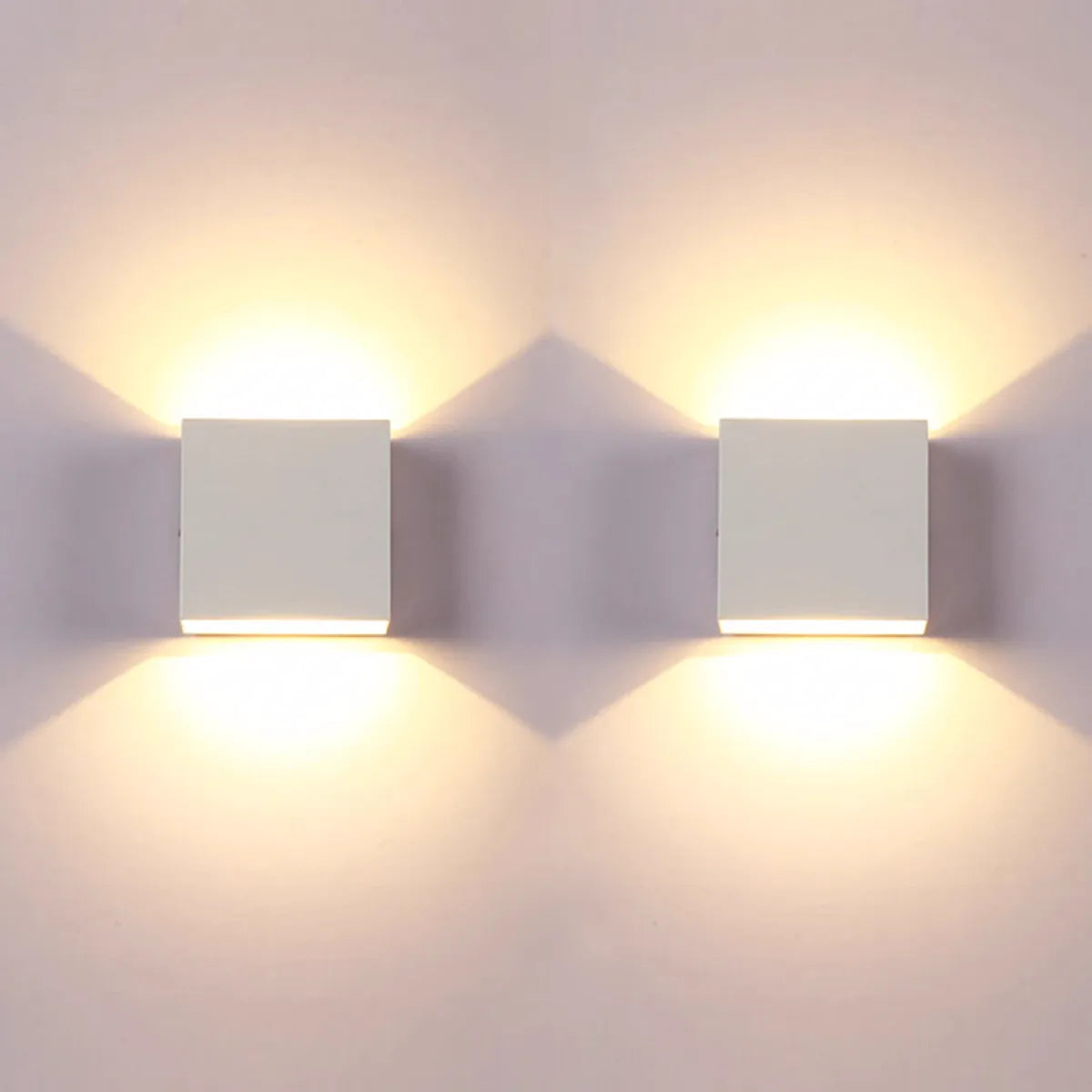
When selecting bedroom lighting, it’s essential to consider the activities you’ll be doing in the space. For a modern touch that enhances both ambiance and functionality, the Modern Minimalist Square LED Wall Light is an ideal choice. With its up-down lighting design and sleek aluminum body, it provides a focused light layer perfect for reading, relaxing, or setting the mood, all while minimizing glare and offering smooth control.
Choosing the Right Light Color and Brightness
Bedroom lighting should feel soft and controllable, not clinical or glaring. Choose color temperature for sleep comfort first, then choose brightness for tasks, with dimming as your range control.
Warm White vs. Cool White: Which Works Best for Bedrooms
Warm white generally fits bedrooms better because it feels calmer at night. Cool white can work for closets or morning routines, but control it so it doesn’t dominate the bed area.
- Warm white (about 2700K–3000K): best for relaxing, pre-sleep routines, and bedside lamps.
- Neutral white (about 3000K–3500K): good compromise for shared bedrooms that need both comfort and clarity.
- Cooler white (about 4000K+): best kept for task zones (desk, closet) and used earlier in the day.
Decision rule: if your bedroom light feels like an office after sunset, your primary sources are too cool, too bright, or too direct.
How Bright Should Bedroom Lights Be? Lumens and Comfort Explained
Brightness is comfortable when it supports the task without lighting up every surface. Aim for a range: brighter for daytime tasks and lower for wind-down, controlled by dimming or layers.
- Reading: aim the light at the page; if you can see the bulb, reduce glare before increasing brightness.
- Night movement: keep output very low so you can navigate without “waking up” the room.
Practical test: if you see a bright bulb or mirror reflection from the bed, glare is likely the real problem.
Detailed Insight:
Dimmable, LED, and Energy-Efficient Bedroom Lighting
Dimming and LED efficiency matter in bedrooms because you use the space across more modes. The right tech helps you shift from functional light to sleep-friendly light without changing fixtures.
Why Dimmable Lights Matter for Bedroom Comfort
Dimming is a lifestyle feature: it reduces “bright shock” at night and lets one fixture serve multiple purposes.
- Sleep transition: dimming supports a gradual step-down in brightness before bed.
- Shared comfort: one side can stay low while the other reads at a higher level.
- Glare management: lowering output often fixes mirror reflection and exposed-bulb discomfort.
💡 Lumaz tip: Treat dimming like a comfort dial, not a luxury. If you can drop your bedside and ambient lights to a low, warm level in one step, your bedroom will feel more restful every night.
Detailed Insight:
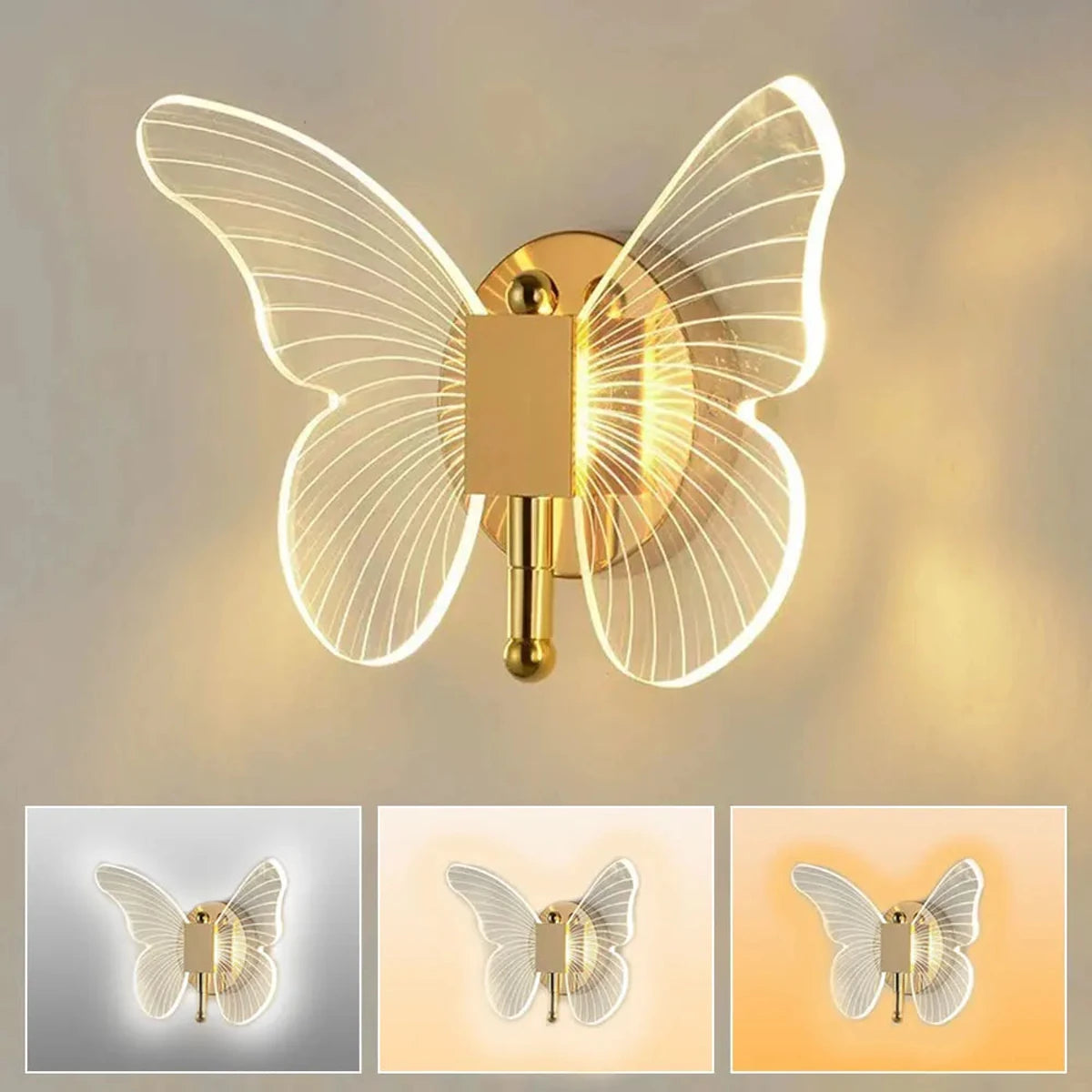
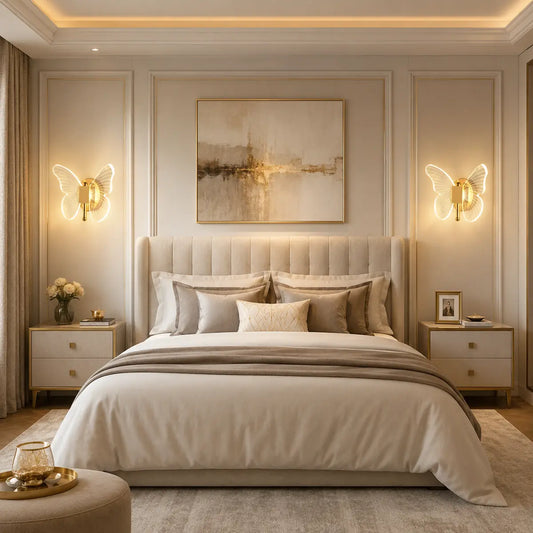
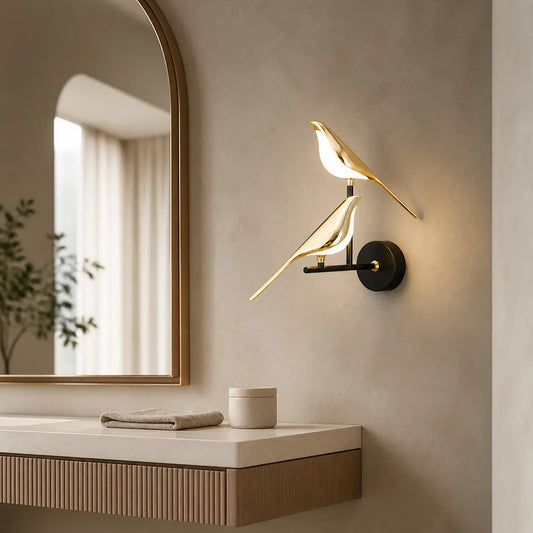
For a bedroom that transitions seamlessly between different moods, the Modern Metal Acrylic Butterfly LED Wall Light offers the perfect balance of style and functionality. With its tricolor dimming feature, you can easily adjust the light from bright, energizing tones to soothing, sleep-friendly warmth, all while adding a decorative touch that enhances your room's ambiance.
LED vs. Traditional Lighting: Efficiency, Lifespan, and Cost
LEDs are the default choice today because they use less energy and last longer than many traditional options. For bedrooms, the biggest benefit is easy access to warm tones and dimming—when components are compatible.
- Efficiency: lower operating cost over time.
- Lifespan: fewer bulb changes in hard-to-reach fixtures.
Decision rule: if your dimmed LEDs flicker or feel jumpy, it’s usually a compatibility problem (dimmer type, driver behavior, or bulb quality), not “how LEDs are.”
Detailed Insight:
Space, Size, and Layout Considerations
Room dimensions and ceiling height determine how light spreads and how much glare you’ll notice. Choose fixtures and placement so the room feels calm and evenly lit without relying on a single bright source.
Choosing Bedroom Lights Based on Room Size and Ceiling Height
Small rooms benefit from softer, distributed light that reduces hard shadows, while larger rooms need more sources to avoid dark corners. Ceiling height influences how “intense” a ceiling light feels and whether downlight glare is in your line of sight.
- Low ceilings: avoid very bright, bare downlights; use diffused fixtures and multiple lower-output sources.
- Standard ceilings: mix one ambient source with bedside task and one accent layer.
- High ceilings: add more layers (sconces, floor lamps, accent) so the room doesn’t feel top-lit and empty.
Decision rule: if your ceiling fixture must be very bright to reach corners, the solution is usually adding a second ambient or accent source, not increasing wattage.
Small Bedrooms vs. Master Bedrooms: Different Lighting Priorities
Small bedrooms prioritize space and glare control; master bedrooms prioritize zones and flexibility. Both benefit from layered lighting, but the “best” layer mix changes based on how many activities happen in the room.
- Small bedrooms: keep footprints compact (wall sconces, slim lamps), hide glare, and add a subtle night path.
- Master bedrooms: build zones (bed, seating, dressing) with separate controls and different brightness ranges.
- Multi-use bedrooms: if there’s a desk, give it its own task lighting and keep it off during wind-down.
Detailed Insight:
Smart vs. Traditional Bedroom Lighting
Smart lighting is useful when it reduces friction: fewer switch hunts, reliable sleep routines, and easy scene changes. Traditional lighting is better when simplicity and immediate control matter most.
When Smart Bedroom Lights Make Sense—and When They Don’t
Smart lighting is not automatically “better” for bedrooms. The best decision depends on how consistent your routines are and how tolerant you are of setup and troubleshooting.
- Smart makes sense when: you want scheduled dimming, a one-tap sleep mode, or hands-free control while you’re in bed.
- Traditional makes sense when: you want zero setup, predictable behavior after a power outage, and simple switches anyone can use.
Decision rule: if a smart feature fails even 10% of the time, you’ll stop using it in a bedroom. Keep at least one “always works” control path (switch, local dimmer, or a reliable remote) so comfort doesn’t depend on Wi‑Fi.
For those who enjoy effortless control and seamless transitions, the USB-powered RGBIC Smart Corner Floor Lamp brings the convenience of smart lighting to your bedroom. With music sync, dimmable settings, and vibrant RGBIC colors, it creates the perfect atmosphere for any moment, whether you’re winding down or setting the mood for an evening.

Common Bedroom Lighting Mistakes to Avoid
Most bedroom lighting mistakes come from using one bright source for everything or ignoring glare and control. Avoid these issues and your bedroom will feel calmer without changing your style.
- One overhead light for all modes: it forces “bright” even when you want “soft.”
- Exposed bulbs at eye level: glare can make a room feel harsh even at moderate brightness.
- No dedicated reading light: you end up using the ceiling light or your phone, both of which are worse at night.
- Mismatched color temperatures: mixed warm and cool whites can make the room feel inconsistent and unsettling.
- Controls in the wrong place: if you can’t reach it from bed, you’ll use the wrong lights.
How to Build a Balanced Bedroom Lighting Setup
A balanced bedroom setup combines ambient, bedside task, and a low-glare night or accent layer. The goal is simple: bright when you need it and quiet when you want it.
- Pick your “quiet default”: decide what lights will be on during wind-down.
- Add independent bedside task: lamp or sconce per side, aimed and dimmable.
- Make ambient adjustable: dimmable ceiling fixture or a floor lamp that fills the room softly.
- Add night navigation: very low output that’s safe but not stimulating.
If you’re unsure whether a light will glare, evaluate from the bed first.
Final Checklist: Choosing the Right Bedroom Lights for Your Home
Use this checklist to choose bedroom lights based on outcomes: calm sleep modes, comfortable reading, accurate dressing light, and simple controls. If you can answer “yes” to most items, your setup will feel right in daily life.
- Layering: I have ambient + bedside task, and ideally a night/accent layer.
- Bedside control: I can turn off or dim lights from bed without getting up.
- Reading comfort: my reading light is aimed at the page and doesn’t shine into eyes.
- Color comfort: my main bedroom lights are warm or neutral at night.
- Night safety: I have a low-level path or night light that’s not glaring.
- Shared use: each person has independent control if the room is shared.
FAQs
These quick answers cover common bedroom lighting edge cases: sleep comfort, symmetry, color temperature, glare, and whether smart control is worth it.
What is the best bedroom lighting setup for sleep?
Use warm/neutral light in the evening, dimmable bedside lighting, and a low-level night path. Avoid bright overhead light late at night and keep bulbs out of direct view from bed.
Should bedside lights match on both sides?
They should match in function more than in appearance. If both people read or use the room differently, prioritize independent dimming and aiming on each side; symmetry is optional, comfort is not.
Is cool white light bad for bedrooms?
Cool white isn’t “bad,” but it’s harder to make it feel relaxing at night. If you use cool white for closets or morning routines, keep it localized and use warm/neutral lighting for the bed area in the evening.
How do I reduce glare from bedroom lamps?
Use a shade that hides the bulb from seated eye level, choose diffused bulbs, and position lamps so the source isn’t visible from bed. Dimming helps because glare often feels worse than “brightness” alone.
Do I need smart lights in a bedroom?
Only if they reliably reduce friction for you, such as a predictable sleep routine or one-tap scene control. If setup and troubleshooting would create stress, a traditional dimmer plus well-placed lamps is often the better choice.
Conclusion: Making Confident Bedroom Lighting Choices
The best bedroom lighting choices come from matching light to real routines: sleep, read, relax, and dress. When you use layered lighting, warm/neutral color at night, and convenient control from bed, the room becomes easier to live in.
Start simple: fix bedside task lighting and add dimming. Then add a low-glare night layer for comfort and safety.
After considering all the factors mentioned, you can explore more product options and detailed buying guides on our Indoor Lighting Hub Page to find the best solution for your needs.
Additional Guides in This Topic
- Battery-Powered vs. Wired Bedroom Lighting: 9 Key Differences
- Recessed Lighting vs. Pendant Lighting: Which Is Better for Bedrooms?
- LED Strip Lights vs. Fairy Lights for Bedroom Decoration
- Lamps vs. Overhead Lighting in Bedrooms: 10 Key Questions Answered for Maximum Comfort















 />
/>
 />
/>
 />
/>
 />
/>
 />
/>