

Hardwired vs Plug-In vs Battery Puck Lights: Which Installation Option Is Right?
Table of Contents
- Why Installation Method Matters More Than You Think
- Overview of the Three Puck Light Installation Options
- Key Differences at a Glance
- Installation Trade-Offs You Should Consider
- Cost Breakdown: Upfront vs Long-Term
- Performance Differences in Real-World Use
- Which Installation Option Is Right for You?
- When Each Installation Option Is a Poor Choice
- Final Recommendation Matrix
- Frequently Asked Questions About Puck Light Installation Options
- Conclusion
Why Installation Method Matters More Than You Think
Your puck lights can look identical on a product page, but the installation method decides how they feel day to day. It affects safety, how clean the setup looks, how often you maintain it, and whether brightness stays consistent over time.
Most people start by asking “Which puck light is best?” A better first question is “How will this be powered and controlled?” The wrong method can create cords you hate, battery swaps you forget, or drivers that run hot because they’re undersized.
Think of installation as the foundation. Once the foundation matches your space, you can focus on layout, beam angle, and controls without fighting preventable problems.
Overview of the Three Puck Light Installation Options
There are three common ways to install puck lights: hardwired, plug-in, and battery-powered. Each solves a different problem, so the “right” choice depends on permanence, access to power, and how polished you need the result to look.
Instead of jumping straight to step-by-step wiring, this section gives you a mental model for what each option is designed to do.
Hardwired Puck Lights
Hardwired puck lights connect to household power through dedicated wiring, typically through a driver/transformer if the fixtures are low voltage. They’re built for permanent installs where you want a clean look, stable power, and switch-level control.
Typical fit: remodels, new builds, daily-use kitchens, built-in cabinetry, and any space where you can hide wiring in walls, ceilings, or cabinets.
Plug-In Puck Lights
Plug-in systems draw power from an outlet, then distribute power to multiple puck lights through low-voltage cables. The appeal is predictability: you get consistent power without opening walls.
Typical fit: upgrades, retrofits, rentals (when allowed), and installs where you can hide an adaptor/driver inside a cabinet or above uppers.
Battery-Powered Puck Lights
Battery-powered puck lights trade wiring for speed. They’re ideal when there is no power nearby or you want a no-tools install, but the trade-off is maintenance and lower performance in high-use spaces.
Typical fit: closets, pantries, display cases, and low-use accent lighting where you can accept battery swaps.
Key Differences at a Glance
If you want a quick decision frame, compare methods by what you’ll notice in real life: brightness stability, the amount of visible cabling, and how often you’ll touch the system after install. This table shows the core differences without oversimplifying them.
| Decision Factor | Hardwired | Plug-In | Battery-Powered |
|---|---|---|---|
| Brightness consistency | High (stable power) | High (stable power) | Varies (drops as batteries drain) |
| Installation difficulty | Highest (electrical planning) | Medium (routing + cord management) | Lowest (mount and go) |
| Visual cleanliness | Best (wires hidden) | Good if cords are managed well | Best at first, but depends on access for batteries |
| Maintenance frequency | Low | Low | High (battery changes/charging) |
| Best for | Permanent, daily task lighting | Retrofits needing reliable power | Low-use, no-power locations |
| Common “gotcha” | Needs safe wiring and access to drivers | Visible cords if not planned | Dimming, uneven output, frequent upkeep |
Installation Trade-Offs You Should Consider
The best installation option is the one whose trade-offs you can live with for years. Focus on complexity, how the setup will look, and long-term safety and reliability—not just how fast you can mount the lights.
Installation Complexity and Skill Level
Installation difficulty is not just about tools; it’s about how much risk you’re willing to manage. Hardwired installs often touch household wiring, while plug-in and battery options mostly involve mounting and routing.
- Hardwired: best when you can plan wiring paths, locate drivers safely, and integrate a switch or dimmer. Many homeowners hire an electrician for parts of this.
- Plug-in: DIY-friendly for most people, but you still need to plan where the adaptor sits and how cables will be routed.
- Battery-powered: easiest to mount, but you must plan for battery access so maintenance doesn’t become annoying.
If your plan includes opening walls, adding new outlets, or working inside junction boxes, review basic electrical safety guidance from OSHA (osha.gov) and default to professional help when unsure.
Visual Cleanliness and Cable Management
Puck lights are small, but the system can look messy if cords are visible. Plug-in installs look “built-in” only when the cable plan is intentional.
- Choose a hiding zone: inside an appliance garage, above upper cabinets, inside a cabinet side wall, or behind a face frame.
- Route on edges: run cables along corners and cabinet edges, not across open surfaces.
- Plan service loops: leave a little slack near each puck so you can replace a light without ripping out everything.
💡 Lumaz tip: Before you drill or stick anything down, tape the cables in place and open every cabinet door and drawer. The fastest way to ruin a clean install is a cord that gets pinched by a hinge.
Heat, Safety, and Long-Term Reliability
Reliability is mostly about heat and connection quality. Drivers that run too hot, loose connectors, and cramped enclosures cause flicker and early failure more often than the LEDs themselves.
Hardwired and plug-in systems can be very reliable when the driver is sized correctly and has airflow. Battery puck lights avoid drivers, but they introduce battery-related issues like inconsistent output and frequent handling.
A few practical rules help regardless of method:
- Leave airflow around drivers and power supplies; don’t bury them in insulation or tightly packed storage.
- Respect ratings for damp locations, enclosed spaces, and maximum fixture counts.
- Secure connections so cables aren’t under tension when cabinet doors move.
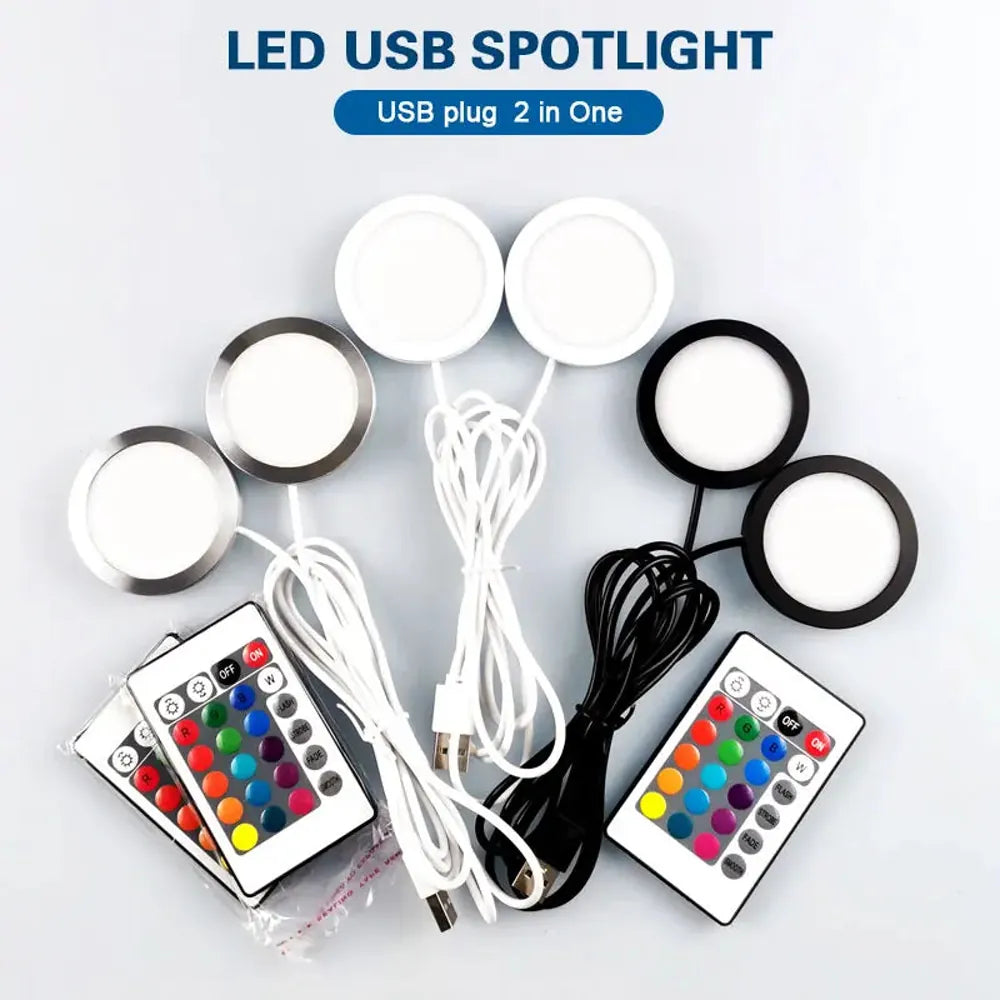
For users weighing trade-offs, ease of placement and safe connections can simplify everyday use. Dual-head 2-in-1 USB RGB under cabinet LED puck lights with remote control and 16-color options are ideal for small cabinets or workspaces, offering flexible positioning without complex wiring while maintaining safe, tension-free connections.
Cost Breakdown: Upfront vs Long-Term
Low upfront cost is not the same as low total cost. Compare installation options by what you pay at install time and what you pay later in batteries, replacements, and time spent maintaining the system.
Initial Installation Costs
Hardwired systems often cost more up front because you’re paying for planning and clean integration. Plug-in costs are usually moderate, and battery puck lights are often cheapest to start.
- Hardwired costs: electrical labor (if hired), wiring materials, and sometimes wall/finish work if you need to conceal runs.
- Plug-in costs: the kit itself plus cable management accessories; sometimes an outlet add or relocation to hide the adaptor.
- Battery costs: minimal up front, but check whether the model uses disposable batteries or a rechargeable pack with a separate charger.
Ongoing Costs and Maintenance
Battery-powered puck lights shift cost into maintenance. Even when battery prices are low, the repeat work adds up, especially across multiple fixtures.
Also consider disposal and replacement cycles. If you use disposable batteries, follow your local recycling guidance and EPA resources on used household batteries (epa.gov).
💬 “I loved the battery pucks in my pantry at first. After a few months, I realized I was changing batteries more often than I wanted—especially in the ones I used every day.”
Hardwired and plug-in systems usually have lower ongoing effort. If something fails, it’s often a connector, a driver, or a single puck—not the whole system—so service access matters.
Performance Differences in Real-World Use
Real-world performance is about how the system behaves after the novelty wears off. Look at power stability, how evenly light stays across multiple pucks, and how easy it is to control the lights the way you actually use the space.
Brightness Consistency and Power Stability
For daily task lighting, stable power is the biggest reason people choose hardwired or plug-in systems. A consistent supply keeps each puck at the intended output so your countertop or shelf doesn’t look patchy.
Battery-powered puck lights can still work well, but they fit best when:
- you use them for short periods, not hours at a time
- you can access the battery compartment easily
- you don’t mind brightness changing between fixtures over time
If your goal is a “set it and forget it” install in a kitchen or work zone, battery power is often the wrong tool for the job.
Control Options: Dimming, Remotes, and Smart Integration
Controls are where installation methods feel different. Hardwired systems can integrate with wall switches and some dimmers. Plug-in systems often use inline controllers, remotes, or smart plugs. Battery puck lights usually rely on a tap switch or a simple remote.
For multi-light systems, also check whether fixtures support linking, hubs, or daisy-chaining limits. A clean power-and-control plan prevents “why does only half my run dim?” problems.
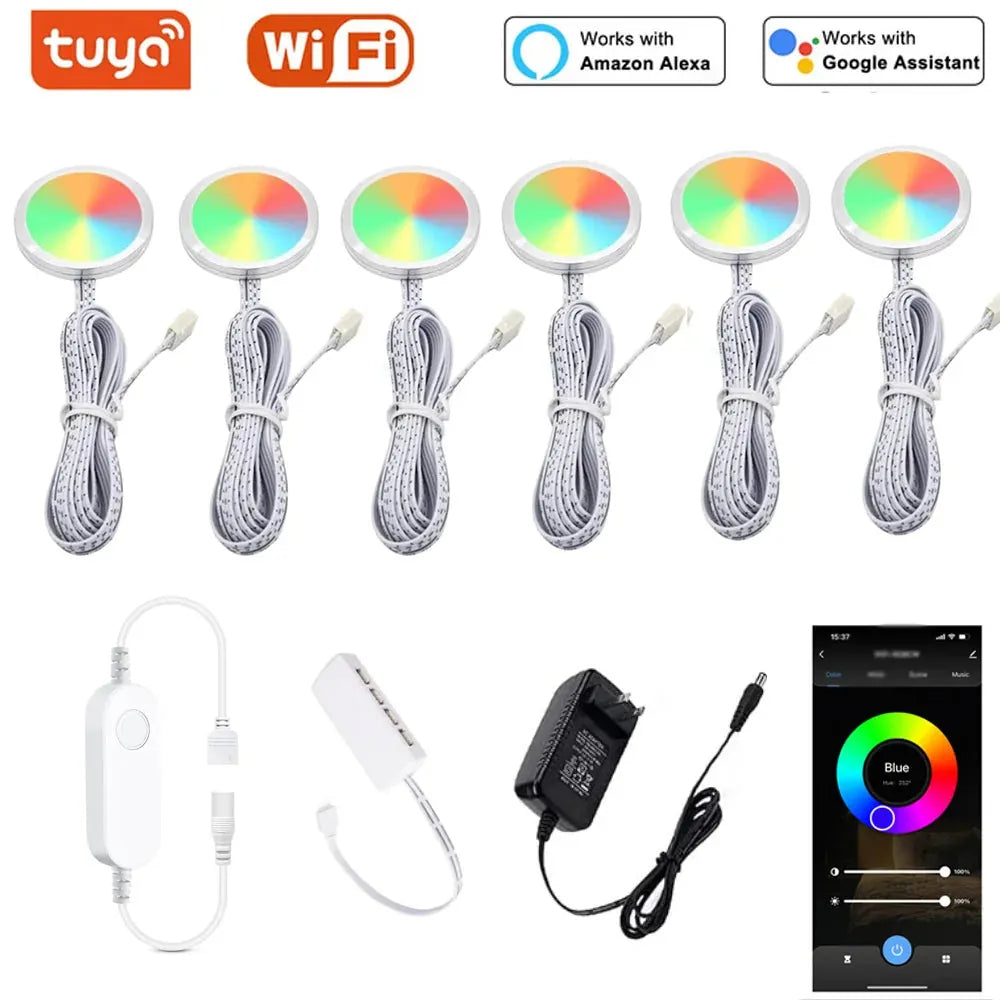
For users focused on consistent performance and easy control, smart puck lights help maintain reliable brightness across multiple fixtures. Tuya WiFi RGB Under Cabinet LED Puck Lights (12V, dimmable) let users adjust light levels and colors via app or voice, ensuring even illumination and convenient operation in kitchens, display areas, or multi-puck setups.
Which Installation Option Is Right for You?
Choose based on your timeline and how permanent you want the result to be. The fastest install is not always the best fit, especially if you’re installing multiple lights in a daily-use area.
Homeowners vs Renters
Homeowners usually benefit from hardwired or plug-in systems because they can plan for long-term use and a cleaner look. Renters often prefer plug-in or battery options to avoid permanent electrical changes.
- Homeowners: prioritize stable power, dimming options, and hidden wiring for a built-in feel.
- Renters: prioritize reversibility, minimal tools, and a cable plan that doesn’t require drilling through finished surfaces.
New Builds vs Retrofits
New builds and remodels are the best time to hardwire because access is easier and you can hide everything properly. Retrofits often lean plug-in because you can keep the system neat without opening walls.
If your cabinets already have an outlet inside, plug-in becomes especially attractive: you get stable power and a clean look with far less disruption.
Low-Use Accent Lighting vs Daily Task Lighting
Use frequency is an underrated decision rule. If lights will be used daily for long stretches, choose stable power first. If they’re used occasionally, convenience may matter more than maximum performance.
- Daily task lighting: hardwired or plug-in is usually the better fit for consistency and lower upkeep.
- Low-use accent lighting: battery-powered can work well if access is easy and brightness demands are modest.
When Each Installation Option Is a Poor Choice
Knowing what to avoid is often faster than trying to optimize a bad fit. These “no” cases help you rule out options that commonly disappoint users after a few weeks.
- Hardwired is a poor choice when you can’t access wiring paths or you need a fully reversible install.
- Plug-in is a poor choice when there is no practical place to hide the adaptor or route cords without visible clutter.
- Battery-powered is a poor choice for daily task lighting, long runtimes, or installs where reaching the batteries is awkward.
If your constraints eliminate two options, that’s not a problem—it’s a decision shortcut. Design the remaining option well instead of forcing a method that fights your space.
Final Recommendation Matrix
If you want a fast answer, match your use case to the method that minimizes regret: stable power for daily work, plug-in for clean retrofits, and battery for truly no-power locations. This matrix summarizes the typical best fit.
| Your Situation | Best Fit | Why | Watch Out For |
|---|---|---|---|
| Full remodel or new build | Hardwired | Cleanest look and stable control options | Driver placement and safe wiring |
| Retrofit with accessible outlet | Plug-In | Stable power without opening walls | Cable routing and adaptor hiding |
| Closet/pantry with no nearby power | Battery-Powered | Fast install with no wiring | Battery access and brightness changes |
| Display case / shelf accent | Plug-In or Battery-Powered | Low disruption and flexible placement | Maintenance vs cord visibility |
| Daily under-cabinet task lighting | Hardwired or Plug-In | Consistent output and lower upkeep | Heat management and driver capacity |
If you’re still split between two methods, decide based on what you will tolerate least: visible cords (choose hardwired) or electrical work (choose plug-in). If you tolerate neither, battery is the fallback—but accept the maintenance trade.
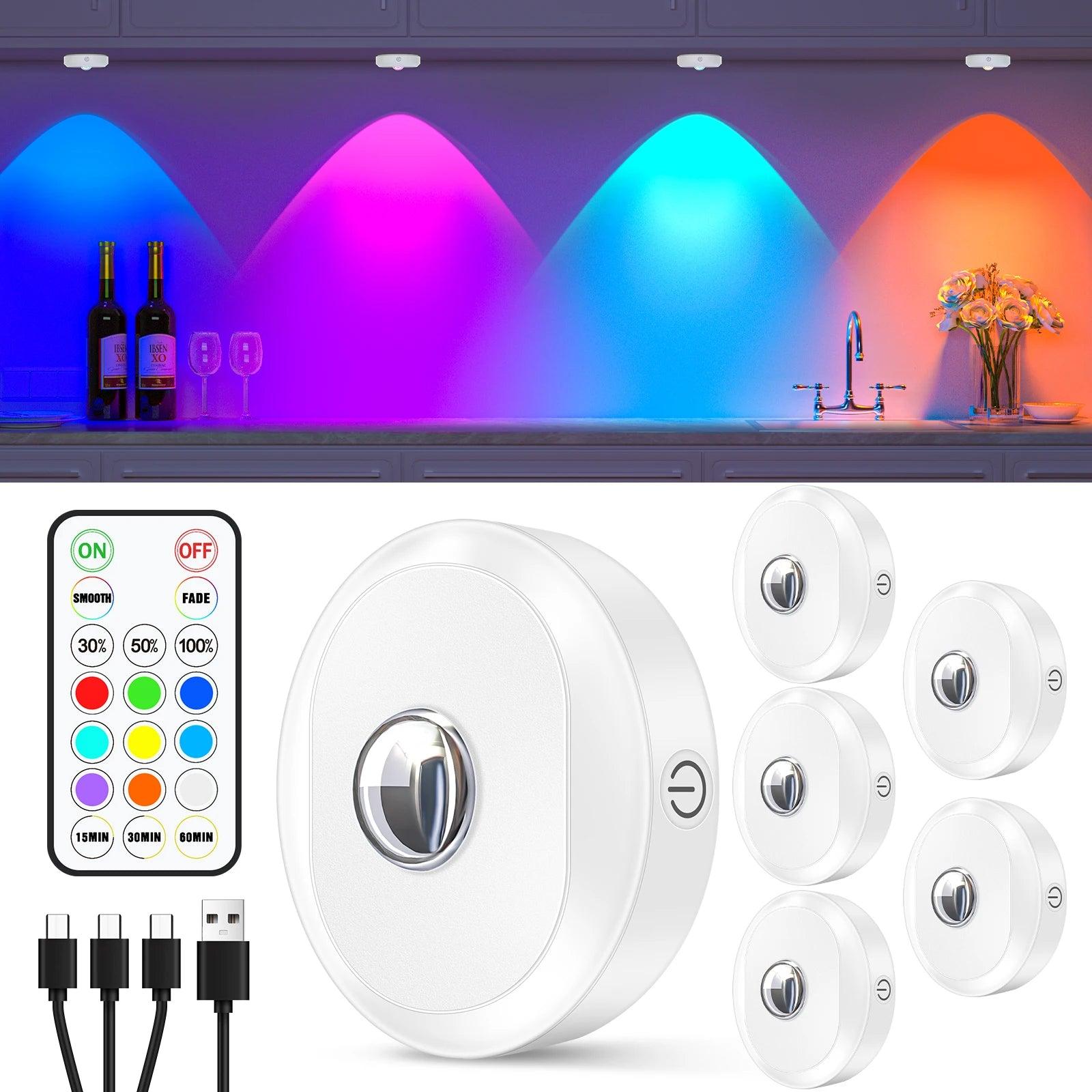
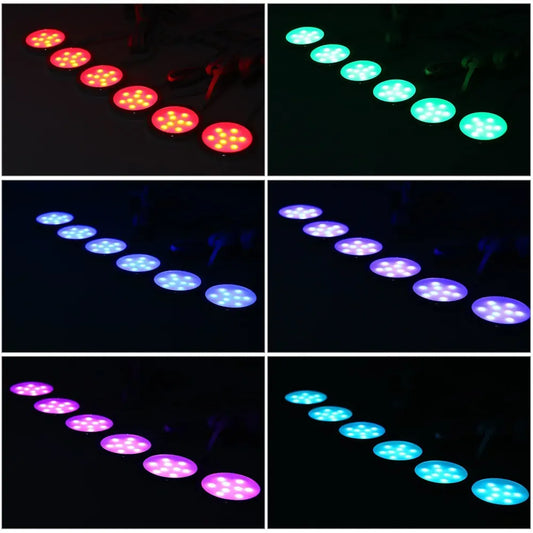
For users who want versatility across multiple spaces without committing to wiring, rechargeable puck lights provide a practical balance. A 6-pack of rechargeable RGB under cabinet LED puck lights with remote and touch control is ideal for kitchens, closets, or display areas, letting users easily adjust brightness and color while keeping installation simple and flexible.
Frequently Asked Questions About Puck Light Installation Options
These FAQs cover common edge cases that come up when you’re choosing between hardwired, plug-in, and battery-powered puck lights.
Which is better for under-cabinet task lighting: hardwired or plug-in?
Both can work well because both provide stable power. Choose hardwired if you want the cleanest look and switch-level integration, and choose plug-in if you want a clean retrofit without opening walls.
Are battery puck lights bright enough for a kitchen?
They can be, but many people find maintenance and brightness consistency frustrating in daily-use kitchens. Battery options tend to fit better in closets, pantries, or low-use accents where you don’t need long runtimes.
Do plug-in puck lights always mean visible cords?
No. A good plug-in install hides the adaptor and routes cables along edges and corners. If you can’t hide the power source or route cords cleanly, plug-in may not be the right method for your space.
When should I hire an electrician for puck lights?
If the project involves in-wall wiring, junction boxes, new circuits, or changes to household electrical infrastructure, hiring a licensed electrician is the safest choice. For many plug-in and battery installs, most homeowners can DIY safely.
What is the biggest mistake people make when choosing an installation method?
They optimize for install speed instead of long-term use. The “best” method is the one you can control easily, keep looking clean, and maintain without annoyance.
Conclusion
Choosing between hardwired, plug-in, and battery puck lights comes down to how permanent you want the installation to be, how much control you need, and how you actually use the space. Hardwired systems offer the cleanest look and best long-term performance, plug-in options balance flexibility and reliability, and battery-powered pucks work best for low-use or hard-to-wire areas. By matching the installation method to your space, usage frequency, and maintenance tolerance, you’ll avoid unnecessary compromises and get lighting that truly fits your needs.
Further Reading
Explore the full guide for this topic: How to Install Puck Lights: Placement, Wiring, and Layout Guide
















 />
/>
 />
/>
 />
/>
 />
/>
 />
/>