

Matching Puck Light Color Temperature to Room Function: Kitchens, Closets, and Display Cases
Table of Contents
- Why color temperature matters for puck lights
- Kitchen: optimal puck light color temperatures and placement
- Closets: clarity, color matching, and practical choices
- Display cases: balancing color temperature, CRI, and object protection
- Comparison table: recommended CCT, CRI, and illuminance by room function
- Balancing CCT, CRI, and brightness: metrics, trade-offs, and tools
- Choosing puck lights: specifications checklist and shopping tips
- Installation, controls, and post-install verification
- Limitations, maintenance, and evidence of benefits
- Frequently Asked Questions (FAQ)
- Conclusion
Why color temperature matters for puck lights
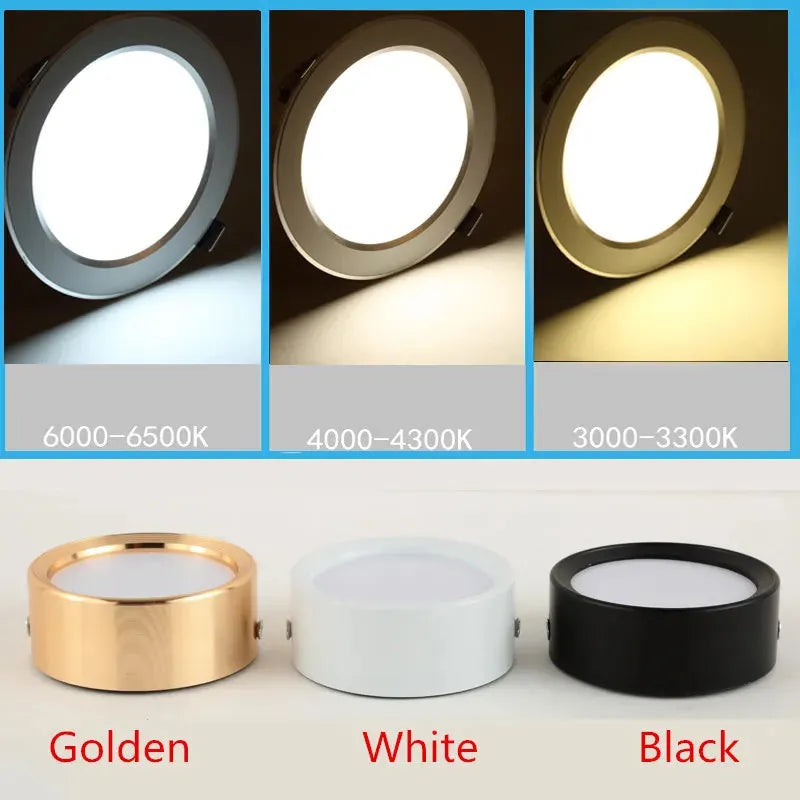
Color temperature (CCT) and color rendering determine how a space and its contents look under puck lights. Choosing the right CCT improves task performance, visual comfort, and product/display appearance.
Color temperature is measured in kelvin (K) and ranges from warm (≤3000K) to cool (≥5000K). Color rendering index (CRI) and newer metrics such as TM-30 describe how accurately a light source reveals object colors. Both CCT and CRI matter when matching puck lights to a room’s function: kitchens need accurate, appetizing color; closets need clarity; displays need controlled highlights and faithful color rendering.
For evidence-based context, the U.S. Department of Energy outlines how LED choices affect savings and quality of light (Energy.gov), and peer-reviewed research links light spectrum and timing to circadian effects (NCBI/NIH).
Kitchen: optimal puck light color temperatures and placement
Use warm-to-neutral whites (2700K–3500K) for general and task puck lighting in kitchens to balance color appeal of food and accurate visibility for prep work.
Recommended settings:
- General under-cabinet or island task lighting: 3000K–3500K, CRI ≥ 90.
- Accent/pendant puck effects (over bar or island): 2700K–3000K for warmer mood and flattering skin tones.
Practical metrics and layout:
- Target illuminance for kitchen counters: 300–750 lux for task areas (use higher end for detailed food prep).
- Spacing: mount puck lights 12–18 inches apart under cabinets or use continuous linear fixtures for even coverage; aim for overlapping beams to avoid hot spots.
- Beam angle: 60°–120° depending on distance from counter—wider beams for close mounting, narrower for recessed placement.
Action steps: Select LED puck lights rated 3000K with CRI ≥ 90, pair with a dimmer compatible with the driver, and measure lux after installation with a lux meter to fine-tune spacing and dim settings.
Kitchen case: food photography and perceived color
For kitchens used frequently for food photos or videography, prefer 3500K with high CRI (≥95) to reproduce food tones accurately under camera sensors. Test with white balance and sample shots before finalizing fixture positions.
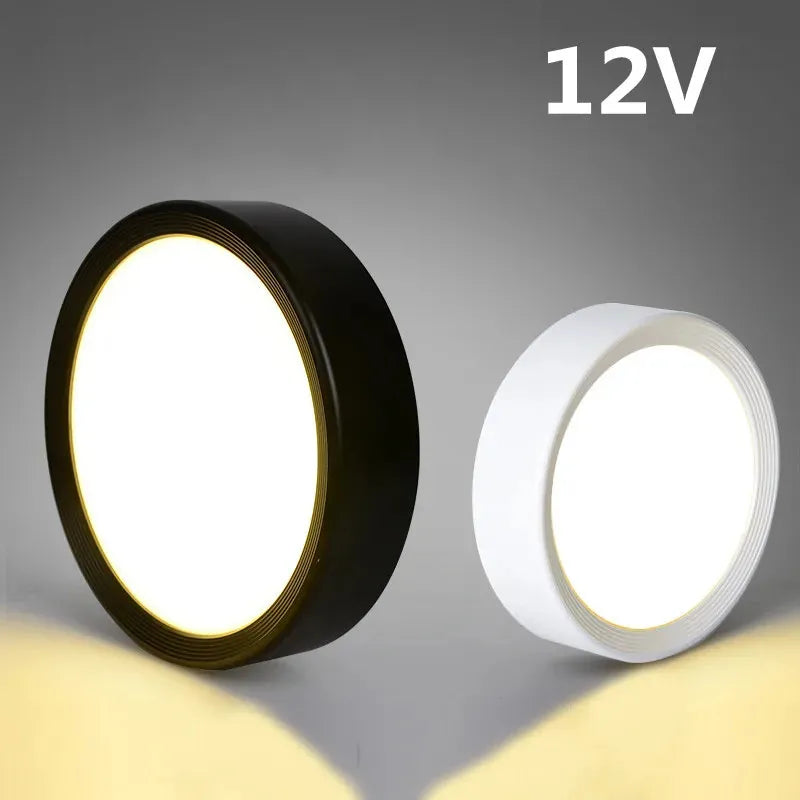
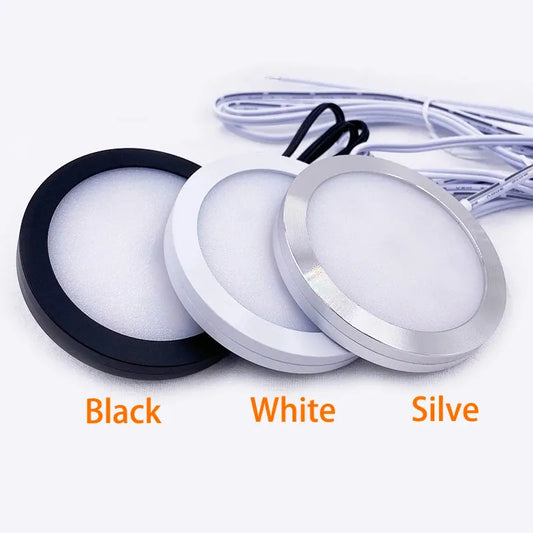
For users focused on accurate food presentation and kitchen tasks, consistent color rendering and adjustable brightness are essential. 12V aluminum under cabinet LED puck lights with surface mount and multiple wattage options allow precise placement and intensity control, helping maintain true-to-life colors for cooking, photography, or videography.
Closets: clarity, color matching, and practical choices
Closets benefit from neutral, high-CRI light that reveals garment colors and textures without overwhelming brightness. Aim for 3000K–4000K and CRI ≥ 90.
Why this range? Cooler whites (3500K–4000K) improve contrast and make it easier to distinguish similar hues, while 3000K can be more flattering for skin tones in dressing areas.
- Recommended illuminance: 150–300 lux for walk-in closets; 300–500 lux for dressing areas and full-length mirror zones.
- Mounting tips: use multiple small puck lights or a linear LED strip along the top shelf to minimize shadows. Use motion sensors or door-activated switches for convenience and energy savings.
Top checklist when choosing closet puck lights:
- High CRI (≥90) to accurately show clothing color.
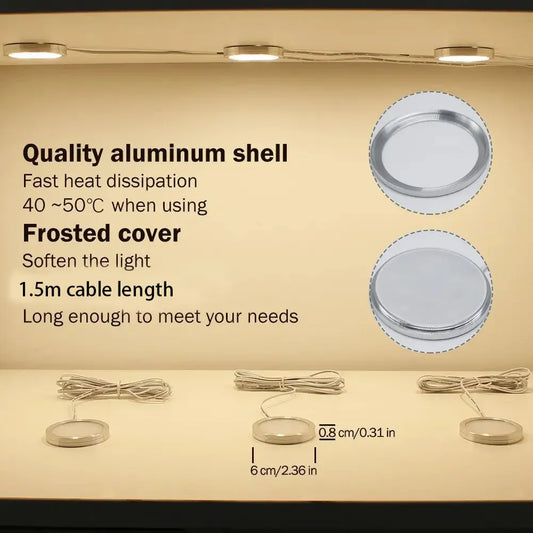
- Diffused lens or frosted cover to reduce glare on glossy fabrics.
- Low profile and shallow depth for small closet ceilings.
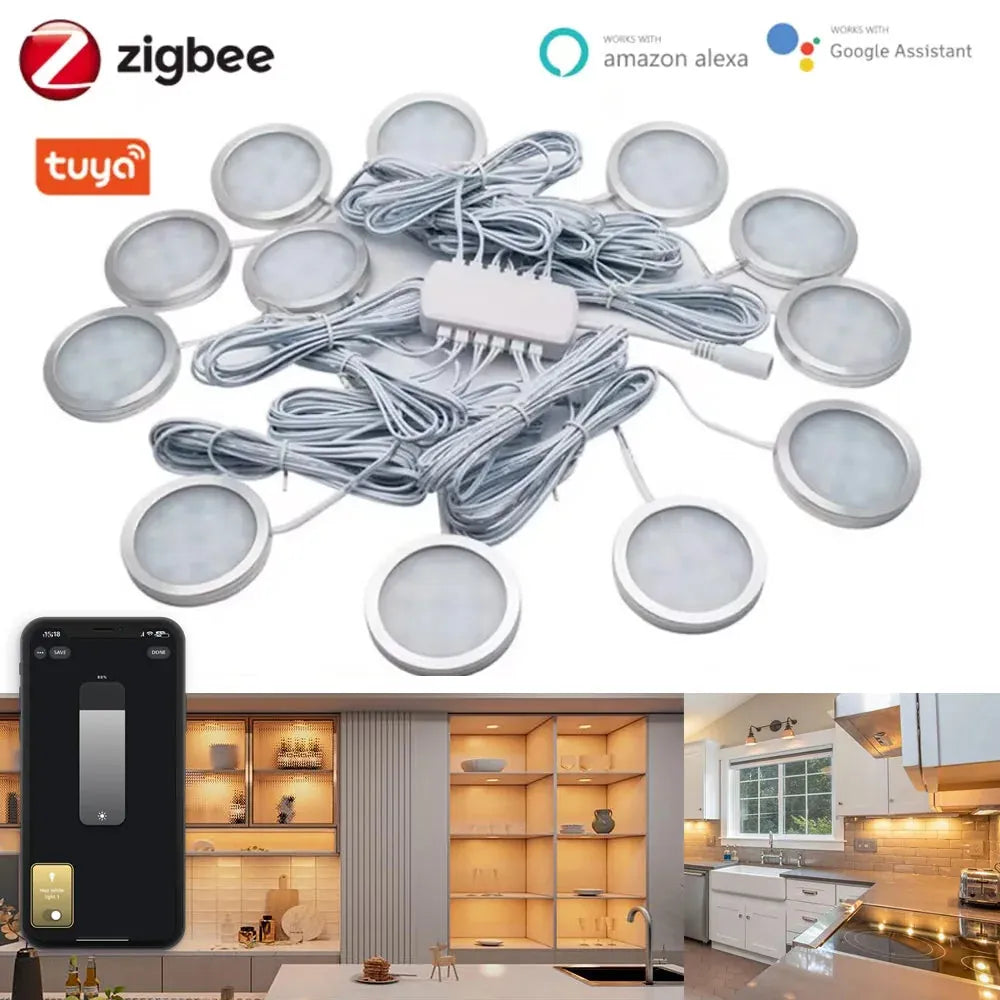
For users who want clear, accurate lighting in closets without frequent adjustments, smart control can simplify daily use. Tuya Zigbee Smart Under Cabinet LED Puck Lights (12V, full kit) let you set brightness and color via app or voice, ensuring garments are seen in true colors while keeping the system easy to manage.
Display cases: balancing color temperature, CRI, and object protection
Displays demand precise control: use CCT to set mood and CRI to preserve color fidelity; consider UV exposure and heat for sensitive objects.
Guidelines:
- Recommended CCT: 2700K–3500K for jewelry, art, and collectibles to provide warmth and richness; 3500K–4000K for retail merchandise where true color matching is critical.
- Required CRI: ≥95 for fine art, textiles, and jewelry where color accuracy influences value.
- UV and IR: choose LEDs with negligible UV/IR emissions and low operating temperatures to protect sensitive artifacts.
Accent techniques:
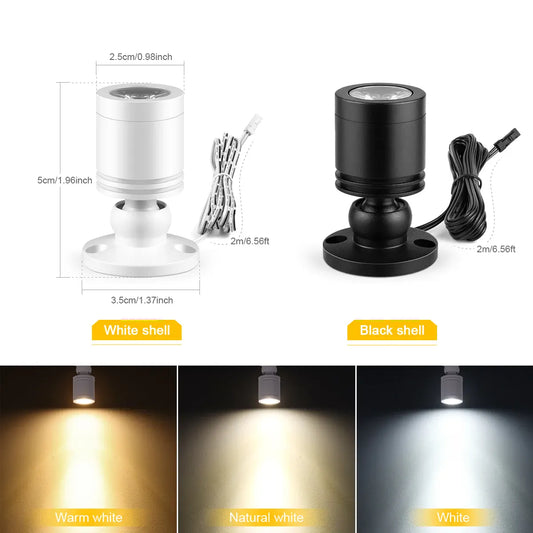
- Use narrow beam puck lights (15°–30°) for pinpoint highlights and wider beams for even shelf illumination.
- Include adjustable gimbals or swivel mounts to control hotspots and reduce glare on glass.
Conservation note
For museums or valuable textiles, consult conservation guidelines. LEDs generally emit less UV than halogen, but spectrum and heat still matter—seek fixtures tested for museum use and follow facility recommendations (curators and conservators).
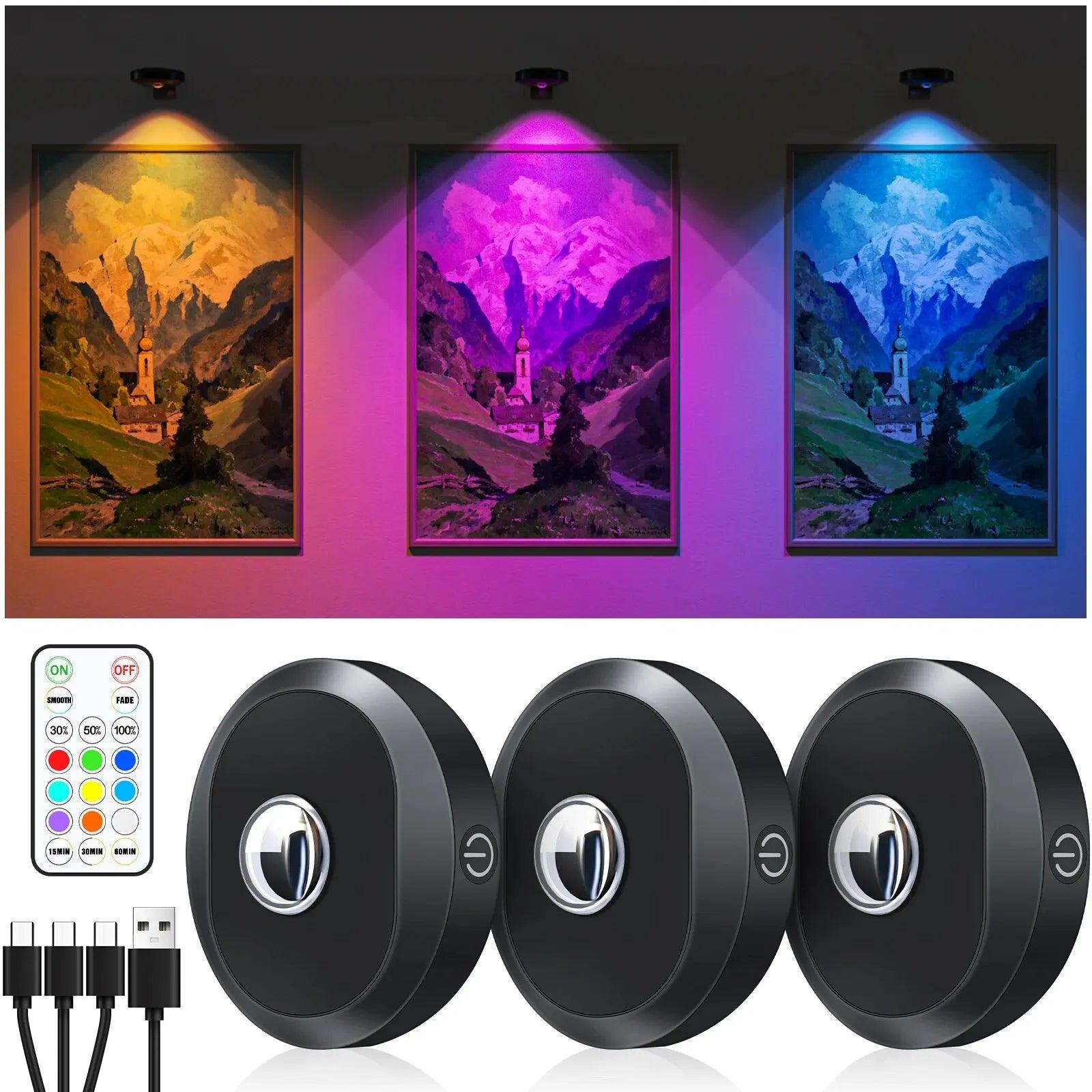
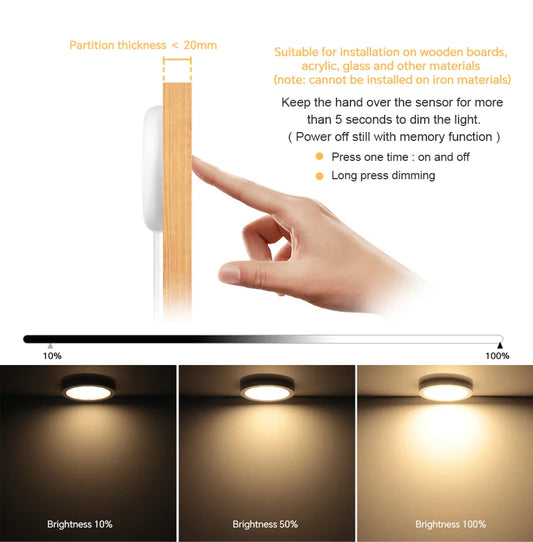
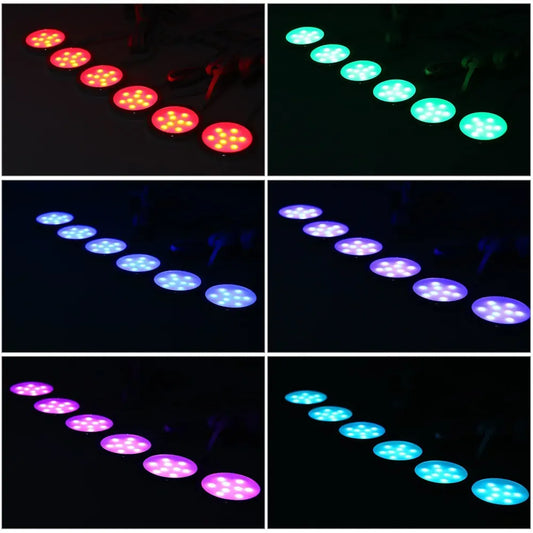
For users displaying collectibles or artwork, adjustable lighting helps balance visual impact with object care. Rechargeable RGB under cabinet LED puck lights with remote and touch control allow fine-tuning of color and brightness while minimizing heat and avoiding constant power exposure, making them suitable for sensitive display cases.
Comparison table: recommended CCT, CRI, and illuminance by room function
Quick reference table for puck light selection across kitchens, closets, and display cases.
| Space | Recommended CCT (K) | Recommended CRI | Target Illuminance (lux) | Beam Angle / Notes |
|---|---|---|---|---|
| Kitchen (task) | 3000–3500 | ≥90 | 300–750 | 60°–120°, overlapping beams |
| Closet / Dressing | 3000–4000 | ≥90 | 150–500 | Diffused lens, motion sensor suggested |
| Display Case / Jewelry | 2700–4000 | ≥95 | 200–1000 (accent/highlight) | 15°–60°, low UV/IR, adjustable aims |
Balancing CCT, CRI, and brightness: metrics, trade-offs, and tools
Understand the trade-offs: warmer CCTs provide ambiance, cooler CCTs improve contrast, high CRI ensures accurate color — but cost and availability vary.
Key metrics and tools:
- Color temperature (CCT, in kelvin): determines perceived warmth/coolness.
- Color rendering index (CRI): indicates color accuracy (≥90 preferred for most tasks; ≥95 for critical color work).
- TM-30 (if available): more modern, descriptive metric of color fidelity and saturation.
- Lux meter: measures illuminance on surfaces.
- Color temperature meter / spectrometer: confirms actual CCT and spectral power distribution (SPD) of LEDs.
Trade-offs:
- Cost vs. quality: high-CRI, high-accuracy LEDs are more expensive but reduce returns and improve perceived value in retail or displays.
- Energy vs. spectrum: cooler LEDs sometimes deliver more lumens per watt—but can negatively affect evening circadian rhythms if used in living spaces after dusk (Harvard Health).
💡 Balancing CCT, CRI, and brightness is simpler with advanced LED technology. Achieve the perfect ambiance with reliable, stylish, and affordable solutions from Lumaz.
Choosing puck lights: specifications checklist and shopping tips
Select puck lights by matching specs to your goals: CCT, CRI, dimmability, beam angle, driver compatibility, and warranty.
Shopping checklist:
- CCT label and measured CCT (avoid vague “warm white” labels).
- CRI value, preferably listed; aim for CRI ≥ 90 for kitchens/closets, ≥95 for display cases.
- Dimmable driver compatibility (list compatible dimmer models if provided).
- Beam angle and lens type (frosted for closets; narrow for displays).
- Power source and installation type (12V DC puck systems vs. 120V LED retrofits).
- IP rating if installed in damp locations (e.g., near sinks).
- Manufacturer SPD or spectral data if color accuracy is critical.
Tip: Request a sample or small order to test CCT/CRI in-situ before committing to a full run, especially for retail or exhibit lighting.
💬 "We swapped to 3000K, CRI 92 pucks in our kitchen and the counter work is clearer while meals look more appetizing — installation was straightforward and the dimmer made evenings cozy." — Homeowner review
Installation, controls, and post-install verification
Proper positioning, controls, and verification testing secure intended outcomes: lay out fixtures, select controls, and measure after installation.
Installation and control best practices:
- Layout plans: sketch puck locations and measure from edge-to-edge; aim for equal spacing and overlap of light cones.
- Dimmers: use LED-compatible dimmers and check for flicker at low levels.
- Smart control: schedule cooler temps for daytime tasks and warmer/dimmer settings in evening to support circadian comfort.
- Sensor integration: motion or door sensors for closets; occupancy sensors for energy savings in less-used pantry spaces.
Post-install verification steps:
- Measure illuminance (lux) at working surfaces and compare to target numbers in the table above.
- Confirm CCT with a color temperature meter or by photographing a white card under the lighting and checking white balance.
- Inspect for hotspots, glare, and unwanted reflections; adjust aim or add diffusers as needed.
- Document fixture model, CCT, CRI, and driver settings for future maintenance.
Limitations, maintenance, and evidence of benefits
LED puck lights deliver efficiency and flexibility but have constraints: spectral gaps, driver compatibility, and upfront costs for high-CRI fixtures.
Limitations and mitigation:
- Spectrum gaps: some inexpensive LEDs have poor spectral balance—choose units with published SPD or high CRI certification.
- Heat and longevity: ensure adequate heat sinking; avoid enclosed housings unless rated for it.
- Compatibility: replace dimmers when switching to LEDs to prevent flicker.
Maintenance tips:
- Clean lenses periodically to maintain output.
- Track driver life and replace drivers before end-of-life flicker begins.
- Store spare modules and drivers with documented specs for quick replacement to preserve uniformity.
Evidence of benefits:
- Energy savings: LEDs offer significant watt-per-lumen advantages versus incandescent/halogen—see Energy.gov guidance on savings strategies (Energy.gov).
- Health and comfort: spectral choices and timing influence circadian rhythms; use warmer, lower-blue light in evening hours to reduce circadian disruption (NCBI/NIH review).
Frequently Asked Questions (FAQ)
Can I mix different color temperatures in the same room?
Yes—mixed CCTs can work when intentional: use warmer accents (2700K–3000K) for ambiance and neutral task lighting (3000K–3500K) for work areas. Avoid random mixes that create color casts; use dimming or color-tunable fixtures to harmonize at different times.
How do I measure the actual color temperature of a puck light?
Use a handheld color temperature meter or spectrometer for precise measurement; alternatively, photograph a neutral gray/white card under the light and check white balance in photo-editing software for a rough estimate. Professional installers often use an NIST-traceable meter for accuracy.
Are high-CRI LEDs always necessary?
Not always. High CRI (≥90) is recommended where color accuracy matters (food prep, clothing, retail, art). For purely functional or decorative applications where cost is the priority, CRI 80–90 may suffice—but test with real materials before deciding.
Do puck lights produce harmful UV or heat for displays?
Most LED puck lights emit negligible UV compared to halogen or incandescent sources, but spectral content and heat vary by model. For sensitive items (artwork, textiles), choose LED fixtures with documented low UV/IR output and low operating temperatures.
What’s the easiest way to test puck light placement before final installation?
Temporarily mount fixtures or use clamp lights with the same beam angle and CCT. Tape-paper or cardboard templates showing beam spread helps visualize coverage. Measure lux and observe for glare and shadows at different times of day before committing.
Conclusion
Choosing the right color temperature, CRI, and brightness for puck lights ensures each space—kitchens, closets, or display cases—is both functional and visually pleasing. By matching lighting specifications to room tasks and carefully planning installation and controls, users can enhance clarity, highlight features, and create comfortable, well-lit environments while minimizing maintenance and maximizing long-term benefits.
Further Reading
Explore the full guide for this topic: How to Install Puck Lights: Placement, Wiring, and Layout Guide














 />
/>
 />
/>
 />
/>
 />
/>
 />
/>