

Puck Lights for Retail Displays: Color Rendering, Security Mounts, and Theft-Resistant Options
Table of Contents
- Why puck lights matter in retail displays
- Color rendering metrics: CRI, TM-30, and selecting the right CCT
- Lumen output, beam angle, and lux targets for merchandising
- Security mounts and theft‑resistant hardware for puck lights
- Integrating alarm systems, sensors, and power security
- Installation best practices and maintenance for secure, attractive displays
- Comparative table: sample puck light options for retail displays
- Case studies and ROI: sales impact and shrink reduction
- Frequently asked questions
Well-designed puck lighting can make products pop while protecting inventory. This article explains how to choose puck lights for retail displays that optimize color rendering, meet merchandising lux targets, and resist tampering or theft—so you increase conversions without increasing shrink.
Why puck lights matter in retail displays
Puck lights focus controlled illumination on merchandise to improve perceived quality and draw attention, delivering measurable merchandising benefits at low cost and energy use.
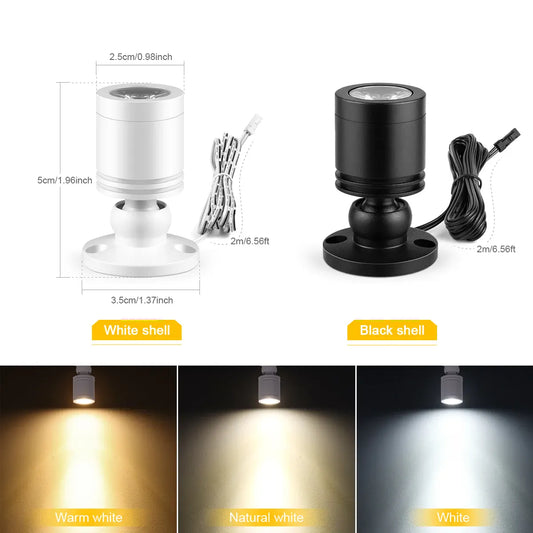
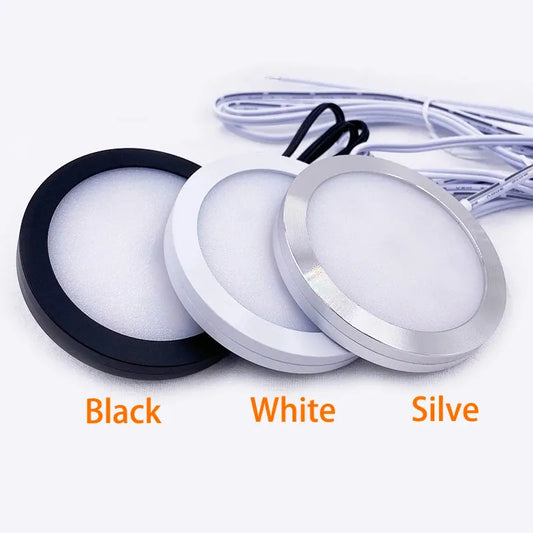
Puck lights are compact, directional LED fixtures used inside shelves, cases, and gondolas. Compared with overhead lighting, they let retailers highlight color, texture, and details on individual products—critical for categories such as jewelry, cosmetics, apparel, and electronics. Benefits include:
- Higher perceived product quality and color accuracy.
- Lower energy use versus full-area spotlights (LED puck lights often draw 1–6 W).
- Flexible placement and retrofit-friendly installation on existing fixtures.
Energy- and color-performance data for LEDs is maintained by the U.S. Department of Energy; LEDs offer strong efficacy and long life, reducing maintenance in displays (source: energy.gov).
💡 Elevate your retail space with reliable, stylish, and affordable puck lighting from Lumaz. Smarter, brighter experiences drive sales.
Color rendering metrics: CRI, TM-30, and selecting the right CCT
Prioritize CRI 90+ or TM-30 fidelity scores for true-to-life color; pair with CCT chosen to flatter the product category (warm for apparel, neutral/cool for electronics).
Color accuracy is critical: shoppers often evaluate products by color tone and subtle finishes. Key metrics:
- CRI (Color Rendering Index): Traditional scale; CRI ≥ 90 recommended for accurate color reproduction in retail displays.
- TM-30 (Fidelity & Gamut): A modern metric that provides more complete color fidelity and saturation information than CRI; TM-30 Rf and Rg values offer nuanced selection for retail needs.
-
CCT (Correlated Color Temperature): Measured in kelvins (K). Typical recommendations:
- 2700–3000K (warm): suitable for apparel, furniture, and luxury goods to add warmth.
- 3500–4000K (neutral): versatile for mixed categories, skin tones, cosmetics.
- 4000–5000K (cool/neutral-cool): works for electronics, hardware, or high-detail items where crisp contrast helps.
For rigorous color work, consult color science resources and measurement standards from research institutions such as the Lighting Research Center at RPI and government labs for color measurement (examples: lrc.rpi.edu, nist.gov).
CRI vs TM-30: Which matters for your display?
CRI is widely available on product spec sheets and sufficient for many retailers. When selling color-critical products—art, fine jewelry, paints—look for TM-30 data and verified Rf (fidelity) and Rg (gamut) to avoid oversaturated or misleading tones.
Lumen output, beam angle, and lux targets for merchandising
Choose lumens and beam angles to meet display lux targets—typically 300–1000 lux—while avoiding glare or hot spots.
Practical metrics to specify:
- Lumens: Puck lights commonly range 100–800 lumens. Lower lumen counts are fine for accenting small items; higher lumens suit deep cases or darker backgrounds.
- Beam angle: Narrow beams (10°–30°) deliver spot accents; medium beams (30°–60°) provide even case illumination. Use narrow angles for jewelry and small items, wider for apparel displays.
- Display lux targets: Retail display illuminance often ranges 300–1000 lx depending on product and retail strategy; high-value small items like jewelry benefit from the upper end, while general shelving can be lower. The Lighting Research Center provides guidance on appropriate retail illuminance ranges (source: lrc.rpi.edu).
Measure post-installation with a lux meter to confirm even coverage and to avoid overexposure that washes out colors.
Security mounts and theft‑resistant hardware for puck lights
Use tamper-proof fasteners, locking mounts, and concealed wiring to reduce tampering; combine mechanical hardware with visual deterrence to lower shrink risk.
Common theft-resistant mount types and tactics:
- Tamper‑proof screws and bolts: One-way screws, Torx® with security pin, and spanner head fasteners prevent casual removal.
- Locking housings: Enclosures that require a key or specialized tool to open are effective for in-case lighting.
- Security tethers and cables: Stainless-steel tethers attached to fixtures prevent removal even if the fastener is defeated.
- Concealed/flush mounts: Embed puck lights into shelf undersides or chaseways so there’s no accessible rim to lever off.
- Riveted or permanently fixed installs: For areas with persistent tampering, permanent fixings make removal extremely difficult—but plan maintenance access.
Pros and cons:
- Mechanical locks add cost and complicate maintenance but greatly reduce opportunistic theft.
- Concealed wiring improves security and aesthetics but requires careful planning during fixture design or retrofit.
Quick checklist for choosing a secure mount
- Does the mount require special tools to remove?
- Are wires hidden or routed into internal channels?
- Can staff still perform safe maintenance without damaging security features?
- Is the mounting solution compatible with existing display cases and alarms?
Integrating alarm systems, sensors, and power security
Combine mounting hardware with electronic tamper detection—power-loss alerts, intrusion sensors, and integration with POS or building security systems.
Electronic measures boost deterrence and provide rapid response:
- Tamper switches: Micro-switches that trigger alarms when a light housing is opened or removed.
- Power supervision: Systems that send alerts when a fixture is unplugged or loses power can indicate tampering.
- Integration with store alarms and cameras: Tie lighting tamper events into the store’s VMS (video management system) and alarm panels for verification and response.
- IoT monitoring: Networked puck lights can report status remotely, including power draw anomalies and device offline events, enabling proactive maintenance and shrink prevention.
Implementing tamper detection requires collaboration between loss prevention, IT, and facilities teams to ensure alerts are actionable and false positives are minimized.
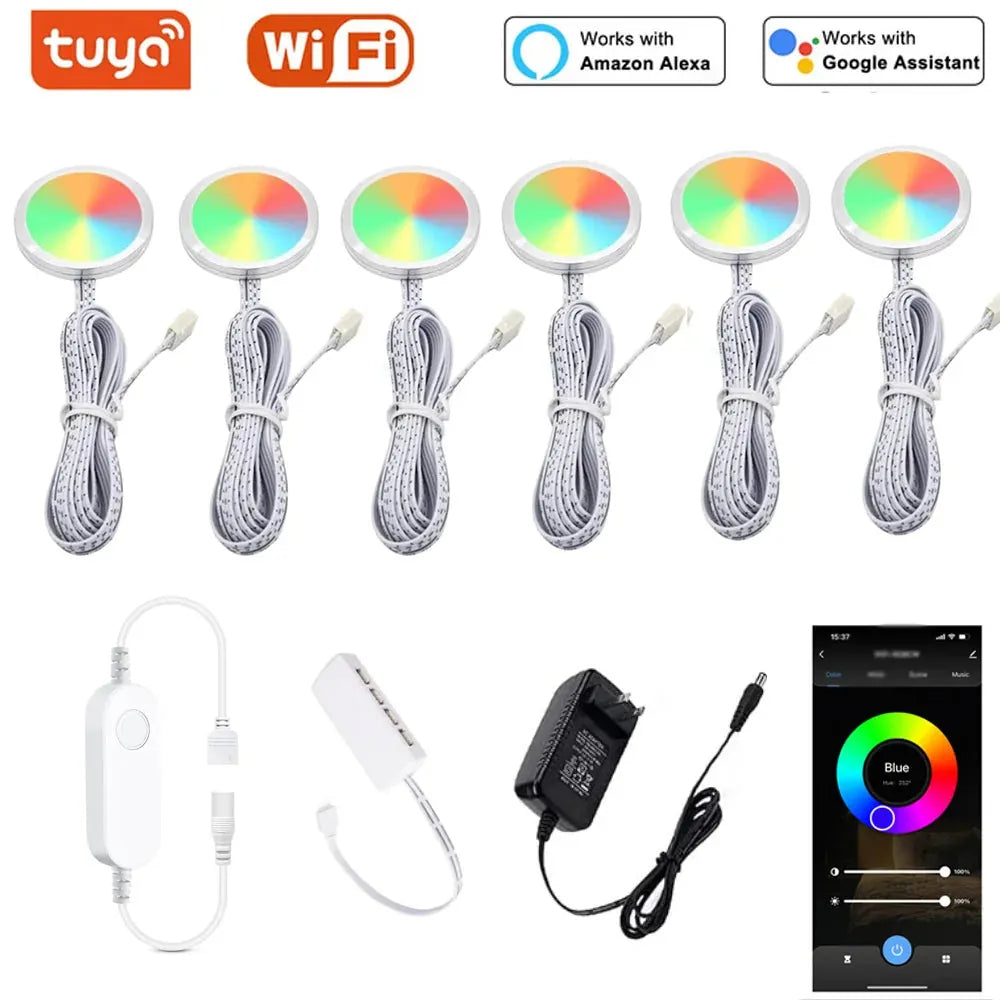
For store owners seeking both display enhancement and operational awareness, integrating smart lighting with security measures adds convenience and peace of mind. Tuya WiFi RGB Under Cabinet LED Puck Lights (12V, dimmable)allow app and voice control while supporting timed schedules or automation, ensuring products are well-lit without leaving lights on unattended, complementing your existing security setup.
Installation best practices and maintenance for secure, attractive displays
Follow a documented installation plan: measure baseline lux, select secure fasteners, test alarm integration, and schedule preventive maintenance.
Step-by-step installation and maintenance workflow:
- Survey displays and record product categories, mounting options, and available power locations.
- Specify puck lights by CRI/TM-30, CCT, lumen output, and beam angle to match the merchandise and desired lux target.
- Choose security mounts and tamper hardware; plan concealed wiring runs and access panels for maintenance.
- Install lights and secure mounts; route wiring to prevent access from showroom floor.
- Commission lighting: measure lux uniformity, color appearance, and check for glare or hotspots.
- Test tamper/alarm integration and power supervision; configure alert thresholds and notification pathways.
- Document maintenance intervals: LED puck lights generally require cleaning and occasional replacement of drivers; schedule quarterly inspections for security hardware.
Maintenance tips:
- Keep spare drivers and tamper fasteners in a secure location for rapid repairs.
- Log each service event with photo proof to support shrink investigations.
- Train store staff to recognize and report loose fixtures immediately.
🔒 "We reduced in-case tampering by 75% after switching to locking puck mounts and power supervision—maintenance was minimal, and sales of targeted SKUs increased." — Retail Store Manager
Comparative table: sample puck light options for retail displays
Side-by-side comparison helps choose the right puck light by CRI, CCT, lumens, mount security, and typical retail applications.
| Model / Type | CRI / TM‑30 | CCT (K) | Lumens | Mount & Security Features | Ideal Uses | Price Range |
|---|---|---|---|---|---|---|
| Micro-Jewel Spot | CRI 95 / TM-30 Rf 92 | 3000 | 150 lm | Locking bezel + one-way screws | Jewelry, watches | $35–$60 |
| Under-Shelf Wide | CRI 90 | 3500 | 400 lm | Flush mount, concealed wiring | Apparel, folded textiles | $25–$45 |
| High-Output Case | CRI 92 | 4000 | 800 lm | Riveted housing + tether | Deep display cabinets, electronics | $50–$90 |
| Smart IoT Puck | CRI 90 / TM-30 data | 2700–5000 (tunable) | 200–600 lm | Networked power supervision, tamper alerts | Omnichannel stores, seasonal displays | $80–$150 |
Case studies and ROI: sales impact and shrink reduction
Targeted puck lighting improves product visibility and can boost conversion; security mounts reduce tampering and shrink, yielding measurable ROI when combined.
Evidence and practical outcomes:
- Lighting influences perception and purchasing. Several retail studies find that well-lit displays lead to longer dwell time and higher conversion rates—particularly for categories where color and texture matter. (See research in lighting and retail from university lighting labs.)
- Shrink reduction: combining mechanical locks with alarm integration reduces opportunistic theft. While exact results depend on store format, managers report significant decreases in in-case tampering when using locking puck mounts and power supervision.
Simple ROI example (annualized):
- Incremental sales uplift: A 3% sales lift on a $500,000 product category = $15,000/year.
- Cost of premium secured puck lighting (hardware + integration + install): ~$10,000 one-time.
- Shrink savings: Reducing theft on high-value SKUs by $5,000/year.
- Payback: Hardware pays back in ~8–12 months when combining uplift and shrink savings; ongoing energy savings and reduced maintenance improve lifecycle ROI.
For accurate business cases, measure baseline sales and shrink, track post-install metrics, and include installation plus integration costs. Government and university lighting research centers provide data on lighting performance and energy savings to inform total cost of ownership (see energy.gov and lrc.rpi.edu).
Frequently asked questions
Answers to common operational and product-selection questions about puck lights, security mounts, and integrating tamper detection.
How bright should puck lights be for jewelry vs apparel?
Jewelry: use narrow-beam, higher-lumen puck lights (150–400 lm focused to reach 500–1000 lx on the item). Apparel: wider beam, moderate lumens (200–500 lm) to achieve ~300–500 lx across folds and mannequins.
Are tamper-proof mounts compatible with LED retrofit kits?
Yes—most retrofit kits can be installed into security housings or combined with tamper screws. Verify driver size and heat dissipation; some tamper housings require larger drivers or remote mounting to maintain safety.
Can smart (IoT) puck lights integrate with my store alarm system?
Many smart puck lights support network APIs or SNMP and can send status alerts to a central system. Integration depends on your alarm/VMS platform—plan for IT involvement and secure network segmentation.
What maintenance schedule should we follow for secure puck lights?
Quarterly visual security checks, annual driver/connection inspection, and prompt replacement of any fixture reporting power anomalies. Clean lenses monthly in high-traffic stores to maintain optical performance.
Do bright puck lights increase the risk of fading or heat damage?
LEDs emit minimal UV and far less heat than halogen, so risk is low. Still, for light-sensitive products (certain textiles, artworks), limit illuminance and consult conservation guidelines—museums often recommend lower lux levels for sensitive materials (see conservation guidance at government and museum resources).
Where can I get authoritative guidance on recommended illuminance?
Consult the Lighting Research Center and governmental energy/lighting resources for retail-specific recommendations and energy performance data: lrc.rpi.edu, energy.gov.
Final recommendations: Specify CRI ≥ 90 (or TM-30 data for color-critical items), choose CCT by product category, meet target lux 300–1000 lx with appropriate beam angles, and deploy tamper-proof mounts combined with electronic supervision for high-value displays. Measured installation and follow-up tracking are essential—document pre/post metrics to validate visual uplift and shrink reduction.
Further Reading
Explore the full guide for this topic: Puck Lights for Kitchens, Cabinets, Displays, and Specialty Applications















 />
/>
 />
/>
 />
/>
 />
/>
 />
/>