

How to Choose the Right Battery Operated Puck Lights?
Choosing battery operated puck lights is easier when you treat it as a decision problem: brightness and beam first, then battery type and runtime, then controls and mounting. This guide helps you pick a setup that looks clean, works for your space, and won’t become a maintenance headache.
Table of Contents
- Quick Checklist for Choosing Battery Operated Puck Lights
- Brightness and Beam: What Lumens Actually Mean
- Color Quality: CCT and CRI for Real-World Spaces
- Battery Type and Runtime: What to Expect
- Controls and Usability: Tap, Remote, Motion, and Timers
- Mounting and Maintenance: Adhesive, Screws, and Easy Access
- Best Use Cases: Which Battery Pucks Fit Which Space
- When Battery Operated Puck Lights Are a Poor Choice
- Frequently Asked Questions About Battery Operated Puck Lights
- Final Thoughts and Next Steps
Quick Checklist for Choosing Battery Operated Puck Lights
If you want a fast answer, choose based on where the light will be used and how often it will run. The right puck light is the one that meets your brightness goal and stays convenient to maintain.
- Use case: closet/pantry, under cabinets, display shelves, RV, stairs
- Brightness target: enough for the task without running “high” all the time
- Battery strategy: replaceable AA/AAA vs built-in rechargeable
- Control style: tap, remote, motion sensor, auto-off timer
- Mounting: adhesive vs screws vs magnetic, plus battery access
Brightness and Beam: What Lumens Actually Mean
Brightness is the first decision lever because it determines whether the light is useful and how quickly batteries drain. Lumens tell you output, but beam shape and placement decide how bright the surface feels.
Use this table as a starting point, then adjust for your space size, shelf depth, and how many pucks you plan to install.
| Lumens (per puck) | Best For | What You’ll Notice |
|---|---|---|
| 80–150 | Accent, display, night lighting | Soft pools of light; longer runtime |
| 150–300 | Closets, pantries, shelves | Better visibility for labels and clothing |
| 300–500 | Light task zones (short bursts) | Brighter, but batteries drain faster on “high” |
LEDs are efficient compared with older bulbs, which is why battery puck lights can be practical. For a plain-English overview of LED efficiency, see the U.S. Department of Energy (energy.gov).
Color Quality: CCT and CRI for Real-World Spaces
Color temperature (CCT) changes how a space feels, and CRI affects how natural objects look. This matters most in closets (clothing colors) and kitchens (food prep and surfaces).
- 2700K–3000K: warm, cozy; common for living areas and evening use
- 3500K–4000K: neutral; common for closets, pantries, and work zones
- CRI 80+: baseline for most homes; higher CRI helps colors look more accurate
If a puck light is for display or wardrobe use, prioritize consistent color temperature across all units so the lighting doesn’t look patchy.
Battery Type and Runtime: What to Expect
Battery choice is where many installs succeed or fail. The wrong battery strategy can turn “wireless convenience” into frequent swaps, uneven brightness, or dead lights when you need them.
| Power Option | Best For | Main Trade-Off |
|---|---|---|
| AA/AAA alkaline | Occasional use, quick swaps | Recurring replacements |
| AA/AAA NiMH rechargeable | Weekly/daily use | Charging routine required |
| AA lithium (primary) | Cold areas, long shelf life | Higher battery cost |
| Built-in Li-ion rechargeable (USB) | Clean look, easy top-ups | Charging downtime; pack aging over time |
Runtime is mostly driven by brightness level and time-on. If you expect long daily runtimes, pick a model with dimming or a timer so you’re not forced to run on max output.
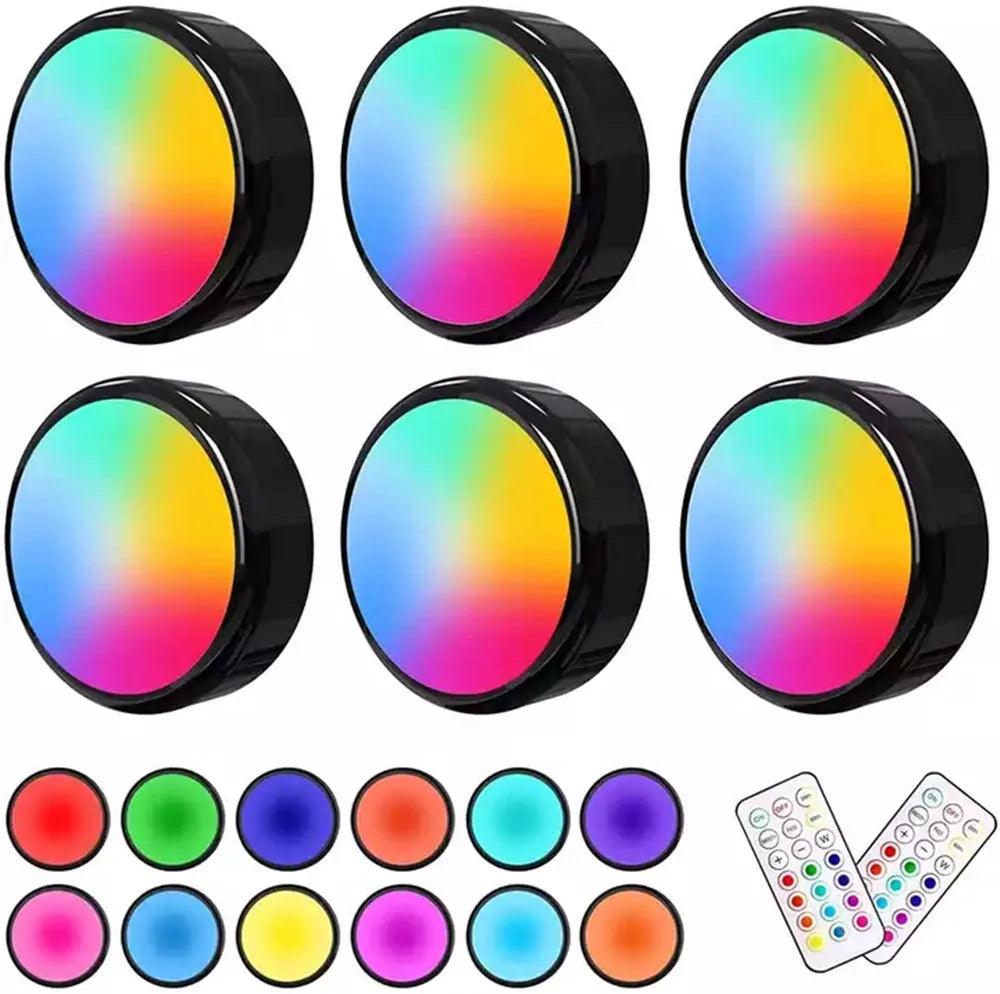
For users relying on battery-powered setups, predictable runtime and easy power management are critical. An RGBW dimmable under cabinet LED puck light using standard AA batteries, with touch and remote control, suits low- to moderate-use spaces where brightness control matters and battery replacements can be planned rather than frequent or unexpected.
Controls and Usability: Tap, Remote, Motion, and Timers
Controls determine whether puck lights feel effortless or annoying. For high-use areas, choose a control method that matches your daily routine instead of what looks coolest in a listing.
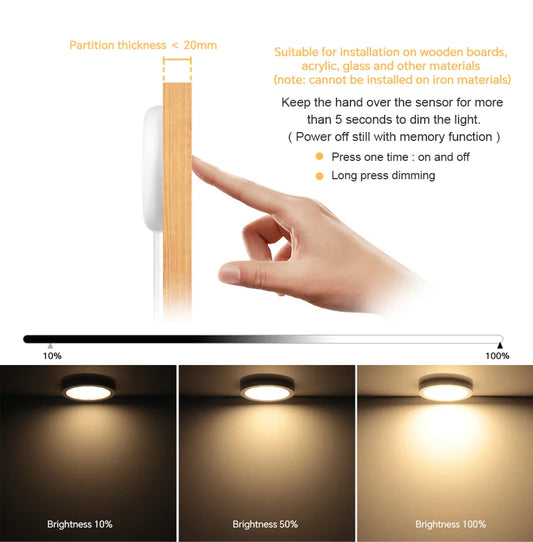
- Tap control: simplest, but can be inconvenient on high shelves
- Remote: good for multiple lights, especially in cabinets or displays
- Motion sensor: best for closets/pantries; look for adjustable sensitivity or auto-off
- Timer/auto-off: one of the most important battery-saving features
💬 “Motion mode was the upgrade for my pantry. The lights turned on when I needed them and didn’t get left on, so batteries lasted way longer than tap-only.”
Mounting and Maintenance: Adhesive, Screws, and Easy Access
Mounting isn’t just about install speed. It decides whether the lights stay put, whether you can change batteries easily, and whether the setup still looks clean after months of use.
- Adhesive: fastest install; best on clean, flat surfaces
- Screws/brackets: strongest hold; best for long-term installs
- Magnetic: convenient for removable charging or battery swaps
💡 Lumaz tip: Before you mount anything permanently, test battery access. If you need to remove the entire puck to change batteries, choose magnetic mounts or a bracket that releases easily.
Best Use Cases: Which Battery Pucks Fit Which Space
Battery operated puck lights shine in places where wiring is hard or where you only need light in short bursts. Match features to the space so you don’t overbuy or end up with constant maintenance.
- Closets: motion + auto-off, neutral white (3500K–4000K), easy battery access
- Pantries: motion or remote, medium lumens, wide beam to reduce hot spots
- Display shelves: warm or neutral CCT, higher CRI, remote control for groups
- Under cabinets (light duty): use for short tasks; consider dimming and a plan for frequent access
- RV/temporary setups: adhesive + rechargeable packs for easier recharging
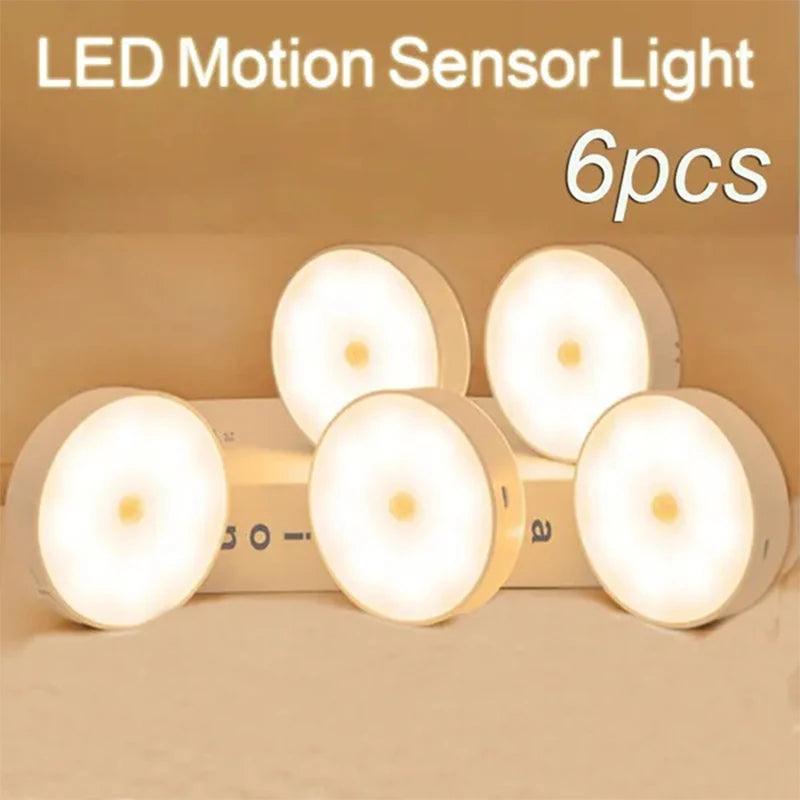
For spaces like closets, pantries, or hallways where lights are only needed briefly, motion-activated pucks reduce unnecessary runtime and maintenance. An 8-LED PIR motion sensor under cabinet LED puck light with auto on/off and USB recharging fits these areas well, providing instant illumination when movement is detected without requiring manual control.
When Battery Operated Puck Lights Are a Poor Choice
Battery pucks are not the best default for every lighting problem. If you need long runtimes or a lot of lights, stable power options are often a better fit.
- Daily task lighting running for hours (maintenance becomes frequent)
- Large multi-light runs where replacing batteries becomes a chore
- Hard-to-reach installs that require a ladder for every battery swap
Frequently Asked Questions About Battery Operated Puck Lights
These FAQs cover the edge cases that come up when choosing battery operated puck lights.
How many battery puck lights do I need?
Start by spacing for coverage (to avoid hot spots), then size the system to your willingness to maintain it. More lights at lower brightness often looks better and can be easier on batteries than fewer lights on “high.”
Are rechargeable puck lights better than replaceable-battery models?
They can be if charging is convenient. If charging is inconvenient, replaceable batteries may be less frustrating because swaps are faster than waiting for recharge.
Why do my battery puck lights look dim after a while?
Many models dim as battery voltage drops. Switching to lower brightness settings, using auto-off timers, or choosing a better battery strategy usually helps.
How should I dispose of used batteries?
Follow local recycling guidance. The EPA provides an overview for used household batteries (epa.gov).
How do I avoid hot spots under shelves or cabinets?
Use more fixtures at lower output, choose wider beams when available, and position the puck to wash the surface instead of creating a tight circle.
Final Thoughts and Next Steps
The best battery operated puck lights are the ones you can live with: the right brightness for the job, the right control style, and a battery plan that won’t annoy you. Start with your space and usage pattern, then choose features that reduce maintenance.
Further Reading
Explore the full guide for this topic: Puck Lights: A Complete Guide to Choosing and Using Them
Related Articles
- Puck Lights vs. Other Lighting Solutions: A Comprehensive Comparison for Every Space
- Expert Tips for Installing and Using LED Puck Lights in Your Home
- Top 8 Puck Lights for Kitchens, Closets, and Displays
-
How to Choose the Best Rechargeable Puck Lights
- How to Choose Battery Operated Picture Lights for Your Home














 />
/>
 />
/>
 />
/>
 />
/>
 />
/>