

How to Choose the Best Puck Lights for Cabinets: Power, Controls and Use Cases
Best Puck Lights for Cabinets at a Glance
The best puck light is the one whose power source and control method fit the way the cabinet is actually used. Choose a continuously powered 12V or 5V puck for everyday kitchen task lighting, a rechargeable motion-sensor puck for a small closet or cabinet visited briefly, and a remote-controlled rechargeable set for decorative shelves or color scenes. If you want connected color control, choose a puck kit with its controller and power supply designed as one system.
Puck lights create separate circles of light. That makes them excellent for divided cabinets, display bays, and intentional pools of task or accent light. It also means they are not automatically the best answer for a long counter where an even, uninterrupted band of light is the main goal.
| Best for | Recommended puck light | Why it fits | Main trade-off |
|---|---|---|---|
| Concealed daily control | Ultra-Thin LED Puck Light Kit with hidden touch sensor | A 12V kit with a sensor that can operate through a suitable non-metallic surface. | The sensor position and surface must be planned before installation. |
| App, voice, and color scenes | Tuya WiFi RGB puck light kit | A four-light 12V kit with app and compatible voice control. | It needs a powered installation and a place for the controller and cables. |
| Flexible 12V surface mounting | 12V aluminum surface-mount puck light | Multiple wattage, finish, and white-light options support different cabinet roles. | The compatible driver and controls must be planned as part of the system. |
| Simple USB-powered white task light | 5V USB high-CRI puck light | An inline switch, 5V USB power, and CRI above 90 make it a straightforward shelf or counter option. | The visible USB cable and switch need a tidy route. |
| Small closets and short visits | Rechargeable PIR motion-sensor puck | Magnetic mounting, motion activation, and automatic shutoff suit small enclosed areas. | It produces a localized pool and must be recharged. |
| Decorative cordless scenes | Six-pack rechargeable RGB puck lights | Remote and touch control, dimming, colors, and timers coordinate several display points. | Six separate lights create more charging work than one powered system. |
Best starting point for a working kitchen
Begin with a continuously powered puck system when the lights will be used for long food-preparation sessions. It removes the recurring charging task and makes coordinated control easier to plan.
Best cordless choice only when the routine is short
Rechargeable motion pucks are most convincing inside closets, pantries, and small cabinets where the light turns on briefly. A cordless installation can become less convenient when many lights need frequent charging.
How These Cabinet Puck Light Recommendations Were Chosen
This guide compares current Lumaz puck lights using verified product specifications and the practical consequences of their design. It does not claim that every model was laboratory-tested side by side. “Best” means best suited to a stated cabinet use, not universally better in every room.
Each recommendation is based on five decisions that materially change the result:
- Power: continuously powered 12V or 5V versus rechargeable battery power.
- Control: inline switch, hidden touch, remote, app, voice, motion sensor, or timer.
- Light pattern: focused pools for distinct zones versus the need for broad continuous coverage.
- Mounting: surface mounting, magnetic removal, cable routing, and room for a driver or controller.
- Daily routine: long task-lighting sessions, short cabinet visits, or occasional decorative use.
Those factors are more useful than treating all puck lights as interchangeable circles. A kitchen counter, a pantry shelf, a glass display, and a wardrobe may all accept the same shape of fixture, but they do not demand the same power or control system.
Best Lumaz Puck Lights by Use Case
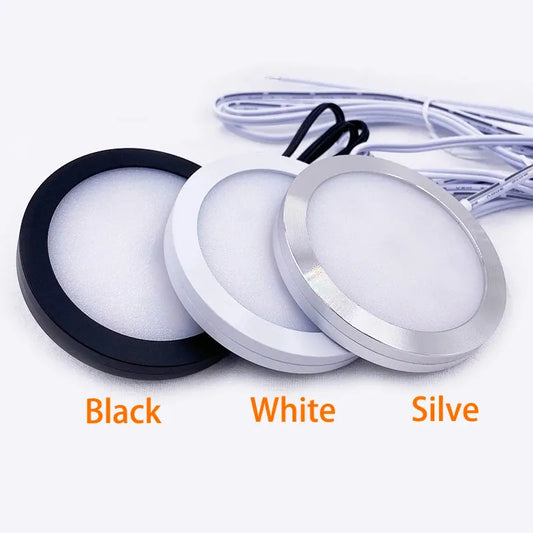
Best for concealed touch control: Ultra-Thin LED Puck Light Kit
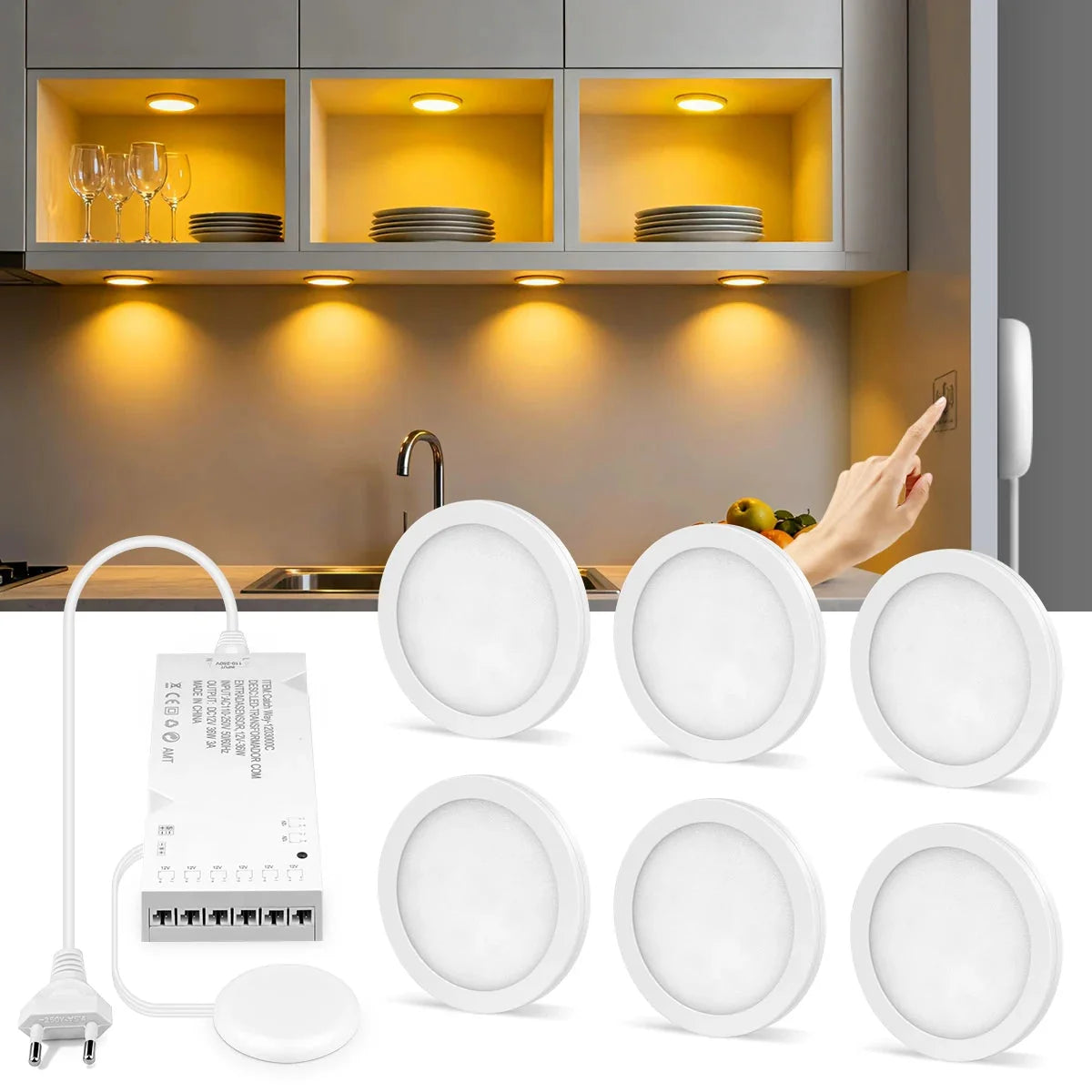
- Choose it when: you want to control cabinet lighting without leaving a visible switch on the cabinet face.
- Useful facts: 5W LED pucks, a 12V DC adapter, warm/neutral/white options, aluminum construction, and kits from one to ten pucks.
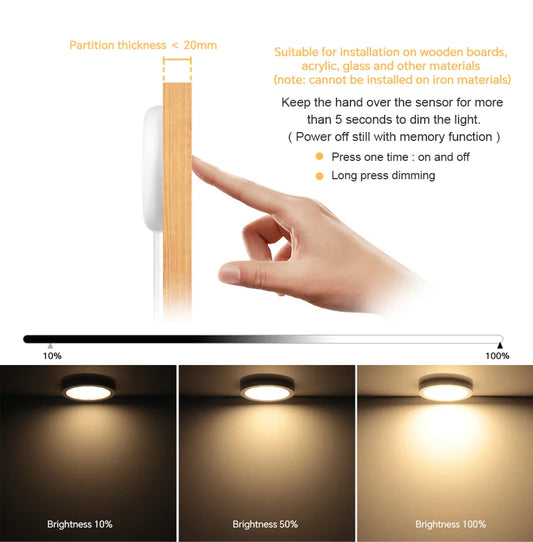
- Control fit: the hidden touch dimmer can sense through a selected non-metallic surface up to 25mm thick.
- Main trade-off: metal surfaces and unsuitable thicknesses change the sensor decision, so test the proposed location before final mounting.
Best for connected RGB scenes: Tuya WiFi RGB Puck Light Kit
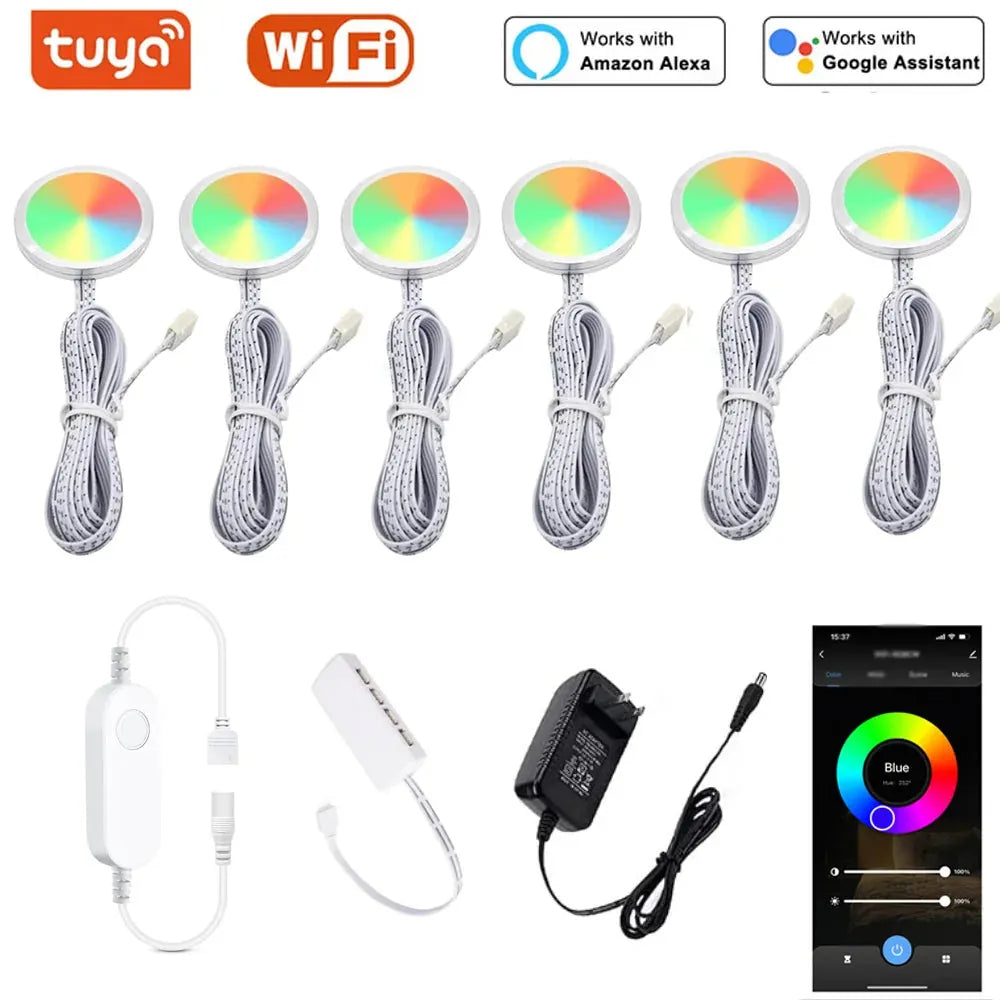
- Choose it when: shelves, media cabinets, or display zones need coordinated color and remote control rather than simple white utility light.
- Useful facts: four RGB pucks, 12V adapter, 200 lumens per lamp, CRI above 80, and included controller, splitter, cables, and adhesive.
- Control fit: Tuya app control plus compatibility with Alexa and Google Assistant supports connected scenes.
- Main trade-off: the adapter, controller, splitter, and cables need concealed space; RGB accent light is not a substitute for high-quality white task light in every kitchen.
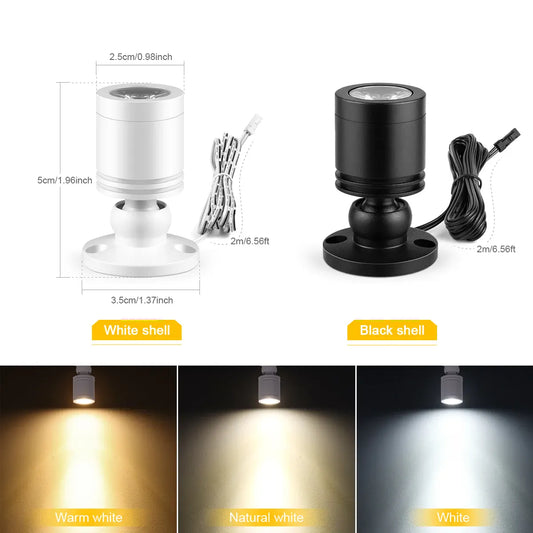
Best flexible 12V surface-mount option: Aluminum Cabinet Puck Light
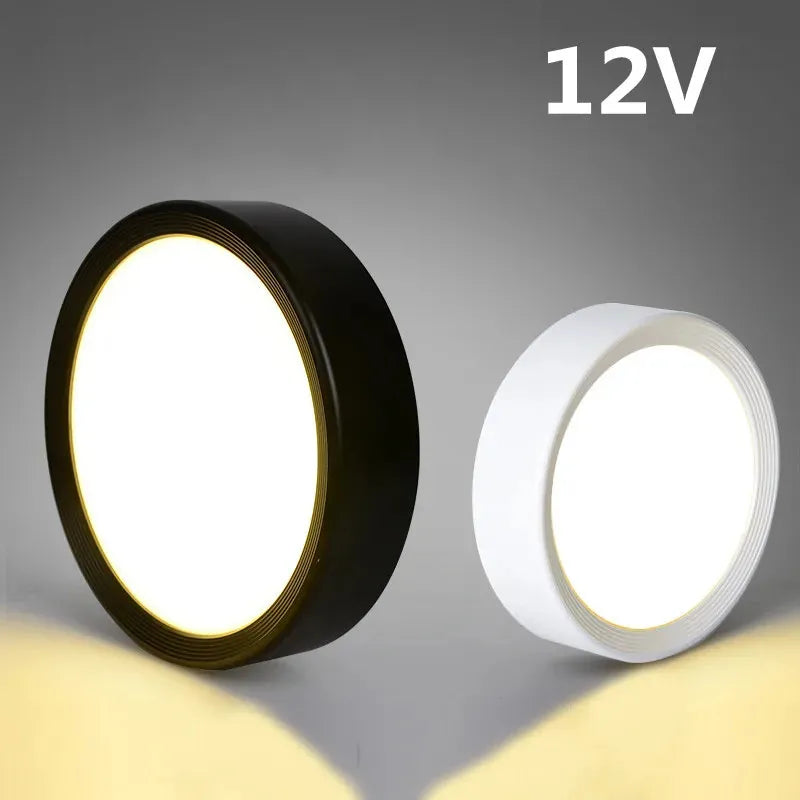
- Choose it when: a surface-mounted 12V puck must match a specific cabinet finish or lighting role.
- Useful facts: 3W to 18W options, warm/natural/cool white choices, black/white/gold finishes, and aluminum construction.
- System fit: the 12V DC design can be planned into a low-voltage cabinet-lighting system.
- Main trade-off: do not assume that the selected puck includes a driver or direct line-voltage connection. Match the power supply and controls to the exact configuration.
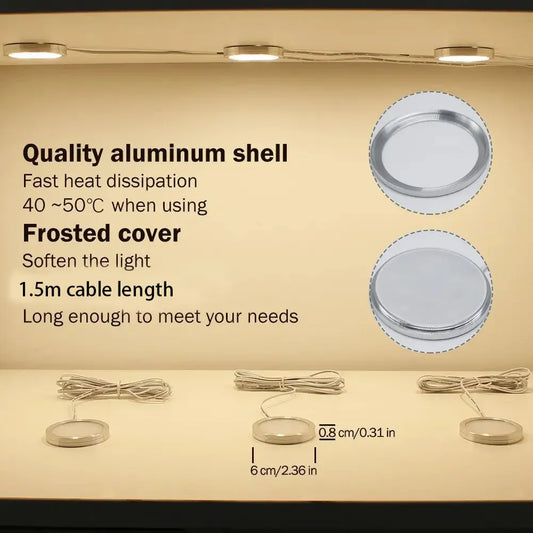
Best simple USB-powered option: High-CRI 5V Puck Light
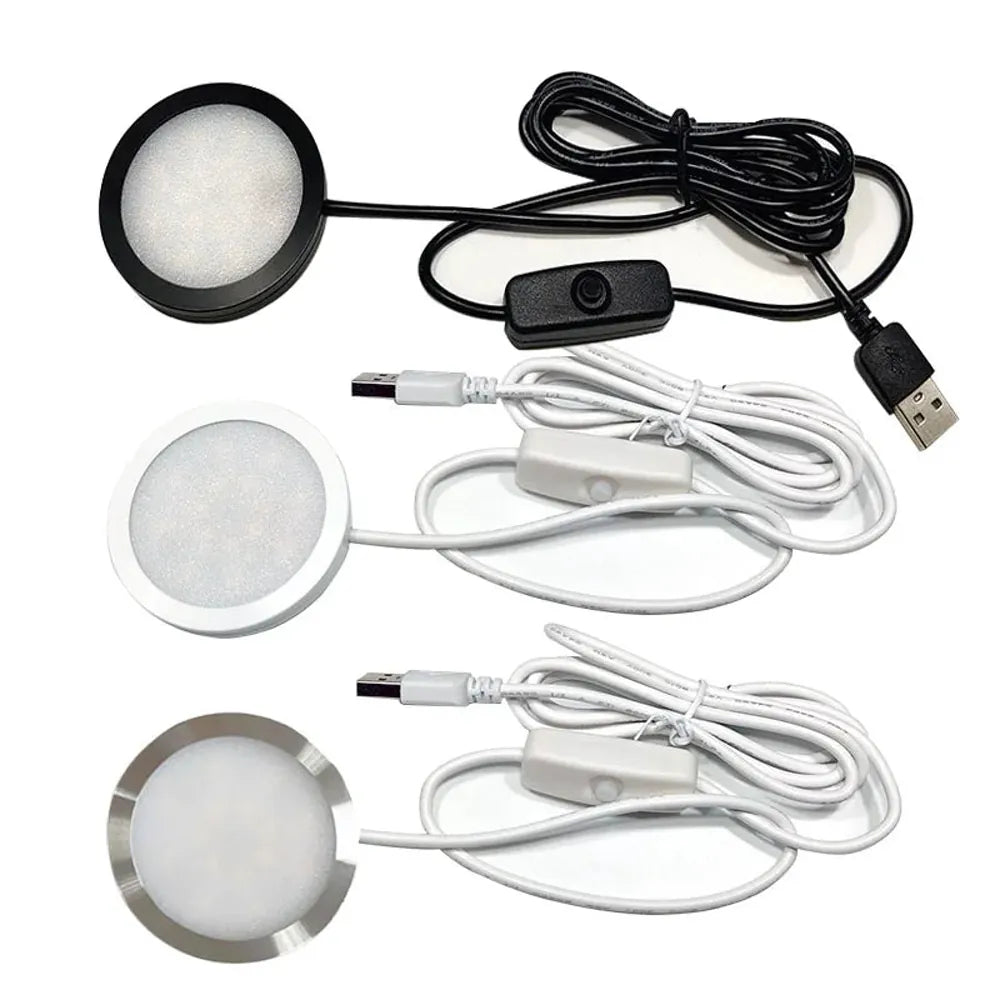
- Choose it when: a nearby USB power source and visible inline switch are acceptable.
- Useful facts: 5V USB power, 3W, 280 lumens, CRI above 90, warm/natural/cool white choices, and a 60mm by 8mm aluminum body.
- Light fit: high color rendering is useful where food, finishes, or displayed objects should look natural.
- Main trade-off: its 1500mm cable and switch must be routed where they remain usable without looking untidy.
Best for short hands-free visits: Rechargeable PIR Puck Light
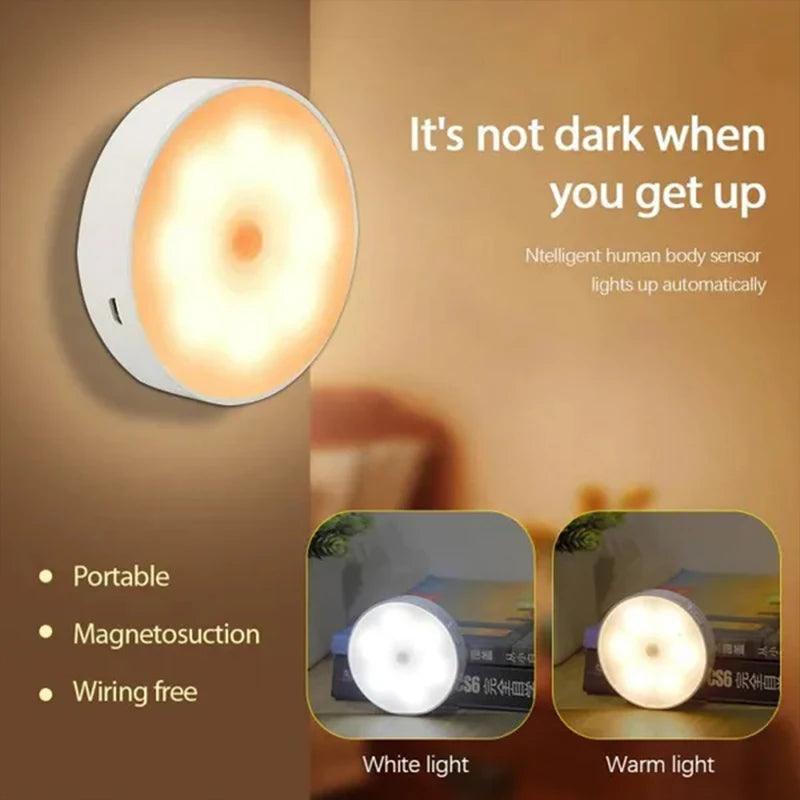
- Choose it when: the light should activate for a short visit inside a pantry, wardrobe, or cabinet without permanent wiring.
- Useful facts: USB rechargeable power, magnetic mounting, warm or white options, 3–6m sensing distance, 120-degree sensing angle, and 25-second automatic shutoff.
- Routine fit: automatic shutoff helps reserve battery power for brief access rather than long work sessions.
- Main trade-off: it illuminates a compact zone and must be removed or reached for charging.
Best cordless decorative set: Six Rechargeable RGB Puck Lights
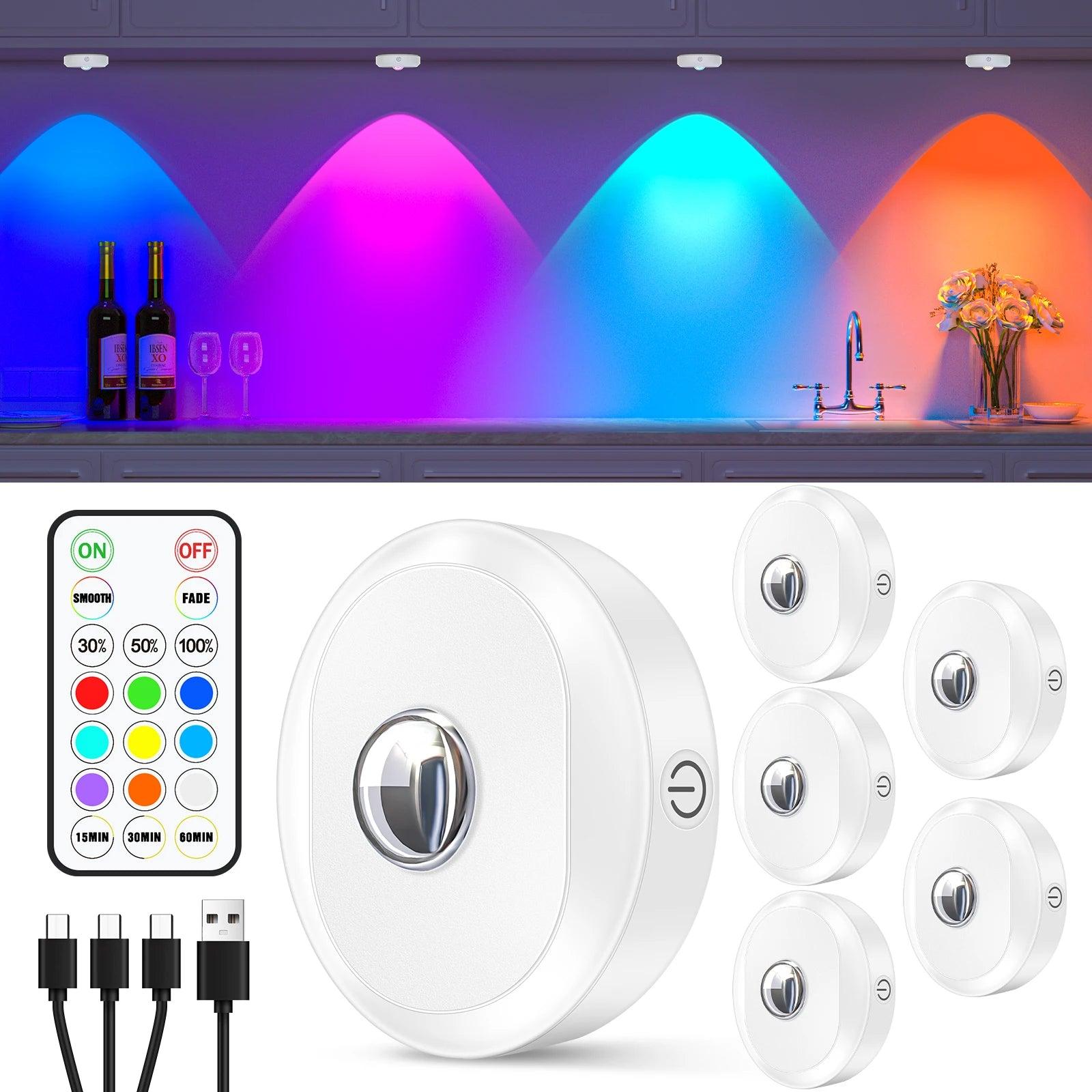
- Choose it when: several shelves or display compartments need coordinated color without routing a powered puck system.
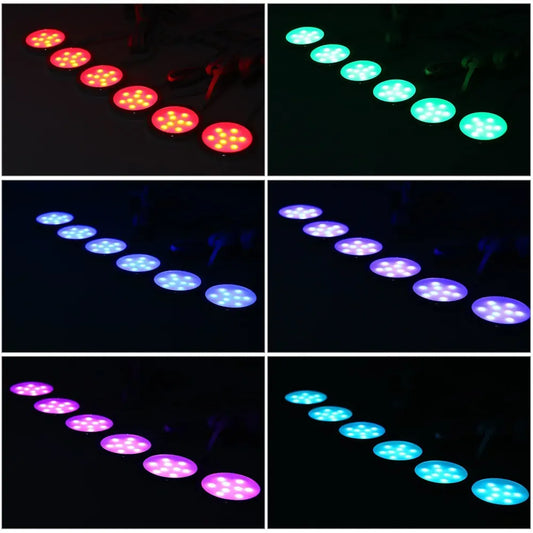
- Useful facts: six pucks, remote and touch control, five brightness levels, nine RGB colors, 15/30/60-minute timers, magnetic or adhesive mounting, and Type-C charging cables.
- Scene fit: the remote and timer simplify temporary decorative lighting across multiple points.
- Main trade-off: each puck remains a separate rechargeable fixture, so the charging routine grows with the number of lights.
Wired, USB, or Rechargeable Puck Lights?
For cabinet lighting, “wired” often describes a continuously powered low-voltage system with an adapter or driver. It does not automatically mean that the puck connects directly to household line voltage. Read the exact product specification before planning the electrical connection.
| Power type | Best use | Advantages | Plan for |
|---|---|---|---|
| 12V continuously powered | Daily kitchen lighting and coordinated multi-puck systems | No recurring charging; easier to operate several pucks as one system. | A compatible driver or included adapter, cable routes, controller location, and outlet access. |
| 5V USB powered | Small shelves or counters near USB power | Simple low-voltage connection and familiar power format. | Cable length, USB power source, inline switch access, and cable concealment. |
| Rechargeable | Closets, rented spaces, isolated compartments, and occasional displays | No permanent cable route and easy magnetic removal on compatible models. | Charging access, number of fixtures, expected on-time, and a realistic charging routine. |
| True line-voltage hardwired | Only a fixture specifically listed and designed for that connection | Can integrate with a permanent wall-switch circuit when the product and installation allow it. | Product compatibility, local electrical requirements, safe isolation, junctions, and a qualified electrician where required. |
Practical rule: use continuous power when the lights must work every day for long periods. Use rechargeable power when avoiding cables is more valuable than avoiding charging. For a deeper comparison of battery and remote-control concerns, see how to choose rechargeable puck lights with remote control.
Choose the Right Puck Light Control
The control should match the moment when a person approaches the cabinet. A feature-rich control is not automatically more convenient if it adds steps to a simple task.
- Inline switch: choose it for a small powered installation where the switch remains easy to see and reach.
- Hidden touch sensor: choose it when a clean cabinet face matters and a suitable non-metallic sensing surface is available.
- PIR motion sensor: choose it for short visits to closets, pantries, and cabinet interiors. Check whether the sensor can see a person approaching rather than being blocked by the shelf lip.
- Remote control: choose it for several decorative pucks that should change together. Consider where the remote will live and whether all fixtures can receive its command.
- App and voice control: choose it for scheduled or connected scenes, not merely because the feature exists. The controller still needs power and a reliable place in the installation.
- Timer: choose it for display lighting that should turn off automatically after a fixed period.
When several pucks share one cabinet run, confirm that the selected controller, splitter, driver, and lights belong to a compatible system. Similar-looking connectors do not prove electrical compatibility.
Plan the Light Pattern Before Buying
A puck light produces a pool of light. Close spacing can blend those pools; wider spacing makes the circles and shadows more obvious. The right effect depends on whether the goal is preparation light, a highlighted object, or a decorative rhythm across shelves.
- Mock up one real puck. Temporarily hold it under the cabinet at the intended front-to-back position.
- Judge the counter, not the fixture. Look for dark gaps, harsh bright circles, glare from polished surfaces, and shadows from hands or objects.
- Repeat the mock-up along the cabinet run. Use the actual beam and mounting height instead of relying on a universal spacing number.
- Treat cabinet breaks separately. Sinks, ranges, corner cabinets, shelves, and vertical dividers may change both spacing and cable routing.
For a full layout method, use the guide to spacing under cabinet lighting. If the mock-up shows that separate pools will never look even enough, compare puck lights, light bars, and LED strips before adding more pucks.
Match the Puck Light to the Room
Kitchen counters
Prioritize continuous power, useful white light, manageable shadows, and controls that work with messy hands. A 12V or USB-powered puck can suit divided cabinet sections, but a long uninterrupted counter may be better served by a light bar or strip.
Closets and pantries
Prioritize automatic activation, short on-time, easy charging, and a sensor position with a clear view. A rechargeable PIR puck is a strong fit for a small compartment; a deeper or wider pantry may need a bar or more than one light source.
Glass cabinets and display shelves
Prioritize beam placement, fixture concealment, dimming, and the appearance of displayed colors. Separate pools can be an advantage here because each puck can emphasize one bay or object. High color rendering is useful for art, food, materials, and objects whose natural appearance matters.
Rental homes and temporary installations
Prioritize removable mounting and a charging routine that fits the number of lights. Adhesive can still mark delicate finishes, so test it in an inconspicuous area and do not assume “no wiring” means “no installation impact.”
Mounting and Installation Checks
- Measure the fixture, cable, and connector. A thin puck does not help if its plug or splitter cannot pass through the planned route.
- Choose surface or recessed mounting deliberately. Surface mounting is easier to change; recessed mounting needs a suitable hole, clearance, and a product designed for that use.
- Keep removable lights reachable. A magnetic rechargeable puck should come down without emptying the entire cabinet.
- Place sensors where they can sense. Shelf lips, cabinet doors, stored objects, and a person’s approach direction can affect motion or touch operation.
- Test the complete layout before permanent mounting. Check light pools, glare, switch reach, cable visibility, door movement, and charging removal.
- Respect the electrical boundary. Do not connect a 5V or 12V puck directly to household line voltage. Use the specified adapter or a compatible driver. Permanent line-voltage wiring should follow the product instructions and applicable electrical requirements.
When replacing an existing system or making permanent connections, use the detailed guide to installing and replacing puck lights.
When Puck Lights Are the Wrong Choice
Choose another fixture form when the main objective conflicts with the natural light pattern or maintenance needs of pucks:
- You want a continuous line across a long counter. A strip or linked light bars may create the effect with fewer bright-and-dark transitions.
- You do not want to manage several batteries. A powered system is usually easier for daily, long-duration use.
- There is nowhere to hide drivers, splitters, or cables. A simpler bar or rechargeable fixture may fit the physical installation better.
- The counter is highly reflective. Distinct points can reflect as visible bright circles; a more diffused linear source may be more comfortable.
- The cabinet is too shallow to conceal the fixture. An ultra-thin bar or strip in a suitable channel may be less noticeable.
The goal is not to make puck lights win every comparison. It is to use their compact shape and separate light pools where those characteristics solve a real cabinet problem.
Cabinet Puck Light Buying Checklist
- What must be lit: one object, one cabinet bay, a work zone, or a full counter run?
- Is a pool of light desirable, or would visible circles and gaps be distracting?
- Will the lights run for minutes, or for hours at a time?
- Is continuous 12V or USB power available, and where will the adapter or driver go?
- If rechargeable, how many fixtures must be removed and charged?
- Which control matches the routine: switch, hidden touch, PIR motion, remote, timer, app, or voice?
- Does the chosen variant include the needed pack size, color temperature, finish, controller, and power components?
- Can the fixture, cable, plug, sensor, and mounting plate fit without blocking doors or shelves?
- Has the light pattern been mocked up on the real surface before permanent mounting?
Frequently Asked Questions About Cabinet Puck Lights
Are puck lights good for kitchen task lighting?
Yes, when their pools overlap across the work zone and the system provides useful white light without glare. They suit divided cabinet sections especially well. For a long continuous counter, compare the result with bars or strips before committing.
Are wired puck lights better than rechargeable puck lights?
They are usually more convenient for daily, long-duration lighting because they do not need recurring charging. Rechargeable pucks are better when avoiding cables and permanent installation matters more, especially in small spaces used briefly.
How many puck lights do I need under a cabinet?
There is no reliable universal number. It depends on cabinet length, mounting height, front-to-back position, beam pattern, output, and whether you want separate pools or blended coverage. Mock up the actual puck and adjust until the work surface is acceptably even.
Can I mix different puck lights on one driver or controller?
Do not mix them based on connector shape alone. Voltage, load, polarity, control method, and connector wiring must all be compatible. Use components specified to work together or obtain qualified advice for a custom system.
Are motion-sensor puck lights good under kitchen cabinets?
They can help with brief hands-free visits, but a rechargeable PIR puck may be frustrating if long meal preparation repeatedly drains the battery or if normal movement turns the light on and off unexpectedly. A continuously powered switch, touch sensor, or hand-sweep control is often easier for sustained kitchen work.
Do puck lights get hot?
LED pucks still produce heat, and the amount varies with power, construction, mounting, and ventilation. Follow the product’s clearance and installation instructions, keep ventilation paths open, and do not cover the fixture or driver with stored items.
Should I choose warm, neutral, or cool white?
Choose a white light that works with the room finishes and the task. Warm white creates a softer decorative effect; neutral white is a versatile starting point for kitchens and displays; cooler white can feel crisper but may emphasize cool-colored surfaces. When possible, view a sample against the actual counter or cabinet.
Final Recommendations
For a working kitchen, start with a continuously powered 12V or 5V puck system and plan the entire power-and-control path before mounting the first light. For a closet or small cabinet, a rechargeable PIR puck is usually the more practical no-wire choice. For shelves and displays, choose between high-CRI white light, connected RGB scenes, or a rechargeable remote set according to how often the display runs.
Before buying, decide whether separate circles of light are an advantage. If they are, puck lights offer compact placement and precise emphasis. If they are not, compare Lumaz puck lights with bars and strips rather than trying to solve uneven coverage by adding more fixtures.














 />
/>
 />
/>
 />
/>
 />
/>
 />
/>