

Childproof and Tamper-Resistant Puck Lighting Solutions for Daycares and Family Homes
Table of Contents
- Why childproof and tamper-resistant puck lighting matters
- Types of puck lights and which are best for child safety
- Key safety features to demand in tamper-resistant puck lights
- Installation best practices for daycares and family homes
- Comparison: Battery vs Plug-in vs Low-voltage vs Hardwired puck lights
- Maintenance, inspection, and policy recommendations for daycares
- Energy, cost, and ROI considerations
- Design considerations for child development and comfort
- Real-world example and community feedback
- Vendor selection, procurement checklist, and installation QA
- FAQ — Common questions about childproof and tamper-resistant puck lighting
- Final action steps for decision-makers
Why childproof and tamper-resistant puck lighting matters
Child-safe lighting reduces injury, prevents tampering, and limits downtime in daycares and family homes. Properly designed puck lights protect children from electrical shock, burns, and battery ingestion while offering durable, efficient illumination.
Daycare centers and homes face different risks: small hands, curious fingers, and high traffic. Selecting childproof, tamper-resistant puck lighting is a practical way to lower hazards while improving light quality for play, learning, and rest.
Types of puck lights and which are best for child safety
Choose from battery, plug-in, low-voltage, and hardwired puck lights; each has trade-offs for safety, maintenance, and cost.
Quick overview of common types:
- Battery-powered (integrated): Easy to install; risk: button-cell batteries and accessible compartments.
- Plug-in: Simple retrofit; risk: accessible cords and plugs that can be chewed or pulled.
- Low-voltage with remote driver: Safer at surface level because the high-voltage source stays remote; usually hard to tamper with.
- Hardwired (line-voltage): Most secure when installed properly and enclosed; minimal exposed components.
Best picks for daycares and family homes
For maximum child safety, prefer hardwired or low-voltage puck fixtures with tamper-resistant mounting and secured electrical enclosures. Avoid battery-only options in unsupervised child spaces unless battery compartments are fully locked and conform to safety guidance.
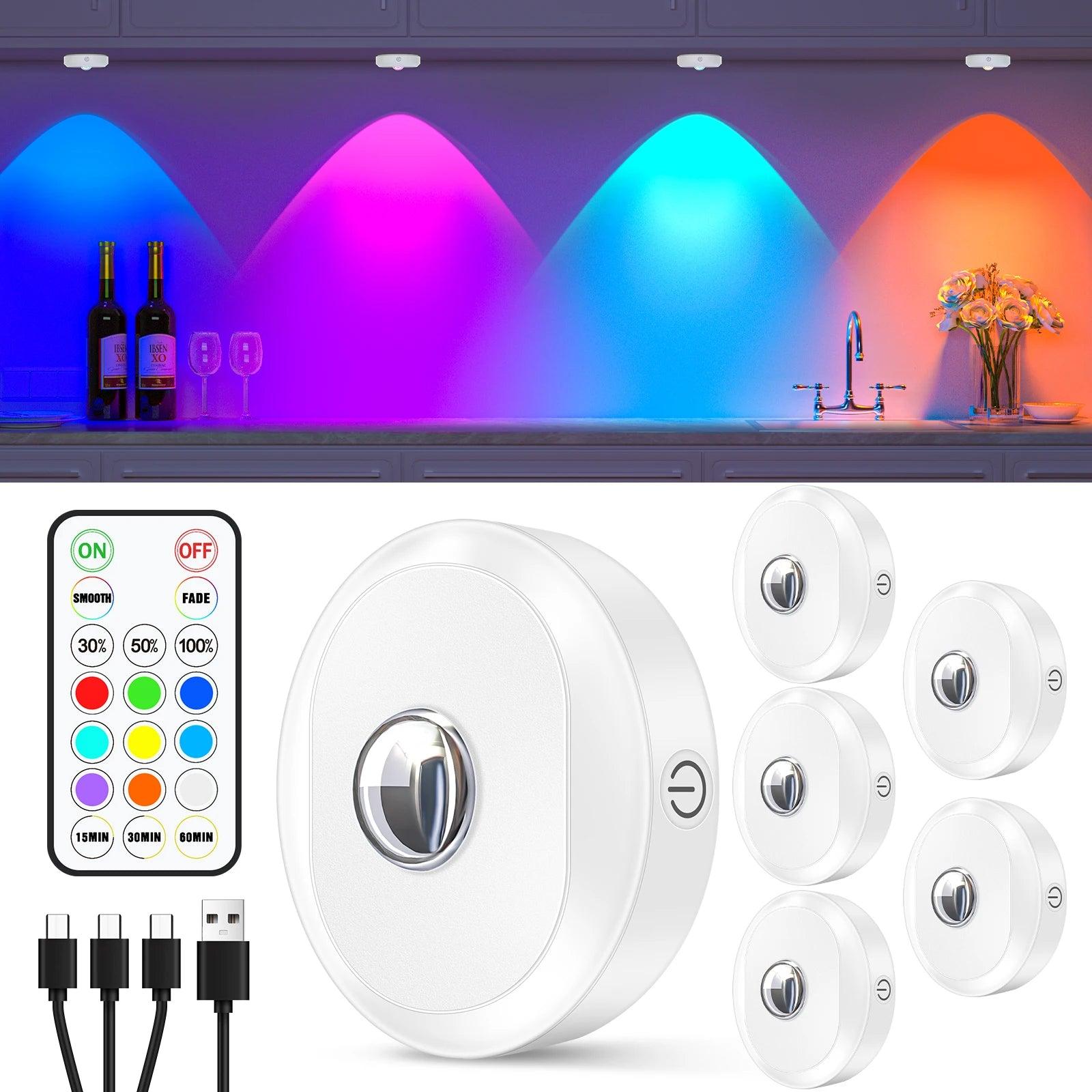
For caregivers who want flexible, safe lighting in child-accessible areas, easy-to-mount, low-risk fixtures are ideal. A 6-pack of rechargeable RGB under cabinet LED puck lights with remote and touch control allows parents to provide adjustable, supervised illumination while keeping lights out of reach and avoiding exposed wiring.
Key safety features to demand in tamper-resistant puck lights
Look for specific features that prevent access, ingestion, and accidental removal while keeping fixtures serviceable by adults.
Essential safety features:
- Locked or screw-sealed battery compartments: prevents button-cell access.
- Tamper screws or tool-only release: blocks unauthorized removal.
- Remote drivers or enclosed drivers: keep live components away from children.
- UL or equivalent listing: verifies electrical safety testing.
- High ingress protection (IP) rating: for moisture-prone areas like sinks or bathrooms.
- Low surface temperature: reduces burn risk where kids may touch fixtures.
Why button batteries and small parts are critical concerns
Button batteries and small parts can cause severe injury or death if swallowed. The U.S. Consumer Product Safety Commission (CPSC) warns that button batteries can cause life-threatening injuries in as little as two hours; secure, sealed compartments are essential.
Read CPSC guidance on button battery safety: CPSC—Button Battery Safety.
Installation best practices for daycares and family homes
Safe installation combines fixture choice, mounting methods, and wiring practices that make tampering difficult and maintenance efficient.
- Choose the right mounting height: mount lights out of reach (recommended >6 ft in mixed-age spaces).
- Hardwire where possible: reduces accessible plugs and cords.
- Use tamper screws or security brackets: require a special tool for removal.
- Locate drivers remotely: put transformers/drivers in locked closets or above ceilings.
- Label circuits and document locations: simplifies maintenance and avoids accidental exposure during repairs.
Practical mounting tips
Install with concealed fasteners and full backboxes. For surface-mounted puck lights, use a recessed basin or metal mounting plate that prevents prying. In bathrooms and kitchens choose units with IP44+ ratings.
Comparison: Battery vs Plug-in vs Low-voltage vs Hardwired puck lights
This table compares safety, tamper resistance, cost, and maintenance to help decision-makers choose the right option.
| Feature | Battery (Integrated) | Plug-in | Low-Voltage (Remote Driver) | Hardwired (Line Voltage) |
|---|---|---|---|---|
| Child tamper risk | High (battery access) | Moderate (cords/plugs) | Low (driver remote) | Low (fixed, enclosed) |
| Installation difficulty | Low | Low | Moderate | High (licensed electrician) |
| Maintenance frequency | High (battery changes) | Moderate (cord wear) | Low (driver lifespan) | Low (LED lifespan) |
| Up-front cost | Low | Low | Moderate | High |
| Lifecycle energy efficiency | Low | Moderate | High | High |
| Best use-case | Temporary, low-risk areas | Retrofits where wiring is absent | Daycares, playrooms, classrooms | Permanent fixtures in high-traffic rooms |
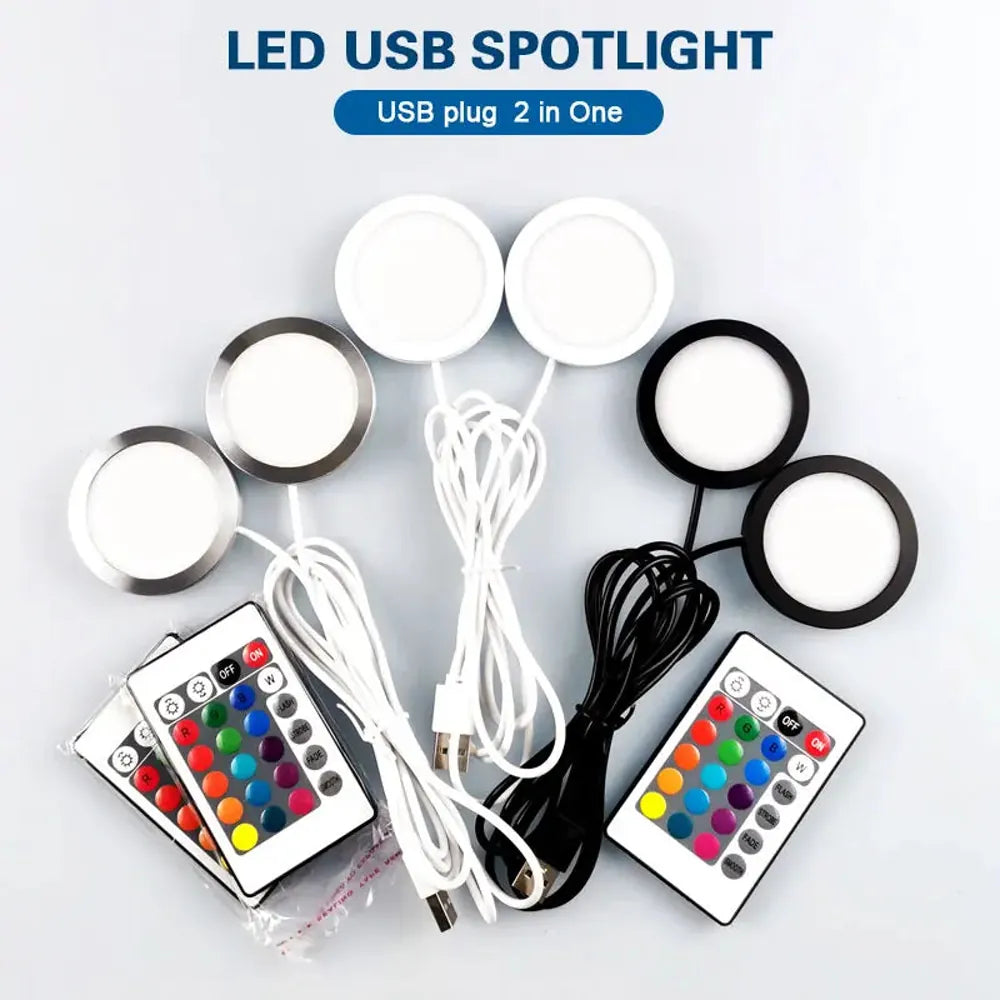
For users seeking a simple, low-risk solution without complex wiring, USB-powered puck lights offer convenience and flexibility. Dual-head 2-in-1 USB RGB under cabinet LED puck lights with remote control and 16 colors provide easy placement and adjustable lighting, making them a practical choice for safe, child-friendly spaces or temporary setups.
Maintenance, inspection, and policy recommendations for daycares
Regular checks and clear policies reduce accidents and extend fixture life. Make inspections part of your daily and monthly routines.
Recommended inspection routine:
- Daily visual check: broken fixtures, loose mounts, exposed wires.
- Weekly safety check: battery compartments locked, no missing tamper screws.
- Monthly operational check: verify dimmers, timers, and driver enclosures.
- Annual electrical safety audit: licensed electrician inspects hardwired fixtures and drivers.
Suggested policy items for childcare providers:
- Only staff or licensed contractors may open fixtures or replace batteries.
- Document every maintenance event with date, staff, and photos.
- Prohibit toys/objects from being attached to fixtures or cords.
- Provide parent communications about lighting upgrades and safety measures.
Energy, cost, and ROI considerations
Childproof puck lights can be energy-efficient and cost-effective when you choose LED fixtures with secure designs and remote drivers.
Key financial points:
- LED puck fixtures use far less energy and last longer than incandescent sources—see DOE guidance on LED savings.
- Hardwired/low-voltage installations cost more up front but cut maintenance and replacement costs.
- Reduced downtime and fewer safety incidents lower liability and operating interruptions.
For evidence-based energy guidance, review the Department of Energy's LED lighting resources: Energy.gov — LED Lighting.
💡 Smart lighting shouldn't break the bank. Lumaz LED puck lights deliver significant energy savings and a rapid ROI for any budget.
Design considerations for child development and comfort
Lighting affects behavior, mood, and learning. Choose color temperature, glare control, and light levels that support activities and rest.
Design tips:
- Use warm white (2700–3500K) for nap and relaxation areas; cooler (3500–4000K) for activity and classroom zones.
- Provide layered lighting: ambient plus task lighting for tables and reading corners.
- Minimize glare with diffusers and recessed mounting to protect sensitive eyes.
Research links between light and behavior suggest moderating brightness and color temperature benefits learning and sleep; see EPA resources on indoor environmental quality for schools: EPA — IAQ Tools for Schools.
Real-world example and community feedback
Practical examples show tamper-resistant pucks reduce incidents and simplify management for staff.
😀 "After switching to hardwired puck lights with tamper screws and remote drivers, our daycare had zero lighting-related incidents in a year—and maintenance calls dropped 70%." — Daycare director, community center
Case highlight: A 150-child daycare replaced 45 battery pucks with hardwired low-voltage fixtures. Results after 12 months:
- Maintenance visits reduced from 15/month to 4/month.
- Battery waste and replacement costs dropped 85%.
- Staff reported fewer disruptions during nap and learning times.
Vendor selection, procurement checklist, and installation QA
Follow a clear procurement checklist and require product samples and certifications before purchase.
Procurement checklist (use when sourcing fixtures):
- Request UL/ETL listing and IP rating documentation.
- Confirm tamper-resistant features: screw covers, sealed battery compartments, remote drivers.
- Ask for thermal test data showing low surface temperatures.
- Require a 3–5 year LED/driver warranty and replacement program.
- Insist on installation instructions and a training session for maintenance staff.
Installation QA steps for facility managers
Before sign-off, verify installations meet safety and accessibility goals.
- Check that tamper screws are installed and tools are locked in a secure cabinet.
- Confirm drivers are in locked areas or above ceilings with locked access points.
- Test for any exposed wires, hot surfaces, or loose mounts.
- Validate lighting levels (lux) for activity areas and rest zones.
FAQ — Common questions about childproof and tamper-resistant puck lighting
Answers to frequently asked questions from daycare operators, parents, and contractors.
1. Are puck lights safe around toddlers?
Yes—if they’re tamper-resistant. Choose hardwired or low-voltage fixtures with locked battery compartments and tamper screws. Avoid exposed cords or easy-to-open battery covers.
2. Can puck lights be made childproof after purchase?
Some models can: add tamper screws, relocate drivers, and use locked enclosures. But retrofits can be limited—upgrading to a purpose-built tamper-resistant model is often safer.
3. How high should puck lights be mounted in mixed-age rooms?
Mount general fixtures above 6 feet where possible. For task lighting, use recessed or covered fittings to prevent access. Always secure any lower-mounted lights with tamper hardware.
4. Do low-voltage lights eliminate electric shock risk?
Low-voltage reduces risk at the fixture but doesn't remove all hazards. Proper installation, secure drivers, and UL-listed components are still required.
5. What should daycares require from vendors?
Require UL/ETL listings, tamper-resistant features, sealed battery compartment proof, low surface temperature data, IP ratings for wet areas, and warranties. Insist on installation and maintenance training.
6. How often should fixtures be inspected?
Daily visual checks, weekly security checks (battery locks, screws), monthly function tests, and an annual licensed electrician audit are recommended for childcare settings.
7. Are there regulations that require tamper-proof fixtures in licensed daycares?
Regulations vary by state and local licensing body. Many licensing agencies require safe electrical installations; check local codes and include tamper-resistant fixtures in your safety plan.
8. What about lighting that supports sleep and learning?
Use warm color temperatures and dimmable fixtures in nap areas; reserve higher, cooler light for active learning. Consider tunable white systems if budget allows for circadian-friendly scheduling.
Final action steps for decision-makers
Adopt a simple, prioritized plan to reduce risk and improve lighting quality in the next 90 days.
- Audit existing puck lights for battery compartments, tamper screws, and driver locations.
- Replace high-risk battery-only units with low-voltage or hardwired tamper-resistant fixtures where possible.
- Implement inspection schedules and staff policies limiting access to fixture internals.
- Require vendor warranties, UL/ETL listings, and a training handoff for maintenance staff.
Following these steps lets daycares and families reduce injury risk, lower operating costs, and create safer, more comfortable spaces for children.
Further Reading
Explore the full guide for this topic: Puck Lights for Kitchens, Cabinets, Displays, and Specialty Applications















 />
/>
 />
/>
 />
/>
 />
/>
 />
/>