

The Rise of Organic and Sculptural Bedroom Lights: Nature-Inspired Designs for 2025
Share
Table of Contents
- 1. Introduction: The Rise of Organic & Sculptural Bedroom Lights (2026)
- 2. What “Organic” and “Sculptural” Really Mean
- 3. Nature-Inspired Materials That Feel Warm (Not Rustic)
- 4. Why These Lights Feel Better at Night (Comfort & Rhythm)
- 5. 2026 Trends: Softer Glow, Bigger Forms, More Craft
- 6. Smart Control That Stays Invisible
- 7. How to Style Organic Lighting Across Bedroom Themes
- 8. Organic vs. Conventional Fixtures: What Changes in Real Life
- 9. How to Choose the Right Fixture by Bedroom Zone
- 10. Real-World Examples: What Works (and Why)
- 11. FAQs: Organic & Sculptural Bedroom Lighting
- 12. Conclusion: A Simple 2026 Checklist
1. Introduction: The Rise of Organic & Sculptural Bedroom Lights (2026)
In 2026, bedroom lighting is shifting from “just illumination” to experience-first design. Organic and sculptural fixtures—lights inspired by stones, leaves, shells, dunes, clouds, and carved clay—are popular because they create a softer visual environment and make a bedroom feel intentional, not overlit.
This trend also connects to a broader movement toward biophilic design patterns (nature references, materials, and dynamic/diffuse light) that support comfort and stress reduction in built environments.
2. What “Organic” and “Sculptural” Really Mean
Organic and sculptural lighting are often grouped together, but they solve different problems:
- Organic lighting describes the visual language: irregular, flowing, nature-referenced forms and textures (woven fibers, rippled glass, hand-thrown ceramic).
- Sculptural lighting describes the role: a fixture that reads like art even when it’s off, often larger scale and more expressive.
In 2026 trend reporting, designers repeatedly describe fixtures as “sculptural” or “jewelry for the room,” especially when used as a primary bedroom focal point.
3. Nature-Inspired Materials That Feel Warm (Not Rustic)
Organic fixtures work because they add texture and diffusion—two things bedrooms often lack. In 2026, trend coverage highlights natural forms, artisanal craft, and materials that soften light instead of exposing it (houzz.com).
Bedroom-friendly material choices (and what they do):
- Rattan, cane, woven fibers: breaks up glare and creates a warm, patterned glow.
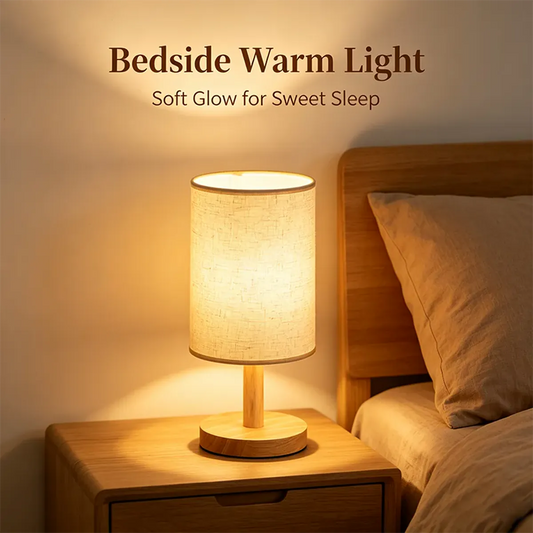
- Linen, paper, fabric shades: makes light softer on skin and reduces the “bright point” effect.
- Ceramic, clay, plaster: reads calm and grounded; great for bedside lamps and sconces.
- Textured glass (fluted, frosted, seeded): diffuses light without looking heavy.
- Translucent stone (e.g., alabaster): prized for flattering illumination and sculptural presence (elledecor.com).
4. Why These Lights Feel Better at Night (Comfort & Rhythm)
Most people don’t search for “organic lighting” because they want a philosophy. They search because they want a bedroom that feels calmer, less harsh, and easier at night.
Two practical reasons organic/sculptural lighting often improves comfort:
- Diffusion reduces visual stress: soft, indirect light and covered sources help bedrooms feel less exposing and less glary.
- Evening light hygiene matters: light exposure affects circadian timing; NIGMS explains that light helps regulate circadian rhythms (nigms.nih.gov), and a field study found that typical home lighting in the hours before bedtime can shift circadian phase later (pmc.ncbi.nlm.nih.gov).
The takeaway: the fixture shape is the aesthetic layer; the real “wellness” win comes from soft light quality and easy control (dimming and predictable scenes).
5. 2026 Trends: Organic & Sculptural Bedroom Lights
Update this for 2026: the shift is not “more decoration.” It’s softer glow, larger sculptural presence, and more craft-forward materials. Trend reporting highlights soft ambient illumination (diffused and reflected), expressive sculptural forms, and natural/earthy materials.
What “organic & sculptural” looks like in 2026:
| Feature | Description | Why It Matters |
|---|---|---|
| Fluid Forms | Shapes echo nature—clouds, shells, pebbles, branches | Softens the room and makes the fixture feel intentional |
| Tactile Materials | Rattan, paper, linen, clay, textured glass | Creates warmth and a “handmade” visual quiet |
| Integrated LEDs | Hidden light sources, indirect glow, dimming | Improves comfort by reducing visible hotspots |
| Statement Scale | Oversized pendants, sculptural sconces, tall floor lamps | Acts like “jewelry” or sculpture for the bedroom |
When performance is the goal, prioritize a fixture that looks organic and behaves like bedroom lighting: soft, dimmable, and not glaring from bed.
6. Smart Control That Stays Invisible
Smart features work best in organic lighting when they reduce friction without adding visible “tech.” In 2026, trend coverage highlights adaptive lighting and tunable LEDs that transition from brighter daytime tones to warmer evening tones (veranda.com).
Smart features that match organic/sculptural bedrooms:
- Smooth dimming: the most important feature for bedtime comfort.
- Tunable white / warm-dim: easier to keep evenings calmer while preserving usability.
- One-tap scenes: “Read,” “Wind Down,” and “Night Path” cover most real behavior.
- Gentle night lighting: low-level guidance light that avoids full-room brightness.
7. How to Style Organic Lighting Across Bedroom Themes
Style works when the fixture’s form and the room’s textures agree. Use one primary natural material and repeat it (shade, headboard, rug, or side table) so the light feels integrated.
Table: Styling Organic Lighting by Bedroom Theme
| Bedroom Style | Fixture Examples | Why It Works |
|---|---|---|
| Scandinavian Minimalism | Birch-wood pendant, linen shade bedside lamp | Clean lines with warm diffusion |
| Boho Chic | Jute/rattan pendant, woven table lamp | Texture-forward and relaxed |
| Japandi Calm | Ceramic sconce, paper lantern pendant | Quiet forms that stay soft at night |
Quick rule: if the bedroom already has strong pattern (wallpaper, bold bedding), choose a calmer organic silhouette. If the room is very minimal, go bigger and more sculptural.
8. Organic vs. Conventional Fixtures: What Changes in Real Life
Organic/sculptural fixtures aren’t “better” by default. They’re better when your goal is soft, comfortable light and a fixture that reads like design.
| Feature | Organic/Sculptural Lighting | Conventional Lighting |
|---|---|---|
| Aesthetic | Textured, nature-referenced, often handmade | Clean, geometric, sometimes utilitarian |
| Eco‑credentials | Often natural fibers/ceramics; varies by sourcing | Often metal/plastics; varies by sourcing |
| Cost | Often mid-to-high; pays for craft and materials | Wide range; mass-produced options common |
| Light Quality | Often diffused/indirect, easier to keep bedtime-friendly | Varies widely; exposed sources can feel harsher |
| Durability | Some materials need gentle care (paper, woven fibers) | Often durable and easy to wipe |
| Tech Integration | Best when hidden (dimming, tunable, scenes) | Can be more visible or feature-forward |
Decision shortcut: if you hate glare and want a bedroom that feels calmer at night, prioritize diffusion and dimming first—then pick the organic form you love.
9. How to Choose the Right Fixture by Bedroom Zone
Most “organic bedroom lighting” searches are really asking: what should I buy for my specific bedroom? Use this zone-based approach so the room stays beautiful and functional.
Ceiling (ambient): choose softness first
- Best choices: paper/linen diffusers, textured glass, shaded pendants, semi-flush with covered source.
- Avoid: bare bulbs or visible LED points in bed sightlines.
Bedside (task): keep the beam off your eyes
- Best choices: swing-arm sconces, directional reading lights, shaded table lamps with deep shades.
- Rule: the brightest spot should be the book/page, not the bulb.
Accent (mood): one calm glow beats many bright accents
- Best choices: a single sculptural floor lamp in a corner, a soft wall wash, or a small shaded lamp on a shelf.
- Rule: keep accents low and dimmable so they don’t become a second ambient layer.
10. Real-World Examples: What Works (and Why)
Three patterns show up in successful organic/sculptural bedroom lighting:
-
Coastal Woodlands Retreat
- Design: driftwood-inspired pendant + linen shades at bedside.
- Why it works: texture + diffusion = glow without glare.
-
Urban Leaf-Inspired Haven
- Design: leaf-like brass pendant + ceramic bedside lamps.
- Why it works: sculptural focal point + calmer supporting layers.
-
Minimal Sculptural Loft
- Design: one oversized sculptural lamp in a corner + simple bedside task lights.
- Why it works: strong form, controlled brightness hierarchy.
The consistent theme: one expressive fixture, plus predictable control and soft bedtime behavior.
11. FAQs: Organic & Sculptural Bedroom Lighting
Are organic lights good for small bedrooms?
Yes, as long as you keep scale and diffusion in mind. Use wall sconces or semi-flush fixtures to save floor space, and choose light materials (paper, linen, pale ceramic) so the room stays airy.
Can I use smart bulbs with rattan, paper, or fabric shades?
Usually yes. Match the bulb base (commonly E26/E27) and avoid heat buildup in tight enclosures. If the fixture is enclosed, choose LED and keep wattage equivalent conservative.
How do I clean woven or fabric shades?
Use a soft brush or low-suction vacuum regularly. Avoid soaking; dust is what dulls the “warm glow” over time.
Do sculptural lights provide enough light for reading?
Not reliably. Treat sculptural fixtures as ambient or mood layers and add a true task light at the bed so you don’t raise whole-room brightness at night.
What’s the most sleep-friendly upgrade if I only change one thing?
Add easy dimming and reduce glare from bed. Light timing affects circadian rhythms (nigms.nih.gov), so a calm, dim evening setting is more important than a specific trend fixture.
12. Conclusion: A Simple 2026 Checklist
Organic and sculptural bedroom lighting works in 2026 when it serves real bedtime behavior. Use this checklist to keep the look and the comfort:
- One hero piece: choose one sculptural fixture as the focal point.
- Soft diffusion: prioritize shades, frosted/seeded glass, paper, or linen over exposed sources.
- True task light: add a directional bedside light so you don’t brighten the whole room to read.
- Easy dimming: make “wind down” a one-step setting.
- No bed-glare: avoid visible LED points and bare bulbs in pillow sightlines.
Further Reading
Explore the full guide for this topic: Bedroom Lighting Design Guide: Style, Mood, and Atmosphere Explained
Related Articles
- Minimalist and Invisible Bedroom Lighting: Recessed and Integrated LED Solutions
- Sculptural Floor Lamps and Oversized Pendants: Top Lighting Ideas for Bedrooms
- Using Colorful and Patterned Table Lamps to Add Personality to Your Bedroom Lighting
- Mood Lighting in Bedrooms: How Color and Temperature Control Improve Sleep and Relaxation
- How to Create a Cozy Bedroom Atmosphere with Warm White vs. Cool White LEDs















 />
/>
 />
/>
 />
/>
 />
/>
 />
/>