

Battery-operated lights review: durable long-life LED models compared
Table of Contents
- Why choose battery-operated LED lights?
- Key specifications that predict durability and runtime
- Battery chemistry and practical runtime: alkaline, NiMH, and lithium
- Test criteria and common failure modes for durable LED lights
- Side-by-side comparison: six durable long-life battery LED models
- Installation, maintenance, and maximizing battery life
- Limitations, safety, and environmental disposal
- How to choose the best battery-operated LED for your use case
- Conclusion: buy for use case, test on receipt, and maintain
- Frequently asked questions
Battery-powered LED lights are essential for emergency kits, outdoor recreation, and locations without reliable wiring. This review compares durable, long-life LED options, explains what specs matter, and gives actionable buying and maintenance advice so you get lights that actually last.
Why choose battery-operated LED lights?
Battery-operated LEDs combine portability with high efficiency—ideal for power outages, camping, and spot lighting where mains power isn’t available.
They deliver bright light with low energy draw, flexible placement, and rapid installation without wiring or electricians.
- Energy efficiency: LEDs use far less energy than incandescent bulbs, extending battery life and lowering running costs.
- Immediate portability: no cords or installation—drop, mount, or carry as needed.
- Versatile form factors: headlamps, lanterns, puck lights, string lights, and flashlights suit distinct tasks.
💡 For reliable, energy-efficient lighting that enhances any space without the hassle of wires, choose Lumaz for a smarter, brighter experience.
Key specifications that predict durability and runtime
Understand the critical specs—lumens, runtime, battery type, IP rating, and thermal design—to assess long-term performance.
These metrics tell you how bright a light will be, how long it will run on batteries, and how well it resists real-world stresses.
- Lumens: the raw brightness output. For task lighting, 100–300 lumens is common; for area lanterns, 300–1000+ lumens.
- Runtime: usually quoted as "hours at low/medium/high"; check the mode associated with the runtime figure.
- Battery type and capacity: alkaline, NiMH (rechargeable), and Li-ion cells (replaceable or built-in) have different energy densities and discharge curves.
- IP rating: ingress protection (e.g., IPX4 splash-proof, IP67 waterproof) indicates environmental durability.
- Thermal management: heat sinks and driver design affect LED longevity—excess heat shortens life.
- Build materials and impact rating: polycarbonate housings and shock-rated designs survive drops and knocks.
Battery chemistry and practical runtime: alkaline, NiMH, and lithium
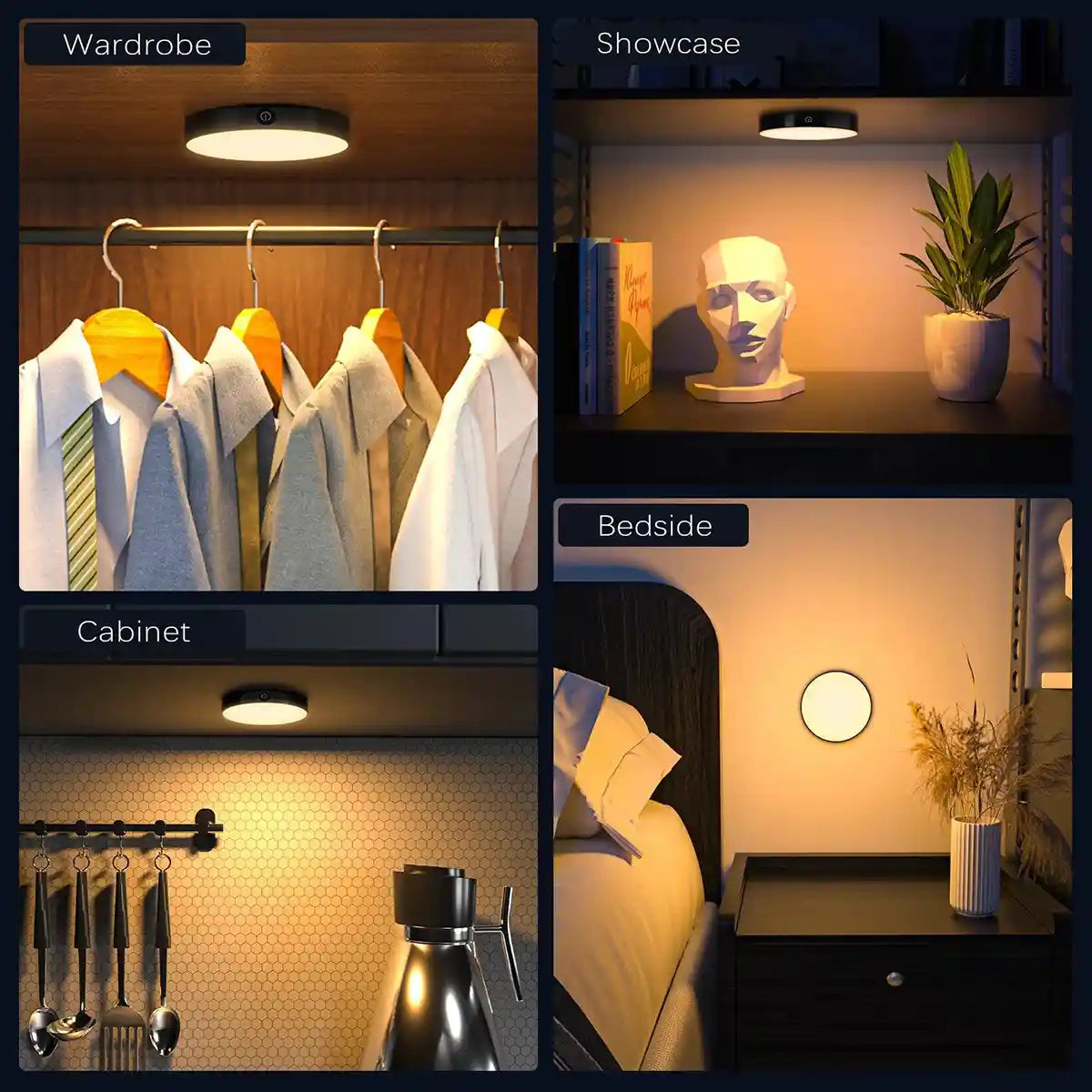
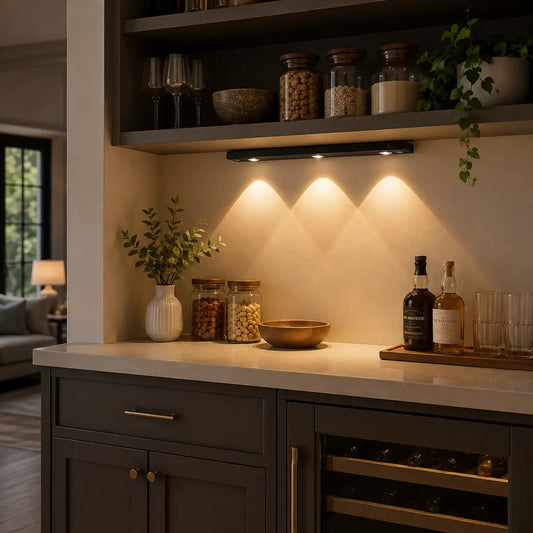
Battery Operated Dimmable Under Cabinet LED Puck Lights with 1000mAh - 2pcs Black
Battery chemistry determines usable capacity, self-discharge, cold-weather performance, and total cycle life.
Choose chemistry based on use: disposables for infrequent use, NiMH for rechargeable convenience, li-ion for highest energy density.
- Alkaline (AA/AAA): cheap and ubiquitous. Good for infrequent use; performance drops in cold temperatures and high-drain modes.
- NiMH (rechargeable): better for repeated use; nominal voltage similar to alkalines, lower internal resistance, better high-drain performance.
- Lithium-ion (Li-ion): highest energy per cell and best for compact, high-output devices; requires protection circuitry and safe charging.
Reference: for safety and testing guidance on lithium-ion batteries, consult NIST’s testing and safety resources for best practices and failure modes: NIST battery safety guide.
Test criteria and common failure modes for durable LED lights

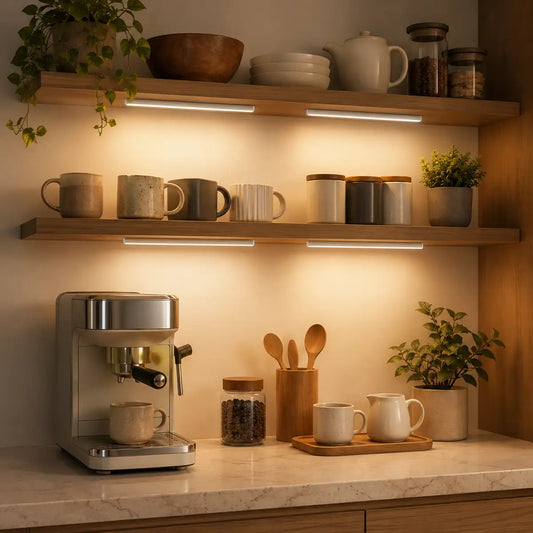
Motion Sensor Under Cabinet LED Light Bar With Battery Operated Type-C Rechargeable
Durability tests should measure lumen maintenance, runtime, impact resistance, and water ingress under real conditions.
Common failures include rapid lumen drop (driver failure), battery leakage, failed switches, and thermal damage.
- Lumen maintenance (L70): predicted hours until LEDs fall to 70% of initial output—thermal design heavily influences this metric.
- Thermal cycling: repeated on/off heat cycles can weaken solder joints and damage drivers.
- Switch and connector wear: mechanical failures are common in cheap models.
- Battery-related issues: leakage from alkalines, poor cold-weather output, or Li-ion protection circuit failure.
Testing checklist (practical):
- Run a full-charge/discharge cycle and record hours at each mode.
- Drop-test to 1–2 meters on concrete to check impact resistance.
- Water exposure at the rated IP level (splash vs immersion) and inspect for ingress.
- Thermal run at full power for several hours to detect heat buildup and driver throttling.
Side-by-side comparison: six durable long-life battery LED models

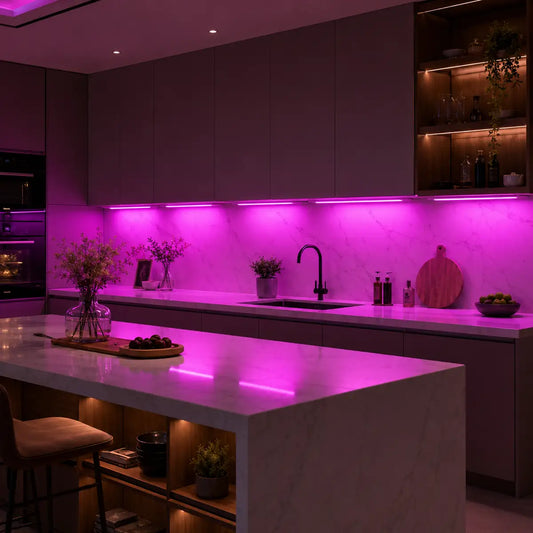
3pcs Black RGB Battery Operated Under Cabinet LED Puck Lights with Remote
This table compares representative long-life battery-operated LEDs by type, claimed brightness/runtime, and durability features.
Manufacturer-claimed specs vary; always verify current specs before purchase.
| Model (type) | Power source | Claimed brightness (lumens) | Claimed max runtime | Durability features | Best use |
|---|---|---|---|---|---|
| LuminAID PackLite Nova (inflatable solar lantern) | Built-in Li-ion (rechargeable via solar/USB) | ~80–120 lm (depending on mode) | Up to ~50 hrs on low (manufacturer claim) | Waterproof IPX6, lightweight, crush-resistant | Backpacking, emergency kit, camping |
| Vont LED Camping Lantern (stackable lantern) | AA batteries (alkaline or NiMH) | ~200–300 lm | ~24–30 hrs on low (manufacturer claim) | Shock-resistant, plastic housing, compact | Car camping, cabin, power outages |
| Goal Zero Crush Light (compact lantern) | 3× AAA or built-in rechargeable | ~120–150 lm | ~20–40 hrs (low settings) | Rugged design, crushable for compact storage | Hiking, backpacking, emergency kit |
| Olight Baton-style rechargeable flashlight (EDC) | Internal Li-ion rechargeable | ~600–1200 lm (high mode) | Hours on low; 1–3 hrs on turbo (manufacturer claims) | Aluminum body, IPX8 on many models, magnetic tailcap | Everyday carry, search, professional use |
| Mr Beams Wireless LED Spotlight (mounted) | AA lithium or alkaline batteries | ~200–350 lm | Weeks to months in motion-activated mode | Weather-resistant, motion sensor, easy mount | Porch/yard lighting, motion-activated security |
| Black Diamond Moji/Moonglow (small lantern / keylight) | AAA or coin cell | ~30–150 lm (varies by model) | 6–50 hrs (depending on mode) | Compact, weather-resistant, durable plastics | Ultralight camping, backpacking, packable lantern |
Short model notes:
- LuminAID: excellent for emergency kits due to solar recharge and waterproof fold-flat design.
- Vont: low cost per lumen and easy to find replacement batteries—good for households.
- Olight/EDC flashlights: best for professional or high-output needs but watch thermal throttling at max output.
💬 "I tossed a LuminAID in my evacuation bag years ago; it survived rain, sat unused, then still held a charge when I needed it—simple, reliable light." — community reviewer
Installation, maintenance, and maximizing battery life
Small maintenance steps and correct battery handling extend runtime and reliability significantly.
Follow a simple regimen: use appropriate batteries, test periodically, store charged devices correctly, and replace worn seals/switches.
- Always use the battery chemistry recommended by the manufacturer.
- For rechargeable units, perform at least one recharge every 6–12 months during storage to preserve Li-ion health.
- Clean contacts with isopropyl alcohol if you notice intermittent operation.
- Replace O-rings or seals in waterproof lights as they age to maintain IP rating.
Practical charging and storage tips:
- Store lights and spare batteries in a cool, dry place at ~40–60% charge for Li-ion to slow capacity loss.
- Rotate AA/AAA batteries in emergency kits every 2–3 years or test them annually.
- Use a smart charger for NiMH cells to avoid overcharging and to refresh capacity with periodic full discharges.
For general LED energy and efficiency guidance see the US Department of Energy’s LED resources: Energy.gov – Solid-State Lighting.
Limitations, safety, and environmental disposal
Battery-operated lights have limits—thermal throttling at high outputs, battery degradation, and environmental impacts of disposables.
Follow safety rules for batteries and dispose or recycle cells properly to avoid fire risks and contamination.
- High-output LEDs generate heat and may throttle to protect electronics—expect shorter runs at max lumen modes.
- Do not mix old and new batteries or different chemistries—this can lead to leakage or rupture.
- Recycle rechargeable cells at local hazardous waste or battery-recycling centers to prevent environmental harm.
For battery safety and consumer guidance, consult the U.S. Consumer Product Safety Commission guidance on portable batteries and safety recalls: CPSC and NIST safety guidance cited earlier.
How to choose the best battery-operated LED for your use case
Match the light type and battery system to the specific use case—camping, emergency kits, EDC, or mounted security lighting.
Use a checklist to narrow options quickly and make an informed purchase.
Decision checklist (quick):
- Define primary use: long-duration area lighting (lantern), directional task light (flashlight/headlamp), or ambient/decorative (string/puck).
- Set the minimum lumen and runtime requirements for your use case.
- Choose battery chemistry: replaceable alkalines for low-frequency use, NiMH for repeatability, Li-ion for compact high-output.
- Confirm durability features: IP rating for weather, impact rating, and warranty/return policy.
- Check availability of replacement batteries or built-in rechargeable options and manufacturer support.
Buying pro tips:
- Prefer models with clear mode/runtime specs and an explicit warranty (1–5 years) from reputable brands.
- For emergency kits, choose a model that accepts common batteries (AA/AAA) or includes a solar/USB recharge option.
- For cold-weather use, avoid plain alkalines—lithium primary cells or NiMH with cold-rated chemistries perform better.
Conclusion: buy for use case, test on receipt, and maintain
Durable, long-life battery-operated LED lights deliver reliable light when designed with the right chemistry, thermal management, and build quality.
Buy based on intended use, verify runtime and durability on receipt, and maintain batteries and seals to maximize service life.
Key takeaways
- Understand lumens vs runtime—higher lumens often mean shorter runtimes at max output.
- Battery chemistry matters: pick replaceable alkalines for infrequent use, NiMH for reusable practicality, and Li-ion for compact, powerful units.
- Look for IP ratings, heat management, and clear manufacturer runtime specs; test devices on arrival.
Frequently asked questions
1. How long will a battery-operated LED light last on average?
Answer: It depends on brightness mode and battery chemistry. Typical low modes on lanterns can run 20–50+ hours, while high-output flashlights may run 1–5 hours. Manufacturer runtime claims are useful starting points—verify by testing.
2. Are rechargeable battery-operated lights worth it?
Answer: Yes for frequent use. Rechargeable NiMH or Li-ion lights reduce long-term cost and waste. For seldom use (emergency kits), replaceable alkaline batteries may be more practical.
3. Can I leave rechargeable LED lights plugged in all the time?
Answer: Modern devices with built-in Li-ion and proper charging circuits often include trickle or float protection, but it’s best practice to unplug after charging and store at partial charge if not used regularly to prolong battery life.
4. What is the best way to store lights in an emergency kit?
Answer: Store lights with fresh batteries in a cool, dry place. For rechargeable lights, store with about 40–60% state-of-charge and recharge every 6–12 months. Label dates on batteries for rotation.
5. How do I choose between a lantern and multiple smaller lights?
Answer: Consider the activity. Lanterns provide even area light for campsites and power outages. Multiple smaller lights (headlamps/flashlights) provide directed light and redundancy—choose a mix for flexibility.
6. Are cheap battery LEDs worth it?
Answer: Some budget models are fine for casual use, but cheap units often cut corners on switch quality, IP seals, and thermal management. For emergency or professional use, opt for proven brands with warranties.
Related Articles:
- Choose the Right Battery-Operated Puck Lights
-
What Wattage for Under-Cabinet Lights?
- Lumens to Watts Conversion
- Guide to Under Cabinet Outlets: Shopping and Installation Tips
- What is the best lumens for under cabinet lighting?
- Under Cabinet Lighting Buying Guide
- Hardwired vs. Plug-in Under Cabinet Lighting














 />
/>
 />
/>
 />
/>
 />
/>
 />
/>