

Top 5 Energy-Efficient Under Cabinet Lighting Options
Table of Contents
- LED Strip Lights
- LED Puck Lights
- LED Linear Bar Lights
- LED Recessed Downlights
- LED Rope Lights
- Comparison Summary
- Resources
- FAQ
- Conclusion
Energy-efficient under cabinet lighting improves comfort and reduces runtime. The five options below emphasize high efficacy, stable dimming, and targeted placement for clear counters with lower energy use.
1. LED Strip Lights
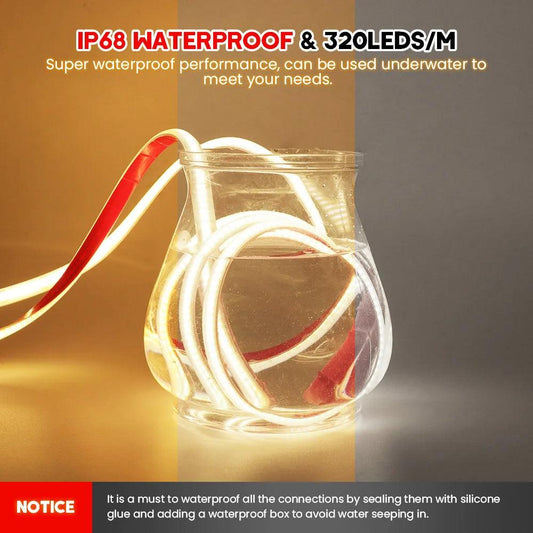
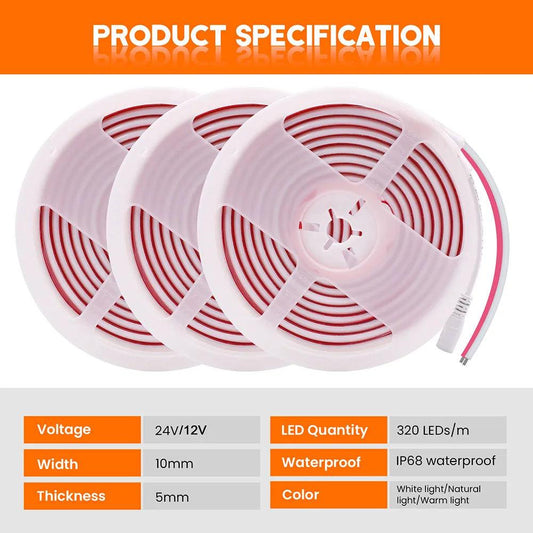
LED strips deliver high efficacy with flexible coverage along cabinet runs. They suit continuous task lighting and tuned low-end scenes for calm evenings.
Overview LED strip lights are one of the most popular and energy-efficient options for under cabinet lighting. These flexible strips can be cut to size and installed in various configurations, making them versatile and practical for any kitchen layout.
Energy Efficiency According to U.S. Department of Energy LED lighting guidance, LEDs use substantially less energy than incandescent sources and maintain long service life under proper thermal design.
Case Study In a study conducted by the Pacific Northwest National Laboratory, LED strip lights installed in a residential kitchen reduced energy usage by 45% compared to traditional fluorescent fixtures. The homeowners also reported improved lighting quality and reduced heat output, enhancing overall kitchen comfort.
Best Use Cases
- Task Lighting: Ideal for illuminating countertops and work areas.
- Accent Lighting: Perfect for highlighting kitchen features and cabinetry.
2. LED Puck Lights
LED pucks concentrate light for accents and spot tasks. They are efficient when spaced correctly and aimed to avoid glare on glossy surfaces.
Overview LED puck lights are small, round fixtures that provide focused lighting. They are perfect for highlighting specific areas and creating dramatic effects in the kitchen.
Energy Efficiency LED puck lights are highly efficient, consuming significantly less power than halogen or incandescent counterparts. The U.S. Environmental Protection Agency highlights that ENERGY STAR certified LED puck lights use at least 75% less energy and last 25 times longer than incandescent lighting.
Research Findings A study published in the Journal of Light & Visual Environment demonstrated that LED puck lights reduced energy consumption by 60% in a controlled kitchen environment, without compromising on brightness or light quality.
Best Use Cases
- Accent Lighting: Great for illuminating display cabinets or decorative features.
- Spot Lighting: Ideal for focused task lighting on countertops or kitchen islands.
3. LED Linear Bar Lights
Linear bars provide uniform, continuous illumination for clear, shadow-free counters. They pair well with dimmers for stable low-end brightness at night.
Overview LED linear bar lights provide continuous, uniform light, making them ideal for task lighting under cabinets. Their sleek design and robust build make them a popular choice for both residential and commercial kitchens.
Energy Efficiency Guidance from the RPI Lighting Research Center emphasizes uniform distribution and thermal management—key for efficient, comfortable task lighting with LED bars.
Case Study A study by the Lawrence Berkeley National Laboratory found that replacing fluorescent under cabinet lights with LED linear bars in a commercial kitchen resulted in a 50% reduction in energy consumption and a significant decrease in maintenance costs due to the longer lifespan of LEDs.
Best Use Cases
- Task Lighting: Provides even illumination for countertops and workspaces.
- General Lighting: Suitable for illuminating larger areas under cabinets.
4. LED Recessed Downlights
Recessed LEDs sit flush and deliver broad ambient or general lighting. Proper spacing and dimming achieve efficiency without glare.
Overview LED recessed downlights are installed flush with the surface of the cabinet, providing a modern, unobtrusive lighting solution. They are particularly effective for general and ambient lighting.
Energy Efficiency Recessed LED downlights are highly efficient, with the U.S. Department of Energy noting that they consume up to 85% less energy than incandescent downlights. Their design also helps reduce heat build-up, further enhancing their energy-saving potential.
Research Findings A report by the American Council for an Energy-Efficient Economy (ACEEE) highlighted that LED recessed downlights in a sample of residential kitchens reduced energy usage by 55% compared to traditional lighting options, with significant improvements in light quality and distribution.
Best Use Cases
- General Lighting: Provides widespread illumination for entire countertops.
- Ambient Lighting: Enhances overall kitchen ambiance without being intrusive.
5. LED Rope Lights
Rope lights add flexible accents and soft guidance along contours. They deliver modest output with efficient strands when used for ambient layers.
Overview LED rope lights are flexible, encased in a clear plastic tube, and can be used to create both functional and decorative lighting effects. They are easy to install and versatile, suitable for various under cabinet applications.
Energy Efficiency According to ENERGY STAR lighting guidance, certified LED fixtures substantially reduce energy use versus legacy sources while maintaining light quality.
Case Study A study by the Illuminating Engineering Society (IES) demonstrated that installing LED rope lights under kitchen cabinets reduced energy consumption by 40% while providing consistent, soft illumination suitable for both task and ambient lighting.
Best Use Cases
- Accent Lighting: Perfect for highlighting the contours of cabinets and countertops.
- Decorative Lighting: Adds a subtle, ambient glow to the kitchen.
Comparison Summary
| Option | Typical Use | Efficiency Notes | Dimming & Comfort |
|---|---|---|---|
| LED Strip Lights | Continuous task runs | High efficacy along linear coverage | Stable low‑end when matched to drivers |
| LED Puck Lights | Spot/Accent areas | Efficient focused output | Aim to avoid glare; space evenly |
| LED Linear Bar Lights | Uniform task lighting | Efficient, even distribution | Pairs well with dimmers for night scenes |
| LED Recessed Downlights | General/ambient | Efficient replacements for legacy downlights | Plan spacing to reduce shadows |
| LED Rope Lights | Accent/ambient contours | Efficient decorative strands | Use as secondary layer |
Resources
- U.S. DOE LED Lighting overview: see Energy Saver — LED Lighting.
- Lighting research and practice: RPI Lighting Research Center.
- ENERGY STAR lighting guidance: ENERGY STAR — Lighting & Fans.
FAQ
Which option is most efficient overall?
LED strips and linear bars typically deliver the best balance of efficacy and coverage for task lighting when thermally managed and matched to drivers.
Will dimming affect energy savings?
Yes. Lower output reduces power draw; verify stable low‑end to keep scenes comfortable without flicker.
How do I avoid glare on glossy counters?
Mount near the front edge, use diffusers, and aim pucks away from reflective backsplashes.
Are rope lights a good primary task light?
Use rope lights for accent and ambient layers; rely on strips or bars for primary task illumination.
Conclusion
Choose options that match tasks and geometry, then tune dimming and placement. Efficient fixtures, uniform coverage, and ambient thresholds keep counters clear and runtime low.
💡 Lumaz favors efficient, low‑glare under‑cabinet runs—consistent scenes, matched drivers, and measured output for clarity with less energy.
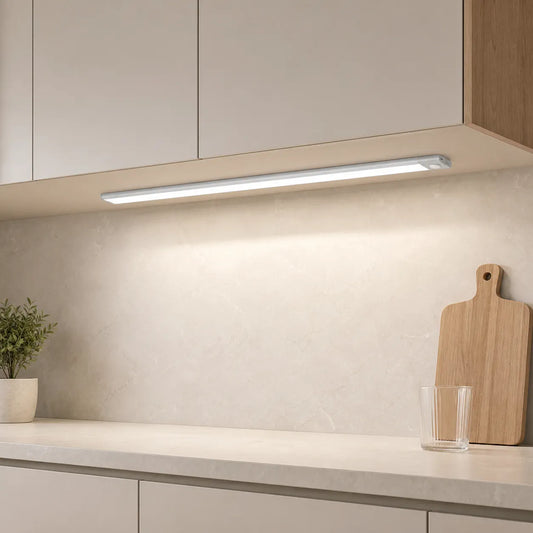
When selecting energy-efficient under cabinet lighting, it's important to choose fixtures that suit both the tasks at hand and the layout of your space. The Type-C Rechargeable Under Cabinet LED Light Bar with smart motion sensor provides efficient, on-demand lighting that only activates when movement is detected, conserving energy. Its 3 color options allow you to adjust the lighting to match different tasks, ensuring optimal brightness without wasting energy.

Further Reading
Explore the full guide for this topic: How to Choose Under Cabinet Lighting: A Complete Decision Guide














 />
/>
 />
/>
 />
/>
 />
/>
 />
/>