

Can You Use Speaker Wire for Under Cabinet Lighting?
When it comes to installing under cabinet lighting, choosing the right type of wire is crucial for safety and performance. A common question is whether speaker wire can be used for under cabinet lighting. This article explains when it might work, why it is often not recommended, and what safer wiring options are typically preferred.
Table of Contents
- Quick Answer
- Understanding Speaker Wire
- Electrical Requirements for Under Cabinet Lighting
- What the Code and Ratings Care About
- Can Speaker Wire Be Used?
- Wire Sizing and Voltage Drop
- Better Wire Options (Usually Safer)
- Professional Opinions and Recommendations
- Decision Checklist
- FAQs
- Conclusion
Quick Answer
Speaker wire can sometimes work for low-voltage under cabinet lighting, but it is usually not recommended. The biggest issues are not the voltage itself, but whether the cable is properly rated for the installation method (especially if it passes through walls or concealed spaces), whether it can be protected from damage, and whether it meets the requirements of your local electrical code and the lighting manufacturer’s instructions.
Understanding Speaker Wire
Speaker wire is typically used to connect speakers to an audio amplifier. It is designed to carry low voltage audio signals. Speaker wire generally consists of two insulated conductors, often made of copper, and is available in various gauges, with 16 and 18 AWG (American Wire Gauge) being common.
Electrical Requirements for Under Cabinet Lighting
Many under cabinet lighting systems (especially LED tape/strips and puck lights) run on low voltage (commonly 12V or 24V DC) from a driver/power supply. The wiring must handle the electrical load without excessive voltage drop, heat buildup, or damaged insulation. The National Electrical Code (NEC) and local codes also affect which cable types are permitted for specific routing methods and spaces.
What the Code and Ratings Care About
Even on low-voltage systems, the wiring method matters. The NEC includes rules for Class 2 and Class 3 power-limited circuits and for how conductors can be run through building cavities. In practice, this often means you should use cable that is specifically listed and marked for the use case (for example, in-wall rated low-voltage cable when routing inside walls) and follow the driver and fixture installation instructions.
Can Speaker Wire Be Used?
The suitability of speaker wire for under cabinet lighting depends on several factors:
1. Voltage and current capacity
Speaker wire can carry the low voltage typically used by under cabinet LED systems. However, the conductor size still must be adequate for the maximum current of the circuit to avoid overheating, especially if the wire is bundled, tightly concealed, or near heat sources.
2. Gauge considerations
The gauge of the wire influences both heating and voltage drop. For small LED loads over short distances, 16 AWG or 18 AWG may work electrically, but longer runs can cause noticeable dimming near the end of the run. For longer distances or higher wattage, thicker wire (lower AWG) is commonly needed.
3. Insulation, jacket, and installation rating
This is where speaker wire most often fails the “should I use it?” test. Many speaker wires are not listed for in-wall use and may not have the same jacket robustness or fire-rating markings expected for building wiring methods. Using cable that is not rated for the path you plan to run it can create safety and compliance issues.
4. Connection method and protection
Under cabinet systems often rely on specific connectors, polarity conventions, and strain relief. If speaker wire requires improvised splices, loose connectors, or exposed terminations, the risk of poor connections and intermittent flicker increases.
Wire Sizing and Voltage Drop
Voltage drop is often the practical limiter on low-voltage lighting. A small drop can make LEDs dimmer or cause uneven brightness across cabinets. As a rule of thumb, keep runs short, avoid daisy chaining long distances on 12V systems, and consider 24V systems for longer runs. If you know total wattage and voltage, you can estimate current (amps = watts ÷ volts) and choose wire gauge to keep voltage drop low.
Better Wire Options (Usually Safer)
If you are choosing wiring from scratch, these options are more commonly appropriate than speaker wire, depending on whether the run is in-wall, exposed, or inside cabinetry:
| Wire/Cable Type | Typical Use | Why It’s Preferred | Watch Outs |
|---|---|---|---|
| In-wall rated low-voltage cable (often CL2/CL3 marked) | Low-voltage runs routed through walls | Listed for in-wall use; clearer compliance path | Match gauge to load and length |
| Manufacturer link cables / system harness | Modular bar/puck systems | Designed for the product; correct connectors and polarity | Usually limited by max length and max fixture count |
| Low-voltage landscape-style cable (as allowed by system) | Short concealed low-voltage runs | Often robust jacket; good for higher current on longer runs | Confirm it is acceptable for your routing method |
Professional Opinions and Recommendations
Electricians and manufacturers typically recommend using wiring that is listed for lighting applications and installed in accordance with the product instructions and applicable code rules. The NEC exists to reduce fire and shock hazards, and “it works” is not the same as “it is an acceptable wiring method.”
For example, the Lighting Research Center at Rensselaer Polytechnic Institute highlights the importance of proper system design and reliable components for LED performance. In under cabinet applications, that reliability often comes down to the driver, the connectors, and using an appropriate cable type for how and where it is routed.
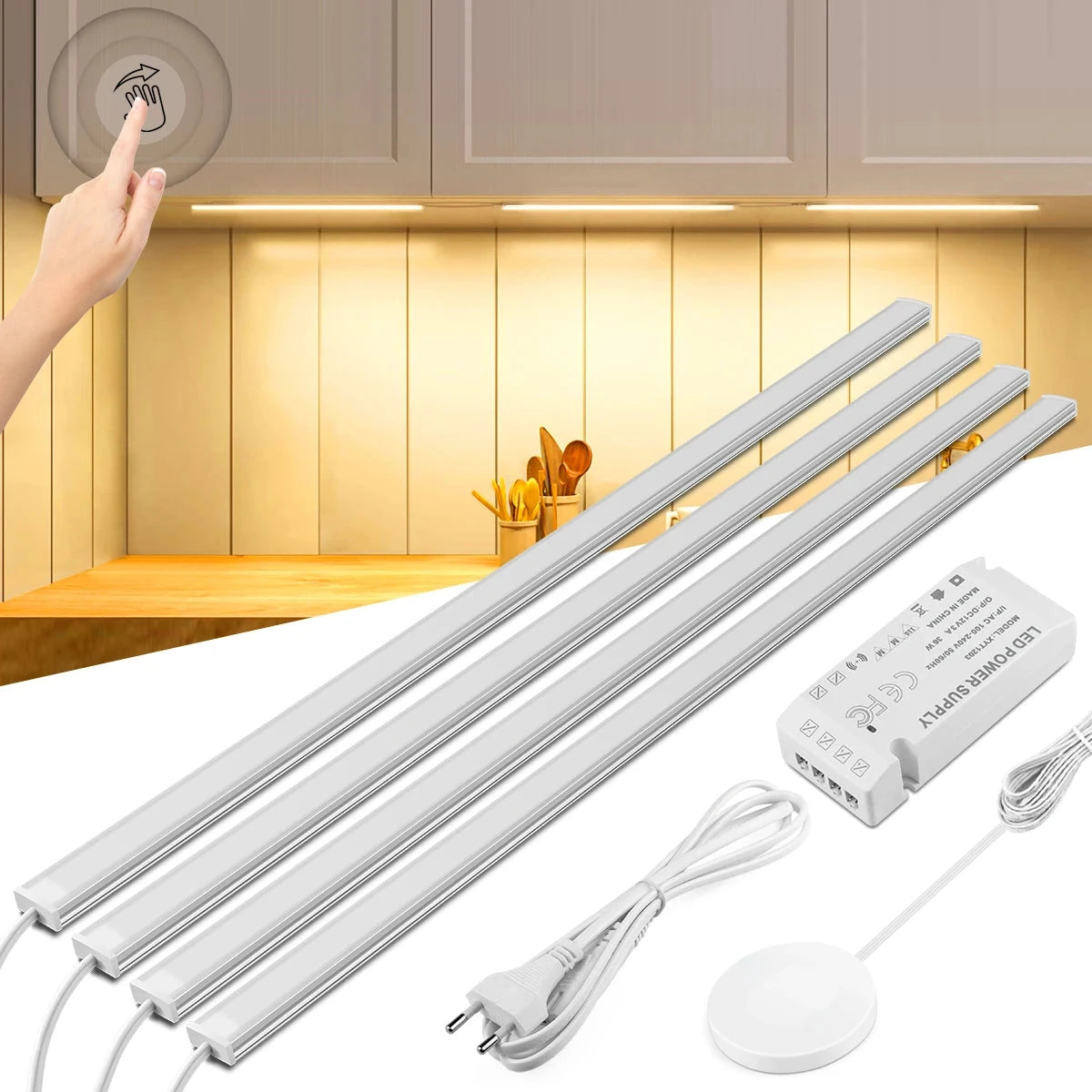
For users who want to stay within code guidance without worrying about wire types or terminations, complete plug-in kits remove that uncertainty. A no-drill, ultra-thin under-cabinet LED light bar with touch and hand-sweep control comes as an all-in-one plug-in solution, eliminating the need to select or install separate wiring altogether.
Decision Checklist
- Confirm your system voltage (12V/24V DC) and total wattage.
- Check whether the driver output is Class 2 / power-limited and follow its instructions.
- Decide the wire path (inside wall, inside cabinet, exposed) and choose cable rated for that path.
- Size wire gauge to minimize voltage drop for your run length.
- Use proper connectors and enclosed splices where required; avoid loose twist-and-tape connections.
FAQs
Is speaker wire in-wall rated?
Many speaker wires are not listed for in-wall use. If your plan involves routing through walls, choose an in-wall rated low-voltage cable and follow the lighting system instructions.
What wire is best for under cabinet LED lighting?
For low-voltage systems, a listed low-voltage cable with appropriate gauge and installation rating is usually the safest route. For modular systems, manufacturer link cables are typically the most reliable option.
Does wire gauge really matter on 12V or 24V?
Yes. Low-voltage systems can draw higher current for the same wattage, and voltage drop becomes more noticeable. Using thicker wire or shorter runs helps keep brightness consistent.
Conclusion
While speaker wire can technically power some low-voltage under cabinet LED lights over short distances, it is usually not the best choice because it may not be rated for the installation method and can create safety, reliability, and compliance issues. For a cleaner, safer result, use wiring that is listed for low-voltage lighting and appropriate for the routing path, and follow the manufacturer’s instructions and local code requirements.
Further Reading
Explore the full guide for this topic: Under Cabinet Lighting Installation: What’s Possible in Your Home




















 />
/>
 />
/>
 />
/>
 />
/>
 />
/>