

Strip vs Bar vs Puck Lights: Which Fits Your Cabinet Layout?
Table of Contents
- Introduction – Choosing the Right Lighting for Your Cabinet Layout
- LED Strip Lights – Sleek and Versatile
- Linear Bar Lights – Clean and Consistent Illumination
- Puck Lights – Compact and Focused Lighting
- Comparing the Three Lighting Types – Pros and Cons
- Which Lighting Type Fits Your Cabinet Layout?
- Key Considerations When Choosing Between Strip, Bar, and Puck Lights
- FAQs About Under Cabinet Lighting
- Conclusion – Making the Right Choice for Your Home
Introduction – Choosing the Right Lighting for Your Cabinet Layout
Under cabinet lighting improves clarity, comfort, and style. Strips, bars, and pucks differ in optics, installation, and use cases—choosing the right one depends on your layout and daily routines.
This guide explains each type, compares pros and cons, and offers layout‑specific recommendations. The aim is a solution that looks clean, works reliably, and fits your budget and space.
- Strips: continuous, low profile, excellent in channels with diffusers.
- Bars: robust housings, even output, premium finish.
- Pucks: compact spotlights for accents and tight spaces.
🗣️ Customer perspective: “We added diffused strips under the cabinets and two pucks for highlights—prep became easier and the kitchen felt designed.”
LED systems typically use less energy and produce less heat than halogen/incandescent, offering long lifespans and lower operating costs (US DOE; ENERGY STAR).
LED Strip Lights – Sleek and Versatile
LED strips provide sleek, continuous light with minimal visual bulk. In aluminum channels with diffusers, they appear seamless and deliver smooth coverage across long counters.
Where strips excel
- Long runs and modern aesthetics; thin profile hides beneath cabinets.
- Cut‑to‑length flexibility; corner connectors handle complex layouts.
- Ideal for kitchens, shelves, and display edges requiring linear glow.
Installation details
- Use channels as heat sinks; diffusers reduce glare and hide LED points.
- For long runs, prefer 24V systems to mitigate voltage drop.
- Route cables cleanly; avoid exposed cords across backsplashes.
Optics and output
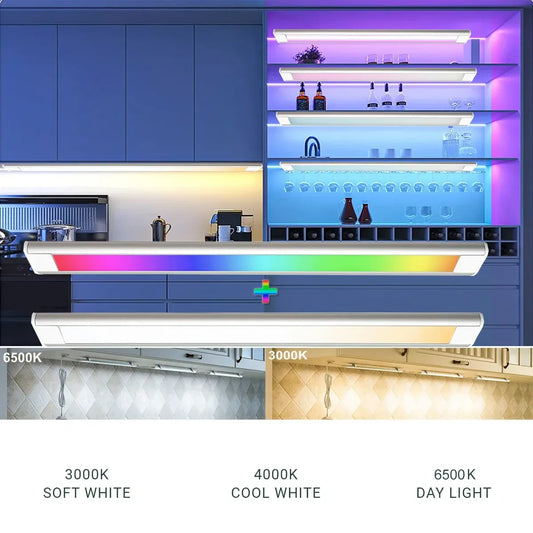
Higher LED density with quality diffusion improves uniformity. CRI ≥ 90 preserves natural colors on food and finishes. Tunable white can shift between cozy evenings and bright prep sessions.
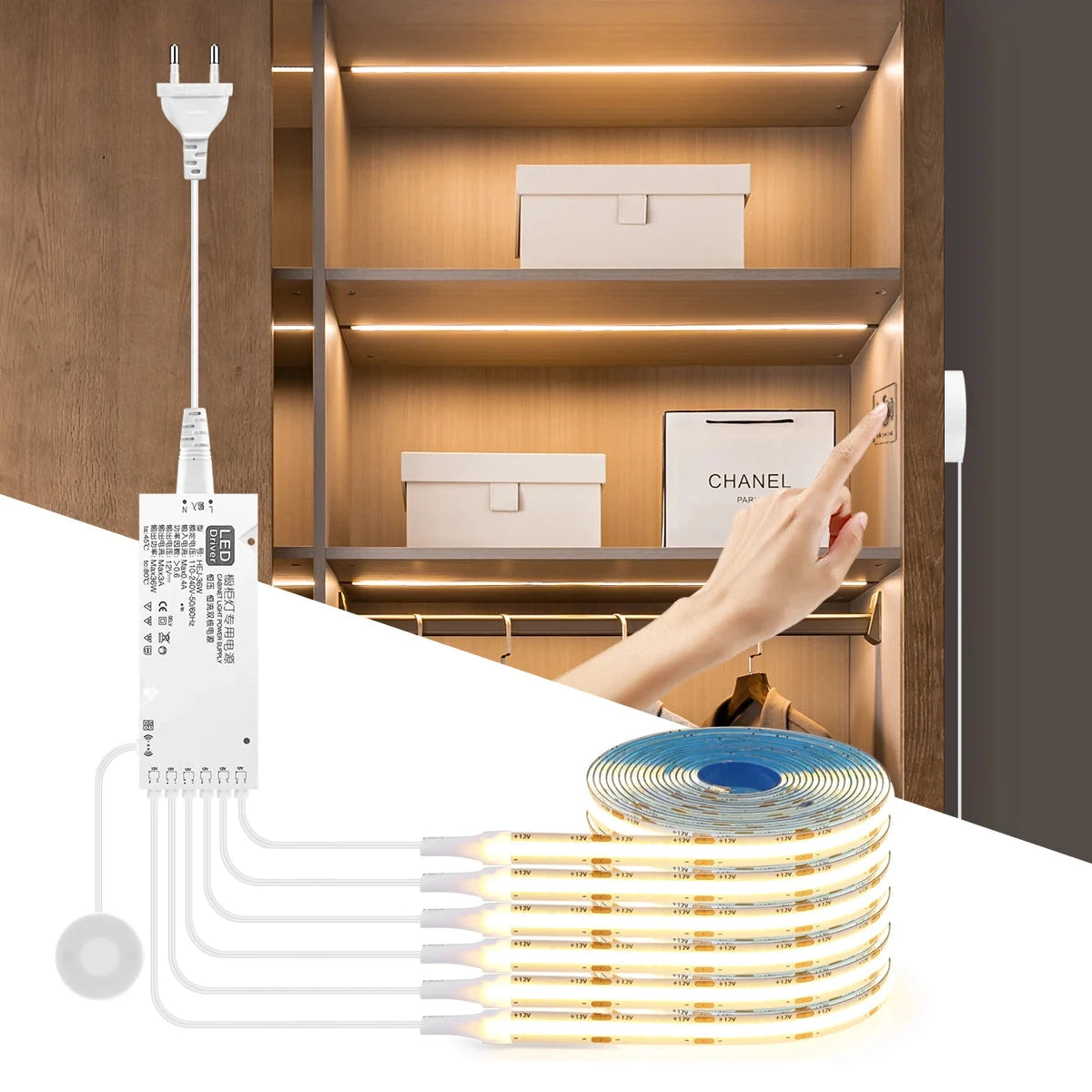
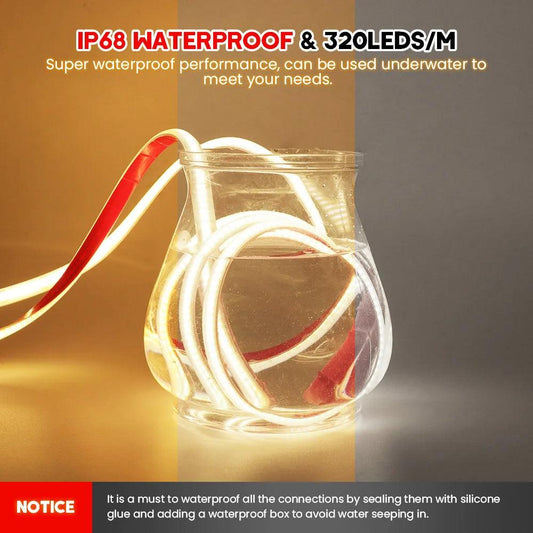
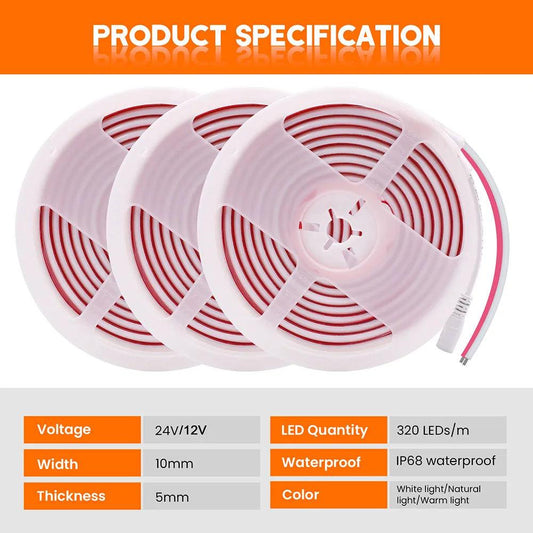
For cabinet layouts that benefit from continuous, shadow-free illumination, high-density strip lighting fits naturally into this category. A through-wood touch sensor COB LED strip light with 320 LEDs per meter and stepless dimming delivers smooth, even output while letting you adjust brightness directly through the cabinet surface.
Linear Bar Lights – Clean and Consistent Illumination
Linear bars deliver robust, even illumination with a premium, integrated look. They suit modern and industrial kitchens requiring uniform task lighting.
Advantages of bars
- Consistent output along the fixture; less risk of hotspots than bare strips.
- Durable housings; clean lines match minimalist design languages.
- Often available with high CRI and dimming options.
Installation and style
- Choose fixture lengths that align with cabinet segments for visual symmetry.
- Hardwired installs look tidiest; plug‑in options are faster and renter‑friendly.
- Ensure drivers fit ventilated areas away from heat and moisture.
When bars are best
Bars excel in uniform task zones and premium builds. They’re ideal where channel mounting is difficult or when a clean, fixture‑forward aesthetic is desired.
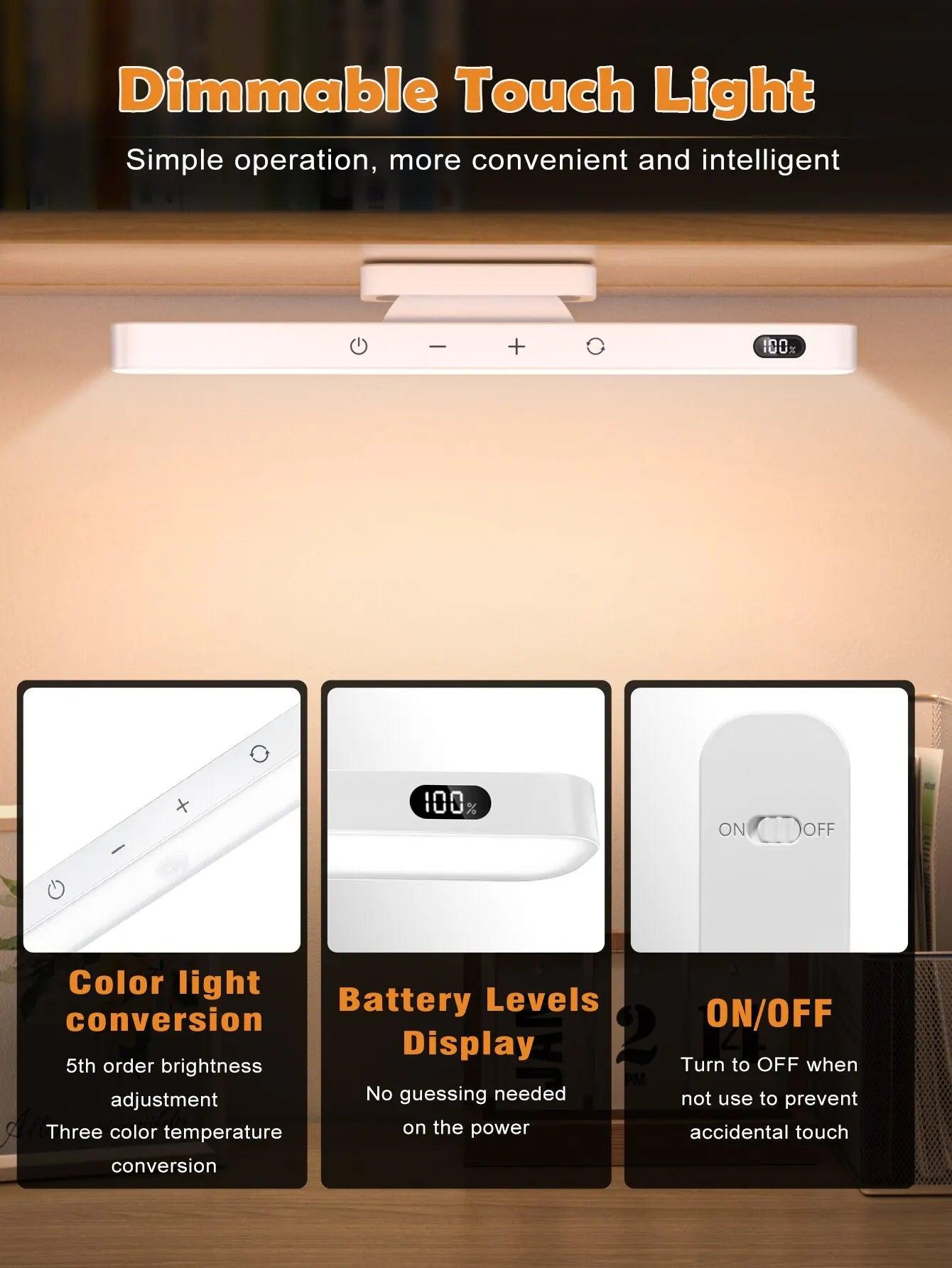
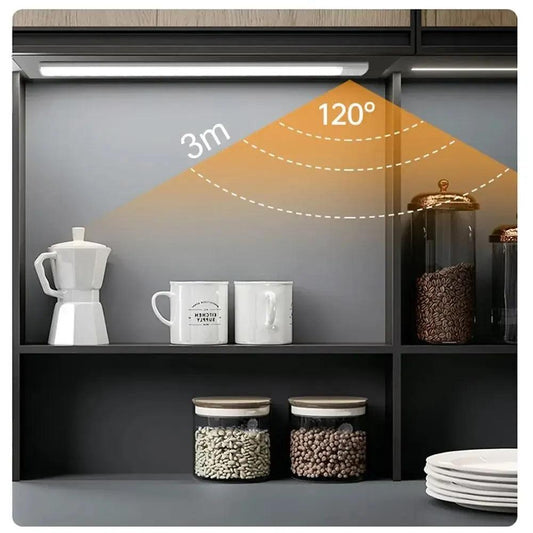
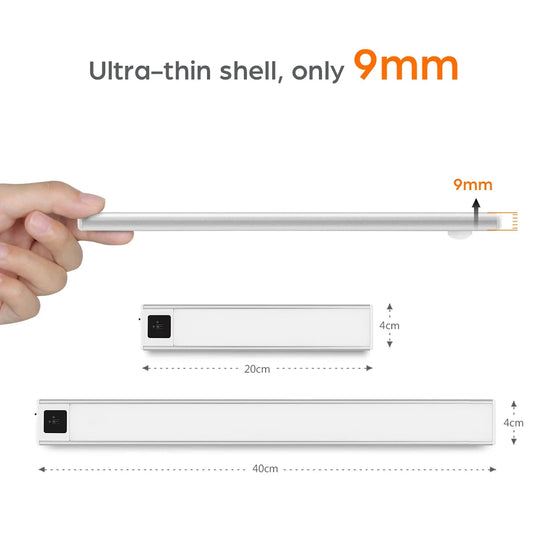
For users who want the clean look of a bar fixture without committing to permanent wiring or channels, rechargeable bars offer a practical alternative. A 2500mAh rechargeable under-cabinet LED light bar with three color options and a magnetic base provides consistent task lighting while allowing easy removal for repositioning or recharging.
Puck Lights – Compact and Focused Lighting
Puck lights produce focused pools of light. They’re small, easy to place, and effective for accents or tight spaces—but they’re not ideal as the sole source for broad task lighting.
Strengths of pucks
- Compact form; simple placement for localized highlights.
- Great for display cabinets, islands, and shelf focal points.
- Battery or plug‑in pucks are convenient in areas without outlets.
Limitations to note
- Scalloping risk on backsplashes if spacing is uneven.
- Less uniform coverage across long counters compared with strips/bars.
- May need dimming to avoid glare on shiny surfaces.
Placement tips
Test at night to refine positions; blend puck accents with low‑level strips for layered lighting. Keep spacing consistent to minimize bright spots and shadows.
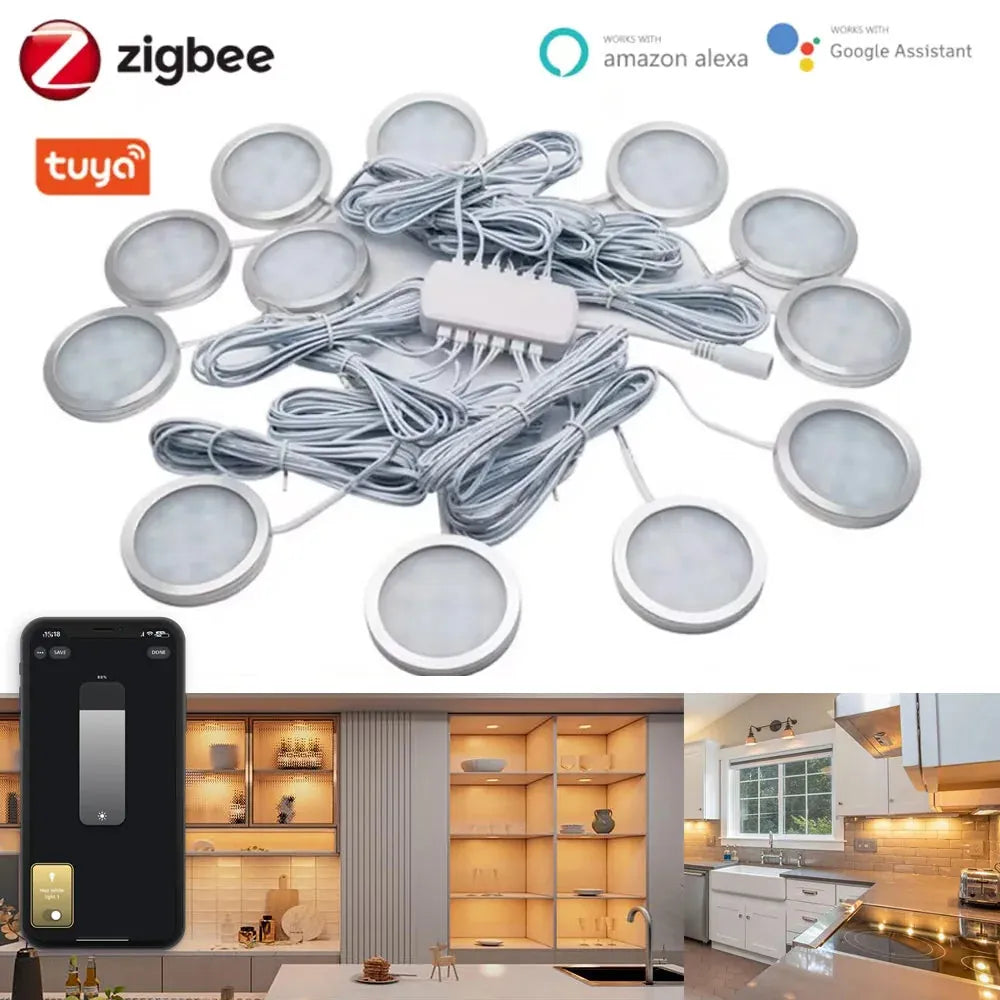
For users who want the compact focus of puck lights without juggling separate controls or wiring decisions, a complete smart kit can simplify planning. Tuya Zigbee smart under-cabinet LED puck lights combine consistent spacing, centralized app and voice control, and a full 12V plug-in system, making it easier to fine-tune brightness and reduce glare across multiple accent zones.
Comparing the Three Lighting Types – Pros and Cons
Use this chart to compare optics, install complexity, and best‑fit scenarios. It helps match your cabinet layout to the right light type.
| Type | Optics | Pros | Cons | Best For | Install Complexity | Power |
|---|---|---|---|---|---|---|
| LED Strip | Continuous line light; density varies | Thin, cut‑to‑length, adaptable; seamless in channels | Needs diffusion and tidy routing to prevent hotspots | Long counters, modern aesthetics | Medium | Hardwired / Plug‑in / Battery (limited) |
| Linear Bar | Uniform line source; high CRI options | Even coverage, robust housings, premium look | Fixed lengths; typically higher cost | Uniform task zones, premium builds | Low–Medium | Hardwired / Plug‑in/ Battery |
| Puck | Localized spot; accent‑forward | Compact, flexible placement, great highlights | Less uniform across long runs; scalloping risk | Displays, islands, tight spaces | Low–Medium | Hardwired / Plug‑in / Battery |
For uniform daily tasks, strips or bars usually feel better; for visual emphasis, pucks shine—use them sparingly to avoid uneven coverage.
Which Lighting Type Fits Your Cabinet Layout?
Match optics to geometry. Long, straight runs benefit from strips/bars; segmented or compact zones can add pucks for focal interest.
Long galley counters
- Diffused strips or slim bars deliver smooth, continuous coverage.
- Break runs into segments for zone control near sink and prep areas.
Small modular cabinets
- Pucks highlight specific spots; mix with short strip segments for uniformity.
- Rechargeable pucks/strips help where outlets are scarce.
Open shelves and displays
- Strip edges create elegant glow; add pucks to highlight objects or textures.
- Dim to avoid glare on glossy finishes.
Key Considerations When Choosing Between Strip, Bar, and Puck Lights
Decide by brightness, color, installation, budget, and maintenance. Use these rules to avoid glare, uneven light, and messy cabling.
Brightness & uniformity
- Task zones: roughly 200–500 lumens per linear foot.
- Ambient glow: ~100–200 lm/ft with dimming for comfort.
- Uniform distribution beats raw brightness; avoid hotspots.
Color temperature & CRI
- Most kitchens feel natural at 3000–3500K; high CRI (≥90) preserves color.
- Tunable white helps shift from prep to evening ambiance.
- See US DOE and ENERGY STAR for selection guidance.
Installation & power
- Hardwired looks cleanest; plug‑in is fast; battery fits outlets‑limited areas.
- Match dimming protocols (phase‑cut/PWM/0–10V) to drivers and switches.
- Keep drivers ventilated; route cords through channels to hide them.
Budget & maintenance
- Include channels, connectors, cable management, and labor—not just fixtures.
- Document runs and driver locations; plan cleaning for grease‑heavy zones.
- Prefer modular systems with replaceable parts to extend lifespan.
FAQs About Under Cabinet Lighting
Focused answers to common follow‑ups help finalize decisions confidently.
How bright should under cabinet lighting be?
Start with 200–500 lm/ft for tasks; test a pilot section and dim as needed. Increase output on dark countertops or higher cabinet heights.
Which color temperature feels best?
3000–3500K feels natural for most kitchens; use 2700–3000K for cozy evenings and 4000–4500K for precision tasks. Prefer CRI ≥ 90.
Hardwired or plug‑in—what should I pick?
Hardwired is clean and permanent; plug‑in is fast and renter‑friendly. Hide cords in channels and route to discreet outlets.
Do LEDs get hot under cabinets?
LEDs run cool compared to halogen/incandescent. Keep drivers ventilated and away from ovens and sinks (US DOE).
Are battery kits practical for daily use?
Yes in outlets‑limited areas or for occasional lighting; plan charging cadence for daily, high‑brightness use. USB‑C rechargeable bars are convenient.
Conclusion – Making the Right Choice for Your Home
For uniform, everyday tasks, diffused strips or slim bars often fit best. Add pucks for highlights—not as your only source. Choose power by permanence and practicality, and prioritize clean routing and dimming comfort.
When done well, under cabinet lighting becomes a quiet upgrade that improves clarity and mood without visual clutter—precisely what a modern kitchen needs.
Further Reading
Explore the full guide for this topic: How to Choose Under Cabinet Lighting: A Complete Decision Guide














 />
/>
 />
/>
 />
/>
 />
/>
 />
/>