

What is the best practice for under cabinet lighting?
Table of Contents
- Introduction: Why Good Under Cabinet Lighting is Essential
- Key Considerations for the Best Under Cabinet Lighting
- Types of Under Cabinet Lighting and Their Best Uses
- How to Achieve the Best Light Distribution for Under Cabinet Lighting
- Installation Best Practices for Under Cabinet Lighting
- How to Maintain Your Under Cabinet Lighting for Longevity
- FAQs
- Conclusion: Choose the Best Under Cabinet Lighting for Your Needs
Introduction: Why Good Under Cabinet Lighting is Essential
Under cabinet lighting elevates visibility, safety, and style in kitchens and workspaces. Done right, it removes shadows, enhances colors, and boosts comfort for daily prep, reading, or detailed tasks.
Beyond aesthetics, it improves task accuracy, reduces eye strain, and complements ambient light. Effective practices ensure consistent coverage, appropriate brightness, and efficient energy use.
Key Considerations for the Best Under Cabinet Lighting
Prioritize brightness, color quality, efficiency, and lifespan. Match output and color to tasks while ensuring fixtures are safe, certified, and easy to install, dim, and maintain.
Brightness and Lumens
Choose brightness to fit counter tasks and cabinet height. Larger, darker surfaces require more lumens and careful placement to avoid glare.
- General prep counters: ~200–500 lumens per linear foot
- Detailed tasks or darker surfaces: ~400–700 lumens per linear foot
- Target illuminance: ~30–50 foot-candles on the countertop
Increase output for deeper counters or high shelving. Use dimmers to tune light for comfort and time of day.
Color Temperature & CRI (Color Rendering Index)
Select color temperature and CRI for accurate, comfortable visuals. CRI affects how food and materials appear true-to-life.
- Color temperature: 2700–3000K warm ambience; 3000–3500K neutral tasks; 4000K+ crisp, cooler light
- CRI: Aim for 90+ in kitchens to render food and finishes naturally
- Consistency: Use the same CCT across bars/strips to avoid patchy tones
Energy Efficiency and Lifespan
LEDs are the best practice for efficiency and longevity. According to the U.S. Department of Energy, residential LEDs use at least 75% less energy and last up to 25 times longer than incandescent lamps U.S. DOE.
- Efficiency: Choose ENERGY STAR or equivalent high-efficacy fixtures
- Lifespan: Prefer 25,000+ hour rated LEDs for low maintenance
- Controls: Dimmers and occupancy sensors further reduce energy use U.S. DOE
Types of Under Cabinet Lighting and Their Best Uses
Choose fixture types based on coverage, appearance, and install constraints. Bars provide uniform light; strips add flexible, seamless lines; pucks spotlight small zones.
LED Strip Lights
Flexible, low-profile, and ideal for continuous runs along long cabinets. Install inside channels to diffuse and hide diodes for even light.
- Pros: Seamless lines, easy expansion, minimal profile
- Cons: May need channels/lenses and external drivers
LED Bar Lights
Rigid bars with built-in optics deliver bright, uniform task light. Good for deeper counters and high-use prep zones.
- Pros: Even illumination, simple mounting, often dimmable
- Cons: Visible hardware; may need careful spacing to avoid seams
Puck Lights
Compact fixtures for accent or focused spots (e.g., cutting boards, display shelves). Use higher count or closer spacing to prevent isolated pools.
- Pros: Simple placement, strong local highlights
- Cons: Uneven coverage; can create glare and hotspots
| Type | Coverage | Install Ease | Dimming | Best Use |
|---|---|---|---|---|
| LED Strips | Continuous, smooth | High (adhesive/channels) | Yes (driver dependent) | Long runs, low-profile modern kitchens |
| LED Bars | Uniform task light | Medium (clips/screws) | Yes (built-in or inline) | Deep counters, primary prep zones |
| Pucks | Localized spots | High (adhesive/screws) | Often | Accent highlights, small areas |
How to Achieve the Best Light Distribution for Under Cabinet Lighting
Place fixtures near the cabinet’s front edge and avoid gaps. Use diffusion and overlap to eliminate shadows and create a continuous task-light band.
Mounting Options and Placement Tips
- Position bars near the front lip to minimize backsplash glare
- Angle fixtures slightly toward the counter for even spread
- Hide power supplies inside cabinets where possible
- Test placement with temporary mounts before finalizing
Light Spacing and Overlap
- Strips: Mount end-to-end; avoid dark seams between lengths
- Bars: Slightly overlap coverage zones or use diffusers
- Pucks: Space ~8–12 inches; ensure beam overlap to prevent “spotting”
- Match CCT and CRI across all fixtures for consistent color
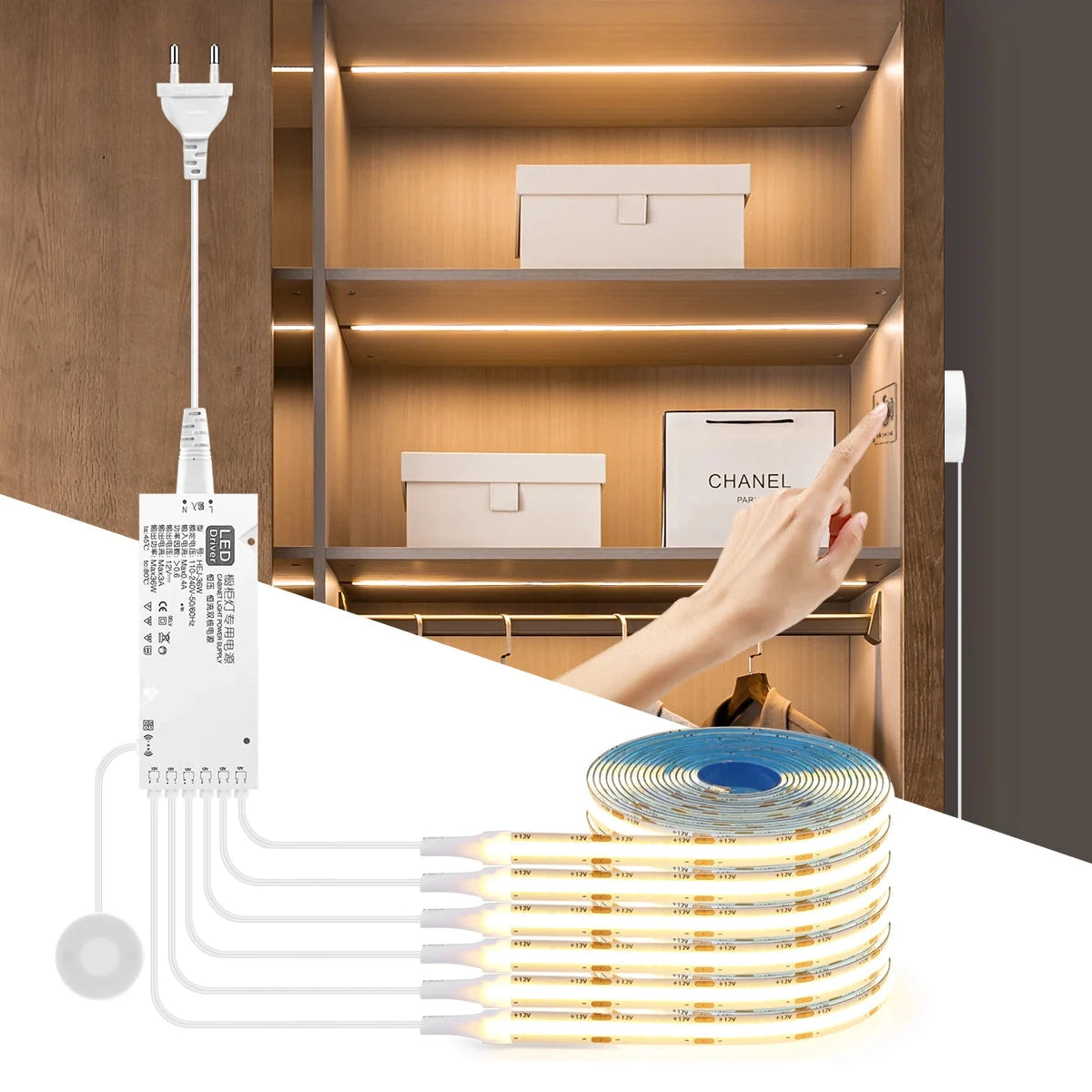
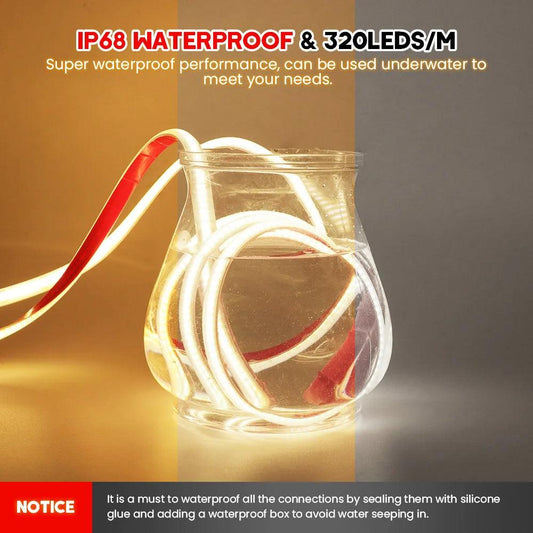
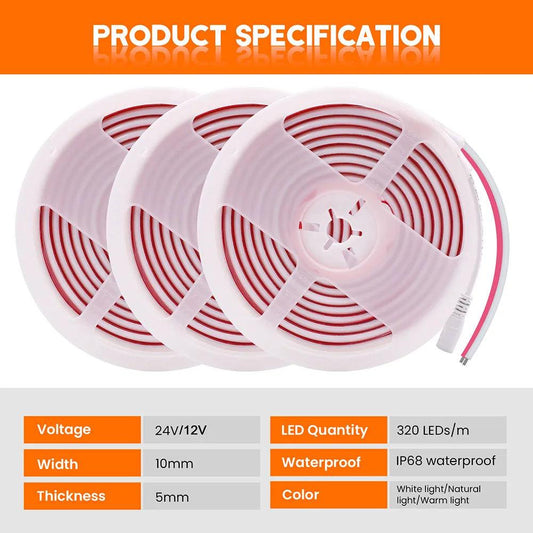
For optimal light distribution, consider using the Through-Wood Touch Sensor COB LED Strip Light for under-cabinet lighting. Its stepless dimming feature and high LED density (320 LEDs/m) provide even illumination across your workspace, ensuring no shadows or hot spots. Ideal for kitchens, offices, and any space that requires consistent and adjustable lighting.
Installation Best Practices for Under Cabinet Lighting
Use safe, certified components and plan power, routing, and controls. Favor tidy cable management and dimmers to improve comfort and efficiency.
Choosing the Right Power Source
- Plug-In: Simplest; ideal for quick installs without wall cutting
- Hardwired: Cleanest look; integrate with wall switches and dimmers
- Rechargeable/Battery: Cordless convenience for rentals or no-outlet areas
Ensure compatibility between LED drivers and dimmers. ENERGY STAR/FEMP guidance supports efficient luminaires and controls for cost-effective performance U.S. DOE FEMP.
Avoiding Common Installation Mistakes
- Gaps between fixtures causing uneven light
- Mismatched color temperatures/CRI across segments
- Unsupported drivers or incompatible dimmers leading to flicker
- Exposed wiring or unlisted components; always use UL/ETL fixtures
- Mounting too far back causing shadows on the counter
🛠️ “I moved my bars to the front edge and added a dimmer. The counters went from patchy glare to soft, even light—best upgrade for daily cooking.”
How to Maintain Your Under Cabinet Lighting for Longevity
Keep lenses clean, verify connections, and replace failing parts promptly. Routine checks prevent flicker and ensure consistent output.
Cleaning and Replacing Bulbs
- Wipe lenses/channels monthly to remove grease and dust
- Replace failing segments/drivers with matching CCT/CRI parts
- Use manufacturer-recommended cleaning methods to avoid damage
Troubleshooting Common Issues
- Flicker: Check dimmer compatibility and driver ratings
- Uneven light: Re-space fixtures; add diffusion or increase overlap
- Color shift: Replace aged segments; standardize on high-CRI LEDs
- Intermittent power: Inspect connectors and cable routing
FAQs
What brightness works best for prep?
Target ~200–500 lumens per foot and ~30–50 foot-candles on the countertop; adjust for cabinet depth and wall color.
Which color temperature is most comfortable?
3000–3500K gives neutral task light; 2700–3000K is warmer for ambience; 4000K+ adds crisp detail.
Are strips or bars better for even light?
Bars provide uniform task light; strips offer seamless, low-profile lines. Use diffusion and overlap with either.
Can I dim all under cabinet LEDs?
Most can dim, but ensure driver-dimmer compatibility to avoid flicker. Inline dimmers simplify plug-in setups.
Do I need professional installation?
Plug-in systems are DIY-friendly. Hardwiring during renovation yields the cleanest look with wall-switch control.
Conclusion: Choose the Best Under Cabinet Lighting for Your Needs
Best practice pairs high-CRI LEDs with front-edge placement, uniform coverage, and dimming. Choose bars for primary task areas, strips for seamless lines, and pucks for accents.
Match brightness and color to tasks, use certified components, and maintain clean optics. Smart controls and efficient LEDs deliver long, comfortable use with minimal energy.
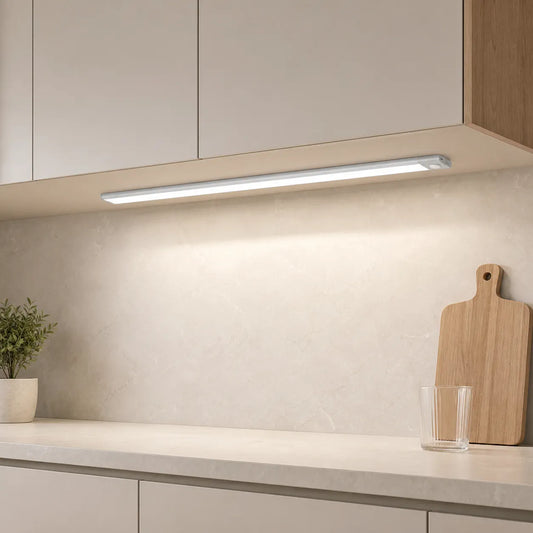
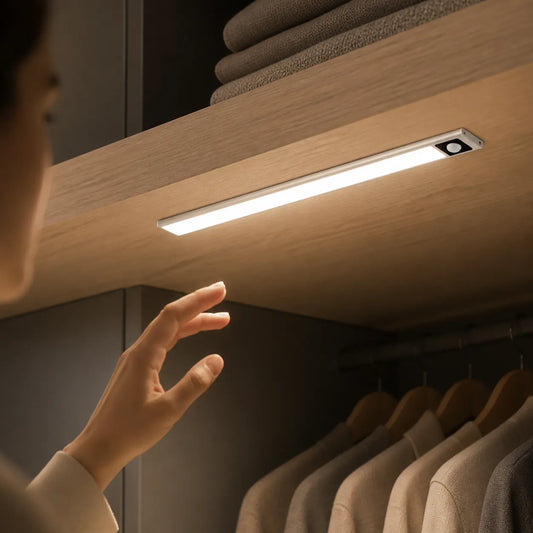
For a flexible and efficient lighting solution, the 2500mAh Rechargeable Under Cabinet LED Light Bar with a magnetic base and three-color options is perfect for any space, offering easy installation and customizable lighting to suit your needs.

Further Reading
Explore the full guide for this topic: How to Choose Under Cabinet Lighting: A Complete Decision Guide














 />
/>
 />
/>
 />
/>
 />
/>
 />
/>